
The fusion of artificial intelligence with robotics is no longer a mere convergence of disciplines; it represents the foundational catalyst for a paradigm shift towards intelligent agents that perceive, reason, and act within our physical world. This transformation, often encapsulated by the strategic initiative “AI+”, is giving rise to a new generation of robotic forms. Among these, the embodied AI robot stands as the most pivotal and ambitious direction. Its core tenet—that genuine intelligence arises from and is shaped by a physical body’s dynamic interaction with the environment—challenges traditional disembodied AI paradigms. This article, from the perspective of a researcher immersed in this field, systematically explores the conceptual underpinnings, technological architecture, practical applications, and future trajectory of the AI+-empowered embodied AI robot. We will dissect how AI technologies are revolutionizing every layer of the robotic stack, from multimodal perception to closed-loop control, and examine the tangible impacts and persistent challenges as these advanced embodied AI robots transition from laboratories into real-world scenarios.
1. Defining the Embodied AI Robot: Beyond Programmed Automation
The journey of artificial intelligence has evolved from symbolic reasoning to connectionist models based on neural networks. The concept of embodied intelligence emerged as a critical reflection on the limitations of these earlier approaches, arguing that intelligence is not merely computed but is fundamentally grounded in the sensorimotor experiences of a body situated in an environment. This philosophical shift has profound engineering implications.
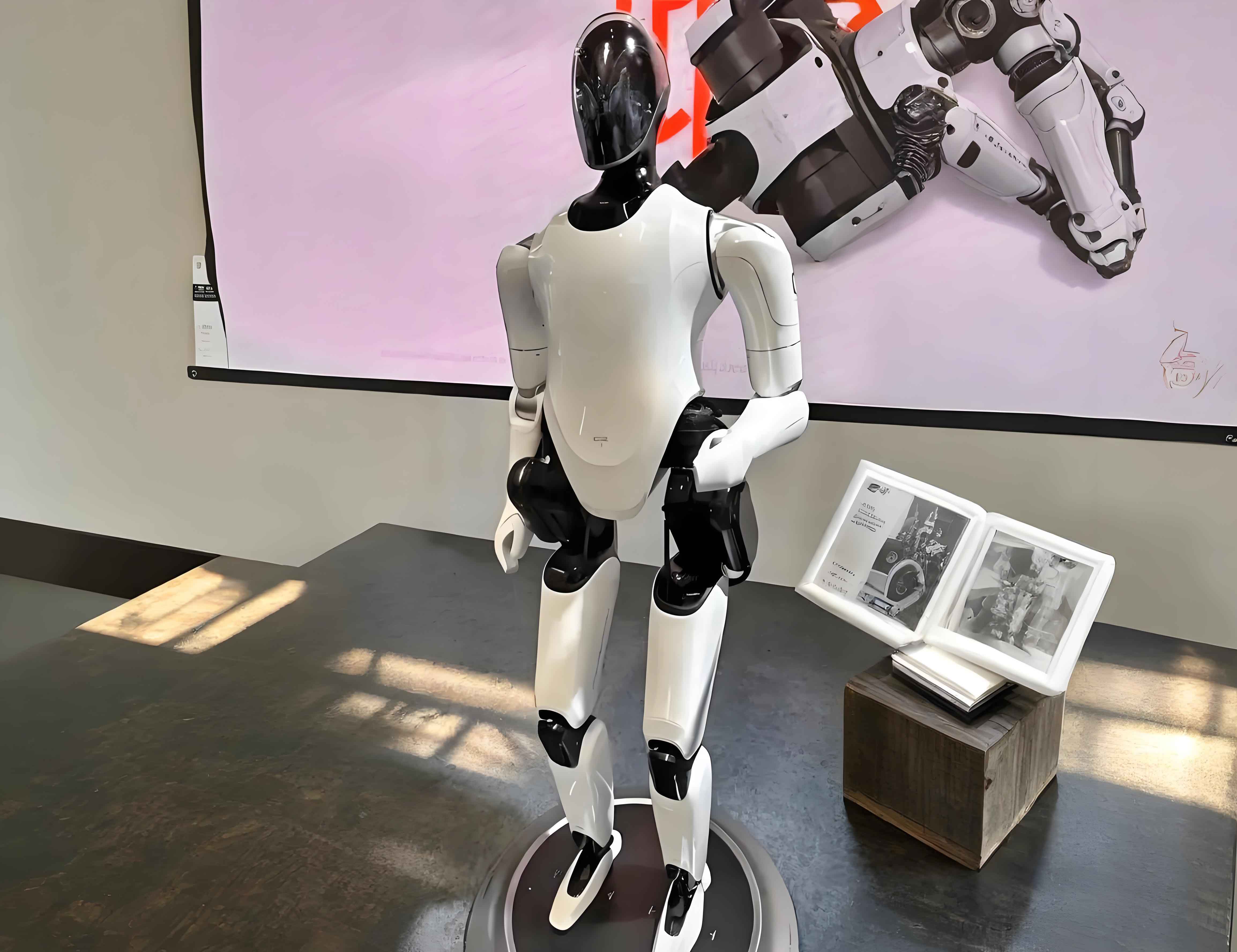
An embodied AI robot is defined by its possession of a physical form—actuators, limbs, sensors—and its capacity to use that form to sense, decide, and act autonomously within an unstructured, dynamic environment. The “embodiment” is not incidental; it is essential. The intelligence of an embodied AI robot is continuously refined through the physical feedback loops generated by its actions on the world and the world’s reactions upon it. This differentiates it sharply from both traditional industrial robots and other forms of AI+ robotics. While a conventional robotic arm executes pre-programmed welding paths with high repeatability, an embodied AI robot, such as a humanoid platform, can use multimodal sensing to understand a cluttered scene, plan a sequence of actions to clear a table, and adapt its grip if an object slips. The key distinguishing features are summarized below.
| Characteristic | Traditional Robot | AI+ Robot (General) | Embodied AI Robot (Subset of AI+ Robot) |
|---|---|---|---|
| Core Driver | Programmed control | AI algorithm-driven | AI algorithm-driven with physical feedback |
| Intelligence Level | Low (executes fixed tasks) | Medium-High (perception & decision) | |
| Interaction Depth | Shallow (limited environmental interaction) | Variable (application-dependent) | Deep (active physical interaction & learning from feedback) |
| Environmental Adaptability | Low (requires structured settings) | Medium-High | High (must handle non-structured, dynamic worlds) |
| Learning Capacity | None or weak | Present (data/model-based) | Strong (continuous learning via environmental interaction) |
| Typical Example | Industrial manipulator | Smart vacuum cleaner, Chatbot | Humanoid robot, Advanced assistive robot |
The development of the modern embodied AI robot has progressed through stages of theoretical foundation, engineering breakthroughs, product prototyping, and is now entering a phase of systemic integration and capability upgrade, largely fueled by advances in AI+ methodologies.
2. The AI+ Technology Stack for Embodied Intelligence
The empowerment of embodied AI robots by AI+ is not a singular technology but a deeply integrated stack of capabilities that form a coherent “Perception-Cognition-Control-Data”闭环 (closed-loop). This stack can be conceptualized as a four-tier architecture, each layer enabled and enhanced by specific AI advancements.
2.1 Tier 1: Multimodal Perception and Understanding
This layer serves as the sensory cortex of the embodied AI robot. The shift from uni-modal to multi-modal perception is fundamental. An embodied AI robot must fuse visual, auditory, tactile, and proprioceptive data into a coherent, semantically rich understanding of its surroundings. Research focuses on two main pathways:
- Multimodal Models for Environmental Perception & Task Understanding: Large Vision-Language Models (VLMs) like GPT-4V provide the embodied AI robot with the ability to parse natural language instructions in the context of visual scenes. For instance, given the command “hand me the metallic tool next to the red box,” a VLM can guide the robot’s attention and understanding. Systems like ViLA demonstrate closed-loop control where visual feedback dynamically adjusts action plans, enhancing robustness.
- Multimodal Models for Environmental Representation & Semantic Augmentation: Here, models like CLIP (Contrastive Language-Image Pre-training) are used for open-vocabulary object recognition, embedding visual scenes into a semantic space queryable by language. A significant advancement is the integration of such semantic features into 3D scene representations. For example, combining 3D Gaussian Splatting—an efficient, high-fidelity rendering technique—with language embeddings allows the creation of a “semantic field.” An embodied AI robot can then query this 3D map with questions like “where are all the drinkable items?” receiving not just coordinates but a semantic understanding.
| Technology Path | Core Method | Function for Embodied AI Robot | Example / Model |
|---|---|---|---|
| Task Understanding | Vision-Language Action (VLA) Models | Parse instructions, generate task plans from visual context | GPT-4V, ViLA, Object-centric LLMs |
| Semantic Mapping | 3D Semantic Scene Reconstruction | Build maps with object labels (e.g., “chair”, “door”) and properties | CLIP-feature fused SLAM, 3D Gaussian + Language |
| Spatial Cognition | Semantic & Dynamic SLAM | Real-time localization and mapping in dynamic environments with semantic labels | ORB-SLAM3 (with semantic CNN), Lidar-Vision-Inertial fused SLAM |
Underpinning both is the critical role of environment modeling and localization. Semantic SLAM (Simultaneous Localization and Mapping) transforms raw sensor data into a living, annotated map. This is the embodied AI robot’s spatial memory. The evolution from geometric SLAM (knowing *where* walls are) to semantic SLAM (knowing *what* a “wall” is and that it’s not traversable) is crucial for high-level task reasoning.
2.2 Tier 2: Multimodal Planning and Decision-Making
This layer functions as the “cognitive brain” of the embodied AI robot. It translates high-level goals and semantic understanding into actionable, physically plausible sequences. Large Language Models (LLMs) and World Models are the key enablers here.
- LLMs as High-Level Planners: An LLM can decompose a complex command like “make me a cup of coffee” into a sequence of sub-tasks: locate kitchen, find mug, find coffee machine, operate machine, etc. More advanced frameworks, such as VoxPoser, use LLMs to generate “3D value maps” that spatially represent where and how an embodied AI robot should act, enabling zero-shot manipulation planning for novel objects.
- World Models for Prediction and Imagination: A world model is a learned simulator of the robot’s environment. It allows the embodied AI robot to “imagine” the consequences of its actions before executing them. Models like 3D-VLA embed scenes, objects, and actions into a unified 3D Transformer space, enabling the prediction of future states. This allows for planning through mental simulation, reducing the need for costly and potentially dangerous trial-and-error in the real world. The core value function in a reinforcement learning context often relies on such predictions:
$$V(s_t) = \mathbb{E}_{ \tau \sim p_{\pi} } \left[ \sum_{k=0}^{\infty} \gamma^k r(s_{t+k}, a_{t+k}) \mid s_t \right]$$
Where a good world model helps accurately predict the future state-action trajectory $ \tau $ and associated rewards $ r $, enabling more efficient policy $ \pi $ optimization for the embodied AI robot.
2.3 Tier 3: Motion Control and Execution
This is the “cerebellum” of the embodied AI robot, responsible for translating planned actions into stable, precise, and adaptive motor commands. The evolution has moved from rigid rule-based control to adaptive learning-based methods, with a current trend favoring hybrid approaches.
| Control Paradigm | Representative Methods | Advantages | Limitations for Embodied AI Robot |
|---|---|---|---|
| Rule-Based | ZMP, PID Control | High real-time performance, simple implementation | Poor adaptability, struggles with strong nonlinearities |
| Model-Based | MPC, Whole-Body Control (WBC) | High precision, can incorporate physical constraints | High development cost, sensitive to model accuracy |
| Learning-Based | Deep Reinforcement Learning (DRL), Imitation Learning | Autonomous exploration, strong generalization potential | High demand for data/simulation resources |
Model Predictive Control (MPC) is a cornerstone for legged embodied AI robots like humanoids. It solves an optimization problem over a receding horizon:
$$\min_{u_{t},…, u_{t+H}} \sum_{k=t}^{t+H} \left( \| x_k – x^{ref}_k \|^2_Q + \| u_k \|^2_R \right)$$
$$\text{subject to: } x_{k+1} = f(x_k, u_k), \quad g(x_k, u_k) \leq 0$$
Where $x$ is the state (e.g., body pose, velocity), $u$ is the control input (joint torques), $f$ is the dynamics model, and $g$ represents constraints (e.g., friction, joint limits). This allows the embodied AI robot to dynamically balance and navigate while anticipating future states.
Deep Reinforcement Learning (DRL) excels in learning complex, adaptive policies directly from interaction, often in simulation. A policy $ \pi_\theta(a_t | s_t) $, parameterized by a neural network with weights $\theta$, is optimized to maximize cumulative reward. Hybrid approaches, where a DRL policy is refined or stabilized by an MPC-like framework, are becoming the state-of-the-art for robust control of an embodied AI robot in complex terrains.
2.4 Tier 4: Multimodal Generative AI for Data Fabrication
Training and validating the aforementioned layers for an embodied AI robot requires massive, diverse, and often perilous-to-collect datasets. Generative AI has emerged as a pivotal solution, creating synthetic but physically plausible data. Two main paradigms dominate:
| Paradigm | Core Technology | Generation Advantage | Primary Application for Embodied AI |
|---|---|---|---|
| Learning-Driven Generation | Diffusion Models, Transformers | High semantic alignment, superior image/video fidelity, flexible text control | Massive 2D/3D synthetic data for perception training, zero-shot visual task simulation |
| Physics-Driven Generation | GANs, VAEs + Physical Priors | Strong physical consistency, direct 3D scene & dynamics data output | High-fidelity digital twins for simulation, complex industrial/mechanics simulation, sim2real transfer |
Platforms like NVIDIA’s Omniverse exemplify the fusion of these paradigms, creating vast, physically accurate virtual worlds where embodied AI robots can be trained safely and at scale through millions of trials. This synthetic data engine is crucial for overcoming the “data bottleneck” and is increasingly forming the primary foundation for pre-training embodied AI models, supplemented by targeted real-world data.
3. Application Cases of AI+-Empowered Embodied AI Robots
3.1 Industrial Manufacturing
In industrial settings, the embodied AI robot is transitioning from a fixed automation tool to a flexible, cognitive coworker. It brings perception, reasoning, and dexterous execution to complex tasks. For instance, in electronics assembly, an embodied AI robot can use vision to identify micron-scale solder joints and adapt its tool path in real-time, improving precision and yield. More significantly, these robots enable flexible production lines. A single embodied AI robot can be quickly re-tasked for different products—from assembling engine components to performing quality inspection—dramatically reducing retooling time and cost for small-batch production. They are also deployed in hazardous environments like painting booths, performing standardized, high-quality coating while eliminating human exposure to toxic fumes.
3.2 Healthcare and Assistive Care
The healthcare domain presents profound opportunities for the embodied AI robot. In physical rehabilitation, an embodied AI robot can guide patients through personalized therapy sessions, using force and motion sensors to monitor progress and adapt exercise resistance in real-time, akin to a dedicated physiotherapist. For elderly or mobility-impaired individuals, an assistive embodied AI robot can perform fetch-and-carry tasks, provide mobility support, and offer companionship. By integrating with smart home systems and medical monitors, such a robot can detect falls, remind about medication, and facilitate teleconsultations, thereby promoting independent living and safety.
3.3 Domestic and Service Environments
The home is a challenging, unstructured domain ripe for embodied AI robots. Beyond vacuuming, next-generation domestic robots aim to perform a wide array of chores: loading/unloading dishwashers, sorting laundry, and even preparing simple meals. These tasks require a high degree of multimodal perception (distinguishing a clean plate from a dirty one), dexterous manipulation (handling fragile items), and long-horizon planning. Furthermore, as a family companion, an embodied AI robot could engage in educational play with children, using its language and vision capabilities to tell stories, answer questions, and even tutor, all while navigating a dynamic, human-centric environment safely.
4. Current Challenges Facing Embodied AI Robots
Despite remarkable progress, the path to ubiquitous, capable embodied AI robots is fraught with significant hurdles.
4.1 Computational Resources and Energy Consumption: The AI+ stack—running large multimodal models, complex planners, and adaptive controllers—is computationally intensive. Real-time operation demands powerful, low-latency onboard computing, which conflicts with constraints on size, weight, power, and cost (SWaP-C). The high energy draw of such systems severely limits operational endurance for untethered embodied AI robots, a critical barrier for applications like search and rescue or all-day domestic service.
4.2 Insufficient Algorithmic Generalization and Robustness: While an embodied AI robot may excel in a lab or a specific training environment, its performance can degrade severely in the face of novel objects, lighting conditions, or physical configurations not seen during training. The “sim-to-real” gap remains wide. Furthermore, the decision-making of LLM-based planners can be unpredictable or fail to account for subtle physical constraints, leading to unsafe or nonsensical plans. Ensuring the reliable, trustworthy operation of an embodied AI robot in the infinite variability of the open world is the paramount technical challenge.
4.3 Natural and Safe Human-Robot Interaction (HRI): For seamless integration into human spaces, an embodied AI robot must communicate and collaborate naturally. This involves not just understanding speech but also inferring intent from gesture, context, and even social cues. More critically, safety is non-negotiable. The embodied AI robot must predict human motion, understand social norms of personal space, and possess reflexes to halt or modify actions instantly to prevent injury. Developing these nuanced social and physical safety layers is as complex as the core mobility and manipulation problems.
5. Future Development Trends
5.1 Continued Innovation and Fusion of AI Technologies: The AI+ engine will keep evolving. We anticipate more efficient model architectures (e.g., Mixture of Experts for robotics), tighter coupling between world models and low-level control, and the emergence of “embodied foundation models” pre-trained on vast datasets of robotic interaction. The integration of causal reasoning and neuro-symbolic methods could lend greater explainability and logical rigor to the decision-making of an embodied AI robot.
5.2 Toward Greater Autonomy and Cognitive Upgrade: The trajectory points toward fully autonomous embodied AI robots capable of long-term operation in complex settings with minimal human supervision. This involves advancements in lifelong learning—where the robot continuously updates its knowledge and skills from daily interactions—and meta-learning, enabling rapid adaptation to new tasks. The future embodied AI robot will not just execute tasks but also proactively manage its goals, energy, and maintenance.
5.3 Expansion and Deepening into Multidisciplinary Domains: The application horizon will broaden beyond current foci. In agriculture, embodied AI robots could perform selective harvesting and detailed crop monitoring. In construction, they could work alongside humans for heavy lifting, inspection, and assembly. In space and deep-sea exploration, they would serve as resilient proxies, operating in environments utterly hostile to humans. Each new domain will pose unique challenges, further driving innovation in the core technology stack of the embodied AI robot.
6. Conclusion
The “AI+” initiative is fundamentally reshaping the landscape of robotics, with the embodied AI robot standing at the forefront of this revolution. By integrating breakthroughs in multimodal perception, cognitive planning, adaptive control, and synthetic data generation into a cohesive four-layer architecture, we are endowing machines with an unprecedented capacity to understand and act in our physical world. From transforming industrial floors and assisting in healthcare to entering our homes, the embodied AI robot is transitioning from a research concept to a tangible technological force. However, the journey is far from complete. Overcoming challenges related to computational efficiency, algorithmic robustness, and safe human integration requires sustained, collaborative effort across academia and industry. As these hurdles are addressed, the embodied AI robot will evolve from a tool that performs tasks to a partner that understands contexts, learns from experience, and operates autonomously within the rich fabric of human society, ultimately heralding a new era of human-machine collaboration.