
As a key player in Shanghai’s industrial landscape, I have witnessed firsthand the remarkable evolution from a traditional manufacturing base to a dynamic center for scientific and technological achievements transfer. This district, once emblematic of China’s heavy industry, now stands at the forefront of innovation, driven by a strategic vision to become a national demonstration zone for科技成果转移转化. The journey is not just about economic restructuring; it is a testament to resilience, foresight, and a commitment to leveraging technology for sustainable growth.
In the mid-20th century, this area was home to massive state-owned enterprises, often referred to as the “Four Giants” and “Five Golden Flowers,” which laid the foundation for China’s industrial prowess. These facilities produced groundbreaking machinery, including the nation’s first oil hydraulic press, power generation units, and turbine sets, and contributed to the development of the “Long March” series rockets. By 2017, the industrial output value reached 357.4 billion yuan, with strategic emerging industries accounting for 129 billion yuan, or 38.8% of the total scale以上工业总产值. Industrial tax revenue grew by 34.8% to 29.95 billion yuan, reflecting robust economic activity. However, the need for transformation became imperative to adapt to global trends and foster innovation-driven development.
The turning point came with the announcement of the行动方案 for建设国家科技成果转移转化示范区 from 2018 to 2020. Our goal is to strengthen the linkage between technology and the economy, and between innovation outcomes and industries. To achieve this, we are focusing on building a comprehensive network, establishing multiple platforms, aggregating institutions, and perfecting the service system for成果转化. This initiative marks a pivotal shift from reliance on traditional manufacturing to embracing high-tech and knowledge-based sectors.
| Indicator | Value (Billion Yuan) | Growth Rate |
|---|---|---|
| Total Industrial Output Value | 357.4 | N/A |
| Strategic Emerging Industries Output | 129.0 | N/A |
| Proportion of Strategic Industries | 38.8% | N/A |
| Industrial Tax Revenue | 29.95 | 34.8% |
The new industrial layout is strategically divided into two major belts. In the south, we are developing the “Southern Shanghai High-Tech Manufacturing Belt,” leveraging the Huangpu River’s first bend to create nine industrial functional areas. These include zones focused on advanced manufacturing, artificial intelligence,时尚科技, and innovation hubs, forming a spatial pattern described as “one bend with nine nodes.” In the central-northern part, the “Greater Hongqiao International Business Belt” emphasizes four industries:科技金融, headquarters commerce, cultural creativity, and producer services, aimed at clustering modern service industries. This dual approach ensures a balanced economic structure, integrating manufacturing with high-end services.
| Area Name | Focus Sector | Key Initiatives |
|---|---|---|
| Xinzhuang Industrial Zone | Advanced Manufacturing | High-tech production and R&D |
| Lin’gang Pujiang Park | Innovation Hub | Startup incubation and technology transfer |
| Zizhu Hi-Tech Park | Research and Development | University collaborations and innovation |
| Minhang Development Zone | Industrial Upgrading | Traditional industry transformation |
| Wujing Fashion Tech Town | Fashion and Technology | Integration of design and tech |
| Maqiao AI Town | Artificial Intelligence | AI research and applications |
| Shanghai Civil-Military Integration Base | Defense and Civilian Tech | Military-civil fusion projects |
| Zero Bay | Entrepreneurship | University spin-offs and startups |
| Xiangyang Industrial Zone | Industrial Innovation | Support for SMEs and innovation |
To drive this transformation, we are implementing several core strategies. First, we support universities in establishing professional technology transfer agencies modeled after world-class institutions, enhancing知识产权许可机制. For instance, local universities are developing市级技术转移服务示范机构 to create systematic, standardized, and full-chain management systems for科技成果. The “Zero Bay” project, a collaboration with universities and real estate groups, has become a national “双创”示范基地重点项目, attracting over 400 startup projects and 10创业机构, with more than 30 companies securing融资 above ten million yuan. This vibrant ecosystem fosters innovation and entrepreneurship.
A critical aspect of our strategy is the emphasis on医疗机器人. We are co-establishing a “医疗机器人研究院” with a leading university to leverage interdisciplinary strengths and build a national base for医疗机器人 technology conversion and industrial development. This initiative aligns with our focus on cutting-edge fields like人工智能 and生物医药. For example, we are also building an “人工智能研究院” to gather international talents and promote AI applications in the demonstration zone. The医疗机器人研究院 aims to advance robotic systems for healthcare, enhancing surgical precision, rehabilitation, and patient care. The potential impact of医疗机器人 on medicine is profound, and we are committed to positioning this district as a global hub for医疗机器人 innovation.
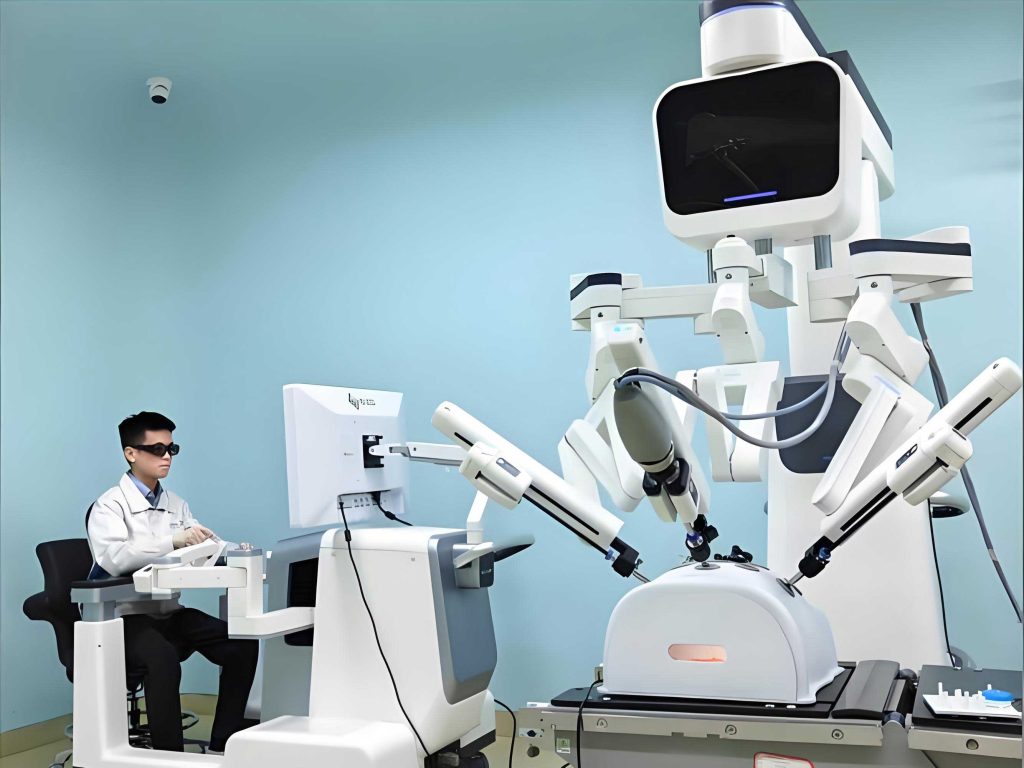
Moreover, we are promoting军民融合产业化 by utilizing resources from defense research institutes to create clusters for civil-military integration. We support mechanisms for bidirectional technology transfer between military and civilian sectors, such as establishing a创新创业中心 for aerospace军民融合. This includes developing functional platforms for民用航空电子研发与转化, facilitating the transfer of军民融合技术成果. The integration of defense technologies into civilian applications, including医疗机器人, can accelerate innovation and provide dual-use solutions.
Collaboration with diverse entities is key. We are deepening partnerships with state-owned enterprises, supporting foreign companies in opening创新资源, and vigorously fostering innovation in private enterprises. Agreements with large state-owned groups help transform old industrial bases and traditional parks, expanding industrial space and承接成果转化项目. Foreign R&D centers are encouraged to participate in科创中心建设,打造开放式创新平台 to promote cross-border flow of innovation要素. Companies like强生 and美敦力 have initiated innovation centers for industry incubation. For small and medium-sized private enterprises, we承接长三角创新挑战赛 to release technology demands, connecting them with科技成果, experts, capital, and talent from the长三角协同创新网络, thereby enhancing their技术创新能力和核心竞争力.
The construction of a global network is central to our vision. We aim to leverage the示范区’s区位优势 and the international resources of虹桥商务区 to focus on承接国际技术转移. This involves building the上海国际技术交易市场 with the示范区 as the core and the Yangtze River Delta as the primary辐射区. Key components include a global technology交易成果展示中心, a hub for major科技类展会活动, clusters for domestic and international优质技术转移服务机构, and a一站式服务与交易大厅 for technology transfer. This network will enhance connectivity and facilitate the flow of innovations, including those in医疗机器人.
In terms of institutional support, we have attracted three major市级平台机构: the华东版权登记大厅, the上海知识产权交易中心南部分中心, and the国家技术转移东部中心闵行分中心. We are大力发展科技服务业,引进和培育优秀科技服务机构 to support the专业化 and市场化 development of技术转移机构. These efforts are complemented by policies from the上海市科委, which prioritizes piloting reform measures in the示范区, such as exploring高校成果转移转化服务体系建设, encouraging科技成果披露制度,完善成果转化专业服务人员的激励机制, and建设上海高校知识产权运营创新中心.
For instance, the上海科技成果信息库 will be率先筹备建设 in the示范区, guiding publicly funded科技成果 into the database and encouraging non-funded international innovations to be汇交. The上海市科委 will encourage专业服务机构 to深度挖掘成果信息,盘活成果资源. Additionally, efforts are underway to构建技术转移网络 domestically, with the示范区 as the core and the Yangtze River Delta as the协同网络, exploring服务一体化,政策协同化, and交易标准化. Internationally, we are建设国际技术转移交流展示平台 to provide “一站式”服务 for overseas projects, promoting the率先实践 of海外科技创新成果 in the示范区. The上海市科委 will guide various创新资源 to aggregate in the示范区.
These policies have spurred the emergence of技术转移机构 characterized by服务专业化,人才高端化, and模式多元化, which are valuable resources for推动科技成果转移转化. The上海市科委 will actively promote the集聚和发展壮大 of these机构 in our district. Furthermore, through various创新创业活动, the上海市科委 helps营造良好的创新创业氛围和成果转化生态. Special tasks and key projects will be arranged within the示范区 to构建完善的科技成果转移转化服务体系 while promoting高质量 development.
The上海市科委 is also seeking科技部转移转化引导基金 to support the establishment of成果转化基金 in the示范区,引导社会资本加大投入 to provide支撑和保障 for建设发展. Under this support, the示范区建设 will聚全市之力共同推进. A领导小组 will be formed under the市促进科技成果转移转化联席会议 to coordinate and advance重大问题进行协调和推进 in the示范区建设 process.
To quantify our progress, we use metrics and formulas to evaluate innovation efficiency. For example, the成果转化率 can be expressed as: $$ \text{Conversion Rate} = \frac{N_c}{N_t} \times 100\% $$ where \(N_c\) is the number of commercialized innovations and \(N_t\) is the total innovations generated. Similarly, the economic impact of医疗机器人 development can be modeled using growth equations: $$ \text{Growth in医疗机器人 Sector} = \alpha \cdot I_{rd} + \beta \cdot C_{collab} $$ where \(I_{rd}\) represents R&D investment, \(C_{collab}\) denotes collaboration intensity, and \(\alpha, \beta\) are coefficients. These formulas help us track performance and optimize strategies.
| Metric | Formula | Target Value |
|---|---|---|
| Technology Transfer Efficiency | $$ E_{tt} = \frac{T_{transferred}}{T_{available}} $$ | > 60% |
| Innovation Index | $$ I_{innov} = \sum_{i} w_i \cdot S_i $$ where \(S_i\) are sector scores | Annual increase of 10% |
| 医疗机器人 Adoption Rate | $$ A_{mr} = \frac{U_{mr}}{U_{total}} \times 100\% $$ | 20% by 2025 |
| Economic Multiplier from医疗机器人 | $$ M_{mr} = \frac{\Delta GDP_{mr}}{\Delta I_{mr}} $$ | > 3.0 |
Looking ahead, we are committed to advancing示范 in five areas:技术网络全球化,科技资源共享化,创新主体多元化,科技服务专业化, and军民融合产业化. This includes strengthening international collaborations, such as supporting joint research institutes with foreign universities for转化科学与技术 in fields like生物医药,基因编辑, and细胞治疗. The医疗机器人研究院 will play a pivotal role in this ecosystem, driving advancements in robotic-assisted surgery, diagnostics, and telemedicine. We envision a future where医疗机器人 technologies developed here are exported globally, contributing to healthcare solutions worldwide.
In conclusion, the transformation from an old industrial zone to a national科技成果转移转化示范区 is a complex but rewarding journey. By fostering innovation, building robust networks, and emphasizing key sectors like医疗机器人, we are creating a sustainable model for economic growth. The integration of表格 and formulas into our planning ensures data-driven decision-making, while the support from higher authorities amplifies our efforts. As we move forward, the focus on医疗机器人 will remain central, symbolizing our commitment to cutting-edge technology and human-centric innovation. The journey is ongoing, and with collective effort, we aim to set a benchmark for regions worldwide.