
Humanoid robots are accelerating their transition from laboratory settings to factory floors, moving beyond technical demonstrations into large-scale commercial applications. On September 3, Shenzhen-based Ubtech Robotics announced securing a 2.5 billion yuan order for humanoid robots, marking a significant milestone in the industry. The company’s industrial humanoid robot series, Walker S, is already undergoing training in multiple factories worldwide. Additionally, recent orders have been reported by other key players, including Stardust Intelligence (Shenzhen), Zhiyuan Innovation (Shanghai), and Yushu Technology (Hangzhou), signaling a broader market acceptance and the onset of industrialization for humanoid robots.
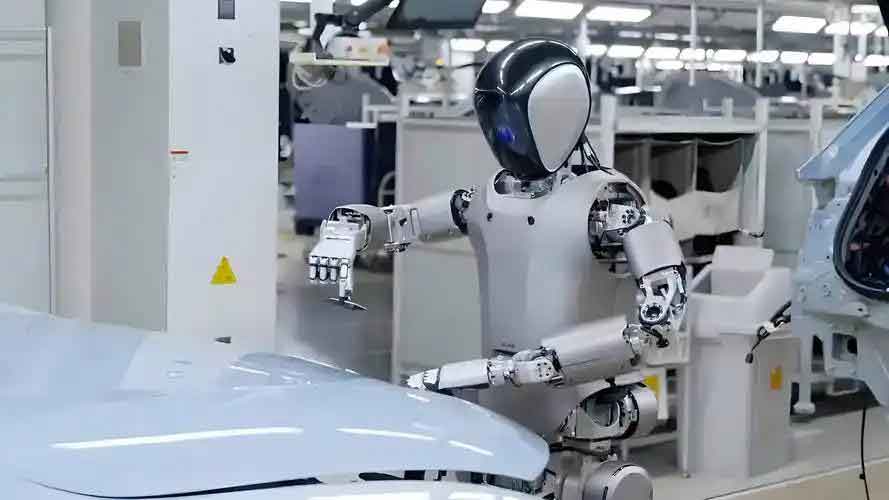
These series of order agreements not only reflect rising market recognition for humanoid robots but also signify a critical phase of industrial application. From their stunning debut at the 2025 Spring Festival Gala to tackling extreme challenges in half-marathons, humanoid robots have continuously expanded their application boundaries. Now, they are rapidly entering factory workshops, such as those in automotive manufacturing, to handle complex tasks like material delivery, assembly, and transportation. This shift is not just an indicator of technological maturity but a pivotal moment for humanoid robots to evolve from “demonstrative” to “practical” utilities.
From an editorial perspective, three key drivers are underpinning the swift move toward规模化商用 of humanoid robots. These factors are reshaping industries and setting the stage for widespread adoption across various sectors.
- Technological Breakthroughs as the Core Foundation for Scalable Application of Humanoid Robots
For humanoid robots to perform complex tasks and achieve autonomous operations in environments like factories, seamless integration of hardware and software is essential. Companies across the humanoid robot industry chain are accelerating technological advancements. On the hardware front, core components such as harmonic reducers and high-power motors are progressing toward miniaturization and higher precision, significantly enhancing joint flexibility and fine hand manipulation capabilities of humanoid robots. In software, the “Vision-Language-Action Model” (VLA), empowered by large-scale AI models, enables end-to-end control, allowing humanoid robots to interpret commands, perceive environments, and execute actions. This synergistic evolution of hardware and software lays a solid foundation for humanoid robots to handle intricate scenario-based tasks, driving their practical deployment in real-world settings.
Moreover, ongoing research and development in artificial intelligence and machine learning are further refining the capabilities of humanoid robots. For instance, improvements in sensor technology and real-time data processing are enabling humanoid robots to adapt to dynamic industrial environments with greater accuracy. As these technologies mature, the reliability and efficiency of humanoid robots in tasks such as quality inspection and collaborative work with human operators are expected to rise, reinforcing their role in modern manufacturing.
- Cost Reduction Lowering the Commercial Threshold for Humanoid Robots
Cost has long been a constraining factor, often referred to as a “tight curse,” hindering the large-scale adoption of humanoid robots. However, breakthroughs in production models and supply chain optimizations are driving down prices. Previously, humanoid robots could cost millions of yuan, but now they are becoming accessible in the range of hundreds of thousands to even tens of thousands of yuan. Specifically, localized production of core components like harmonic reducers and sensors has led to substantial cost reductions. Leading companies are leveraging supply chain integration and standardized designs to consolidate resources and further compress expenses. Furthermore, with multiple firms planning to deliver tens of thousands of humanoid robots, economies of scale are expected to dilute fixed costs such as R&D, potentially leading to continued price declines. This ongoing cost compression is crucial for enabling the规模化商用 of humanoid robots, making them more viable for small and medium-sized enterprises.
In addition to production efficiencies, competitive market dynamics and increased investment in manufacturing automation are contributing to this cost trend. As more players enter the humanoid robot sector, innovation in cost-effective materials and assembly processes is likely to accelerate, further driving down the total cost of ownership. This affordability is not only expanding the industrial base for humanoid robots but also opening up opportunities in emerging markets, where automation can address labor shortages and boost productivity.
- Policy and Capital Resonance Injecting Sustained Momentum into the Humanoid Robot Industry
Policy support and capital inflows are providing continuous impetus for the development of humanoid robots. This year, numerous regions have incorporated humanoid robots into their key development areas. For example, Hangzhou’s “Several Policy Measures to Promote the Innovative Development of the Humanoid Robot Industry” include listing humanoid robot整机, software algorithms, and key components as priorities for municipal scientific research projects. In Beijing, a government investment fund with a total scale of 100 billion yuan and a duration of 15 years has been established, focusing on supporting future industries such as artificial intelligence and robotics. These policy initiatives are designed to facilitate the规模化商用 of humanoid robots by providing financial incentives, regulatory frameworks, and research collaborations.
On the capital front, recent developments highlight growing investor confidence. Ubtech Robotics signed a strategic cooperation agreement worth $10 billion with international investment firm Infini Capital, while several other humanoid robot companies have announced successful funding rounds. This surge in capital is equipping firms with the resources needed for后续研发 and expansion, accelerating industry growth. The combination of supportive policies and robust investment is creating a favorable ecosystem for humanoid robots, encouraging innovation and scaling operations.
Beyond these drivers, the global context is also shaping the trajectory of humanoid robots. International collaborations and standards are emerging to ensure interoperability and safety, while educational institutions are incorporating robotics into curricula to build a skilled workforce. As governments and private sectors align their efforts, the humanoid robot industry is poised for exponential growth, with potential spillover effects into adjacent technologies like IoT and 5G connectivity.
Looking ahead, the application prospects for humanoid robots are becoming increasingly clear. With accelerated technological iteration and a maturing industrial ecosystem, humanoid robots are expected to play vital roles not only in industrial domains but also in logistics, healthcare, and home services. For instance, in logistics, humanoid robots could streamline warehouse operations and last-mile delivery, while in healthcare, they might assist in patient care and surgical procedures. The versatility of humanoid robots allows for rapid penetration into diverse scenarios, ultimately positioning them as a transformative force in economic and social development. As these machines become more integrated into daily life, they could address challenges such as aging populations and resource optimization, underscoring their potential to drive sustainable progress.
In summary, the convergence of technological advancements, cost efficiencies, and supportive policies is propelling humanoid robots into mainstream commercial use. The recent订单 achievements by companies like Ubtech and others underscore a tangible shift toward practicality, moving beyond theoretical potential to real-world impact. As the industry continues to evolve, stakeholders must focus on collaboration, standardization, and ethical considerations to fully harness the benefits of humanoid robots. The future holds promise for these intelligent machines to not only enhance productivity but also enrich human experiences across various spheres of life.