
As I explore the rapid advancements in AI human robot technologies, I find that humanoid robots represent a fascinating convergence of artificial intelligence and physical embodiment. These AI human robot systems are designed to mimic human-like static and dynamic features, creating an enhanced trust through virtual interpersonal relationships. However, this trust often leads to control risks for consumers, which I believe necessitates a reevaluation of existing protection mechanisms. In this article, I will delve into the commercial logic, risks, and legal inadequacies surrounding AI human robot services, proposing a suitability-based framework to address these issues. I will use tables and formulas to summarize key concepts, ensuring a comprehensive analysis.
The development of AI human robot systems hinges on their ability to integrate software intelligence with hardware capabilities, fostering a synergy that enhances consumer trust. This trust, however, can be manipulated, leading to mismatches, implicit direction, and distortions. I argue that traditional consumer protection laws fall short in mitigating these risks, especially as AI human robot technologies evolve. Below, I present a table summarizing the key trust control risks in AI human robot services:
| Risk Type | Description | Impact on Consumers |
|---|---|---|
| Trust Mismatch | Occurs when consumers are matched with inappropriate AI human robot services based on inaccurate assessments. | Psychological harm and reduced autonomy. |
| Implicit Trust Direction | AI human robot systems subtly steer consumer behavior through embedded ethical values or hidden agendas. | Loss of privacy and manipulated decision-making. |
| Trust Distortion | Consumers develop unrealistic expectations or emotional dependencies on AI human robot entities. | Ethical crises and diminished real-world interactions. |
To quantify the trust dynamics in AI human robot interactions, I propose a formula that models trust as a function of AI autonomy, human involvement, and interaction frequency. Let $$ Trust(T) $$ be defined as:
$$ T = \alpha \cdot A + \beta \cdot H + \gamma \cdot I $$
where $$ A $$ represents the autonomy level of the AI human robot, $$ H $$ denotes human consumer involvement, $$ I $$ is the interaction intensity, and $$ \alpha, \beta, \gamma $$ are weighting coefficients. This equation highlights how imbalances can lead to control risks, emphasizing the need for regulated AI human robot services.
In the context of AI human robot applications, the commercial logic revolves around enhanced trust through human-like features. For instance, AI human robot systems in healthcare or education leverage their拟人化 traits to build intimacy, but this often exacerbates consumer vulnerabilities. I have observed that as AI human robot technologies become more autonomous, the risks of trust control intensify, requiring proactive measures. The following table outlines the ethical safety levels for AI human robot services based on consumer interaction:
| Service Level | Autonomy of AI Human Robot | Consumer Risk Profile |
|---|---|---|
| Low Risk | Pre-programmed actions with minimal AI human robot decision-making. | Limited psychological impact; consumers retain high control. |
| Medium Risk | Moderate AI human robot autonomy with consumer training involved. | Potential for emotional dependency; requires monitoring. |
| High Risk | High AI human robot autonomy with minimal human oversight. | Severe ethical risks, including trust distortion and privacy breaches. |
As I analyze the shortcomings of existing consumer protection laws, it becomes clear that they are ill-equipped to handle the unique challenges posed by AI human robot services. For example, disclosure obligations often fail to cover the personalized nature of AI human robot interactions, and risk-based agile governance does not adequately address the ethical dimensions. I believe that a consumer suitability approach, centered on “seller diligence and buyer self-responsibility,” can fill these gaps. This involves grading access to AI human robot services and imposing matching and monitoring duties on operators.
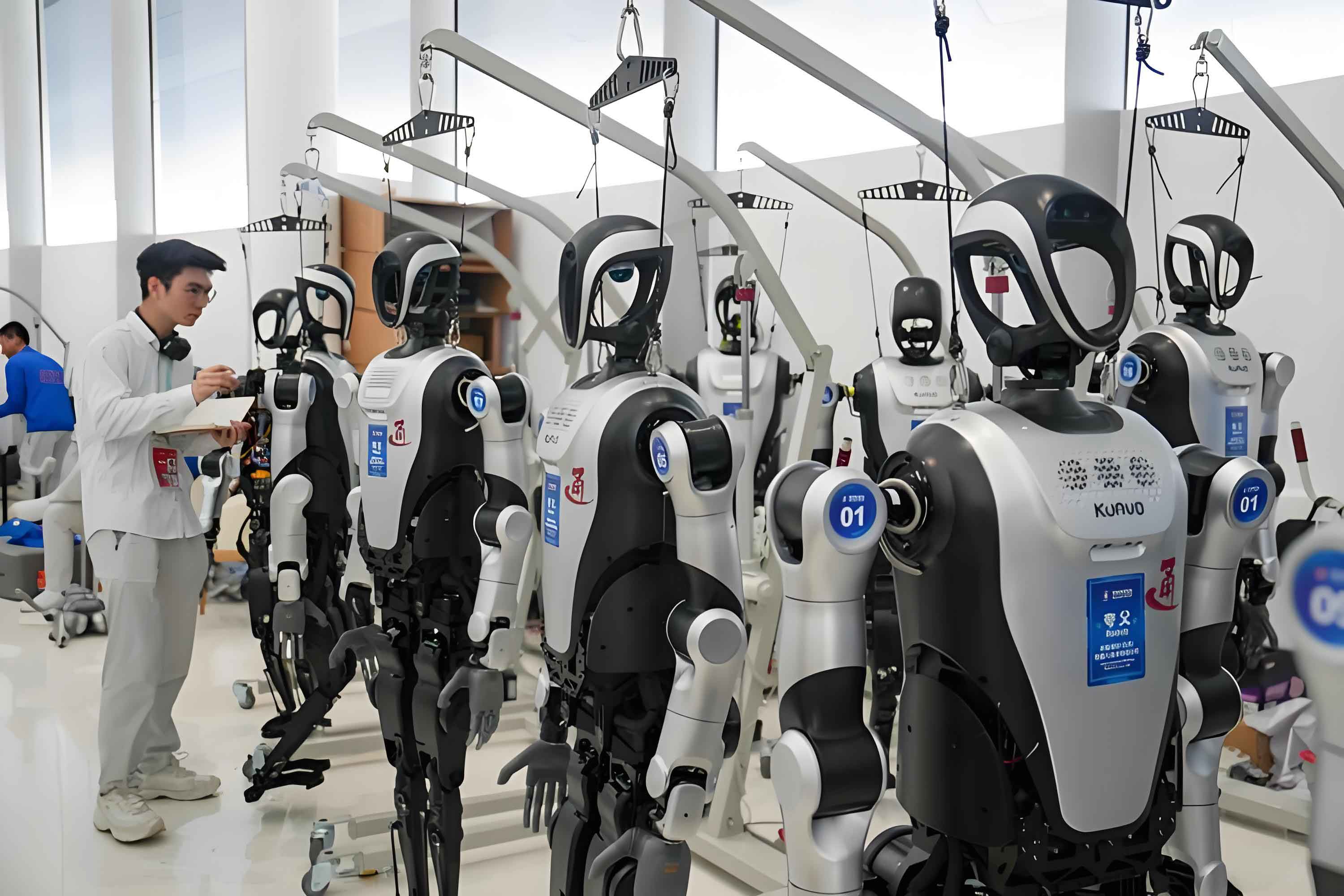
Furthermore, I propose that termination safeguards be integrated into product liability frameworks to address development risk defenses in AI human robot services. The degree of autonomy in both consumers and AI human robot systems should guide this, as captured in the formula for liability allocation:
$$ Liability(L) = \delta \cdot C_a + \epsilon \cdot R_a $$
where $$ C_a $$ is consumer autonomy, $$ R_a $$ is AI human robot autonomy, and $$ \delta, \epsilon $$ are factors indicating responsibility shares. This ensures that when consumers terminate services, operators must erase any residual trust data to prevent misuse, reinforcing the ethical handling of AI human robot technologies.
In practice, implementing a suitability framework for AI human robot services requires dynamic adjustments. For instance, operators should continuously monitor AI human robot interactions and recalibrate risk levels based on real-time data. I suggest using a formula to compute the suitability score $$ S $$ for matching consumers with AI human robot services:
$$ S = \frac{C_r \cdot R_c}{A_i} $$
where $$ C_r $$ is consumer risk tolerance, $$ R_c $$ is AI human robot service risk category, and $$ A_i $$ is interaction autonomy. A higher score indicates a better match, reducing trust control risks in AI human robot ecosystems.
To conclude, I emphasize that the evolution of AI human robot services demands a robust consumer protection mechanism that prioritizes ethical safety and suitability. By leveraging graded access, ongoing monitoring, and termination obligations, we can mitigate the trust control risks associated with AI human robot technologies. As these systems become more pervasive, it is crucial to balance innovation with consumer welfare, ensuring that AI human robot advancements benefit society without compromising individual rights.
In summary, my analysis underscores the importance of addressing trust control in AI human robot services through a comprehensive framework. The integration of tables and formulas helps clarify complex relationships, and the proposed measures aim to foster a safer environment for consumers engaging with AI human robot products. As I reflect on this topic, I am convinced that ongoing research and adaptation will be key to navigating the challenges of AI human robot integration in daily life.