
On September 12, 2026, UBTech’s Liuzhou Industrial Humanoid Robot Super Smart Factory was put into production. The facility is positioned as the world’s first humanoid robot intelligent manufacturing benchmark factory adapted to ten-thousand-unit capacity. The start of production in Liuzhou, Guangxi, marks a significant step for industrial humanoid robots in China and for the region’s intelligent manufacturing ambitions. The factory is designed to produce Walker S series and Cruzr series embodied intelligent industrial humanoid robots. According to the production design takt, one industrial humanoid robot can roll off the line every 10 minutes, and the annual planned capacity exceeds 10,000 units.
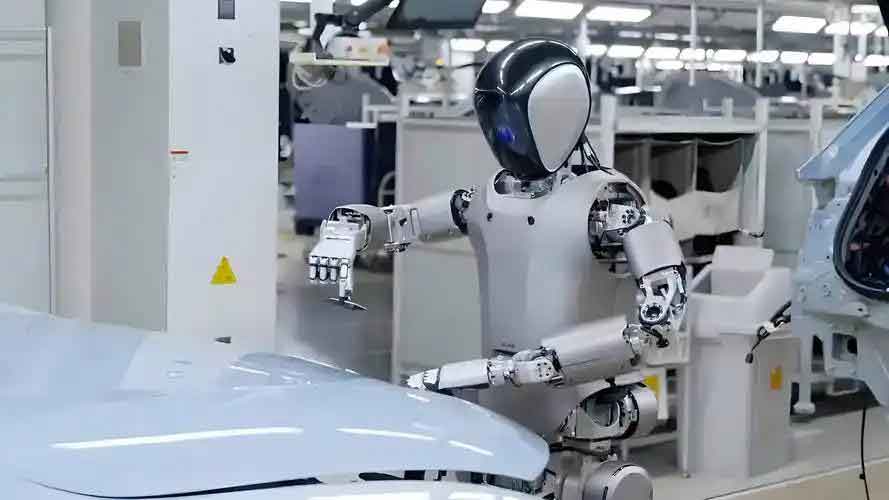
The factory covers 14,000 square meters and has a building height of 13.8 meters. Its production system is supported by an industrial simulation system for intelligent planning and a digital smart brain for full-domain scheduling. The project realizes a “robots making robots” new quality productive forces intelligent manufacturing model. This model signals that the domestic humanoid robots industry is moving from technical prototypes and small-batch production into a new stage of large-scale, standardized, and digital mass production.
1. A Production Base Designed for Ten-Thousand-Unit Humanoid Robots Capacity
The Liuzhou Industrial Humanoid Robot Super Smart Factory is not simply another assembly plant. It is a production base conceived around the requirements of industrial humanoid robots at scale. Its stated positioning is to be the world’s first humanoid robot intelligent manufacturing benchmark factory adapted to ten-thousand-unit capacity. That positioning places the factory at the center of a broader shift in how humanoid robots are built, tested, scheduled, and delivered.
With a floor area of 14,000 square meters and a building height of 13.8 meters, the factory has been arranged to support the production of Walker S series and Cruzr series embodied intelligent industrial humanoid robots. The production design takt of one industrial humanoid robot every 10 minutes is a key indicator of the factory’s intended rhythm. It suggests a manufacturing system organized around repeatable, timed, and digitally coordinated output rather than one-off prototype development. The annual planned capacity of more than 10,000 units further underlines the scale ambition behind the project.
For industrial humanoid robots, scale is not only a matter of volume. It also involves consistency, process control, supply chain coordination, and the ability to integrate complex subsystems into a reliable product. The Liuzhou factory is therefore significant because it brings these requirements together in a single production environment. The factory is expected to support the transition of industrial humanoid robots from demonstration and trial use toward broader deployment in industrial settings.
| Key Item | Details |
|---|---|
| Location | Liuzhou, Guangxi |
| Factory Type | Industrial Humanoid Robot Super Smart Factory |
| Positioning | World’s first humanoid robot intelligent manufacturing benchmark factory adapted to ten-thousand-unit capacity |
| Floor Area | 14,000 square meters |
| Building Height | 13.8 meters |
| Main Products | Walker S series and Cruzr series embodied intelligent industrial humanoid robots |
| Production Takt | One industrial humanoid robot every 10 minutes |
| Annual Planned Capacity | More than 10,000 units |
| Production Model | Robots making robots, supported by industrial simulation and a digital smart brain |
| Digital Manufacturing Partner | Siemens |
| Regional Development Path | R&D in Beijing, Shanghai and Guangzhou, integration in Guangxi, and application in ASEAN |
2. Walker S Series and Cruzr Series Humanoid Robots
The factory will mainly produce Walker S series and Cruzr series embodied intelligent industrial humanoid robots. These product lines represent the industrial focus of the facility. The factory is not described as a general-purpose electronics plant or a conventional automation equipment line. Its identity is tied specifically to humanoid robots designed for industrial use and embodied intelligence.
The term embodied intelligent industrial humanoid robots points to a combination of physical form, sensing, decision-making, and action in an industrial context. Such humanoid robots are expected to operate in environments where movement, manipulation, perception, and coordination with other systems matter. The Liuzhou factory is intended to manufacture these humanoid robots at a scale that can support wider industrial adoption.
The Walker S series and Cruzr series are named as the main products of the plant. The production design is organized around their requirements. Because industrial humanoid robots contain many components and require precise assembly, their manufacture demands a high degree of process discipline. The factory’s digital systems and production model are intended to meet that demand. By focusing on these series, the factory can concentrate its scheduling, logistics, quality control, and assembly processes on the needs of humanoid robots rather than treating them as a marginal product category.
The presence of these product lines in Liuzhou also connects the factory to a broader industrial ecosystem. Industrial humanoid robots require advanced components, software, sensors, actuators, and integration services. A factory producing them at ten-thousand-unit capacity can help stimulate demand for upstream suppliers and create opportunities for downstream integration and application partners. That ecosystem effect is central to the project’s significance.
3. A Manufacturing Model in Which Robots Make Robots
A defining feature of the Liuzhou factory is its “robots making robots” model. The project relies on an industrial simulation system for intelligent planning and a digital smart brain for full-domain scheduling. This combination is intended to coordinate production across the factory rather than managing each station in isolation. The result is described as a new quality productive forces intelligent manufacturing model.
In this model, industrial humanoid robots are not only the products being built. They are also participants in the production process. UBTech has integrated multiple self-developed embodied intelligent humanoid robots into production operations. These humanoid robots are used within the factory to help create human-machine collaborative intelligent manufacturing scenarios. The factory therefore becomes both a production site and a proving ground for humanoid robots in industrial work.
The “robots making robots” approach is important because it tests humanoid robots in realistic manufacturing conditions. The factory environment includes movement, transfer, assembly, scheduling, and coordination challenges. By deploying humanoid robots in these operations, UBTech can gather experience and refine the interaction between human workers, robotic systems, and digital management platforms. This is a practical way to advance industrial humanoid robots from isolated demonstrations toward integrated production roles.
The industrial simulation system supports intelligent planning. It allows production layouts, process flows, and scheduling decisions to be modeled and coordinated before and during operations. The digital smart brain provides full-domain scheduling, linking different parts of the factory into a unified digital system. Together, these systems aim to reduce friction in the production of humanoid robots and to support a more flexible, responsive, and scalable manufacturing environment.
The phrase “robots making robots” also captures the ambition of the project. It suggests a future in which humanoid robots contribute directly to the manufacture of other humanoid robots. In Liuzhou, that idea has moved into an operating factory. The factory is positioned to demonstrate how humanoid robots can be both a strategic product and a productive force within intelligent manufacturing.
4. Digital Manufacturing Foundation with Siemens
UBTech has joined with Siemens to create a dedicated digital intelligent manufacturing foundation for humanoid robots. This collaboration is intended to solve specific pain points in the mass production of humanoid robots. Those pain points include numerous parts, high transfer frequency, high assembly precision, and rapid product iteration. Each of these challenges is closely related to the nature of humanoid robots.
Humanoid robots contain many parts. Their structure combines mechanical, electronic, sensory, and computing elements. Managing these parts requires coordinated procurement, inventory, logistics, and assembly. High transfer frequency adds another layer of complexity because components and subassemblies must move between stations efficiently and safely. High assembly precision demands strict process control and reliable quality systems. Rapid product iteration means the manufacturing system must be able to adapt as designs, software, and components evolve.
The digital manufacturing foundation developed with Siemens is intended to address these realities. It provides a dedicated digital base for the production of humanoid robots. Rather than relying on disconnected tools or manual coordination, the factory can use digital systems to link planning, scheduling, production, and iteration. This is especially important when the product category is new and changing quickly.
The partnership also reflects a broader trend in intelligent manufacturing. Advanced robot production requires advanced digital production systems. The complexity of humanoid robots makes this need even more urgent. By working with Siemens, UBTech aims to build a manufacturing foundation that can support the scale, precision, and speed required for industrial humanoid robots. The factory in Liuzhou is the physical expression of that digital foundation.
The digital foundation is not an isolated technical feature. It supports the factory’s ability to produce humanoid robots at a ten-thousand-unit capacity. It helps coordinate the many parts and processes involved. It also supports rapid iteration, which is essential in a field where hardware and software continue to develop. The combination of digital planning, full-domain scheduling, and human-machine collaboration gives the factory a distinctive manufacturing model.
5. From First Unit to Thousand-Unit Mass Production and Ten-Thousand-Unit Capacity
In just over a year, Liuzhou UBTech has moved from a first unit breakthrough to thousand-unit mass production and then to ten-thousand-unit capacity. This trajectory is a notable achievement in the development of industrial humanoid robots. It shows that the project has advanced through several stages in a relatively short period.
The first unit breakthrough represents the initial proof that humanoid robots could be produced in the Liuzhou context. Thousand-unit mass production represents a move beyond one-off builds toward repeatable manufacturing. Ten-thousand-unit capacity represents a further step: the creation of a production system designed for much larger output. Each stage brings different challenges. The first stage tests technical feasibility. The second tests process repeatability. The third tests scale, supply chain strength, and digital coordination.
The Liuzhou factory is positioned at the third stage. Its annual planned capacity exceeds 10,000 units, and its production design takt is one industrial humanoid robot every 10 minutes. These figures describe an intended production rhythm and scale. They do not stand alone. They depend on the factory’s digital systems, its partnership with Siemens, its product focus on Walker S series and Cruzr series humanoid robots, and its use of humanoid robots within production operations.
The progression from first unit to thousand-unit mass production to ten-thousand-unit capacity also has symbolic value. It suggests that industrial humanoid robots are moving from laboratory and prototype settings into a more mature manufacturing phase. The Liuzhou project is presented as evidence of that transition. It is described as a milestone that marks the domestic humanoid robots industry’s entry into large-scale, standardized, and digital mass production.
6. Liuzhou’s Differentiated Development Path
The Liuzhou project is closely connected to a differentiated development path: research and development in Beijing, Shanghai and Guangzhou; integration in Guangxi; and application in ASEAN. This path is intended to combine advanced research capacity, regional integration capabilities, and market application opportunities. The factory’s start of production is described as a vivid practice of that approach.
Under this model, Liuzhou and Guangxi play an integration role. They connect research and development from major Chinese cities with manufacturing, testing, and deployment in Guangxi. ASEAN markets then provide application opportunities. This division of labor is designed to leverage different regional strengths. It also gives the Liuzhou factory a wider strategic purpose beyond local production.
The project is also described as a two-way journey and deep integration between UBTech and Liuzhou manufacturing. UBTech brings technology, brand, and humanoid robots expertise. Liuzhou brings industrial foundations, manufacturing experience, and regional connectivity. The combination is intended to create a new benchmark for Liuzhou’s artificial intelligence terminal and robot industry.
This benchmark matters because the development of humanoid robots depends on more than isolated technological breakthroughs. It requires manufacturing ecosystems, supply chain coordination, application scenarios, and market access. The differentiated path attempts to bring these elements together. The Liuzhou factory is an important node in that effort. It is designed to produce humanoid robots at scale while also supporting the broader intelligent robot industry in Guangxi and beyond.
7. Impact on Liuzhou’s Industrial Transformation
The start of production at the super smart factory is expected to help Liuzhou transform from a traditional industrial city into a new industrialization demonstration area. It is also intended to inject strong momentum into the building of an intelligent manufacturing strong city. This is a significant shift for a city with a traditional industrial base. The factory connects that base to artificial intelligence, robotics, and digital manufacturing.
The project is expected to leverage technology, brand, and ecosystem advantages. It will promote the deployment of full-stack technology for humanoid robots in more industrial scenarios in Liuzhou. This means the factory is not only a production site. It is also a platform for applying humanoid robots in real industrial environments. Those applications can generate experience, improve products, and demonstrate value to potential users.
The factory is also expected to drive upstream and downstream supporting enterprises to cluster around the humanoid robots industry. Upstream suppliers can provide components, materials, and specialized services. Downstream partners can provide integration, application development, and market access. As these enterprises gather, they can help build a more complete and more resilient industrial chain. That chain can support the continued growth of humanoid robots manufacturing and adoption.
The broader goal is to create an intelligent robot industry highland based in Guangxi, serving the whole country, and radiating ASEAN. The Liuzhou factory is a central part of that vision. It combines production capacity, digital manufacturing, humanoid robots deployment, and regional strategy. Its impact is therefore both local and regional.
8. Significance for the Humanoid Robots Industry
The Liuzhou factory is significant for the humanoid robots industry because it addresses the challenge of scale. For years, many humanoid robots advances have been demonstrated through prototypes, research platforms, and limited pilot projects. The movement toward mass production requires different capabilities. It requires standardized processes, reliable supply chains, digital management, and repeatable assembly. The Liuzhou factory is designed around these requirements.
Its positioning as a ten-thousand-unit capacity factory for industrial humanoid robots is a statement about the direction of the industry. It suggests that humanoid robots are being treated as manufacturable industrial products, not only as experimental systems. The production design takt of one industrial humanoid robot every 10 minutes and the annual planned capacity of more than 10,000 units reinforce that direction. These are not merely production targets. They represent an intended manufacturing system.
The use of humanoid robots within the production process adds another layer of significance. When humanoid robots help make other humanoid robots, the factory becomes a test of human-machine collaboration. It also becomes a demonstration of how humanoid robots can be integrated into industrial workflows. This can help accelerate learning and improvement in both product design and production operations.
The partnership with Siemens and the creation of a dedicated digital manufacturing foundation also matter for the humanoid robots industry. They show that the production of humanoid robots requires purpose-built digital infrastructure. The complexity of humanoid robots, with numerous parts, high transfer frequency, high assembly precision, and rapid product iteration, demands more than conventional manufacturing approaches. The Liuzhou factory’s digital foundation is intended to meet that demand.
In this sense, the factory is a benchmark for industrial humanoid robots. It brings together scale, standardization, digitalization, and human-machine collaboration. It also connects production to application, supply chain development, and regional market strategy. The project therefore has implications beyond Liuzhou. It contributes to the broader evolution of the humanoid robots industry.
9. Regional and ASEAN Linkages
The strategic vision for the factory includes serving the whole country and radiating ASEAN. This regional dimension is central to the project. Guangxi’s location and integration role make it a link between Chinese research and manufacturing capacity and ASEAN application markets. The Liuzhou factory is intended to support that link by producing industrial humanoid robots at scale.
ASEAN application is part of the differentiated development path. The path combines research and development in Beijing, Shanghai and Guangzhou with integration in Guangxi and application in ASEAN. This approach recognizes that humanoid robots need both advanced technology and real deployment scenarios. ASEAN markets can provide diverse industrial and service environments where humanoid robots may be applied. The factory can support those applications by supplying products and by helping build a broader ecosystem.
The goal of creating an intelligent robot industry highland based in Guangxi, serving the whole country, and radiating ASEAN is therefore closely tied to the Liuzhou factory. The factory is not only a production asset. It is also a platform for industrial cooperation, supply chain development, and application exploration. Its output can support domestic needs while also connecting to regional opportunities.
For the humanoid robots sector, regional linkages can help accelerate adoption. Different markets have different needs and operating conditions. By working across regions, manufacturers and integrators can test humanoid robots in a wider range of scenarios. The Liuzhou project is positioned to contribute to that process. Its production capacity, digital manufacturing model, and human-machine collaboration scenarios can support the development of a more complete and resilient industrial chain.
10. A New Stage for Industrial Humanoid Robots
The start of production at the Liuzhou Industrial Humanoid Robot Super Smart Factory marks a new stage for industrial humanoid robots. The factory is positioned as the world’s first humanoid robot intelligent manufacturing benchmark factory adapted to ten-thousand-unit capacity. It covers 14,000 square meters, has a building height of 13.8 meters, and mainly produces Walker S series and Cruzr series embodied intelligent industrial humanoid robots. Its production design takt is one industrial humanoid robot every 10 minutes, and its annual planned capacity exceeds 10,000 units.
These facts describe a factory designed for scale. But the project’s importance also lies in how that scale is pursued. The factory relies on an industrial simulation system for intelligent planning and a digital smart brain for full-domain scheduling. It implements a “robots making robots” new quality productive forces intelligent manufacturing model. It integrates multiple self-developed embodied intelligent humanoid robots into production operations. It creates human-machine collaborative intelligent manufacturing scenarios. It also works with Siemens to build a dedicated digital intelligent manufacturing foundation for humanoid robots.
Together, these elements address the pain points of humanoid robots production: numerous parts, high transfer frequency, high assembly precision, and rapid product iteration. They also support the transition from technical prototypes and small-batch production to large-scale, standardized, and digital mass production. The factory therefore represents more than an increase in capacity. It represents a new approach to manufacturing humanoid robots.
The Liuzhou project also reflects a broader regional strategy. It is a practice of the differentiated development path of research and development in Beijing, Shanghai and Guangzhou, integration in Guangxi, and application in ASEAN. It is a two-way journey and deep integration between UBTech and Liuzhou manufacturing. It sets a new benchmark for Liuzhou’s artificial intelligence terminal and robot industry.
As the factory enters production, it is expected to help Liuzhou transform from a traditional industrial city into a new industrialization demonstration area. It is expected to inject strong momentum into building an intelligent manufacturing strong city. It is expected to leverage technology, brand, and ecosystem advantages to promote full-stack technology for humanoid robots in more industrial scenarios in Liuzhou. It is expected to drive upstream and downstream supporting enterprises to cluster and to build a more complete and resilient industrial chain. The shared goal is an intelligent robot industry highland based in Guangxi, serving the whole country, and radiating ASEAN.
11. What the Liuzhou Factory Means for the Future of Humanoid Robots
The Liuzhou factory gives the humanoid robots industry a concrete example of what scaled industrial production can look like. It combines a defined product focus, a timed production rhythm, a large annual capacity plan, digital scheduling, and the use of humanoid robots within manufacturing. This combination is important because the future of humanoid robots depends on both technological capability and production capability.
Industrial humanoid robots must be reliable, repeatable, and adaptable. They must be manufactured with precision and supported by strong supply chains. They must also be tested in real environments. The Liuzhou factory is designed to support all of these needs. Its digital manufacturing foundation, developed with Siemens, is intended to manage complexity. Its “robots making robots” model is intended to deepen human-machine collaboration. Its ten-thousand-unit capacity positioning is intended to support scale.
The factory’s location in Liuzhou adds a further dimension. It connects a traditional industrial region to advanced robotics and artificial intelligence. It supports the transformation toward new industrialization. It also links production in Guangxi with application opportunities in ASEAN. This regional role gives the project a reach beyond a single factory or product line.
For the humanoid robots sector, the Liuzhou factory is a signal that the industry is moving toward a more mature phase. The transition from technical prototypes and small-batch production to large-scale, standardized, and digital mass production is a major step. It requires coordination across design, manufacturing, supply chain, software, and application. The Liuzhou project is positioned to contribute to that transition.
As production begins, the factory will be watched as a test of whether industrial humanoid robots can be built at scale with consistency and digital control. It will also be watched as a test of whether humanoid robots can be meaningfully integrated into the manufacturing process itself. The answers to these questions will shape the next phase of the humanoid robots industry.
The Liuzhou Industrial Humanoid Robot Super Smart Factory therefore stands as a milestone. It brings together the production of humanoid robots, the deployment of humanoid robots, and the digital infrastructure needed to support both. It reflects the ambition to build a complete, resilient, and internationally connected intelligent robot industry. It also reflects the practical work of turning that ambition into operating capacity. The start of production is not the end of the journey. It is the beginning of a larger test: how far humanoid robots can go when manufacturing scale, digital intelligence, and regional strategy are brought together.