
In a significant corporate move, Unitree Technology has announced a name change, removing the “Hangzhou” geographic identifier from its official title, now operating as “Unitree Technology Co., Ltd.” This decision, disclosed through a report submitted by its IPO advisor CITIC Securities to the China Securities Regulatory Commission’s online service platform, underscores the company’s strategic pivot towards a global footprint. The renaming occurs during the initial public offering辅导 period, accompanied by thorough analyses of proposed fundraising projects to align with future growth strategies, marking a critical phase in Unitree’s IPO preparations.
The elimination of “Hangzhou” from the company name reflects a deeper brand evolution aimed at projecting a more streamlined and international image. For an enterprise on the cusp of going public, this adjustment signals a transition from a regional player to a nationwide and eventually global entity, facilitating easier access to international capital and markets. This rebranding is not merely cosmetic but a calculated step to reinforce Unitree’s ambitions in the competitive landscape of humanoid robots, a sector poised for exponential growth.
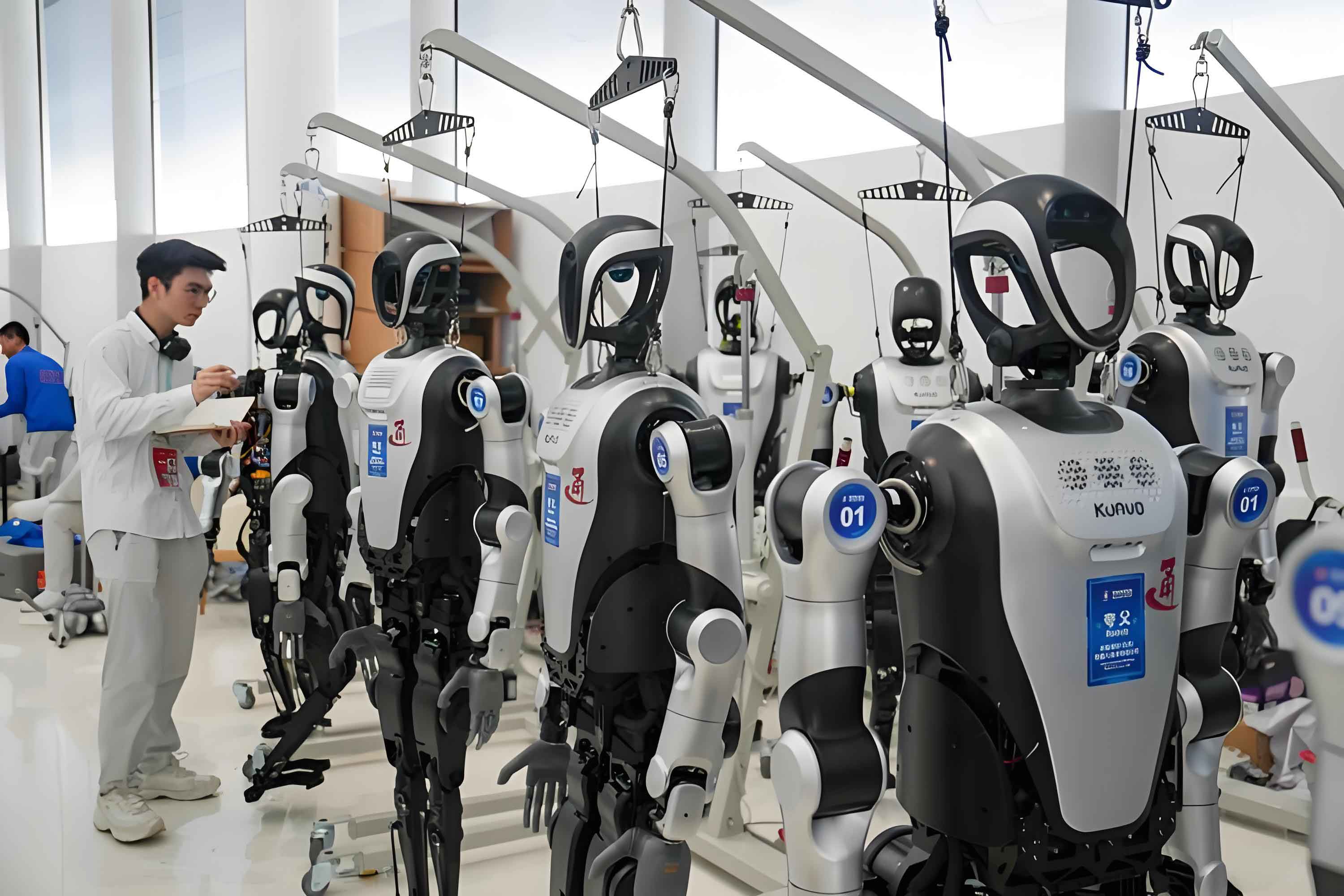
Unitree Technology’s journey in robotics, particularly in humanoid robots, has been marked by consistent innovation and market disruption. Founded in 2016 by Wang Xingxing, the company initially focused on quadruped robots, gradually expanding into humanoid robots with groundbreaking releases. Key milestones include the 2017 launch of Laikago, a high-performance, low-cost quadruped robot; the 2021 Spring Festival Gala appearance of “Ben Ben,” a quadruped robot; the 2022 Winter Olympics opening ceremony featuring 109 Go1 robots; the 2023 debut of H1, China’s first full-sized general-purpose humanoid robot capable of running; and the 2024 introduction of the G1 humanoid robot priced at 99,000 yuan, making humanoid robots more accessible to consumer markets.
In 2025, Unitree accelerated its pace, with the H1 humanoid robot gracing the Spring Festival Gala stage once again, cementing its status as a trailblazer in China’s humanoid robots arena. This recognition placed Unitree among the “Hangzhou Six Little Dragons,” a group of innovative tech firms including DeepSeek, BrainCo, Qunke Technology, Yunchu Technology, and Game Science. Most recently, on October 20, 2025, the company unveiled the H2 bionic humanoid robot, standing 180 cm tall and weighing 70 kg, with enhanced human-like features and capabilities such as dancing, martial arts performances, and even modeling in attire, pushing the boundaries of what humanoid robots can achieve.
The company’s prowess in humanoid robots is underpinned by robust research and development. To date, Unitree has filed over 200 patent applications domestically and internationally, with more than 180 granted, covering critical areas like robot perception, motion control, structural design, and intelligent algorithms. This intellectual property portfolio erects a formidable technological barrier. In July 2025, Unitree’s innovations were globally acknowledged when it won an award at the World Intellectual Property Organization Global Awards in Geneva, Switzerland, standing out among 780 companies from 95 countries, a testament to its competitive edge in humanoid robots.
Unitree’s globalization efforts are already bearing fruit. During a symposium organized by the Zhejiang Provincial Market Supervision Administration on September 5, 2025, CEO Wang Xingxing revealed that the company’s clientele includes international giants like NVIDIA, Meta, and Samsung, as well as prestigious academic institutions such as Stanford University, MIT, and ETH Zurich. Both its quadruped and humanoid robots have gained popularity worldwide, highlighting the expanding reach of humanoid robots in diverse sectors.
Despite these achievements, Unitree faces challenges common in fast-growing tech sectors. At the Bund Conference in September 2025, Wang candidly addressed issues such as a severe shortage of top-tier talent and declining team efficiency amid rapid expansion. He also highlighted industry-wide hurdles, including overseas intellectual property protection, participation in standard-setting processes, and occasional instances of product imitation and infringement, which could impact the development and adoption of humanoid robots.
The global humanoid robots industry is at a pivotal juncture, with technological breakthroughs and commercial applications nearing a tipping point. Market analysts predict an imminent surge in demand for humanoid robots, driven by advancements in AI and robotics. Unitree’s name change is a strategic maneuver to position itself at the forefront of this wave. By adopting a neutral, international brand identity, the company aims to better engage with global investors and markets, leveraging the IPO to consolidate resources and secure a dominant position in the humanoid robots ecosystem.
Looking ahead, Unitree’s transformation from a regional entity to a global contender will test not only its technical capabilities in humanoid robots but also its soft skills in strategic planning, organizational management, and intellectual property safeguarding. If the company can effectively address talent gaps, enhance operational efficiency, and strengthen international IP protections, its vision of a “global robot ecosystem” centered on humanoid robots may gradually materialize. Unitree’s trajectory offers a valuable blueprint for Chinese tech firms seeking to break into high-end global manufacturing: embracing a worldwide perspective, fortifying innovation foundations, and refining management practices to thrive in the intense competition of the humanoid robots market.
- Global Expansion: Unitree’s removal of the “Hangzhou” label aligns with its strategy to tap into international markets for humanoid robots, fostering partnerships and investments beyond China.
- Technological Milestones: The company’s consistent rollout of advanced humanoid robots, such as the H1 and H2 models, demonstrates its commitment to pushing the envelope in robotics innovation.
- IPO Preparation: The name change and ongoing IPO辅导 activities are integral to Unitree’s plans to raise capital for scaling production and R&D in humanoid robots, ensuring long-term sustainability.
- Industry Challenges: Issues like talent shortages and IP risks highlight the broader obstacles facing the humanoid robots sector, necessitating collaborative efforts for resolution.
- Future Prospects: With the humanoid robots industry on the brink of mass adoption, Unitree’s global ambitions could catalyze new standards and applications, shaping the future of automation worldwide.
In summary, Unitree Technology’s rebranding initiative is a calculated step in its quest to lead the humanoid robots revolution. By shedding regional constraints and embracing a global outlook, the company not only enhances its market appeal but also sets the stage for transformative growth. As humanoid robots continue to evolve, Unitree’s journey will be closely watched as a barometer for China’s prowess in high-tech industries, underscoring the importance of innovation, adaptability, and strategic vision in the dynamic world of humanoid robots.
| Year | Event | Significance for Humanoid Robots |
|---|---|---|
| 2016 | Company founded by Wang Xingxing | Laid foundation for future innovations in humanoid robots |
| 2017 | Launch of Laikago quadruped robot | Early step towards advanced robotics, precursor to humanoid robots |
| 2021 | “Ben Ben” robot on Spring Festival Gala | Increased public visibility for robotics, including humanoid robots |
| 2022 | Go1 robots at Winter Olympics | Showcased scalability and performance of robots, influencing humanoid robots development |
| 2023 | Release of H1 humanoid robot | Marked entry into full-sized, running-capable humanoid robots |
| 2024 | Introduction of G1 humanoid robot | Made humanoid robots more affordable, expanding consumer access |
| 2025 | H1 on Spring Festival Gala; H2 unveiling | Reinforced leadership in humanoid robots with enhanced bionic features |
The progression of Unitree’s product line, from quadruped to humanoid robots, illustrates a deliberate expansion into more complex and human-like machines. Each milestone has contributed to the company’s reputation as a pioneer in humanoid robots, with the H2 model representing the latest leap in biomimicry and functionality. As humanoid robots become integral to industries like healthcare, logistics, and entertainment, Unitree’s innovations are poised to drive widespread adoption, supported by its growing patent portfolio and international recognition.
Moreover, Unitree’s engagement with global clients and academia underscores the cross-border appeal of humanoid robots. Collaborations with entities like NVIDIA and Stanford University not only validate the company’s technological advancements but also foster knowledge exchange that accelerates the evolution of humanoid robots. However, the path forward requires navigating regulatory landscapes and intellectual property challenges, particularly as humanoid robots gain prominence in diverse markets. Unitree’s proactive approach to these issues, coupled with its IPO strategy, could set a precedent for how tech firms manage growth and innovation in the humanoid robots sphere.
In the broader context, the humanoid robots industry is experiencing rapid transformation, with companies worldwide racing to develop machines that mimic human abilities. Unitree’s successes highlight China’s growing influence in this field, challenging traditional leaders from North America and Europe. By focusing on cost-effective and versatile humanoid robots, Unitree has democratized access to advanced robotics, potentially spurring new applications in everyday life. The company’s emphasis on R&D, evidenced by its numerous patents, ensures that it remains at the cutting edge of humanoid robots technology, capable of adapting to emerging trends and consumer demands.
As Unitree prepares for its IPO, the removal of the “Hangzhou” label symbolizes a break from provincial roots and an embrace of global opportunities. This shift is crucial for attracting international investors who are increasingly interested in the humanoid robots market, projected to grow substantially in the coming years. The funds raised through the IPO will likely be channeled into expanding production capacities, enhancing R&D for next-generation humanoid robots, and strengthening global supply chains. Ultimately, Unitree’s journey reflects a larger narrative of Chinese innovation in high-tech sectors, where humanoid robots serve as a catalyst for economic and technological advancement on a global scale.
In conclusion, Unitree Technology’s strategic rebranding and focus on humanoid robots position it as a key player in the ongoing robotics revolution. The company’s ability to overcome challenges related to talent, efficiency, and IP will determine its success in realizing a global ecosystem for humanoid robots. By learning from Unitree’s example, other firms can appreciate the importance of integrating local strengths with international ambitions, ensuring that humanoid robots not only transform industries but also enrich human experiences worldwide. The future of humanoid robots looks promising, with Unitree at the helm of innovation, driving progress through relentless experimentation and collaboration.