
The pervasive integration of embodied AI robot systems—encompassing autonomous vehicles, service robots, and low-altitude aerial vehicles—into the urban fabric represents more than a mere technological upgrade; it signifies the emergence of new, active agents within the city’s operational ecosystem. These systems, capable of sensing, deciding, and acting within dynamic environments, are fundamentally reshaping the logic of urban space, from macroscopic traffic flows to microscopic interior layouts. This shift demands a radical re-evaluation of traditional, exclusively human-centric planning paradigms. This article argues for a proactive approach to spatial adaptability, constructing a theoretical framework centered on the evolving “Human-Machine-Environment” (HME) triad. It posits that the physical and institutional environment must actively evolve to accommodate the operational logic of embodied AI robot systems, not as a concession to machines, but as a strategic necessity to harness their efficiency for human benefit. The ultimate goal is to orchestrate a transition towards human-machine friendly human settlements, where optimized environments liberate machines from complex navigation and conflict, enabling them to perform service tasks with higher efficiency and, in turn, returning more ground space, time, and green resources to human inhabitants.
The emergence of embodied AI robot systems as new urban actors introduces spatial demands fundamentally distinct from human needs. They occupy complementary spatial niches: service robots indoors (points), autonomous vehicles on roads (lines), and aerial vehicles in low-altitude airspace (volumes), collectively forming an integrated “ground-air-interior” spatial substrate for future urban operations.
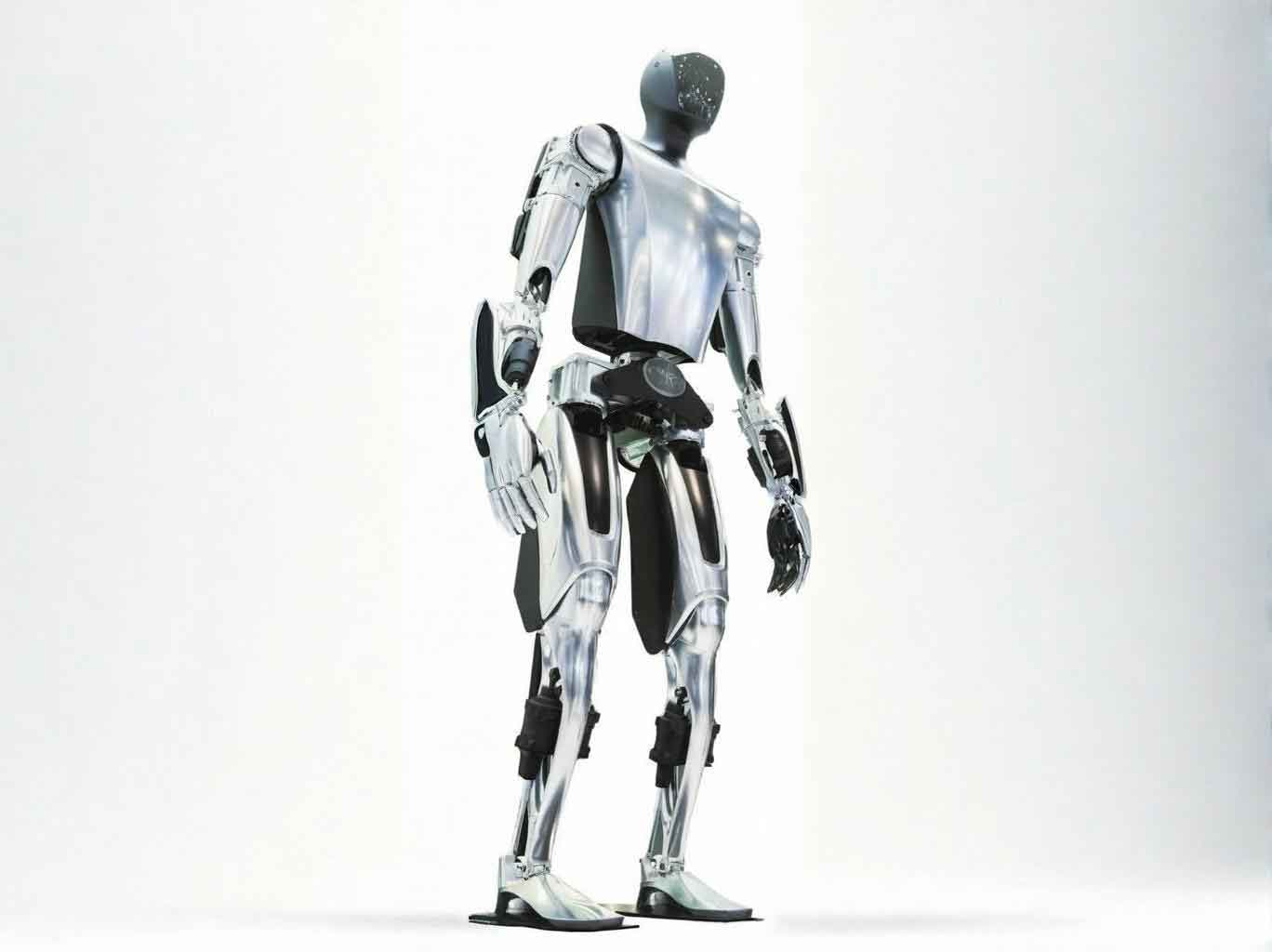
Service robots, the quintessential embodied AI robot, are transitioning from controlled industrial settings to open urban公共服务 and residential domains. Their requirements reshape微观-space logic. They demand high environmental standardization—specific door widths, gradient limits, and smooth surfaces—directly impacting transit efficiency. This necessitates dedicating space for robot workstations, docking bays, and supporting digital-physical infrastructure like charging ports and communication beacons, rather than merely co-opting human corridors. The interaction logic presents a dichotomy: designing machines to adapt to human spaces (e.g., humanoid robots) versus adapting spaces to suit machines (e.g., optimizing for wheeled robots). Given the high cost and complexity of humanoid forms, a more pragmatic and inclusive strategy is the proactive adaptation of the environment through Universal Design principles. By enhancing environmental affordances—such as implementing gentle slopes, wide corridors, and clear pathways—we can simultaneously lower deployment barriers for wheeled embodied AI robot systems and improve accessibility for the elderly and disabled, achieving a systemic “human-machine friendly” outcome.
Autonomous vehicles, a specialized class of embodied AI robot, promise transformative changes to urban mobility and structure. Their ability to communicate and coordinate enables “platooning,” dramatically increasing road capacity. More profoundly, efficient, on-demand mobility reduces the need for proximate parking, freeing vast tracts of central urban land for conversion into public green spaces or commercial uses. The infrastructure itself must evolve towards greater machine-readability, integrating dense networks of sensors and V2X (Vehicle-to-Everything) communication platforms to enable协同 scheduling. The traffic management paradigm will shift from static rules to dynamic, algorithmically mediated interactions between fleets of embodied AI robot vehicles and intelligent road infrastructure.
Low-altitude aerial vehicles, including cargo drones and eVTOLs (electric Vertical Take-Off and Landing aircraft), are adding a third dimension to urban交通 networks. They operate in a三维, volumetric space, bypassing ground-level congestion for point-to-point medium-distance travel. This necessitates a fundamental “dimensional upgrade” in urban planning: the systematic planning and management of urban airspace. The core challenge is establishing “aerial right-of-way” through strategies like airspace stratification and the designation of dedicated “flight corridors,” providing predictable and独立的 pathways for these aerial embodied AI robot systems, analogous to rail tracks in the sky.
Facing this systemic technological generational shift, the concept of spatial adaptability emerges as a critical response. It moves beyond the paradigm of passively accommodating technology or forcing technology to contort itself to fit legacy spaces. Instead, it advocates for the active, strategic evolution of the physical and institutional environment to optimally interface with the new operational logics of embodied AI robot systems. The economic logic of this approach can be modeled. Let the fixed cost of spatial adaptation be $C_s$, the number of technological agents served be $N$, the usable lifecycle of the adaptation be $T$, the per-unit cost of technological adaptation to a suboptimal environment be $C_t$, and the efficiency loss coefficient due to environmental misfit be $\eta$ (where $0 \leq \eta \leq 1$).
$$ \frac{C_s}{N \times T} < C_t \times \eta $$
The spatial adaptation strategy is socially preferable when the per-agent, per-time-unit cost of spatial改造 (left side) is less than the weighted cost of technological adaptation and its associated efficiency losses (right side). This model reveals that for高频, long-lifecycle, and highly standardized technologies like autonomous vehicle networks or low-altitude logistics, a one-time investment in spatial adaptation (dedicated lanes, flight corridors) spreads costs across many agents and years, significantly reducing total social cost and enhancing systemic efficiency. In contrast, for heterogeneous, rapidly evolving technologies, relying on the flexibility of the embodied AI robot itself may be more economical. The following table illustrates this comparative logic with hypothetical values for various technologies.
| Technology Type | N (Scale) | T (Years) | $C_t$ (Relative) | $\eta$ | $C_s$ (Relative) | Judgment | Socio-Economic Implication |
|---|---|---|---|---|---|---|---|
| Railroad Systems (19th Cent.) | Medium (~10³) | Very Long (~50) | High | 0.9 | Very High | Adaptation Wins | Technology cannot adapt to old urban patterns, prompting massive spatial重构 (rail corridors, hubs). |
| Automobiles (Early 20th Cent.) | High (~10⁵) | Long (~30) | Medium | 0.8 | High | Adaptation Wins | Legacy streets are inadequate, leading to construction of highways, overpasses, car-centric urban form. |
| Autonomous Road System | Medium (~100) | Long (~15) | Medium | 0.6 | High | Adaptation Wins | One-time spatial改造 serves multiple technological generations, offering long-term systemic收益. |
| Urban Service Embodied AI Robot | High (~1000) | Medium (~10) | Low | 0.4 | Medium | Adaptation Wins | Cost of spatial standardization is amortizable, significantly boosts human-robot协作 efficiency. |
| Low-Altitude Infrastructure | Low (~10) | Long (~20) | High | 0.8 | High | Adaptation Wins | High efficiency loss without adaptation justifies investment in airspace management and vertiports. |
| Household Appliances | Very High (~10⁷) | Medium (~10) | Low | 0.2 | Medium | Tech. Adaptation Wins | Appliances designed to fit existing homes; no need for spatial restructuring. |
Spatial adaptability is not a one-dimensional concept but a multi-faceted framework integrating physical, temporal, and socio-institutional dimensions. It involves building a “physical-temporal-social” triadic耦合 system.
- The Horizontal Dimension (Roads & Land Use): Autonomous vehicle logic necessitates a rethinking of road use, moving towards dynamic right-of-way allocation and智能调度. The potential for induced demand and sprawl requires careful integration with transit-oriented development and land-use policies.
- The Vertical Dimension (Low-Altitude Airspace): This demands “dimensional升维” in planning, treating airspace as a structured, navigable public resource through stratification and corridor delineation to ensure safety and predictability for aerial embodied AI robot traffic.
- The Microscopic Dimension (Buildings & interiors): The penetration of embodied AI robot systems into buildings requires “human-machine friendly” universal design. Standardizing elements like door widths, ramps, and incorporating robot docking/charging stations not only facilitates robot operation but also inherently creates more accessible environments for people.
- The Temporal Dimension (24/7 Operations): Unlike humans, embodied AI robot systems can operate continuously, disrupting traditional diurnal urban rhythms. This necessitates智能 management of spatial, energy, and network resources across all hours, optimizing利用 rates and enabling night-time services.
Beyond these foundational dimensions, three supplemental socio-technical dimensions complete the adaptability framework.
- The Systemic Dimension (Complex Adaptation): The city must be understood as a Complex Adaptive System (CAS), where humans and embodied AI robot systems are co-evolving “adaptive agents.” Planning must foster resilient mechanisms that maintain core functions amidst the nonlinear feedback loops generated by their interactions.
- The Rights Dimension (Multi-Agent Governance): The influx of machines forces a renegotiation of spatial resource allocation. Traditional “right-of-way” must expand to include “airspace rights,” “digital passage rights,” and “data collection rights.” Adaptive planning must legally and ethically establish a hierarchy where machines serve human needs, preventing algorithmic monopolization of space and protecting digitally disadvantaged groups.
- The Cognitive Dimension (Dual Readability): Spatial design must achieve dual友好性 for human intuition and machine perception. Urban signage, building facades, and street furniture must be digitally translatable, providing clear, unambiguous semantic information for LiDAR and cameras while remaining aesthetically human-legible, thereby minimizing algorithmic bias stemming from environmental variances.
The following table synthesizes the multi-dimensional strategies for urban spatial adaptability in the context of embodied AI robot integration.
| Dimension | Primary Systems | Core Challenge | Core Strategy | Expected Outcome |
|---|---|---|---|---|
| Vertical | Cargo Drones, eVTOLs | Airspace Conflict; Lack of Infrastructure | Airspace Stratification & Management | 3D立体交通; Complementary to ground transport; Enhanced logistics/emergency response. |
| Horizontal | Autonomous Vehicles | Mixed Traffic Complexity; Parking Inefficiency | Dynamic Right-of-Way & Spatial Reconfiguration | Increased road capacity; Freed land for public use; Reduced accidents and emissions. |
| Microscopic | Service Embodied AI Robot | Poor Building Adaptability; Safety Concerns | Human-Machine Friendly Universal Design | Lowered robot deployment cost; Improved human-robot协作; Enhanced accessibility. |
| Temporal | 24/7 Delivery & Service Systems | Disrupted Diurnal Rhythm; Resource Peaks/Valleys | Full-Cycle Intelligent Operations Management | Higher asset利用; 24/7 service coverage; Optimized energy use. |
| Systemic | City-wide HME System | Data Silos; Lack of System Resilience | Treating City as a Complex Adaptive System (CAS) | Enhanced overall system efficiency and resilience through跨尺度 coordination. |
| Rights | All Embodied AI Robot Systems | Liability Ambiguity; Privacy vs. Data Needs | Multi-Agent Rights Coordination & “Human-First” Hierarchy | Clearer governance; Reduced conflict; Protection of公平性 and vulnerable groups. |
| Cognitive | Human & Machine Perception Systems | Perceptual Dissonance; Algorithmic Bias Risk | Dual Cognitive-Friendly Design | Reduced misinterpretation risk; Safer, more reliable human-machine interaction. |
Translating the理论 of spatial adaptability into actionable planning requires targeted strategies across the urban fabric, guided by the principle that efficient machines serve people better.
1. Human-Machine Friendly Universal Accessibility Design. This strategy recognizes the convergent needs of embodied AI robot systems and individuals with mobility challenges. Instead of investing solely in making robots more human-like to navigate human-centric spaces, we proactively adapt spaces to be more机器可读 and accessible. This involves standardizing critical微观-space parameters: door widths, corridor dimensions, gradient limits, and surface finishes. Furthermore, key infrastructure nodes like building entrances and elevators must be equipped with standardized digital handshake protocols (APIs) allowing authorized embodied AI robot systems seamless access. Such改造 not only enables efficient robotic logistics but also empowers wheelchair users or parents with strollers with “zero-contact” passage, demonstrating true普惠 technological红利.
2. Road System Reconfiguration for Autonomous Mobility. The core of this strategy is ensuring独立 or prioritized right-of-way for autonomous vehicle fleets on major arteries. Initially, this can be achieved by dedicating lanes on existing controlled-access highways and urban expressways, using physical or digital separation. This enables efficient platooning and high-speed travel. As the technology and acceptance mature, this network of “automated vehicle专用 corridors” can expand. The “last-mile” problem is addressed by designing slow-speed, mixed-traffic zones where autonomous vehicles operate safely alongside pedestrians and cyclists,类似 to public buses. This分级响应 approach optimizes both efficiency and safety, while the reduced need for parking can liberate vast amounts of land for community use.
3. Constructing a Navigable Airspace Infrastructure System. To ensure the safe and efficient integration of low-altitude aerial embodied AI robot systems, cities must proactively plan their aerial infrastructure. This involves the three-dimensional zoning of urban airspace, designating specific altitude layers and飞行廊道 for different types of traffic (e.g., ultra-low for drones, higher for eVTOLs) to minimize冲突. Crucially, ground infrastructure must be developed: vertiports and vertistops on building rooftops or transport hubs for takeoff, landing, charging, and maintenance; and a network of micro-infrastructure like docking stations on lampposts for small delivery drones. This “aerial road network” and its supporting ground nodes must be seamlessly integrated with existing transport systems, enabling efficient multi-modal journeys.
In conclusion, the age of embodied AI robot systems demands a fundamental re-imagining of urban space. The theory of spatial adaptability presented here provides a comprehensive framework for this transition, advocating for proactive, multi-dimensional evolution of the urban environment. It establishes that the value logic of “human-machine friendliness” is not subservience to machines, but the strategic design of spaces that allow embodied AI robot systems to operate with maximum efficiency in service of human needs, thereby reclaiming urban space and time for richer human experiences. The proposed strategies—universal accessibility, road network reconfiguration, and低空 infrastructure development—offer concrete pathways forward. Ultimately, urban planners and designers must evolve from being mere “space-makers” to becoming “system architects,” orchestrating the complex, dynamic, and ethical co-evolution of humans and machines within the shared habitat of the future city.