
At the 2026 World Robot Conference main forum on August 20, Wang Xingxing, founder of Unitree Technology, delivered a speech titled “From Exhibits to Products: The Next Decade of the Humanoid Robot Industry.” The speech arrived one day after Unitree Technology listed on the STAR Market as the first humanoid robot stock, giving Wang’s remarks an unusual sense of immediacy. Rather than treating humanoid robots as a distant research vision, Wang placed embodied intelligence at the center of the next industrial wave and described both its promise and its unresolved technical bottlenecks in concrete terms.
Wang said the robot industry is standing at a new starting point created by the accelerating development of artificial intelligence. In his view, the critical breakout point for embodied intelligence could arrive in as soon as two to three years, or it could take as long as five to ten years. That range was not offered as a precise forecast but as a framework for understanding how close the field may be to a genuine turning point. The arrival of that turning point, he argued, will depend less on a single demonstration and more on whether robots can generalize across unfamiliar environments and tasks.
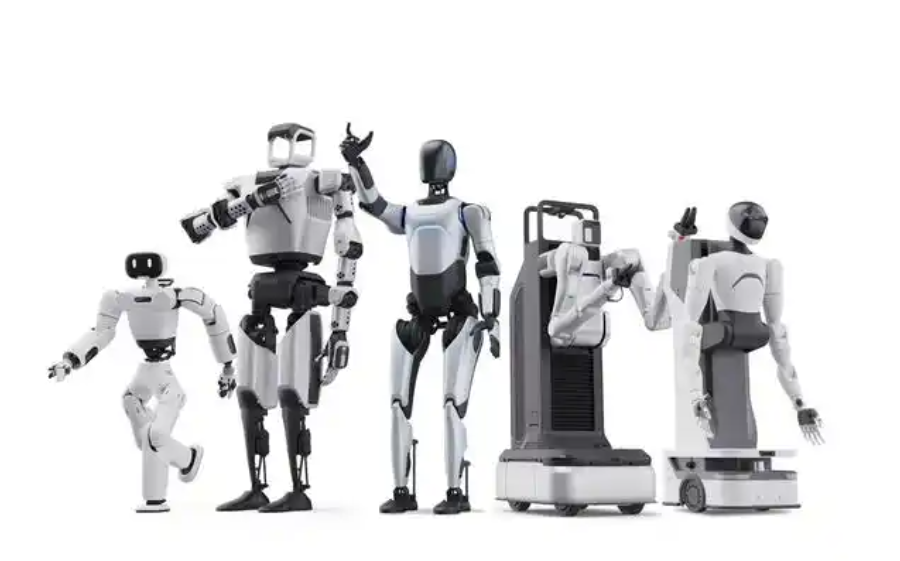
For Wang, embodied intelligence is not simply another term for robotics. It refers to artificial intelligence systems that perceive, reason, decide, and act through physical bodies in the real world. That distinction matters because the real world is noisy, variable, and unforgiving. A system that performs well in a fixed laboratory setting may fail when an object is moved, when lighting changes, or when a task requires even a few millimeters of precision. Wang’s speech repeatedly returned to this gap between controlled performance and open-ended capability, and he framed the next decade of humanoid robots as a race to close it.
He also acknowledged the current limits of humanoid robots without softening them. Although robots can perform some simple assembly tasks, their efficiency is still lower than that of humans. More importantly, whenever a new task appears, the robot often needs to be trained again. That requirement makes deployment costly and slow. Wang said the company hopes to achieve better generalization before pursuing large-scale promotion. In other words, the question is not whether a robot can complete one task under one set of conditions, but whether embodied intelligence can allow a robot to adapt across many tasks and many conditions without starting from scratch each time.
-
Wang Xingxing Frames Embodied Intelligence as the Defining Frontier for Humanoid Robots
Wang’s speech did not present humanoid robots as an isolated hardware category. Instead, he linked them directly to embodied intelligence, the broader effort to give artificial intelligence a physical presence and the ability to act in the world. In this framing, the humanoid form is not merely an engineering choice. It is a platform through which embodied intelligence can interact with environments built for humans, including homes, factories, workplaces, and public spaces.
The industrial significance of embodied intelligence, according to Wang, lies in its potential to move robots from exhibits to products. A robot that appears at a conference can be impressive because it operates in a prepared setting. A robot that becomes a product must operate in settings that were not prepared for it. It must encounter objects it has not seen, rooms it has not mapped, and instructions it has not been trained to follow. That is why Wang described generalization as a precondition for mass promotion rather than an optional enhancement.
He also placed a time horizon around this transition. The critical breakout point for embodied intelligence could come in as soon as two to three years, or it could take five to ten years. The statement was notable because it did not promise immediate arrival. It also did not postpone the possibility to a vague future. Instead, it defined a window in which the industry may discover whether embodied intelligence can cross from narrow capability to broad usefulness.
That window is shaped by advances in artificial intelligence models, robotics hardware, simulation, and real-world deployment. Wang did not claim that any one of these factors alone will determine the outcome. His argument suggested that embodied intelligence will emerge from the interaction among them. Better models can improve perception and decision-making. Better simulation can accelerate testing. More real-world deployment can generate data. But the system must still align its digital reasoning with physical action, and that alignment remains incomplete.
In this sense, Wang’s outlook is both optimistic and disciplined. He sees a path toward embodied intelligence that is faster than many might expect, but he also identifies specific obstacles that must be overcome. The next decade of humanoid robots, in his view, will be defined by whether the field can turn isolated capabilities into general capabilities, and whether it can turn repeated retraining into continuous self-improvement.
-
The “ChatGPT Moment” for Embodied Intelligence: A Concrete Benchmark
One of the most memorable parts of Wang’s speech was his definition of the “ChatGPT moment” for embodied intelligence. He said that if a robot can be taken to any unfamiliar environment, such as a home environment, and can complete about 80 percent of daily tasks through voice or text instructions, then the ChatGPT moment for embodied intelligence will have arrived. That moment, he added, would be the true critical breakout point for the industry.
The benchmark is simple to state but difficult to satisfy. A home environment is not a factory floor with predefined stations and repeated motions. It contains countless objects, layouts, surfaces, and social expectations. A robot must interpret instructions, identify relevant objects, plan actions, avoid collisions, manipulate items, and recover from errors. Completing about 80 percent of daily tasks in such an environment would indicate that embodied intelligence has moved beyond narrow demonstration and into practical generality.
Wang’s use of the phrase “any unfamiliar environment” is important. It means the robot cannot rely on prior mapping or special preparation. The system must bring its own understanding and adapt on the spot. This is a much higher standard than success in a fixed scene. It also explains why Wang treats the 80 percent threshold as a turning point rather than a minor milestone. At that level, a robot would not need to be perfect to be useful. It would need to be capable enough to perform most everyday tasks without constant human intervention or retraining.
The comparison with the ChatGPT moment is also significant. Large language models reached a point where users could give them open-ended prompts and receive useful responses across many domains. Embodied intelligence seeks an analogous leap, but in the physical world. The challenge is greater because the output is not text. It is motion, force, contact, and timing. A language model can generate a sentence and revise it instantly. A robot must commit to an action in physical space, where errors can have immediate consequences.
Wang’s benchmark therefore serves as a bridge between the language-model revolution and the robotics revolution. It translates the idea of general-purpose intelligence into a test that can be observed in a home, a laboratory, or any other unfamiliar setting. If embodied intelligence reaches that point, the industrial consequences could be profound. Robots would no longer be limited to repetitive tasks in structured environments. They could begin to assist with the messy, varied, and unpredictable tasks that define daily life.
Milestone in Embodied Intelligence Time Frame Described by Wang Xingxing Core Condition Critical breakout point for the embodied intelligence industry As soon as two to three years; as long as five to ten years The industry reaches a genuine turning point in capability and deployment “ChatGPT moment” for embodied intelligence Not fixed to a single date; described as the moment the breakthrough occurs A robot in any unfamiliar environment, such as a home, completes about 80 percent of daily tasks through voice or text instructions Mass promotion of humanoid robots After better generalization is achieved Robots no longer require repeated retraining for each new task -
Why Embodied Intelligence Has Not Yet Reached That Moment
Wang was direct about why the ChatGPT moment for embodied intelligence has not yet arrived. The core bottleneck, he said, is that the input and output of artificial intelligence models are not sufficiently aligned with the robot. This is not a minor calibration problem. It is a fundamental gap between digital computation and physical action. Models may perform impressively in controlled settings, but their outputs must be translated into movements that succeed in the real world.
He explained that many artificial intelligence models have been trained with sufficient data collection in fixed scenarios around the world, and in those settings their success rate can approach 100 percent. However, if the object being manipulated or the environment is changed even slightly, the success rate can drop sharply. This pattern reveals the difference between memorization and generalization. A model that performs well in a fixed scenario may have learned the specifics of that scenario rather than the underlying skills needed for embodied intelligence.
For embodied intelligence, the ability to handle variation is not optional. It is the central requirement. A robot that can only succeed when the object, lighting, position, and background remain constant cannot function as a general-purpose assistant. It can serve as a demonstration, but it cannot become a product. Wang’s concern is therefore not simply about improving average performance. It is about improving performance when conditions change, because that is the condition under which real-world robots must operate.
He also described the problem as an alignment deviation between the input and output of artificial intelligence models and the physical world. In a language model, input and output are purely digital encodings. The loss between what is intended and what is produced is almost negligible. In a robot, every execution of a perception-control loop can accumulate deviation. The robot may visually judge that it is about to grasp an object successfully, only to encounter tactile or positional errors in the final few millimeters or centimeters. Those small errors can cause the task to fail and can sharply reduce the overall task success rate.
This explanation helps clarify why embodied intelligence is harder than many digital artificial intelligence problems. A language model can produce a response that is approximately correct and still be useful. A robot must produce an action that is physically correct within tight tolerances. The physical world does not accept approximate outputs in the same way. A grasp that is almost right may still drop the object. A step that is almost right may still cause a fall. A placement that is almost right may still damage the object or fail the task.
Dimension of the Bottleneck Current Constraint Described by Wang Consequence for Embodied Intelligence Model alignment with robot Artificial intelligence model input and output are not sufficiently aligned with the robot Embodied intelligence cannot reliably translate digital decisions into physical actions Fixed-scenario training Models trained in fixed scenarios can approach 100 percent success Performance does not transfer when the object or environment changes Perception-control loop Each loop can accumulate deviation Small errors in the final few millimeters or centimeters can cause task failure Tactile and positional error Visual judgment may indicate success while touch or position is wrong Task success rate drops sharply in real-world manipulation -
The Alignment Gap Between Digital Models and Physical Action in Embodied Intelligence
The alignment gap described by Wang is central to understanding the current state of embodied intelligence. In digital systems, information can be copied, transmitted, and transformed with very little loss. In physical systems, every action is subject to friction, vibration, deformation, sensor noise, and timing delays. The robot’s model of the world may be accurate in a general sense, but the execution of a specific action can still fail because the physical details do not match the model’s assumptions.
Wang illustrated this with the example of a robot visually determining that an object is about to be grasped successfully, only for tactile or positional errors to appear in the last few millimeters or centimeters. That example captures the specific difficulty of embodied intelligence. The robot is not failing because it cannot recognize the object. It is failing because the final contact between its gripper and the object does not match what the model predicted. The error is small in absolute terms, but large in functional terms.
This is why embodied intelligence requires more than better vision or better language understanding. It requires tight integration among perception, planning, control, and touch. The system must continuously correct its actions based on feedback. It must know not only what to do but also how to adjust when the physical world resists the plan. In Wang’s view, this integration is still incomplete, and that incompleteness explains why robots remain slower and less reliable than humans in many tasks.
The alignment gap also explains why new tasks require retraining. If a robot’s skills are tied to a specific scenario, then changing the task or environment invalidates part of what the robot has learned. Retraining can restore performance, but it does not produce general capability. It produces a new narrow capability. For embodied intelligence to advance, the field must find ways to accumulate skills rather than repeatedly replace them.
Wang’s description of the bottleneck therefore points toward a larger research and engineering agenda. The goal is not simply to make models larger. The goal is to make the connection between model and body more reliable. That connection must survive variation, recover from error, and improve over time. Without it, embodied intelligence will remain trapped between impressive demonstrations and limited deployment.
-
From Fixed Scenarios to Generalization: The Real Test for Embodied Intelligence
Wang repeatedly contrasted fixed-scenario success with real-world generalization. In fixed scenarios, success rates can approach 100 percent because the environment is controlled and the task is defined. In real-world settings, success rates drop when the object or environment changes. This contrast is the clearest expression of the gap between current robot capability and the goal of embodied intelligence.
The problem is not that fixed-scenario training is useless. It is that fixed-scenario performance can create a misleading impression of readiness. A robot that succeeds in a demonstration may still fail in a home, a hospital, a warehouse, or a restaurant. The skills it has learned may be too tightly bound to the training conditions. For embodied intelligence to become practical, those skills must transfer across conditions.
Wang said that although robots can perform some simple assembly, their efficiency is lower than that of humans. He also said that whenever a new task appears, the robot must be retrained. Together, these two observations define the current limits of embodied intelligence. The robot is not yet efficient enough to replace human labor in general, and it is not yet adaptive enough to avoid costly retraining. The industry therefore faces a dual challenge: improve efficiency and improve generalization.
Generalization is the harder of the two because it touches every part of the system. A general robot must perceive objects it has not seen, understand instructions it has not heard, plan actions it has not rehearsed, and control its body in conditions it has not encountered. It must also recover from failures without human intervention. That level of capability is what Wang means when he speaks of a robot being taken to any unfamiliar environment and completing about 80 percent of daily tasks.
The path to that capability is not a single breakthrough. It is likely to require advances in models, data, simulation, hardware, and evaluation. Wang’s speech suggested that the field is moving in that direction, but it also made clear that the distance remaining is substantial. Embodied intelligence will not arrive merely because models become more powerful. It will arrive when those models can be aligned with physical bodies in a way that produces reliable, general, and cumulative skill.
-
Unitree Technology’s Vision for a Self-Evolving Physical AI Robot
Looking toward future industry iteration, Wang shared Unitree Technology’s concept for a self-evolving physical artificial intelligence robot. The model begins with human-defined rules, experience, constraints, and tools. A top-tier artificial intelligence large model then drives the system. The agent autonomously searches frontier papers and open-source solutions, and it automatically writes robot control code.
The generated control code is first run and validated in a simulation environment. After that, the system calls the large model to control a physical robot for deployment testing. Finally, both the artificial intelligence model and humans participate in evaluation and scoring. The results are fed back to the programming agent, creating a positive cycle. This cycle is intended to allow the robot and its software to improve continuously rather than depend on manual reprogramming for every new task.
The concept is notable because it treats embodied intelligence as an ongoing process rather than a fixed product. Instead of training a robot once and deploying it, the system is designed to keep learning from simulation, real-world tests, and human evaluation. Each cycle adds information and experience. If the cycle works as intended, the robot’s skills can accumulate rather than reset when a new task appears.
Wang’s description also places large models at the center of robot development. The large model is not only used for perception or language understanding. It is used to drive the agent that writes code, controls the physical robot, and evaluates outcomes. This creates a layered system in which one artificial intelligence capability supports another. The foundation model improves the agent, the agent improves the robot code, and the robot’s real-world performance feeds back into the next iteration.
For embodied intelligence, this feedback loop is significant because it addresses the problem of retraining. If every new task requires a new training cycle, scaling becomes difficult. If the system can autonomously search for solutions, generate code, test in simulation, deploy on hardware, and learn from the results, then the cost of adding new skills may fall. The robot would not simply be programmed. It would participate in its own development through the infrastructure built around it.
Step in the Self-Evolution Loop Action Role in Embodied Intelligence Rule and tool setting The enterprise defines rules, experience, constraints, and tools Provides the boundaries within which embodied intelligence can evolve safely and productively Autonomous research The agent searches frontier papers and open-source solutions Brings new knowledge into the embodied intelligence development process Code generation The agent automatically writes robot control code Converts knowledge into executable robot behavior Simulation validation Generated control code is run and validated in simulation Tests embodied intelligence before physical deployment Physical deployment testing The large model controls the physical robot for deployment tests Evaluates embodied intelligence in real-world conditions Evaluation and scoring Artificial intelligence and humans jointly evaluate and score results Combines automated feedback with human judgment Feedback to programming agent Results are fed back to the programming agent Creates a positive cycle that can improve embodied intelligence over time -
The Feedback Loop as an Engine for Embodied Intelligence
The self-evolution loop described by Wang can be understood as an engine for embodied intelligence. It begins with constraints and tools set by the enterprise. That step is important because it keeps the process within a defined operational space. The agent then searches for knowledge, writes code, and tests that code in simulation. Simulation offers a fast and controlled environment for initial validation. After simulation, the system moves to physical deployment testing, where the robot encounters the full complexity of the real world.
The final stage of the loop is evaluation. Both artificial intelligence and humans take part. This combination is significant because neither alone may be sufficient. Artificial intelligence can process large amounts of data and detect patterns, while humans can bring judgment, context, and values. Their joint scoring is then returned to the programming agent. The agent can use that feedback to adjust future code generation. Over time, the loop is designed to improve the robot’s behavior without requiring every improvement to be manually engineered.
For embodied intelligence, this kind of loop addresses several challenges at once. It provides a mechanism for continuous learning. It connects digital code generation to physical testing. It uses simulation to reduce the cost of early experimentation. It uses real-world deployment to capture conditions that simulation may miss. And it uses human evaluation to guide the system toward useful outcomes. Each part of the loop supports the larger goal of making embodied intelligence more capable and more reliable.
The loop also reflects a broader shift in how robots may be developed. Instead of treating robot software as a static product, the system treats it as an evolving artifact. The robot’s control code can be revised, tested, and improved repeatedly. The agent can search for new methods as they appear in the research literature. The large model can generate new candidate solutions. The physical robot can provide real-world feedback. This cycle could shorten development times and allow skills to accumulate.
Wang presented this concept as a future direction rather than a completed achievement. Its value lies in what it suggests about the path forward. If embodied intelligence is to reach its ChatGPT moment, it may need exactly this kind of feedback-driven development. The field cannot rely only on one-time training or manual programming. It needs systems that can learn from experience, integrate multiple data sources, and improve as deployment scales.
-
Three Advantages of the Self-Evolution Path for Embodied Intelligence
Wang described three advantages of the self-evolution direction for physical artificial intelligence robots. Each advantage is directly related to the challenge of making embodied intelligence more general, more efficient, and more cumulative.
-
Advantage One: Foundation model progress accelerates self-evolution. As the capability of foundation models improves month by month, the self-evolution capability itself evolves along with them. This means the development process is not static. Better foundation models can lead to better agents, better code generation, better control, and better evaluation. For embodied intelligence, this creates a compounding effect: improvements in the underlying models can raise the ceiling of what the self-evolution loop can achieve.
-
Advantage Two: Multiple data sources can be used together. The self-evolution approach can simultaneously use simulation data, real-world data, and human data. Data utilization is therefore more efficient. Simulation data can provide scale and speed. Real-world data can provide grounding and unexpected conditions. Human data can provide demonstration, correction, and judgment. For embodied intelligence, combining these sources is important because no single data source is sufficient. Simulation alone may miss physical nuance. Real-world data alone may be expensive and slow. Human data alone may not scale.
-
Advantage Three: Real-machine deployment accumulates skills. The more real machines are deployed, the richer the test data that can be accumulated. This allows robot skills to be continuously added rather than repeatedly discarded. It avoids the waste of development skills and can greatly improve the overall efficiency of robot development and evolution. For embodied intelligence, this is a direct answer to the problem of retraining. If each new deployment contributes to a shared pool of knowledge, then the system becomes more capable over time instead of starting over for each task.
These three advantages are not independent. They reinforce one another. Better foundation models make the agent more capable. Better data utilization gives the agent more to learn from. More real-machine deployment generates more data and more opportunities for improvement. Together, they form a cycle in which embodied intelligence can develop faster than it would through isolated breakthroughs.
Advantage of Self-Evolution for Embodied Intelligence Explanation from Wang Xingxing Implication for the Field Foundation model improvement As foundation models improve month by month, self-evolution ability evolves with them Embodied intelligence can benefit from continuous upgrades in underlying artificial intelligence Higher data utilization Simulation data, real-world data, and human data can be used simultaneously Embodied intelligence can draw on complementary sources rather than depend on one Accumulated real-machine skills More real-machine deployment yields richer test data and continuous skill accumulation Embodied intelligence can avoid wasted development and improve overall evolution efficiency -
-
A Decade of Robot Evolution and a New Starting Point for Embodied Intelligence
Wang looked back at ten years of industry change, from early participation in the World Robot Conference to the current explosion of artificial intelligence technology. He said the speed of robot evolution has continued to accelerate. His reflection placed the current moment in a longer trajectory. Humanoid robots have moved from exhibition curiosities to serious commercial efforts, and embodied intelligence has moved from a research phrase to a strategic objective.
He also said that future development speed will be even faster than he had estimated. In his words, it is a completely new starting point and a completely new beginning. That statement carries both confidence and uncertainty. Confidence comes from the rapid progress of artificial intelligence and the growing capabilities of robots. Uncertainty comes from the fact that the critical breakthrough in embodied intelligence has not yet arrived. The field is moving quickly, but the destination is still being defined by the ability to generalize, align, and self-improve.
The decade ahead is likely to be shaped by the same tensions Wang described. On one side, foundation models, simulation, and real-world deployment are improving. On the other side, the physical world remains difficult. Robots must handle objects, environments, and tasks that were not part of their training. They must recover from errors that occur in the final few millimeters or centimeters. They must accumulate skills rather than reset with each new task. These are the conditions for embodied intelligence to move from demonstration to daily use.
Wang’s speech did not present a single solution to these problems. Instead, it presented a direction. The self-evolution loop, the use of multiple data sources, the accumulation of real-machine skills, and the drive toward generalization all point toward a future in which embodied intelligence improves continuously. If that future arrives within the two-to-three-year or five-to-ten-year window he described, the robot industry will experience a critical breakout point. If it takes longer, the work will continue along the same technical path.
Either way, Wang’s message was clear: the next decade of humanoid robots will not be defined only by hardware. It will be defined by embodied intelligence, the ability of machines to understand, act, and adapt in the physical world. That is the frontier that will determine whether robots remain exhibits or become products.
-
What the Next Stage of Embodied Intelligence Could Require
The challenges outlined by Wang suggest several requirements for the next stage of embodied intelligence. The first is generalization across unfamiliar environments. A robot must be able to enter a space it has not seen and still perform useful tasks. This requires models that understand objects and actions in a flexible way, rather than relying on memorized mappings from fixed scenarios.
The second requirement is tighter alignment between digital models and physical execution. Wang described how perception-control loops can accumulate deviation and how small tactile or positional errors can cause failure. Addressing this requires better integration of vision, touch, control, and real-time feedback. It also requires evaluation methods that capture physical precision, not just high-level task completion.
The third requirement is continuous learning. The current pattern of retraining for each new task is not scalable. Embodied intelligence needs systems that can add skills without discarding previous ones. The self-evolution loop described by Wang is one approach to this problem. It uses simulation, real-world testing, and human evaluation to create a cycle of improvement.
The fourth requirement is efficient use of data. Simulation data, real-world data, and human data each have strengths and weaknesses. Simulation can generate large amounts of controlled experience. Real-world deployment can reveal conditions that simulation misses. Human data can provide demonstrations, corrections, and judgments. Embodied intelligence will need to combine these sources effectively.
The fifth requirement is scalable deployment. Wang noted that more real-machine deployment can produce richer test data and allow skills to accumulate. This suggests that deployment is not only a commercial goal but also a learning mechanism. Each robot in the field can contribute to the improvement of embodied intelligence, provided the data and feedback are used effectively.
These requirements are demanding, but they are also connected. Progress in one area can support progress in another. Better models can improve generalization. Better generalization can make deployment more useful. More deployment can generate more data. More data can improve models. This is the positive cycle that Wang described, and it is the cycle that could bring embodied intelligence closer to its ChatGPT moment.
-
Conclusion: Embodied Intelligence at the Threshold
Wang Xingxing’s speech at the 2026 World Robot Conference presented a clear picture of where humanoid robots stand and where embodied intelligence may be heading. He did not claim that the breakthrough has already happened. He said that robots can perform some simple assembly but are still less efficient than humans, and that new tasks often require retraining. He identified the core bottleneck as insufficient alignment between artificial intelligence model input and output and the robot, leading to accumulated deviations and failures in the physical world.
At the same time, he offered a concrete benchmark for success. If a robot can be taken to any unfamiliar environment, such as a home, and can complete about 80 percent of daily tasks through voice or text instructions, then the ChatGPT moment for embodied intelligence will have arrived. He estimated that the critical breakout point could come in as soon as two to three years or as long as five to ten years. That estimate gives the industry a window for both ambition and preparation.
Unitree Technology’s proposed self-evolution path adds a possible mechanism for reaching that window. By combining enterprise-defined rules and constraints, top-tier artificial intelligence models, autonomous research, automatic code generation, simulation validation, physical deployment testing, and joint human-machine evaluation, the system aims to create a positive cycle. The three advantages Wang cited are that foundation model improvements can accelerate self-evolution, that simulation, real-world, and human data can be used together, and that real-machine deployment can accumulate skills and avoid wasted development.
The decade ahead will test whether these ideas can move embodied intelligence from promise to practice. The field must solve generalization, alignment, continuous learning, data efficiency, and scalable deployment. If it does, humanoid robots may finally cross the line from exhibits to products. If it does not, the work will continue, but the direction described by Wang will remain central. Embodied intelligence is not simply a feature added to robots. It is the capability that determines whether robots can operate usefully in the unstructured world that humans inhabit.
Wang closed by looking back at ten years of rapid change and forward to a future that he expects to move even faster than he had estimated. He called it a completely new starting point and a completely new beginning. For embodied intelligence, that beginning is already underway. The question is how soon it becomes a true breakout, and how many of the daily tasks in an unfamiliar environment a robot can complete when that moment finally arrives.