
On the afternoon of August 12, the Green Low-Carbon High-Quality Development Experts Qilu Tour event, coupled with the Yantai City Talent Empowering New Quality Productive Forces Development Conference’s dedicated session on the humanoid robot industry, was successfully convened at the Yantai International Conference Center. This significant gathering brought together leading domestic experts, prominent enterprises from the robotics sector, and high-level talents to engage in profound discussions on the developmental trajectories and technological breakthroughs within the humanoid robot industry. The primary objective was to propel the green, low-carbon, and high-quality advancement of Yantai’s robotics industry, marking a pivotal step in positioning the city as a formidable player in the global humanoid robot landscape. The event underscored Yantai’s commitment to leveraging its industrial prowess and innovative capacity to capture opportunities in this emerging field, which is widely regarded as a cornerstone for future economic growth and technological leadership.
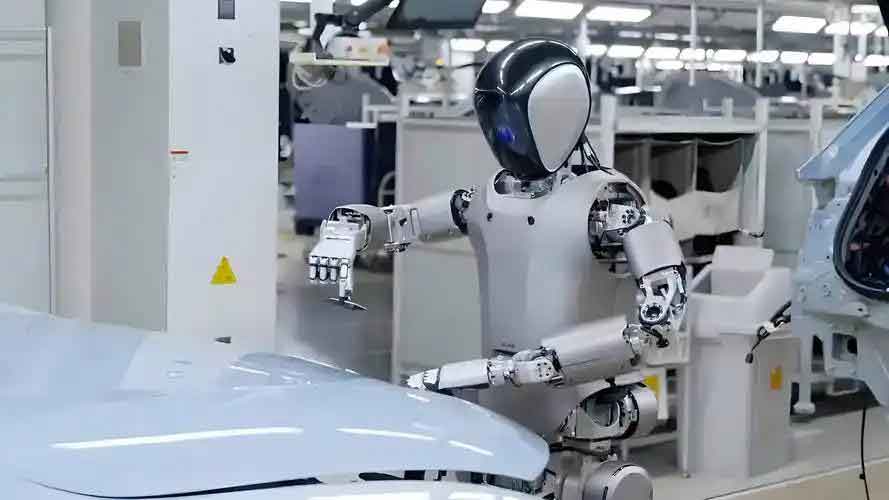
The conference served as a dynamic platform for exchanging cutting-edge insights and fostering collaborations that could accelerate the commercialization and application of humanoid robot technologies. With the humanoid robot industry poised for exponential growth, Yantai aims to harness its robust industrial foundation and diverse application scenarios to drive innovation and competitiveness. The participation of esteemed academics and industry pioneers highlighted the collective effort to address both the opportunities and challenges in scaling up humanoid robot production and integration across various sectors. This event not only facilitated knowledge sharing but also reinforced Yantai’s strategic intent to become a hub for humanoid robot development, attracting investments and talent to bolster the local economy and technological ecosystem.
- Gathering of Eminence: Deliberating on the Future trajectory of the Humanoid Robot Industry
The event attracted a distinguished assembly of scholars and professionals, including experts from renowned institutions such as the Chinese Academy of Sciences and Shandong University, alongside representatives from 22 local robotics产业链 enterprises. This confluence of intellect and experience provided a comprehensive overview of the current state and future directions of the humanoid robot sector. The discussions emphasized the transformative potential of humanoid robots, which integrate advanced artificial intelligence, precision manufacturing, and new materials, making them a strategic industry for national and regional development. The presence of such high-caliber participants underscored the importance of collaborative efforts in advancing humanoid robot technologies and their practical implementations.
Professor Zhang Zhengtao, a researcher and doctoral supervisor at the Chinese Academy of Sciences, delivered a keynote address titled “Artificial Intelligence Empowering Robotics: Technological Frontiers and Industrial Applications.” In his presentation, he provided an in-depth analysis of the application prospects for humanoid robots across various domains, including industrial automation, healthcare, and service industries. Professor Zhang emphasized that the humanoid robot industry, as a strategic sector amalgamating artificial intelligence, high-end manufacturing, and new materials, is on the cusp of explosive growth. He highlighted that Yantai, with its solid industrial base and abundant application scenarios, is fully equipped to seize the initiative in this field. The humanoid robot represents a paradigm shift in how machines interact with human environments, and Yantai’s existing infrastructure positions it ideally to lead in the commercialization and deployment of these advanced systems. The speech resonated with attendees, reinforcing the belief that humanoid robots could revolutionize multiple industries by enhancing efficiency, safety, and accessibility.
Professor Song Rui, a distinguished professor and doctoral supervisor at Shandong University, contributed with a thought-provoking presentation on “Reflections on the High-Quality Development of China’s Robotics Industry.” He analyzed the strengths and challenges facing China’s robotics sector, noting that Yantai has already established a certain industrial foundation in areas such as specialized robots and industrial robots. Professor Song pointed out that for future growth, the focus should be on achieving domestic production of core components, facilitating scenario-based落地, and constructing a robust industrial ecosystem. He stressed that overcoming these hurdles is essential for Yantai to build a globally competitive robotics cluster, with humanoid robots at its core. The discussion delved into the intricacies of supply chain localization, innovation in humanoid robot design, and the need for policies that support research and development. By addressing these aspects, Yantai can enhance its self-reliance and reduce dependencies on foreign technologies, thereby strengthening its position in the humanoid robot market.
Additionally, Wang Jintao, General Manager of Shandong New Song Industrial Software Research Institute Co., Ltd., shared insights on “Robotics and Industrial Artificial Intelligence,” while Fan Yong, Chairman of Shandong Ubotech Intelligent Robot Co., Ltd., discussed “Humanoid Robot Technology and Industry.” Their presentations offered valuable industry perspectives, highlighting the synergies between software, hardware, and AI in advancing humanoid robot capabilities. They elaborated on how industrial AI can optimize humanoid robot performance in complex tasks, such as object manipulation and environmental navigation, making them more adaptable and efficient. The exchanges underscored the importance of cross-disciplinary collaboration in pushing the boundaries of what humanoid robots can achieve, from assembly lines to personal assistance. The collective wisdom shared during these sessions provided a roadmap for Yantai to navigate the complexities of the humanoid robot industry, emphasizing innovation, integration, and international cooperation.
- Integration of Talent and Industry: Igniting Innovative Vitality for Humanoid Robot Advancements
A specially curated segment of the event focused on postdoctoral research exchanges and enterprise project roadshows, designed to bridge the gap between academic research and industrial application in the humanoid robot domain. This segment aimed to stimulate innovation by showcasing cutting-edge研究成果 and facilitating partnerships that could translate theoretical advances into practical solutions. The involvement of young researchers and entrepreneurs injected fresh ideas and energy into the discussions, highlighting the dynamic nature of the humanoid robot field and its potential for disruptive innovation.
Dr. Wang Huaqiang, a postdoctoral researcher from Tsinghua University, presented his latest research findings on multi-modal collaborative robots and dexterous hand operations. His work demonstrated significant progress in enhancing the flexibility and precision of humanoid robots, particularly in tasks requiring fine motor skills and human-robot interaction. Dr. Wang’s presentation highlighted how these advancements could be applied to improve humanoid robot performance in settings such as manufacturing, where collaboration between humans and robots is increasingly important. The research underscored the critical role of academic institutions in driving the technological evolution of humanoid robots, providing a foundation for future commercial applications that could benefit industries worldwide.
Similarly, Li Xinglin, Dean of the Research Institute at Yantai Aidi Aichuang Robot Technology Co., Ltd., shared the company’s breakthrough developments in the field of collaborative robots. He expressed a strong desire to establish in-depth collaborations with top expert teams to jointly tackle key “bottleneck” technological challenges in humanoid robot development. Li emphasized that overcoming these hurdles is essential for enhancing the competitiveness of local enterprises and advancing the overall humanoid robot industry. He detailed specific projects where collaborative robots are being tested for tasks in logistics and healthcare, illustrating how humanoid robots can complement human workers and improve operational efficiency. The roadshow sessions allowed enterprises to pitch their innovations and seek support from investors and researchers, fostering a ecosystem where ideas can flourish and scale rapidly.
In a notable highlight from the talent week opening ceremony, Professor Zhang Zhengtao forged a partnership with Zhongke Shenkuang Embodied Intelligent Robot (Yantai) Co., Ltd., signing a cooperation agreement for the “Intelligent Robot Research, Development, and Industrialization Project.” Professor Zhang revealed that the collaboration will focus on industrializing technologies for hazardous operations in mining environments, specifically using humanoid robots to enhance safety and efficiency in Yantai’s gold and mining sectors. This initiative aims to promote intelligent upgrades within these traditional industries, leveraging humanoid robots to perform tasks in dangerous conditions, thereby reducing human risk and increasing productivity. Gong Xianglin, Deputy General Manager of the company, noted that despite being established only three months ago, the firm has already embarked on joint research and development efforts, targeting high-risk scenarios in mining operations to inject new vitality into the industry’s transformation. Professor Zhang, reflecting on his personal connection to Yantai, expressed great honor in bringing cutting-edge humanoid robot technologies back to his hometown to support local industrial upgrading, demonstrating the powerful impact of talent repatriation on regional development.
The integration of talent and industry through such events is crucial for building a sustainable innovation pipeline for humanoid robots. By connecting researchers with businesses, Yantai can accelerate the translation of laboratory discoveries into market-ready products, ensuring that the humanoid robot industry remains at the forefront of technological progress. This approach not only addresses immediate technical challenges but also cultivates a culture of continuous innovation, where new ideas for humanoid robot applications can be tested and refined in real-world settings. The collaborative spirit evident in these exchanges bodes well for the future of humanoid robots in Yantai, as it combines academic rigor with industrial pragmatism to drive meaningful advancements.
- Vision for the Future: Constructing a Robust Ecosystem for the Humanoid Robot Industry
In recent years, Yantai City has actively positioned itself in the humanoid robot industry, developing a complete industrial chain in key component areas such as sensors and reducers. This strategic focus has nurtured a cohort of innovative enterprises, including Keman Intelligent, Aidi Aichuang, and Qingkejia, which have collectively enhanced the overall competitiveness of Yantai’s robotics and intelligent equipment sector. The city’s efforts in fostering a supportive environment for humanoid robot development have begun to yield results, with local companies making strides in product innovation and market expansion. The growth of these enterprises is a testament to Yantai’s potential to become a significant player in the global humanoid robot market, driven by a combination of policy support, industrial capacity, and technological ambition.
Despite the initial formation of a humanoid robot industry scale in Yantai, challenges remain, including the need for breakthroughs in core technologies and the construction of a comprehensive ecological system. The Green Low-Carbon High-Quality Development Experts Qilu Tour event provided timely insights into the latest industrial technological trends and future directions for humanoid robots, offering guidance for addressing these obstacles. During the event, expert service teams conducted on-site inspections at grassroots industrial fronts, gaining a deeper understanding of the current development status of local key industries. They provided diagnostic services and technical solutions to help resolve practical technical difficulties faced by enterprises in production processes. For common issues encountered by local companies, the teams proposed actionable solutions, emphasizing the importance of tailored support for the humanoid robot sector. These efforts are crucial for identifying and mitigating barriers that could hinder the growth of humanoid robot applications, such as interoperability issues or scalability concerns.
A representative from the Yantai Municipal Human Resources and Social Security Bureau stated that the city will continue to optimize talent policies and build platforms for industry-academia-research collaboration to attract more high-level talents to innovate and start businesses in Yantai. This commitment is vital for sustaining the momentum in the humanoid robot industry, as skilled professionals are the backbone of technological innovation. The representative elaborated on initiatives such as talent incentives, funding for research projects, and partnerships with universities to create a pipeline of experts dedicated to advancing humanoid robot technologies. By fostering a favorable environment for talent, Yantai aims to address the human capital needs of the growing humanoid robot ecosystem, ensuring that it has the necessary expertise to compete on a global scale.
The humanoid robot industry is widely considered a golden track for the next decade, and Yantai is embracing this transformation with an open attitude. By aggregating top-tier talents, strengthening technological research and development, and optimizing the industrial ecology, Yantai is poised to secure a significant position in the trillion-dollar humanoid robot industry. As Professor Zhang Zhengtao aptly noted, Yantai’s industrial soil is fertile; with persistent innovation drive and the integration of talent and industry, the city is capable of forging a unique path in the development of the humanoid robot industry. The future outlook involves not only scaling up production but also ensuring that humanoid robots are developed ethically and sustainably, with considerations for environmental impact and social acceptance. Yantai’s proactive approach sets a precedent for other regions, demonstrating how strategic planning and collaboration can unlock the full potential of humanoid robots to drive economic growth and improve quality of life.
Looking ahead, the focus will be on creating a holistic ecosystem that supports the entire value chain of humanoid robot development, from research and design to manufacturing and deployment. This includes investing in infrastructure, such as testing facilities and innovation hubs, where humanoid robots can be validated in real-world conditions. Additionally, fostering international partnerships will allow Yantai to learn from global best practices and integrate diverse perspectives into its humanoid robot initiatives. The ultimate goal is to establish Yantai as a leader in the humanoid robot revolution, contributing to the advancement of this transformative technology while addressing local and global challenges through innovative applications. The journey ahead requires sustained effort, but with the foundation laid by events like this conference, Yantai is well-positioned to achieve its ambitions in the dynamic and promising field of humanoid robotics.
The successful hosting of this event marks a milestone in Yantai’s journey toward becoming a hub for humanoid robot innovation. The discussions and collaborations initiated here are expected to catalyze further advancements, driving the city’s economic diversification and technological upgrading. As the humanoid robot industry continues to evolve, Yantai’s commitment to green, low-carbon development aligns with global sustainability goals, ensuring that growth in this sector is both responsible and resilient. The enthusiasm and expertise displayed by participants signal a bright future for humanoid robots in Yantai, with potential spillover benefits for related industries and the broader society. By continuing to leverage its strengths and address its challenges, Yantai can not only compete but excel in the competitive landscape of humanoid robotics, setting an example for other cities aspiring to harness the power of emerging technologies.
In conclusion, the humanoid robot industry represents a transformative opportunity for Yantai, and the recent event has solidified the city’s resolve to pursue this path with vigor and vision. The integration of expert knowledge, industrial capability, and talent resources creates a powerful synergy that can accelerate the development and adoption of humanoid robots. As Yantai moves forward, it will be essential to maintain this momentum through continuous investment in research, education, and infrastructure, while also engaging with stakeholders to ensure that the benefits of humanoid robot technologies are widely shared. The journey is just beginning, but with the foundation laid, Yantai is on track to make significant contributions to the global humanoid robot ecosystem, driving progress that resonates far beyond its borders.