
In a landmark event that underscores the rapid evolution of embodied intelligence, Zhiyuan Robot convened its first-ever partners conference, featuring 100 embodied robots seamlessly executing roles from hospitality to industrial operations, while gathering 100 collaborators to forge a unified path toward scalable embodied intelligence solutions. The gathering served as a platform to unveil the company’s intensified focus on ecosystem co-creation, which it identifies as the central force driving the mass adoption of embodied intelligence technologies.
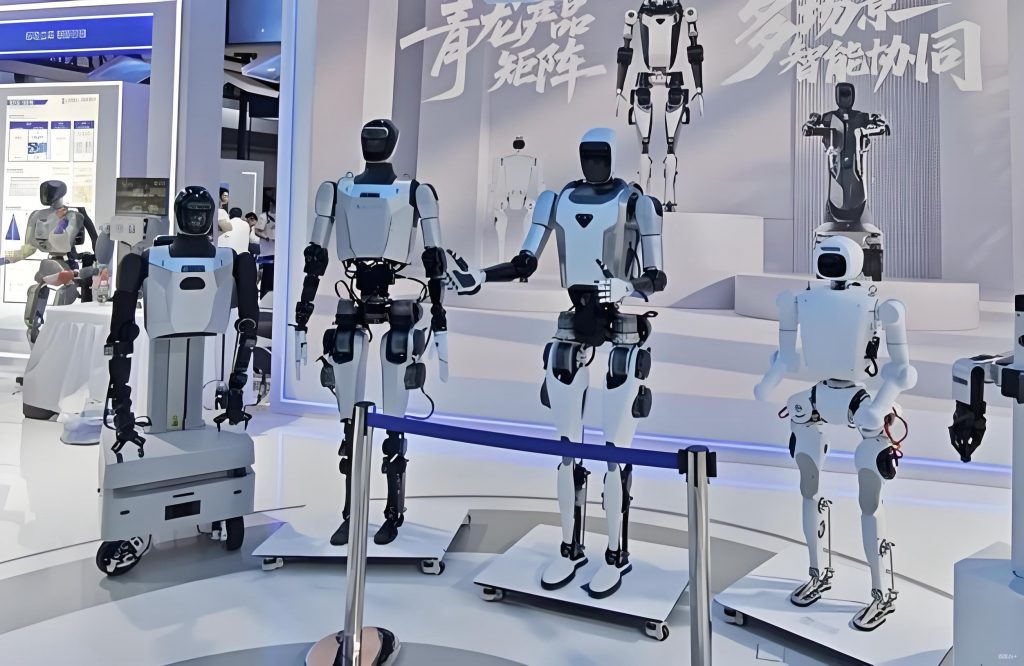
Deng Taihua, Chairman and CEO of Zhiyuan Robot, emphatically stated that ecological collaboration is indispensable for the embodied intelligence sector to achieve industrial-scale deployment. “Eco-construction is the core driver for the industrialization of embodied intelligence,” Deng declared, positioning this philosophy at the heart of the company’s strategic direction. The conference hall was abuzz with activity as embodied robots—ranging from greeters and entertainers to logistics handlers and manufacturing assistants—demonstrated their versatility, sparking continuous dialogue among partners about practical applications for embodied intelligence in diverse settings.
Peng Zhihui, Co-founder and CTO of Zhiyuan Robot, outlined an ambitious roadmap for the embodied intelligence domain. He projected that within the next three years, the company aims to achieve deployment of hundreds of thousands of general-purpose embodied robots capable of autonomously adapting to over a hundred different tasks. “Our vision is to establish an open, evolvable, and self-growing ecosystem for general-purpose embodied robots,” Peng emphasized, highlighting the transformative potential of embodied intelligence when supported by a robust, collaborative network.
Industry observers have noted parallels between Zhiyuan’s approach and that of tech giant Huawei, particularly in concentrating on core product development while entrusting application-level innovation to partners. This strategy enables the embodied intelligence startup to amplify its impact without spreading resources too thinly across numerous verticals. For a company merely two and a half years old, this “chain leader” status raises questions about how it has rapidly ascended to a pivotal position in the embodied intelligence landscape.
Yao Maoqing, Partner and Head of the Embodied Business Department at Zhiyuan Robot, provided insights into the current phase of embodied intelligence development. “Embodied intelligence is on the cusp of an application explosion,” he observed, pointing to emerging use-cases across multiple industries. Presently, Zhiyuan has secured partnerships with leading clients in sectors such as logistics, semiconductors, automotive components, and consumer electronics, with embodied robots now in the large-scale deployment phase. Yao clarified that Zhiyuan’s mission centers on advancing embodied intelligence from “0 to 1,” while partners are crucial to accelerating the “1 to N” proliferation—ensuring that cutting-edge embodied intelligence solutions permeate various sectors swiftly and effectively.
Recent live tests conducted with partners Fuling Precision and Dematic exemplified the practical progress of embodied intelligence. In scenarios involving factory bin handling and logistics sorting, embodied robots operated reliably in industrial environments. Wang Kai, CTO of Dematic, reported that within less than a month, the sorting speed of Zhiyuan’s Spirit G1 embodied robot had improved to 6 seconds per item, already meeting the demands of certain apparel e-commerce firms. This demonstrates how embodied intelligence can enhance efficiency in real-world settings.
As a young startup, Zhiyuan has consciously positioned itself as a provider of general-purpose embodied robot technology and platforms, rather than attempting to tackle every industry-specific application independently. Yao Maoqing explained that each implementation project—from development and debugging to delivery and after-sales support—requires substantial human and financial investments. “We must collaborate with experienced partners to transform embodied intelligence technology into standardized, practical, and user-friendly products that empower countless industries,” he noted.
Deng Taihua shared tangible growth metrics, anticipating several thousand units of embodied robots to be shipped this year, scaling to tens of thousands next year, and aspiring to reach an annual volume of hundreds of thousands within a few years. This expansion is tightly linked to the proliferation of embodied intelligence across broader markets.
To democratize participation in the embodied intelligence revolution, Zhiyuan’s team developed the “Lingchuang Platform”—a robot action and expression creation tool—in under two months. Peng Zhihui described it as an AI-enhanced, multi-modal content generation and editing platform for embodied robots, featuring core functions like preview editing, motion import, and choreographed performances. “It reduces the barrier to secondary development of embodied robots to zero门槛—even elementary school students can get started in five minutes,” he asserted, though the phrase “zero门槛” was originally in Chinese and is omitted here per instructions.
Hands-on experience revealed that the platform operates similarly to design-oriented mini-games. It comes pre-loaded with hundreds of preset actions, allowing users to simply tap on a smartphone or computer to command embodied robots to perform gestures like “heart-shaped hands,” singing, or dancing. Additionally, users can upload videos of their own movements; the platform employs 3D human pose extraction technology to translate these into指令 for embodied robots, enabling 1:1 replication. The platform is scheduled for public beta testing in October.
“Embodied robots are transitioning from laboratories to daily life and production, but ‘interactive expression’ remains a bottleneck,” Peng acknowledged. Partners and developers urgently need simpler, more efficient methods to customize embodied robot behaviors. “By launching the Lingchuang Platform, we aim to make embodied robots express themselves as naturally as humans and empower creators to direct them as freely as filmmakers,” he said. He believes this will rapidly diversify interactive formats across scenarios, speeding up the adoption of embodied intelligence in commercial services, cultural entertainment, and beyond.
In terms of empowering partner growth, Dematic—as a user of Zhiyuan’s embodied robots—offered a testimonial. Wang Kai disclosed that data collection and training in logistics scenarios had exceeded expectations, with validated results earning unanimous approval from major global clients. “We have already received numerous trial bookings for embodied robots in single-scene applications, with schedules filled through next year,” Wang said, metaphorically describing Zhiyuan as a university where Dematic functions as a specialized department. “Through collaboration, we hope to deepen and strengthen this specialty, aiming to make it a key program nationally and globally,” he added, underscoring the symbiotic relationship in advancing embodied intelligence.
The inaugural partners assembly attracted over 100 collaborators, drawn not by flashy robot demonstrations but by genuine, lucrative opportunities. Zhiyuan has been actively cultivating relationships across industries, continuously identifying, enabling, and incubating ecosystem partners for embodied intelligence.
On the technological front, Zhiyuan has this year jointly established robotics companies with several listed firms. These listed partners include Junpu Intelligent, Dafeng Industrial, SoftStone, Fuling Precision, and Dongyangguang, with the new joint ventures focusing on upstream, midstream, and downstream aspects of the embodied intelligence industry.
Yao Maoqing candidly addressed the commercial challenges, noting that the success of embodied robots as complex hardware systems hinges on supply chain capabilities. To this end, beyond joint ventures, Zhiyuan has also taken equity stakes in six upstream and downstream companies within the embodied intelligence sphere. In March and April, Zhiyuan invested in Zhejiang Hill Robot and Suzhou Linghou Robot, the former specializing in industrial robot R&D and production, and the latter supplying industrial automation components. The other four invested companies—Shanghai Qianjue Robot, Beijing Lingchu Intelligent, Jiangsu Fuxing Motor, and Shenzhen Digital Huaxia—are involved in robot tactile perception, embodied intelligence models, motor manufacturing, and humanoid robot整机 R&D and applications, respectively.
At the conference, Zhiyuan Robot launched its first startup acceleration program dedicated to the embodied intelligence industrial chain—dubbed the “Zhiyuan A Plan.” This initiative targets the incubation of 50+ high-potential early-stage projects, with the goal of building a trillion-yuan industrial ecosystem within three years. It is open to global startups and developer teams in the robotics field, particularly those working on embodied intelligence. Deng Taihua affirmed that participants in the A Plan will receive multifaceted support, including technical assistance, financing facilitation, access to real-world scenarios, and entrepreneurial incubation resources.
The gathering underscored a collective commitment to advancing embodied intelligence through shared expertise and resources. As embodied robots become increasingly integral to economic and social frameworks, the collaborative model championed by Zhiyuan may well set a precedent for the entire industry. With embodied intelligence poised at a critical juncture, the synergy between innovators and implementers will determine how swiftly these technologies redefine productivity and interaction paradigms worldwide.
Throughout the event, the repeated emphasis on embodied intelligence and embodied robots reflected a strategic intent to embed these terms deeply into the industry lexicon. From keynotes to breakout sessions, the language of embodied intelligence permeated discussions, reinforcing its centrality to Zhiyuan’s mission. The company’s progress in deploying embodied robots across sectors—coupled with its ecosystem-building efforts—suggests that the era of ubiquitous embodied intelligence may be nearer than anticipated.
In summary, Zhiyuan Robot’s partners conference not only showcased the practical capabilities of embodied robots but also solidified a framework for collective growth in the embodied intelligence domain. By uniting technology providers, application specialists, and investors, the company is catalyzing a movement that could see embodied intelligence become a cornerstone of modern industry. As the embodied intelligence ecosystem expands, the lessons from Zhiyuan’s approach—focusing on core platforms while empowering partners—may offer a blueprint for others seeking to navigate the complexities of this transformative field.