
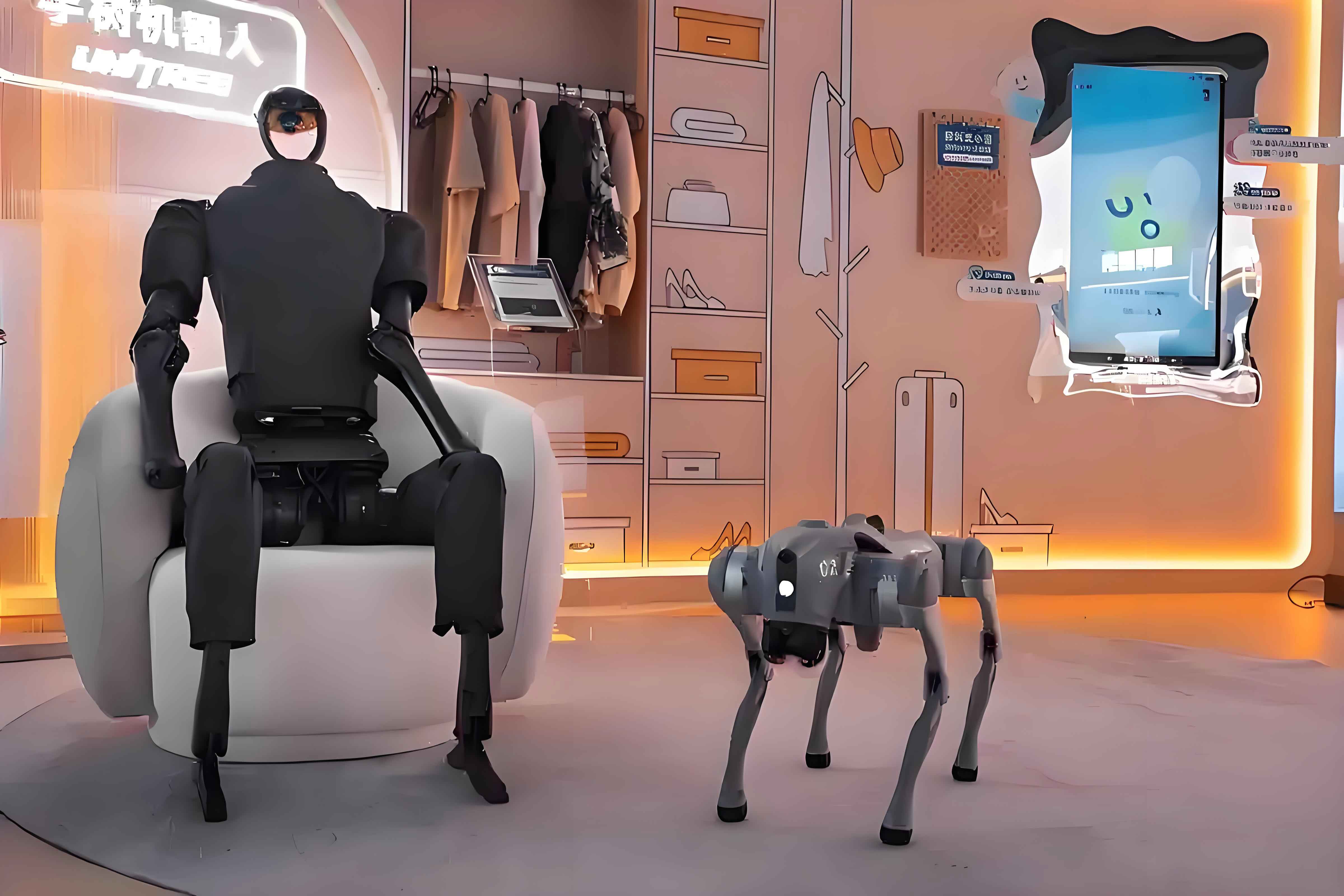
On March 5, coinciding with Zhuhai’s 46th municipal anniversary, Guangdong Tianlian Humanoid Robotics Co., Ltd. commenced construction of its production base at Fushan Industrial Park in Doumen District. This landmark project establishes Zhuhai’s first integrated manufacturing facility for humanoid robots, with planned annual output capacity of 18,000 harmonic reducers, 5,000 commercial robotic arms, and 3,000 humanoid robots. Scheduled for completion by year-end 2025, the facility will begin mass production in 2026.
1. Project Overview: Production Targets and Timeline
The 34,000-square-meter production base, a wholly-owned subsidiary of Sichuan Tianlian Robotics Co., Ltd., will implement phased manufacturing operations. Initial production will focus on harmonic reducers (18,000 units annually) and commercial robotic arms (5,000 units annually). Subsequent phases will scale up humanoid robot manufacturing to achieve the target output of 1,000-3,000 humanoid robots per year. This strategic approach allows gradual production line optimization while meeting immediate component demand before full-scale humanoid robot assembly.
2. Background of Tianlian Robotics: Innovations and Achievements
Founded in 2012 and listed on China’s New Third Board in 2015, Sichuan Tianlian Robotics specializes in R&D and manufacturing of humanoid robots, collaborative robots, and core components like harmonic reducers. The company maintains robust intellectual property holdings with over 170 patents, including approximately 70 invention patents. Recent technological milestones include the debut of their “Tianlian Tina” humanoid robot at Mobile World Congress 2025 in Barcelona, developed in partnership with ZTE Corporation. This humanoid robot demonstration attracted significant international attention, highlighting Tianlian’s position in global humanoid robotics development.
3. Strategic Importance of the Zhuhai Production Base
Beyond manufacturing expansion, the Zhuhai facility will accelerate technological innovation in core components for humanoid robots. The project strengthens Tianlian’s supply chain advantages while facilitating applications across industrial, service, and medical sectors. This humanoid robot production hub will significantly enhance Fushan Industrial Park’s robotics ecosystem, creating comprehensive industry support from component manufacturing to final humanoid robot assembly. The strategic location in the Greater Bay Area provides logistical advantages for domestic distribution and international exports of humanoid robots.
4. Policy Framework Driving Humanoid Robotics Development
National and provincial policies actively support humanoid robot industrialization. China’s 2025 Government Work Report prioritizes development of intelligent robots and next-generation smart terminals. Guangdong Province’s 2025 Modern Industrial System Action Plan specifically mandates accelerated R&D in humanoid robots and embodied artificial intelligence, emphasizing breakthroughs in core components like robotic limbs and cognitive systems. These policy directives create favorable regulatory and funding environments for humanoid robot manufacturers, positioning Tianlian’s Zhuhai project at the forefront of regional technological implementation.
5. Fushan Industrial Park: Manufacturing Hub Transformation
Fushan Industrial Park recorded RMB 18.25 billion in smart equipment manufacturing output during 2024, making it the district’s leading industrial sector. Yang Fubang, Standing Committee Member of Doumen District Committee and Executive Deputy Director of Fushan Industrial Park Management Committee, emphasized the project’s significance: “This humanoid robot production base will substantially advance our intelligent equipment manufacturing cluster, accelerating digital transformation while establishing new growth vectors in artificial intelligence.” The park aims to become a Guangdong advanced equipment manufacturing base and Greater Bay Area model for industrial leadership, with humanoid robot production as a cornerstone initiative.
6. Technical Capabilities and Component Manufacturing
Tianlian’s production strategy integrates vertical manufacturing capabilities for humanoid robots. The facility will mass-produce harmonic reducers – precision components critical for joint movement in humanoid robots – establishing supply chain security while reducing production costs. This component manufacturing expertise directly supports the commercial robotic arm and humanoid robot assembly lines. The 18,000-unit harmonic reducer output represents significant domestic production capacity for these specialized parts, historically dominated by international suppliers. This integrated approach positions Tianlian to control quality across the entire humanoid robot manufacturing process.
7. Market Applications and Implementation Roadmap
Humanoid robot deployment will initially target specialized industrial environments requiring human-like mobility and manipulation capabilities. Subsequent phases will expand into service sectors including hospitality, retail assistance, and educational applications. Medical implementations represent a longer-term development pathway, pending regulatory approvals and specialized adaptation of humanoid robot systems. Tianlian’s commercialization strategy involves progressive capability releases: early humanoid robot models will perform standardized physical tasks, with later generations incorporating advanced AI interaction features demonstrated in their MWC 2025 showcase. This application roadmap aligns with industrial automation demands while building toward general-purpose humanoid robot functionality.
8. Economic Impact and Regional Development
The humanoid robot production base signifies Zhuhai’s strategic entry into advanced robotics manufacturing. Projected to create numerous high-skilled positions in robotics engineering, AI programming, and advanced manufacturing, the facility will stimulate regional technology employment while attracting supplementary suppliers to Fushan Industrial Park. This development accelerates Guangdong’s positioning in the global humanoid robot value chain and complements existing electronics manufacturing infrastructure throughout the Pearl River Delta region. The project timeline coincides with forecasted expansion in global humanoid robot adoption, potentially establishing Zhuhai as an export hub for humanoid robots throughout ASEAN markets.
9. Industry Context and Competitive Positioning
Tianlian enters an increasingly dynamic global humanoid robot market, competing with established robotics corporations and specialized startups. Their integrated manufacturing approach – controlling both core components and final humanoid robot assembly – differentiates their business model. Patent analysis indicates particular strength in articulated movement systems and power efficiency innovations relevant to humanoid robot mobility. The Zhuhai facility’s planned production volume positions Tianlian among mid-scale humanoid robot manufacturers globally, with capacity to supply commercial and industrial clients seeking batch deployments of humanoid robots for specialized applications.
As construction progresses toward the 2025 completion milestone, this humanoid robot manufacturing initiative represents a transformative development for Zhuhai’s technological capabilities. The project aligns with national priorities in advanced manufacturing while establishing Guangdong’s tangible progress in humanoid robot industrialization. With commissioning scheduled for 2026, Tianlian’s production base will soon contribute physically embodied artificial intelligence to global markets, advancing practical implementation of humanoid robots across multiple economic sectors.