
The 22nd Shanghai International Automobile Industry Exhibition, widely known as the 2027 Shanghai Auto Show, will be held from April 23 to May 2, 2027, at the National Exhibition and Convention Center (Shanghai). Organizers have confirmed that the expected exhibition scale will reach 400,000 square meters. For the first time, the event will establish a dedicated embodied intelligence exhibition zone, a move that places embodied intelligence at the center of the next phase of automotive and intelligent hardware development.
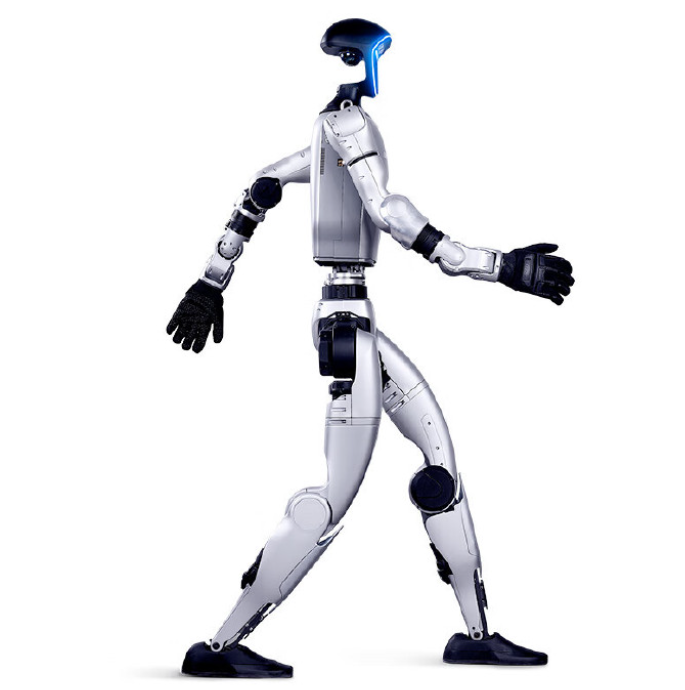
The show will carry the theme “Co-building the Ecosystem, Intelligently Leading the Future.” The theme signals that the exhibition will not be limited to complete vehicle displays. It will also emphasize vehicle manufacturing, intelligent technology, and supply chain ecosystems. The automotive industry’s accumulated technological capabilities are expected to extend toward a broader field of intelligent hardware, with embodied intelligence serving as a key bridge between mobility, artificial intelligence, and physical systems.
As one of the world’s largest automotive exhibitions, the Shanghai Auto Show has long served as a major platform for new vehicles and new technologies to make their debut. The 2027 edition is expected to continue that role while adding a stronger focus on embodied intelligence, physical AI, high-end chips, and the integration of artificial intelligence into vehicles. The announcement of a dedicated embodied intelligence exhibition zone reflects a widening understanding of how vehicles, robots, sensors, chips, software, and AI models are converging.
1. Event Overview and Strategic Role
The 2027 Shanghai Auto Show will take place at the National Exhibition and Convention Center (Shanghai), with an expected exhibition area of 400,000 square meters. The event is scheduled for April 23 to May 2, 2027. Its scale and timing position it as a major international gathering for automakers, technology suppliers, chip companies, software developers, and intelligent hardware innovators.
The organizers have described the event as a platform that goes beyond traditional vehicle launches. The show’s theme, “Co-building the Ecosystem, Intelligently Leading the Future,” points to a coordinated approach in which vehicles, intelligent systems, supply chains, and embodied intelligence applications develop together. This approach is important because the automotive industry is increasingly defined not only by mechanical engineering but also by software, data, AI models, semiconductors, and physical interaction with the real world.
| Item | Details |
|---|---|
| Event name | 22nd Shanghai International Automobile Industry Exhibition, known as the 2027 Shanghai Auto Show |
| Dates | April 23 to May 2, 2027 |
| Venue | National Exhibition and Convention Center (Shanghai) |
| Expected exhibition scale | 400,000 square meters |
| Theme | Co-building the Ecosystem, Intelligently Leading the Future |
| New exhibition feature | A dedicated embodied intelligence exhibition zone |
| Additional technology focus | Physical AI, high-end chips, intelligent technology, supply chain ecosystems, and advanced manufacturing |
The decision to create an embodied intelligence exhibition zone is significant because it gives embodied intelligence a visible and structured place within a major automotive event. In practical terms, embodied intelligence refers to artificial intelligence systems that can perceive, reason, decide, and act within physical environments. Vehicles are among the most complex embodied intelligence platforms because they combine sensors, computing power, real-time decision-making, energy systems, and human-machine interaction.
The 2027 Shanghai Auto Show is therefore expected to present embodied intelligence not as a distant concept but as a converging industrial direction. The automotive sector already possesses large-scale manufacturing, sensor deployment, chip integration, software architecture, and safety validation experience. These capabilities are directly relevant to embodied intelligence. The show’s expanded focus suggests that the automotive supply chain may become a foundation for broader intelligent hardware applications.
2. Embodied Intelligence Takes a Dedicated Stage
The first dedicated embodied intelligence exhibition zone at the 2027 Shanghai Auto Show will be a defining feature of the event. The zone is expected to gather technologies and applications related to embodied intelligence, including systems that connect perception, decision-making, and action. This is a natural extension of the automotive industry’s move toward intelligent driving, intelligent cockpits, robotics, and physical AI.
Embodied intelligence is closely linked to the evolution of intelligent vehicles. A vehicle must sense its surroundings, understand context, predict the behavior of other road users, and act safely in real time. These functions require a combination of sensors, high-performance computing, AI models, and robust software. The same technological stack is increasingly relevant to robots, automated machines, and other intelligent hardware. By establishing a dedicated embodied intelligence zone, the 2027 Shanghai Auto Show will allow those connections to be displayed in one place.
The presence of embodied intelligence at the show also reflects a broader industry trend. Artificial intelligence is moving from digital environments into physical environments. Large models, once associated mainly with text, images, and speech, are now being adapted for real-world tasks. In vehicles, this means AI systems may support intelligent driving, cabin interaction, vehicle control, and proactive service. In embodied intelligence systems, it means AI can interact with the physical world through sensors, actuators, and mechanical platforms.
The dedicated embodied intelligence exhibition zone will not exist in isolation. It will sit alongside displays of complete vehicles, intelligent technology, supply chain solutions, and advanced manufacturing. This arrangement can help visitors understand how embodied intelligence relates to automotive innovation. It can also help suppliers and technology companies demonstrate how their products contribute to a larger ecosystem.
- Embodied intelligence can connect automotive AI with physical action.
- Embodied intelligence can support intelligent driving, robotics, and intelligent hardware.
- Embodied intelligence can benefit from the automotive industry’s sensor, chip, and manufacturing capabilities.
- Embodied intelligence can extend the value of automotive technology beyond vehicles.
- Embodied intelligence can become a shared platform for multiple intelligent industries.
The show’s organizers have placed embodied intelligence within a framework that includes physical AI, high-end chips, and application scenarios for frontier technologies. This framework suggests that embodied intelligence will be presented not only as a research direction but also as an engineering and commercialization pathway. The automotive industry’s experience with safety, reliability, and mass production may provide a strong foundation for embodied intelligence development.
3. Intelligent Driving Moves Toward Scale and Commercialization
One of the three major product highlights announced for the 2027 Shanghai Auto Show is the accelerated scale and commercialization of high-end intelligent driving. According to Fu Bingfeng, executive vice president and secretary-general of the China Association of Automobile Manufacturers, 2027 is the first year for the implementation of a series of new standards. Under the guidance of these national standards, L2-level assisted driving functions will become more widespread, while more L3-level conditional automated driving models will receive road permits.
This development is closely related to embodied intelligence. An intelligent vehicle that can perceive its environment and make driving decisions is an embodied intelligence system in motion. The shift from L2-level assistance to L3-level conditional automation represents an increase in system responsibility and technical complexity. It requires stronger sensors, more powerful computing platforms, more reliable software, and clearer safety frameworks.
The 2027 Shanghai Auto Show is expected to display this transition across multiple vehicle categories. L2-level assisted driving functions are already common in many new vehicles, and their further普及 will continue to shape customer expectations. The more significant change is the expansion of L3-level conditional automated driving. When more models receive road permits, the industry moves closer to commercial deployment in defined conditions.
For embodied intelligence, intelligent driving provides a large-scale testing ground. Real-world roads present countless variables: pedestrians, cyclists, weather, construction zones, sudden obstacles, and complex intersections. An embodied intelligence system must process these variables and act safely. The automotive industry’s progress in intelligent driving can therefore inform broader embodied intelligence applications, including robots that operate in factories, warehouses, public spaces, and homes.
| Product Highlight | Expected Direction | Connection to Embodied Intelligence |
|---|---|---|
| High-end intelligent driving | Accelerated scale and commercialization; L2 assistance becomes more widespread; more L3 conditional automated driving models receive road permits | Embodied intelligence enables perception, decision-making, and action in real traffic environments |
| Battery and charging systems | High-power ultra-fast charging networks; fast charging becomes common; solid-state batteries may appear | Embodied intelligence platforms require efficient, reliable, and scalable energy systems |
| AI and vehicle integration | Large models enter intelligent driving and intelligent cockpits; products understand users, serve proactively, and evolve continuously | Embodied intelligence merges digital intelligence with physical vehicle functions |
The standards environment described by Fu Bingfeng is also important for embodied intelligence. Standards can provide common definitions, safety requirements, testing methods, and performance expectations. When L2 and L3 functions are guided by national standards, the industry gains a clearer path from innovation to deployment. This clarity can attract investment, encourage collaboration, and build public confidence.
The 2027 Shanghai Auto Show will therefore serve as more than a product display. It will also be a checkpoint for the intelligent driving ecosystem. Automakers, suppliers, chip companies, software developers, and sensor providers will have the opportunity to show how their technologies support safer and more capable vehicles. The presence of embodied intelligence at the show will highlight how these technologies extend beyond driving into broader physical intelligence.
4. Battery Technology and Charging Infrastructure
The second major product highlight is the further improvement of power battery technology and the energy replenishment system, which will enhance the charging service experience. The construction of high-power ultra-fast charging networks is accelerating, and fast charging for electric vehicles is expected to become widely applied. New-generation battery technologies, including solid-state batteries, are also expected to meet the public during the 2027 Shanghai Auto Show.
These developments are essential for embodied intelligence because intelligent systems require reliable energy. Electric vehicles are already mobile embodied intelligence platforms. They combine electric drive, computing, sensing, and connectivity. As charging becomes faster and more convenient, the practical use of electric vehicles expands. This supports the broader adoption of intelligent driving and intelligent cockpit functions, which depend on continuous power and thermal management.
High-power ultra-fast charging networks can reduce charging time and improve the user experience. When fast charging becomes common, electric vehicles can operate more flexibly across long-distance travel, urban use, and commercial applications. Solid-state batteries, if introduced in production vehicles, may offer advantages in energy density, safety, and charging performance. The 2027 Shanghai Auto Show is expected to be a stage for these next-generation battery technologies.
For embodied intelligence, energy systems are not a secondary concern. Robots, autonomous machines, and intelligent vehicles all need efficient power, heat dissipation, and safety. The automotive industry’s investment in battery technology and charging infrastructure can therefore benefit the wider embodied intelligence ecosystem. A vehicle is not only a machine that moves people or goods; it is also a platform that integrates energy, computation, and physical action.
The combination of advanced batteries and intelligent systems may also enable new functions. Vehicles could coordinate with charging networks, manage energy use, and provide services while parked or moving. These capabilities require embodied intelligence to understand the environment, the vehicle state, and user needs. The 2027 Shanghai Auto Show will provide a view of how battery innovation and embodied intelligence may reinforce each other.
5. AI Integration with Intelligent Driving and Intelligent Cockpits
The third major product highlight is the deep integration of artificial intelligence and automobiles. Large models and related technologies will be integrated into intelligent driving and intelligent cockpits. Vehicles that can understand user needs, actively provide service, and continuously evolve will be displayed in concentration. This is one of the clearest expressions of embodied intelligence in the automotive context.
An intelligent cockpit is an interface between human users and an embodied intelligence system. It can perceive voice, gesture, gaze, posture, and context. It can respond with speech, visual information, climate adjustments, route changes, and entertainment options. When large models are integrated into the cockpit, the vehicle may move from reactive command execution to proactive assistance. It can recognize patterns, anticipate needs, and adapt over time.
In intelligent driving, AI integration supports perception, prediction, planning, and control. Large models can help vehicles understand complex scenes, interpret unusual situations, and improve decision-making. However, safety remains critical. The industry must ensure that AI functions are validated, explainable where necessary, and governed by clear standards. The 2027 Shanghai Auto Show is expected to show how automakers and suppliers are addressing these challenges.
Embodied intelligence is central to this evolution because it connects AI with physical action. A vehicle that understands a user’s request must also execute it safely in the real world. For example, a vehicle may understand that a passenger wants a quieter cabin, a different route, or a charging stop. Acting on that understanding requires coordination across sensors, software, actuators, and energy systems. This is the essence of embodied intelligence.
The show’s focus on AI integration also suggests that vehicles will become part of a larger intelligent ecosystem. They may communicate with infrastructure, other vehicles, mobile devices, homes, and cloud services. This connectivity expands the scope of embodied intelligence from a single machine to a network of physical and digital systems. The 2027 Shanghai Auto Show will provide a platform to present these possibilities without separating them from real product development.
6. Physical AI, High-End Chips, and Supply Chain Ecosystems
In addition to the dedicated embodied intelligence exhibition zone, the 2027 Shanghai Auto Show will create application scenarios for frontier technologies such as physical AI and high-end chips. These areas are closely related to embodied intelligence. Physical AI refers to artificial intelligence that operates in and interacts with the physical world. High-end chips provide the computing power needed for perception, planning, decision-making, and learning.
The automotive industry is already a major driver of high-end chip development. Modern vehicles use chips for advanced driver assistance, infotainment, battery management, connectivity, safety systems, and vehicle control. As intelligent driving and intelligent cockpits become more advanced, the demand for powerful and efficient chips increases. The same chips and architectures can support embodied intelligence applications beyond vehicles.
Supply chain ecosystems are also central to the show’s theme. The 2027 Shanghai Auto Show will emphasize vehicle manufacturing, intelligent technology, and supply chain collaboration. This emphasis recognizes that no single company can build a complete intelligent vehicle or embodied intelligence platform alone. It requires cooperation among chip designers, sensor makers, software developers, automakers, battery suppliers, and manufacturing equipment providers.
| Frontier Area | Role in the 2027 Shanghai Auto Show | Relationship to Embodied Intelligence |
|---|---|---|
| Embodied intelligence | Dedicated exhibition zone for the first time | Core theme connecting AI, physical systems, and intelligent action |
| Physical AI | Application scenarios for frontier technology | Extends AI from digital tasks to real-world interaction |
| High-end chips | Application scenarios for frontier technology | Provides computing power for perception, planning, and control |
| Supply chain ecosystem | Key exhibition focus alongside vehicles and intelligent technology | Supports scaled development and deployment of embodied intelligence |
The show’s structure suggests that embodied intelligence will be presented as part of a value chain. A chip may enable an AI model. An AI model may enable a vehicle function. A vehicle function may create a user experience. A supply chain may scale that function across many products. This chain is important for embodied intelligence because it must move from demonstration to reliable, cost-effective, and safe deployment.
The automotive industry’s experience with supply chain management, quality control, and mass production can help embodied intelligence mature. Vehicles are produced in large volumes and must meet strict safety and durability requirements. These practices can be adapted to robots and other embodied intelligence platforms. The 2027 Shanghai Auto Show will provide a venue for this cross-sector learning.
7. Registration, Preparation, and Industry Confidence
Li Dong, president of the Shanghai Council for the Promotion of International Trade, said that registration from various parties has exceeded expectations and that preparations for the 2027 Shanghai Auto Show are advancing steadily. This statement indicates strong industry interest in the event, including its new embodied intelligence exhibition zone and its broader technology focus.
The strong registration response is significant because it shows that exhibitors view the 2027 Shanghai Auto Show as a relevant platform for both automotive and intelligent technology. The show’s ability to attract participation across vehicles, chips, AI, batteries, manufacturing, and supply chains will be important for the embodied intelligence theme. Embodied intelligence requires collaboration, and a major exhibition can help different sectors find common ground.
Preparation for a show of this scale involves complex coordination. Organizers must plan exhibition space, manage logistics, support international participants, and create an environment where products and technologies can be presented effectively. The expected 400,000-square-meter scale reflects the breadth of the event. The addition of an embodied intelligence exhibition zone adds a new dimension to that planning.
The steady progress of preparations also suggests confidence in the long-term direction of the industry. Even as the automotive sector faces competition, regulation, and technological change, companies continue to invest in new products and new capabilities. The 2027 Shanghai Auto Show will be a moment to assess how those investments are translating into market-ready solutions.
For embodied intelligence, industry confidence is essential. The field spans robotics, AI, sensors, chips, materials, and software. It needs long-term investment and cross-disciplinary cooperation. By hosting a dedicated embodied intelligence exhibition zone, the 2027 Shanghai Auto Show can help build that confidence and provide visibility for companies working across traditional boundaries.
8. The Theme and the Broader Extension of Automotive Capabilities
The theme “Co-building the Ecosystem, Intelligently Leading the Future” captures the show’s dual focus on cooperation and intelligence. “Co-building the ecosystem” recognizes that the future of mobility depends on collaboration among many industries. “Intelligently leading the future” emphasizes the role of AI, intelligent driving, intelligent cockpits, and embodied intelligence in shaping the next generation of products.
The show will not only display complete vehicles. It will also highlight vehicle manufacturing, intelligent technology, and supply chain ecosystems. This broader scope reflects the reality that automotive companies are becoming technology platforms. Their capabilities in sensors, computing, software, energy, and manufacturing can be applied to many forms of intelligent hardware. Embodied intelligence is one of the most important destinations for these capabilities.
When automotive technology extends into embodied intelligence, it can create new opportunities. A sensor suite developed for a vehicle may be adapted for a robot. A chip designed for intelligent driving may support an autonomous machine. A battery system developed for an electric vehicle may power a mobile robot. A software stack for perception and planning may be reused in other physical systems. These possibilities are likely to be explored at the 2027 Shanghai Auto Show.
The dedicated embodied intelligence exhibition zone can help visitors see these connections. It can also help exhibitors demonstrate how their products fit into a larger ecosystem. Instead of treating embodied intelligence as a separate field, the show places it alongside automotive innovation. This integrated presentation may accelerate learning and cooperation across sectors.
The extension of automotive capabilities into broader intelligent hardware also has implications for standards, safety, and regulation. Vehicles are already subject to detailed rules. As embodied intelligence systems enter more areas of life, similar frameworks may be needed. The 2027 Shanghai Auto Show can serve as a forum for discussing these issues through exhibits, product launches, and industry exchanges.
9. Outlook for the 2027 Shanghai Auto Show
The 2027 Shanghai Auto Show is set to be a major event for the global automotive industry. It will take place from April 23 to May 2, 2027, at the National Exhibition and Convention Center (Shanghai), with an expected scale of 400,000 square meters. Its theme, “Co-building the Ecosystem, Intelligently Leading the Future,” will guide displays across vehicles, manufacturing, intelligent technology, and supply chains.
The first dedicated embodied intelligence exhibition zone will be a notable addition. It will give embodied intelligence a clear presence at a major automotive show and will connect it with intelligent driving, intelligent cockpits, physical AI, high-end chips, batteries, and charging systems. The show’s three product highlights, including high-end intelligent driving, next-generation battery and charging technology, and AI integration, all relate to the broader development of embodied intelligence.
As 2027 approaches, the industry will watch how new standards affect L2 and L3 driving functions, how solid-state batteries and ultra-fast charging develop, and how large models change vehicle interaction. The convergence of these trends will shape the products displayed at the show. Embodied intelligence will be a key lens through which these developments can be understood.
The 2027 Shanghai Auto Show will therefore be more than a traditional auto show. It will be a meeting point for vehicles, AI, chips, energy, manufacturing, and embodied intelligence. It will show how the automotive industry is extending its technological foundation into a wider intelligent hardware landscape. It will also demonstrate why embodied intelligence has become a central topic for the next stage of intelligent mobility.
With registration exceeding expectations and preparations advancing steadily, the event is positioned to attract broad participation. The combination of a dedicated embodied intelligence exhibition zone, a strong technology focus, and a global automotive platform may make the 2027 Shanghai Auto Show a defining moment for embodied intelligence and for the industries that are building it.