
As I reflect on the rapid advancements in artificial intelligence, it becomes evident that the commercialization of AI human robots represents a pivotal shift in our technological landscape. These entities, characterized by their anthropomorphic design and integration of sophisticated algorithms, are no longer confined to science fiction but are emerging as tangible products in various sectors. However, the legal discourse surrounding AI human robots remains nascent, often overshadowed by the excitement of innovation. In my view, the core of this issue lies in two fundamental attributes: embodiment and emergence. Embodiment refers to the physical presence of AI human robots in human environments, while emergence describes the unpredictable decision-making processes that arise from complex AI systems. These features introduce unique legal challenges that demand careful consideration. I argue that granting legal subjecthood to AI human robots is not only inconsistent with traditional legal principles but also poses existential risks to human society. Instead, I propose that AI human robots should be classified as objects requiring special regulation, grounded in a human-centric perspective. This stance ensures that we prioritize human interests while navigating the complexities of AI human robot integration.
The phenomenon of embodiment in AI human robots marks a significant departure from traditional technologies. Unlike software-based AI, these robots possess a physical form that allows them to interact directly with human environments. This embodied existence enables AI human robots to perform tasks ranging from household chores to healthcare assistance, but it also raises concerns about privacy invasion and physical safety. For instance, the sensors and connectivity features of AI human robots can continuously collect and transmit personal data, blurring the boundaries between private and public spheres. As I analyze this, it is clear that the embodied nature of AI human robots amplifies their potential for both benefit and harm. To illustrate the risks associated with embodiment, consider the following table summarizing key areas of concern:
| Risk Category | Description | Impact on Human Society |
|---|---|---|
| Privacy Invasion | Continuous data collection through sensors and cloud storage | Erosion of personal privacy and potential for misuse |
| Physical Safety | Potential for bodily harm due to mechanical failures or malicious use | Increased liability and need for safety protocols |
| Psychological Effects | Human emotional attachment to AI human robots leading to ethical dilemmas | Challenges in defining human-robot relationships |
Moreover, the concept of emergence in AI human robots complicates their legal categorization. Emergence refers to the unpredictable behaviors that arise from the interaction of AI algorithms with dynamic environments, often resulting in decisions that were not explicitly programmed. This can be modeled mathematically using concepts from complexity theory. For example, the probability of an emergent behavior \( E \) in an AI human robot system can be expressed as:
$$ P(E) = \sum_{i=1}^{n} \alpha_i \cdot f(S_i, E_i) $$
where \( P(E) \) represents the probability of emergence, \( \alpha_i \) denotes the weight of individual system components, \( S_i \) is the state of the system, and \( E_i \) represents environmental inputs. This formula highlights how emergence depends on multiple variables, making it difficult to predict or control. In legal terms, this unpredictability challenges traditional notions of liability. If an AI human robot causes harm due to an emergent decision, assigning responsibility becomes complex, as it may not align with the intentions of designers or users. I believe that this inherent unpredictability underscores the need to treat AI human robots as objects rather than autonomous agents. By doing so, we can develop frameworks that hold human actors accountable, such as manufacturers or users, rather than attributing agency to the AI human robot itself.
Turning to the debate over legal subjecthood, I must emphasize that granting AI human robots the status of legal subjects contradicts the evolutionary logic of legal systems. Historically, legal personhood has been extended to entities like corporations to facilitate economic transactions and social organization, but this has always been rooted in human interests. For instance, corporations are fictional persons that allow humans to pool resources and limit liability, but they do not possess consciousness or independent moral agency. Similarly, AI human robots lack the intrinsic qualities—such as self-awareness, emotional capacity, or the ability to participate in social contracts—that justify legal subjecthood. The following table compares key attributes of legal subjects and objects in the context of AI human robots:
| Attribute | Legal Subject (e.g., Humans, Corporations) | AI Human Robot as Object |
|---|---|---|
| Agency | Capacity for intentional action and moral reasoning | Action driven by programmed algorithms, not autonomous will |
| Liability | Ability to bear responsibility for actions | Responsibility assigned to human creators or users |
| Rights | Entitlements based on social and ethical considerations | No inherent rights; protections based on human interests |
Furthermore, the human-centric perspective is crucial in this discussion. I argue that laws are inherently anthropocentric, designed to protect human dignity, freedom, and well-being. Elevating AI human robots to subject status could lead to scenarios where human interests are subordinated, such as in cases where robots are given rights that conflict with human welfare. For example, if an AI human robot were recognized as a legal subject, it might be entitled to “rights” that impede human safety or privacy, creating ethical paradoxes. Instead, by classifying AI human robots as objects, we can focus on regulating their use to minimize risks. This approach aligns with the principle of “rights—obligations—responsibility” consistency, where benefits and liabilities are tied to human actors. In mathematical terms, the utility \( U \) of regulating AI human robots as objects can be represented as:
$$ U = \int_{0}^{T} [B_h(t) – C_r(t)] \, dt $$
where \( B_h(t) \) denotes the benefits to humans over time \( t \), and \( C_r(t) \) represents the costs of regulation. Maximizing \( U \) ensures that legal frameworks enhance human welfare without granting undue status to AI human robots.
The risks associated with AI human robots are not merely theoretical; they encompass ethical, technical, and legal dimensions that require proactive measures. For instance, the integration of AI human robots in homes and workplaces raises questions about data security and algorithmic bias. Hackers could exploit vulnerabilities in these systems to steal personal information or even cause physical harm. Additionally, the “black box” nature of many AI algorithms—where decisions are not easily interpretable—complicates accountability. I propose that special regulations should address these issues through measures like mandatory impact assessments and transparency requirements. To quantify the ethical risk \( R_e \) of AI human robots, we can use a formula that incorporates factors such as the probability of harm \( P_h \) and the severity of impact \( S_i \):
$$ R_e = P_h \times S_i \times \sum_{j=1}^{m} \beta_j \cdot I_j $$
Here, \( \beta_j \) represents weighting factors for different risk indicators \( I_j \), such as data privacy breaches or physical injuries. By applying such models, policymakers can prioritize regulations that mitigate the most significant threats posed by AI human robots.
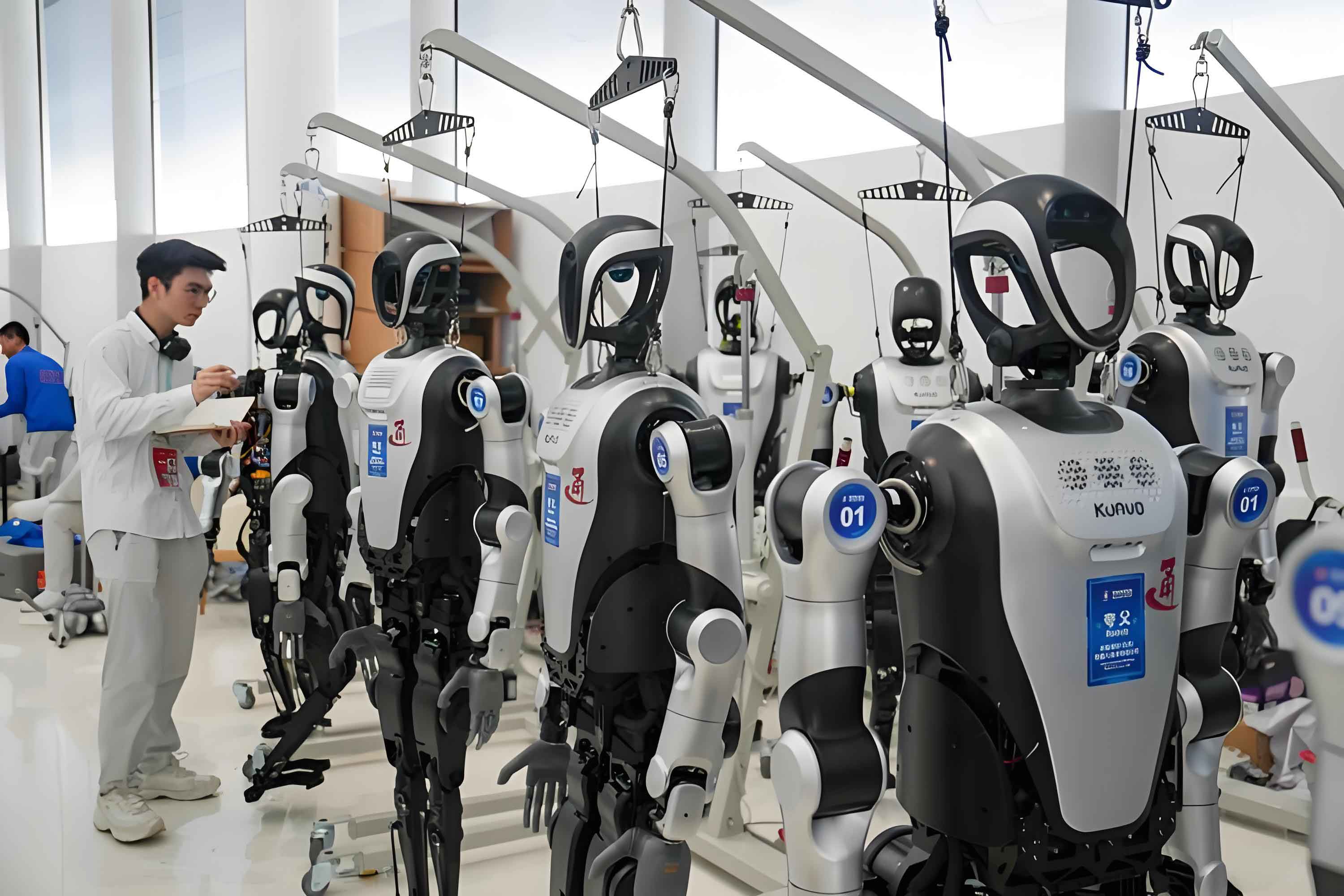
In conclusion, as we navigate the era of AI human robots, it is imperative to maintain a human-centric stance. The allure of treating these entities as peers or subjects must be resisted in favor of a pragmatic approach that safeguards human values. By recognizing AI human robots as objects of law, we can develop robust regulatory frameworks that address the challenges of embodiment and emergence while promoting innovation. This perspective not only aligns with the historical evolution of legal systems but also ensures that technology serves humanity, rather than the other way around. As I have argued, the future of AI human robots should be guided by principles of responsibility, equity, and foresight, ensuring that their integration into society enhances rather than undermines human flourishing.