
In recent years, the field of humanoid robots has garnered significant attention as a transformative technology with the potential to reshape global industries. As a researcher focused on industrial development, I have conducted an in-depth analysis of the current state, opportunities, challenges, and strategies for the high-quality growth of the humanoid robots sector. Through literature review, enterprise surveys, and expert interviews, I aim to provide a comprehensive perspective on how humanoid robots can evolve from experimental prototypes to mainstream applications. This article explores the market dynamics, technological advancements, and policy frameworks driving the humanoid robots industry, while addressing the critical hurdles in innovation, supply chains, and societal acceptance. By leveraging insights from analogous sectors like new energy vehicles and artificial intelligence, I propose actionable pathways to foster a robust ecosystem for humanoid robots, ensuring they become a cornerstone of future productivity.
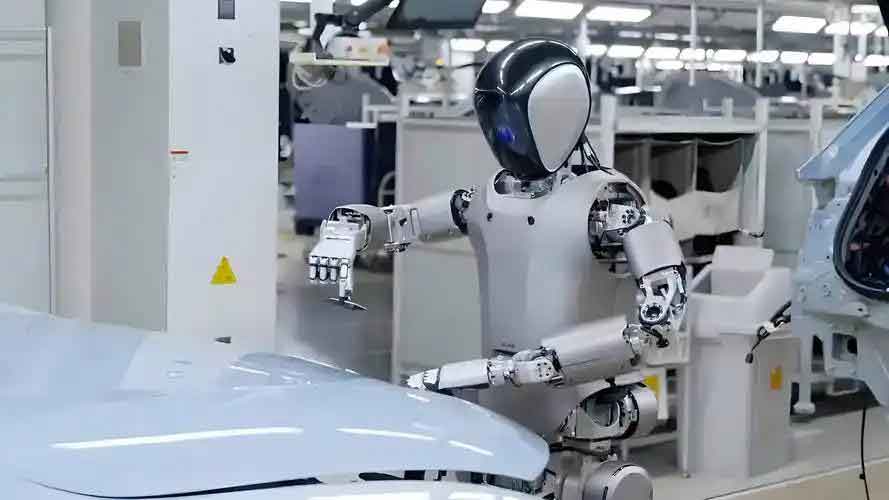
The humanoid robots industry is poised at a critical juncture, where convergence of AI, advanced manufacturing, and materials science is accelerating progress. Humanoid robots, defined as embodied intelligent machines with human-like structures including heads, torsos, and limbs, are increasingly capable of environmental perception and decision-making. According to recent policy directives, such as the “Guidance on Innovative Development of Humanoid Robots” issued in 2023, humanoid robots are anticipated to become disruptive products akin to computers, smartphones, and new energy vehicles, fundamentally altering production and lifestyles. In this study, I delve into the factors that could enable humanoid robots to achieve mass adoption, drawing parallels with successful industrial transformations. The integration of large language models and the influx of major players are creating unprecedented momentum, yet challenges in core technologies and ecosystem development remain. Through this analysis, I seek to outline a roadmap for humanoid robots to transition from niche applications to widespread commercialization, ultimately contributing to economic resilience and technological leadership.
Current State of the Humanoid Robots Industry
The humanoid robots industry is experiencing rapid growth, driven by demographic shifts, technological breakthroughs, and supportive policies. From a market perspective, aging populations and rising labor costs are fueling demand for automation. Statistical data indicate that the global population aged 65 and above has increased significantly, while the labor force share has declined, creating a pressing need for robotic solutions. Humanoid robots offer a versatile platform for tasks ranging from industrial manufacturing to personal assistance, with projections suggesting explosive market expansion. For instance, estimates from industry analysts predict that the global market size for humanoid robots could exceed $20 billion by 2026 and reach $200 billion by 2030, with China potentially accounting for $50 billion. In the long term, under optimistic scenarios, the market might soar to $1.54 trillion by 2035, reflecting a compound annual growth rate (CAGR) of up to 94% from 2025 to 2035. This growth is underpinned by the potential for humanoid robots to replace human labor in both B2B and B2C contexts, leading to what is often termed the “era of embodied intelligence.”
To quantify the market dynamics, consider the following table summarizing key projections and drivers for humanoid robots adoption:
| Region | Projected Market Penetration by 2030 (%) | Estimated Demand (Million Units) | Primary Application Scenarios |
|---|---|---|---|
| United States | 16 | ~2,000 | Healthcare, Logistics |
| Europe | 12 | ~1,500 | Industrial Manufacturing, Services |
| Asia | 8 | ~3,500 | Personal and Household Use |
This table illustrates the regional variations in humanoid robots adoption, with Asia showing the highest potential demand due to its large population and rapid industrialization. The commercial scenarios for humanoid robots are diverse, with healthcare accounting for the largest share, logistics exhibiting the fastest growth, and personal home applications holding the greatest long-term potential. As humanoid robots become more affordable and capable, their deployment in these areas is expected to accelerate, driven by economies of scale and technological maturation.
From a technological standpoint, humanoid robots have evolved from early research prototypes to sophisticated systems with enhanced mobility and intelligence. Internationally, countries like Japan, the United States, and Russia have pioneered developments in joint design, power drives, perception, and control systems. Japan, for example, has long led in precision reducers, controllers, and motors, with humanoid robots like Honda’s Asimo demonstrating early bipedal locomotion. The United States has leveraged its strengths in AI and computing to advance humanoid robots for military and aerospace applications, with recent initiatives such as NVIDIA’s Project GR00T introducing universal foundation models for humanoid robots. Domestically, progress has been accelerated by universities and enterprises, leading to innovations in basic components, new materials, and recognition algorithms. However, gaps persist in key areas like core components, operating systems, and integrated products. The cost of humanoid robots remains a barrier, with current models priced between $20,000 and $100,000, limiting mass adoption. Technologically, humanoid robots rely on advancements in actuators, sensors, and AI algorithms, which can be modeled using equations such as the dynamics of motion control:
$$ \tau = M(q)\ddot{q} + C(q, \dot{q}) + G(q) $$
where \( \tau \) represents the joint torques, \( M(q) \) is the inertia matrix, \( C(q, \dot{q}) \) accounts for Coriolis and centrifugal forces, and \( G(q) \) denotes gravitational effects. This equation highlights the complexity of achieving stable locomotion in humanoid robots, a challenge that requires continuous refinement of hardware and software.
In terms of policy, global competition is intensifying, with nations incorporating humanoid robots into their strategic plans. The United States emphasizes guidance-oriented policies, Germany focuses on coordination, Japan adopts inducement strategies, and South Korea implements regulatory approaches. China, in response, has prioritized industrial development through top-level designs like the aforementioned guidance document, which outlines goals for achieving international competitiveness in brain-like computing, cerebellum-like control, and limb-like mechanisms. Local governments are also actively promoting humanoid robots clusters, with cities such as Shenzhen, Beijing, and Shanghai launching initiatives to build open-source platforms, application demonstrations, and innovation centers. For instance, Shanghai aims to cultivate a humanoid robots industry worth approximately $140 billion by 2025, while Anhui province targets the development of 2-3 influential whole-machine enterprises and industrial agglomeration zones. These efforts reflect a concerted push to position humanoid robots as a pillar of future economic growth.
Major Opportunities for Humanoid Robots Industry Development
The humanoid robots industry stands to benefit from several converging trends, which I identify as key opportunities for high-quality development. First, the success of the new energy vehicle (NEV) industry provides a blueprint for leapfrogging in humanoid robots. Companies like Tesla have demonstrated how existing manufacturing infrastructure and supply chains can be repurposed for humanoid robots production, as seen with the Optimus prototype. By leveraging expertise in battery technology, actuators, and AI algorithms from NEVs, humanoid robots can achieve faster iteration and cost reduction. The synergy between these sectors is evident in the shared components, such as motors and control systems, with humanoid robots potentially costing less than 50% of equivalent NEVs. This cross-industry learning can be quantified through a cost-sharing model:
$$ C_{hr} = \alpha C_{nev} + \beta C_{ai} + \gamma C_{manuf} $$
where \( C_{hr} \) is the total cost of humanoid robots, \( C_{nev} \) represents costs inherited from NEVs, \( C_{ai} \) denotes AI-related expenses, \( C_{manuf} \) covers manufacturing overheads, and \( \alpha, \beta, \gamma \) are scaling factors typically less than 1 due to efficiencies. For example, if \( \alpha = 0.4 \), it implies that 40% of NEV cost structures can be applied to humanoid robots, accelerating commercialization. China’s leadership in NEVs—being the world’s largest producer and consumer—positions it favorably to replicate this success in humanoid robots, enabling a “curve-overtaking” opportunity akin to the automotive sector’s transformation.
Second, the rapid iteration of large language models (LLMs) is empowering humanoid robots with advanced cognitive capabilities. Humanoid robots serve as ideal platforms for embodied AI, where LLMs act as the “brain” enabling natural language understanding, task decomposition, and action planning. The advent of models like Project GR00T and domestic equivalents has overcome previous limitations in environmental interaction, allowing humanoid robots to perform complex tasks through multimodal perception. Reports indicate that China and the U.S. dominate LLM development, with over 80% of global models originating from these two countries. China alone has more than 80 large-scale models with parameters exceeding 1 billion, facilitating a competitive edge in AI-driven humanoid robots. The integration of LLMs can be expressed through an AI performance metric:
$$ P_{ai} = \frac{1}{N} \sum_{i=1}^{N} \log \left( \frac{1}{1 – \text{Accuracy}_i} \right) $$
where \( P_{ai} \) measures the average AI performance across \( N \) tasks, and Accuracy_i represents the task success rate. This formula underscores how improved AI models enhance the functionality of humanoid robots, expanding their application scope from simple repetitive tasks to adaptive problem-solving in dynamic environments.
Third, the influx of heavyweight manufacturers and startups is creating a vibrant ecosystem for humanoid robots. In 2023 alone, numerous players from diverse backgrounds—including established robotics firms, automotive companies, and tech giants—unveiled new humanoid robots products. This diversity fosters innovation through competition and collaboration. For instance, upstream component suppliers have made strides in servomotors, control systems, and reducers, while midstream integrators are pushing the boundaries in整机 design and intelligence. Downstream, the vast domestic market offers ample opportunities for pilot testing in scenarios like industrial manufacturing, logistics, and healthcare. The following table summarizes the key player categories and their contributions to the humanoid robots industry:
| Player Category | Examples | Key Contributions | Recent Product Launches |
|---|---|---|---|
| Robotics Manufacturers | UBTech, Fourier | Advanced locomotion, AI integration | Walker S, GR-1 |
| Automotive Companies | Xiaopeng, Chery | Manufacturing scalability, sensor fusion | CyberOne, Qiyuan-1 |
| AI and Tech Firms | Huawei, iFlytek | LLM deployment, cloud computing | Spark Model, Kepler |
This table highlights how different sectors are converging to drive humanoid robots innovation, with each player bringing unique strengths. As more entrants join the fray, the industry is likely to experience accelerated growth, particularly as technologies mature and commercialization milestones are reached. The collective effort positions humanoid robots as a focal point for industrial upgrading, with China potentially leveraging late-mover advantages to achieve global leadership.
Challenges in Achieving High-Quality Development for Humanoid Robots
Despite the promising opportunities, the humanoid robots industry faces significant challenges that must be addressed to ensure sustainable growth. In the innovation chain, core technologies remain immature, hindering widespread adoption. Humanoid robots require advancements in perception-decision-control integration, compliant control, multimodal interaction, biomimetic dynamics, and lightweight materials to meet the demands of high-performance applications. The cost structure of humanoid robots is heavily influenced by key components, as shown in the following breakdown: brushless torque motors (21%), reducers (16%), force sensors (16%), lead screws (4%), inertial navigation systems (1%), and other parts (28%). Importantly, the reliance on international suppliers for these components is high, with import dependencies ranging from 40% to 86%, exposing the industry to supply chain risks. Moreover, patent analysis reveals that while China leads in application numbers, many filings are concentrated in mid-to-low-end areas like structural design, with fewer in high-end domains such as autonomous learning and human-robot interaction. This technological gap can be modeled using an innovation index:
$$ I_{tech} = \frac{\sum_{i=1}^{n} w_i \cdot T_i}{\sum_{i=1}^{n} w_i} $$
where \( I_{tech} \) represents the overall technological innovation level, \( T_i \) denotes performance in category \( i \) (e.g., actuators, AI), and \( w_i \) is the weight assigned based on importance. Currently, \( I_{tech} \) for domestic humanoid robots lags behind international leaders, necessitating focused R&D to close the gap.
In the industrial chain, the ecosystem for humanoid robots requires optimization to support scalable production. Geographically, the industry is concentrated in regions like Beijing, Guangdong, and Shanghai, which host the majority of whole-machine and component enterprises, research institutions, and patent filings. For example, in 2023, these three regions accounted for over 90% of investment and financing in humanoid robots. However, this centralization may lead to imbalances in resource allocation and innovation diffusion. Application scenarios represent the “last mile” for humanoid robots industrialization, but widespread deployment is still limited. While pilot projects exist—such as humanoid robots performing quality inspections in automotive factories or serving in commercial complexes—the transition to large-scale adoption is slow. The following table outlines the distribution of humanoid robots resources across key regions, highlighting disparities that could impede holistic development:
| Region | Number of Whole-Machine Enterprises | Number of Component Suppliers | Effective Invention Patents (2023, %) | Investment Share (2023, %) |
|---|---|---|---|---|
| Beijing | 9 | 48 | 27.3 | 36.4 |
| Guangdong | 11 | 93 | 18.9 | 31.8 |
| Shanghai | 7 | 39 | 14.7 | 27.3 |
| Zhejiang | 3 | 21 | 9.7 | ~5 |
This table underscores the need for more balanced regional development to avoid bottlenecks in the humanoid robots supply chain. Additionally, the industry is more technology-pushed than demand-pulled, meaning that creating viable use cases is essential to drive adoption. Without clear demonstrations of value in diverse settings, humanoid robots may struggle to move beyond niche applications.
In the demand chain, societal acceptance and cost issues pose substantial barriers to humanoid robots adoption. Public skepticism about robots replacing human jobs or exhibiting autonomous behavior often leads to resistance, as seen in incidents like the temporary suspension of autonomous taxi services in some cities. Ethical concerns, such as privacy violations, moral accountability, and safety risks, further complicate deployment. For instance, if humanoid robots gain emotional cognition capabilities, they could raise questions about human-robot relationships and data security. Cost remains a critical factor, with current humanoid robots models priced between $20,000 and $100,000, far from affordable for mass markets. The high expense stems from custom components and low production volumes, which can be analyzed using a cost-volume curve:
$$ C(v) = C_0 + \frac{k}{v} $$
where \( C(v) \) is the unit cost at production volume \( v \), \( C_0 \) represents fixed costs, and \( k \) is a constant related to variable expenses. As \( v \) increases, \( C(v) \) decreases, but achieving economies of scale requires upfront investment and market confidence. Thus, humanoid robots must overcome these societal and economic hurdles to realize their full potential, necessitating efforts in public education, regulatory frameworks, and cost-reduction strategies.
Strategies for High-Quality Development of Humanoid Robots
To address these challenges and capitalize on opportunities, I propose a multi-faceted approach centered on technological innovation, ecosystem building, and strategic guidance. First, focusing on key technologies is essential to break the “first-mover advantage” of competitors. This involves advancing common technologies such as interdisciplinary fundamental theories, lightweight flexible materials, and engineering manufacturing processes. For humanoid robots, breakthroughs in AI algorithms, environmental perception, and 3D spatial localization are crucial. Initiatives like industry “cornerstone” projects can identify and tackle bottlenecks through mechanisms such as “unveiling the list of challenges,” where consortia of universities and enterprises collaborate on specific issues. In terms of whole-machine manufacturing, efforts should prioritize human-robot interaction, non-physical environment perception, and high-quality multimodal data processing to enhance the “brain” of humanoid robots. Motion control algorithms, dynamic grasping, and high-mobility本体 design require dedicated R&D, potentially modeled using optimization frameworks:
$$ \min_{x} f(x) = \sum_{i=1}^{m} \left( \text{Error}_i(x) \right)^2 $$
where \( x \) represents design parameters (e.g., joint angles, control gains), and \( \text{Error}_i \) quantifies deviations from desired performance in task \( i \). By minimizing this objective function, humanoid robots can achieve more precise and stable operations. Additionally, core software technologies, including dedicated chips for vision, hearing, and force sensing, must be developed to improve decision-making efficiency. Building a suite of application software will enable humanoid robots to operate safely and intelligently across diverse scenarios, fostering a software-driven ecosystem.
Second, fostering a robust industrial ecosystem is key to building a “winning momentum” for humanoid robots. This entails optimizing innovation carriers by establishing public platforms like industrial innovation centers, computing power hubs, and testing facilities. Supporting university-industry partnerships can accelerate the development of universal prototypes and large models, with funding models akin to those in biopharmaceuticals—e.g., “advance payments + milestone payments”—to help startups navigate critical phases from R&D to market entry. To完善 the industrial gradient, regions should leverage their strengths in related sectors like NEVs, integrated circuits, and AI to integrate humanoid robots into existing supply chains. A “whole-machine + core配套” collaborative path can be pursued, focusing on cultivating leading enterprises and chain masters to drive resource aggregation. The following table outlines a proposed action plan for ecosystem development, emphasizing targeted initiatives:
| Initiative | Description | Expected Outcome |
|---|---|---|
| Innovation Platforms | Set up centers for R&D, simulation, and testing | Accelerated technology transfer and prototyping |
| Supply Chain Integration | Promote local sourcing of components like actuators | Reduced import dependency and cost savings |
| Application Scenarios | Open testbeds in healthcare, logistics, etc. | Faster iteration and user feedback |
This table highlights how coordinated efforts can strengthen the humanoid robots value chain. Moreover, opening up application scenarios globally and in real-time is vital. Establishing graded testing environments—from simple to complex—allows for iterative improvement based on practical data. Training centers capable of handling hundreds to thousands of humanoid robots can facilitate comprehensive evaluations before mass production. By deploying humanoid robots in commercial, emergency response, and healthcare settings, the industry can demonstrate tangible benefits and build momentum for broader adoption.
Third, enhancing strategic leadership is critical to achieving “lane leadership” in the humanoid robots sector. This involves strengthening policy guidance through the issuance of cluster development plans and application scenario roadmaps. Governments should outline clear tasks for key technologies, products, and ecosystems, assigning responsibilities to ensure accountability. Developing industry standards is equally important; this includes terminology, general本体 structures, and social ethics norms. Standards for perception systems, navigation, and human-robot interaction need to be established, alongside preemptive research on components like high-performance chips and energy modules. A hierarchical approach to safety and performance evaluation can be implemented, with formulas for standardization metrics:
$$ S_{std} = \sum_{j=1}^{p} \lambda_j \cdot \text{Compliance}_j $$
where \( S_{std} \) represents the standardization score, \( \lambda_j \) is the weight for standard category \( j \), and \( \text{Compliance}_j \) measures adherence to benchmarks. By promoting national and international standards, humanoid robots can gain credibility and interoperability. Furthermore, military-civil fusion presents an opportunity to leverage defense technologies for civilian humanoid robots applications. Through top-level design, synergistic innovation mechanisms can integrate military advancements in robotics, creating specialized industrial bases and expanding market opportunities. This holistic strategy, combining technology, ecosystem, and policy, will position humanoid robots as a driver of high-quality industrial development, ultimately contributing to global technological leadership.
In conclusion, the humanoid robots industry is at a pivotal stage, with immense potential to transform economies and societies. By addressing technological gaps, optimizing supply chains, and building public trust, stakeholders can unlock the full benefits of humanoid robots. As I have outlined, the convergence of opportunities from NEVs, AI, and diverse players provides a solid foundation for growth. However, sustained efforts in innovation and collaboration are necessary to overcome challenges and realize a future where humanoid robots are integral to daily life. Through strategic focus and relentless pursuit of excellence, the humanoid robots industry can achieve high-quality development, paving the way for a new era of embodied intelligence and productivity.