
As Unitree stands on the brink of its initial public offering, the humanoid robots industry is witnessing a frenetic pace of competition. With Unitree outlining a clear timeline to submit its IPO application by the end of 2025, it has become the benchmark for all emerging players in the field. The company’s prominence has drawn intense scrutiny and imitation, as rivals scramble to catch up through performance enhancements, price reductions, and strategic positioning. This surge in activity underscores a broader trend: the humanoid robots market is no longer a niche domain but a full-fledged battleground where companies are vying for dominance through diverse approaches. While Unitree’s IPO is viewed as a pivotal moment, the ultimate trajectory of the sector will depend on sustained innovation and execution, rather than mere speed.
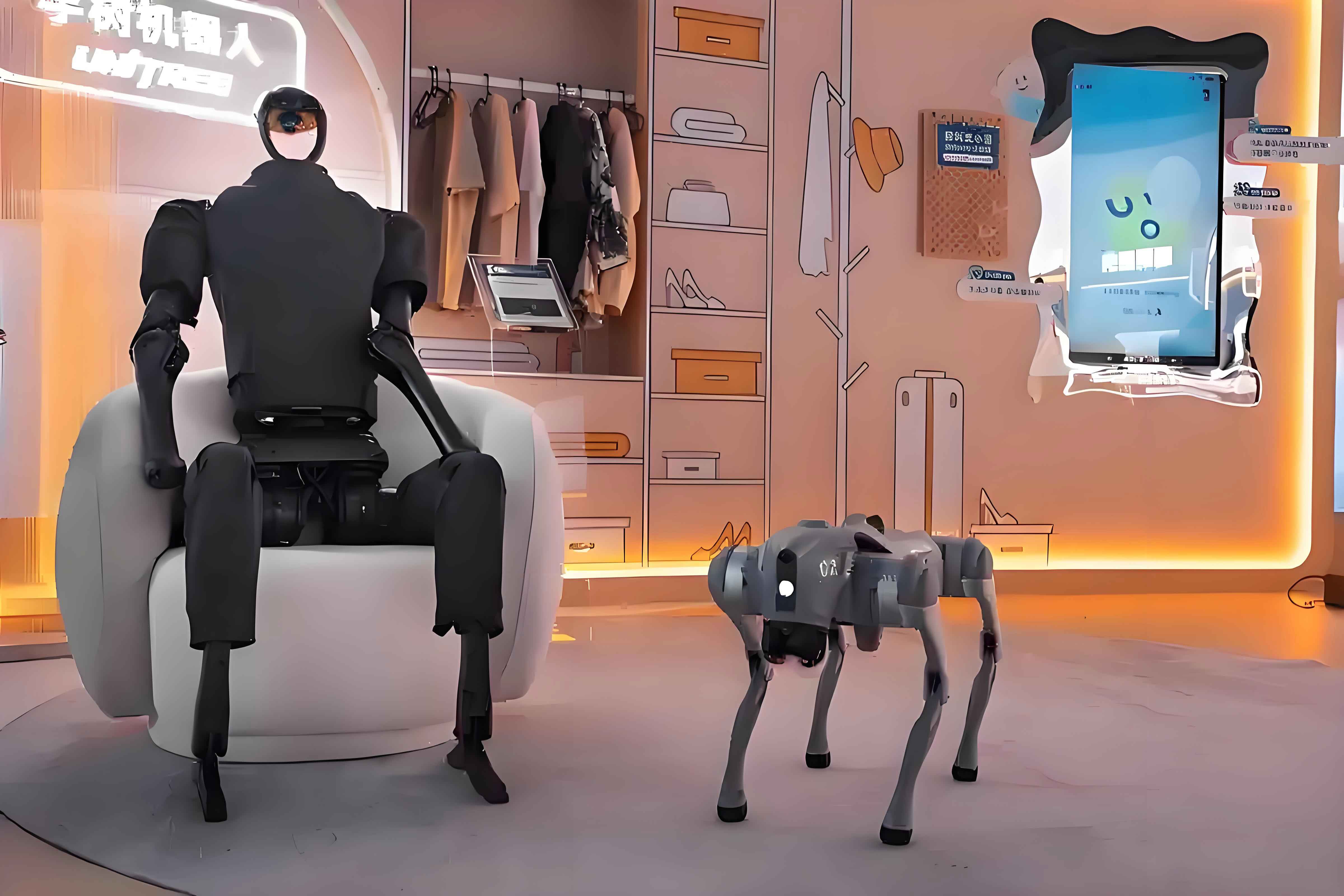
In the midst of this competition, companies are adopting varied strategies to differentiate themselves. Some are focusing on pushing the limits of hardware and artificial intelligence, while others are leveraging cost advantages to capture market share in standardized applications like commercial performances and rentals. The humanoid robots landscape is evolving rapidly, with firms such as Magic Atom, Songyan Power, and others emerging as notable contenders. This report delves into the current state of the humanoid robots industry, examining how companies are aligning their product lines, performance metrics, and delivery capabilities to compete effectively. The emphasis on humanoid robots is not just a trend but a central theme driving innovation and investment in robotics globally.
1. The IPO Frontier: Unitree’s Leadership and Industry Implications
Unitree’s planned IPO submission by the end of 2025 positions it as a trailblazer in the humanoid robots sector, setting a precedent for other companies seeking public listings. This move has amplified the spotlight on humanoid robots, attracting increased investor interest and validating the commercial potential of these advanced machines. As the first in its cohort to approach such a milestone, Unitree serves as a reference point for competitors, who are closely monitoring its progress to gauge market reactions and capital opportunities. The company’s ability to maintain a lead in humanoid robots development has fueled a sense of urgency among rivals, prompting them to accelerate their own initiatives in anticipation of a more liquid capital environment.
The capital implications of Unitree’s IPO extend beyond the company itself, potentially catalyzing a wave of investments in the humanoid robots industry. Institutional investors view this as a bellwether for exit strategies, with one GP chairman noting that Unitree’s successful listing could provide a template for returns in a sector that has long been dominated by private funding. This optimism is tempered by the recognition that humanoid robots require substantial long-term investment in research and development, as the technology is still maturing. Nonetheless, the IPO is expected to enhance visibility for humanoid robots, drawing in more resources and talent to drive further advancements.
However, the industry’s health does not hinge solely on Unitree’s success. Multiple stakeholders emphasize the need for a diversified ecosystem where various humanoid robots companies can thrive through distinct technological pathways and business models. For instance, while Unitree has excelled in consumer-focused applications, others like Yun Shen Chu are targeting industrial and inspection scenarios, highlighting the breadth of opportunities within the humanoid robots domain. This diversity is crucial for mitigating risks and fostering innovation, as over-reliance on a single player could stifle competition. As the IPO timeline approaches, the humanoid robots sector is poised for a period of consolidation and growth, with Unitree’s journey serving as a catalyst for broader market development.
2. Product Lineups: Standardizing the Humanoid Robots Matrix
Unitree’s comprehensive product portfolio, which includes full-sized humanoid robots like the H1 and H2, smaller humanoid robots such as the G1 and R1, and consumer and industrial quadruped robots like the Go1 and Go2, has established a benchmark for the industry. This array allows the company to address multiple market segments simultaneously, from commercial rentals to specialized industrial applications. The recent unveiling of the H2 humanoid robot at IROS, with its human-like exterior, has generated both curiosity and criticism, yet it underscores Unitree’s commitment to expanding the capabilities of humanoid robots. Despite its unconventional design, the H2 has already attracted inquiries for rental use in events like store openings and mall activities, with daily rates estimated at around 10,000 CNY upon delivery.
Other companies are rapidly aligning their offerings with this standard matrix to remain competitive. Magic Atom, for example, has introduced the MagicDog Y1, a quadruped robot capable of running at speeds up to 6 meters per second, effectively mirroring Unitree’s product strategy. According to Chen Chunyu, Vice President and R&D Head at Magic Atom, this alignment is necessary to establish a foothold in a market where humanoid robots are gaining traction. However, he stresses that mere replication is insufficient; differentiation through advanced AI architectures is key to standing out. Magic Atom employs a dual-mode collaborative framework for its robot brain, combining fast processing for obstacle avoidance and stability with slower, semantic understanding for task planning, akin to the human brain and cerebellum.
In contrast, some firms are prioritizing affordability to penetrate the humanoid robots market. Songyan Power’s release of the small-sized Bumi humanoid robot at a pre-order price of 9,998 CNY has significantly lowered the entry barrier, making humanoid robots more accessible for budget-conscious consumers. Similarly, Accelerated Evolution’s Booster K1 is offered at a limited-time price of 29,900 CNY, matching Unitree’s R1 starting price. This price-centric approach aims to capture demand in standardized scenarios like commercial performances and rentals, where cost sensitivity is high. The table below summarizes key product comparisons in the humanoid robots sector, highlighting the diversity in strategies:
| Company | Product | Type | Key Features | Price (CNY) |
|---|---|---|---|---|
| Unitree | H2 | Full-sized Humanoid Robot | Human-like exterior, rental applications | Rental: ~10,000/day (estimated) |
| Unitree | G1 | Small-sized Humanoid Robot | Commercial demonstrations | Not specified |
| Magic Atom | MagicDog Y1 | Quadruped Robot | 6 m/s speed, industry applications | Not specified |
| Songyan Power | Bumi | Small-sized Humanoid Robot | Sub-1 meter height, low cost | 9,998 (pre-order) |
| Accelerated Evolution | Booster K1 | Humanoid Robot | Limited-time offer | 29,900 |
This product standardization reflects the maturation of the humanoid robots market, where companies are not only competing on features but also on how well they can replicate and improve upon established models. The focus on humanoid robots is driving innovations in both hardware and software, as firms seek to balance performance with cost-effectiveness. As Chen Chunyu notes, having a full product matrix is essential for capturing early commercial opportunities while reserving resources for more advanced humanoid robots development in the future.
3. Performance and AI: The Core Battleground for Humanoid Robots
In the race to dominate the humanoid robots sector, performance and artificial intelligence have emerged as critical differentiators. Unitree’s self-developed motors are widely regarded as a stable core competency, enabling reliable operation in various conditions. Competitors like Magic Atom are actively engaging in rigorous testing to match and potentially surpass these standards. Chen Chunyu explains that exposing humanoid robots to extreme environments, such as temperatures as low as -20 degrees Celsius or as high as 55 degrees Celsius, is essential for identifying structural and transmission issues. This iterative process of testing and refinement is crucial for enhancing the durability and functionality of humanoid robots, ensuring they can handle real-world applications.
The integration of AI is another area where companies are striving to gain an edge. Magic Atom’s fast-slow dual-mode architecture exemplifies this trend, aiming to create humanoid robots that can perform complex tasks with greater autonomy. This approach separates instantaneous functions like obstacle avoidance from higher-level planning, similar to how humans process information. Chen emphasizes that while hardware replication is feasible, the real challenge lies in developing scalable AI systems that can adapt to diverse scenarios. This focus on AI is particularly relevant for humanoid robots, as their value extends beyond mobility to include upper-body manipulation and interactive capabilities.
However, not all firms are investing equally in AI. Some are concentrating on mechanical performance and cost reduction, believing that these factors will drive initial adoption of humanoid robots. For instance, a robotics lab head from a Guangzhou university shared that Unitree’s robots outperformed competitors in deploying complex algorithms, such as dance routines, due to their open interfaces and stability. This usability gap highlights the importance of engineering prowess in the humanoid robots space. As Yao Maoqing, Partner and Senior Vice President at Zhiyuan Robotics, points out, the true potential of humanoid robots lies in their operational abilities, not just movement. He argues that upper-limb tasks are orders of magnitude more complex than locomotion, requiring extensive engineering积累 and patience to master.
The table below illustrates key performance metrics and AI focus areas in the humanoid robots industry, based on available information:
| Company | Performance Highlights | AI Capabilities | Testing Methods |
|---|---|---|---|
| Unitree | Stable motors, reliable deployment | Not specified in detail | Factory-based consistency checks |
| Magic Atom | Extreme condition testing (e.g., -20°C to 55°C) | Dual-mode brain architecture for fast/slow processing | Limit state exposure for iteration |
| Zhiyuan Robotics | Focus on upper-body manipulation | Emphasis on embodied intelligence and data打磨 | Long-term engineering积累 |
This emphasis on performance and AI underscores the multifaceted nature of the humanoid robots competition. While hardware innovations are foundational, software intelligence will likely determine the long-term success of humanoid robots in applications ranging from household assistance to industrial automation. As companies continue to invest in these areas, the capabilities of humanoid robots are expected to expand, driving further adoption and innovation.
4. Price Wars: Lowering the Entry Barrier for Humanoid Robots
The humanoid robots market is experiencing a significant shift toward affordability, with companies like Songyan Power and Accelerated Evolution introducing products at unprecedented low prices. Songyan’s Bumi humanoid robot, priced at 9,998 CNY, breaks the 10,000 CNY psychological barrier, making it accessible to a broader audience. Jiang Zheyuan, founder of Songyan Power, believes that this strategy will help capture demand in commercial performance and rental markets, where cost is a primary consideration. Similarly, Accelerated Evolution’s Booster K1, offered at 29,900 CNY for the first 100 units, directly challenges Unitree’s pricing for similar models, intensifying the competition in the humanoid robots space.
This price reduction trend is partly driven by the anticipation of market growth in the coming year. Jiang predicts that increased enthusiasm for humanoid robots will lead to higher volumes, enabling economies of scale and further cost reductions in the supply chain. However, this approach is not without risks. Lower prices may compromise on quality or features, potentially hindering the long-term adoption of humanoid robots if users experience reliability issues. For instance, some earlier entrants in the humanoid robots sector faced criticism for limited functionality and poor interface openness, as noted by the Guangzhou university lab head who found that only Unitree’s robots could successfully execute complex algorithms.
Despite these challenges, the focus on cost-effectiveness is reshaping the humanoid robots landscape. Companies are balancing performance with affordability to appeal to early adopters in fields like education, entertainment, and light industrial tasks. The following list highlights key price points and strategies in the humanoid robots market:
- Songyan Power’s Bumi: 9,998 CNY pre-order price, targeting small-sized humanoid robots for budget applications.
- Accelerated Evolution’s Booster K1: 29,900 CNY limited-time offer, aligning with Unitree’s entry-level models.
- Unitree’s H2: Estimated rental rate of 10,000 CNY per day, focusing on high-end commercial use.
- Magic Atom’s MagicDog Y1: Price not specified, but emphasis on performance may position it at a premium.
This pricing dynamic reflects a broader trend in the humanoid robots industry, where companies are experimenting with different business models to achieve scalability. While Unitree has leveraged its brand strength to command higher prices, newcomers are using cost advantages to gain market share. As the sector evolves, the success of these strategies will depend on whether lower-priced humanoid robots can deliver sufficient value to sustain user interest and drive repeat purchases.
5. Delivery and Manufacturing: The Backend Challenge for Humanoid Robots
Delivery capabilities and manufacturing processes are critical factors distinguishing leaders from followers in the humanoid robots industry. Unitree’s early investment in its own factory has been instrumental in ensuring consistent product quality and reliable delivery, as highlighted by Zhao Nan, an early investor. This in-house approach addresses challenges related to component consistency, stability, and mass production, which are common in a sector where many players still rely on manual assembly. For humanoid robots, which involve complex integrations of mechanics and electronics, controlled manufacturing environments are essential for meeting performance standards and customer expectations.
Other companies are following suit but face hurdles in scaling up. Songyan Power, for example, is in the process of building its own factory, with Jiang Zheyuan admitting that current production relies heavily on manual lines, resulting in a delivery scale that lags behind Unitree. Similarly, Magic Atom is focusing on improving the replicability and deliverability of its humanoid robots, though Chen Chunyu acknowledges that Unitree’s engineering and commercial capabilities set a high bar. These efforts are crucial because, as one industry insider revealed, even companies like Zhongqing have struggled with “burst orders” not due to demand alone but because of constrained delivery capacities.
The ability to mass-produce humanoid robots efficiently is becoming a key competitive advantage, as it enables companies to fulfill orders promptly and maintain customer trust. This is particularly important for humanoid robots intended for commercial use, where downtime or defects can lead to significant losses. The table below compares the manufacturing and delivery statuses of select humanoid robots companies:
| Company | Manufacturing Approach | Delivery Status | Challenges |
|---|---|---|---|
| Unitree | In-house factory | Stable, high-volume delivery | Maintaining consistency |
| Songyan Power | Manual lines, building factory | Limited scale | Scaling production |
| Magic Atom | Not specified | Focusing on replicability | Matching Unitree’s engineering |
| Zhongqing | Not specified | Facing burst orders | Delivery capacity constraints |
As the humanoid robots market expands, investments in manufacturing infrastructure will likely increase, driven by the need for higher volumes and better cost control. Companies that can overcome these backend challenges will be better positioned to capitalize on the growing demand for humanoid robots in various sectors, from retail to logistics. Ultimately, the race in the humanoid robots industry is as much about supply chain management as it is about technological innovation.
6. Industry Expectations: Capital, Technology, and the Future of Humanoid Robots
The humanoid robots sector is at a pivotal juncture, with Unitree’s IPO serving as a catalyst for broader industry expectations. Investors and executives alike are optimistic about the capital infusion that could follow, viewing it as a validation of the humanoid robots market’s potential. The GP chairman interviewed noted that Unitree’s listing would provide a clear exit pathway, encouraging more venture capital to flow into humanoid robots startups. This capital放大 effect is expected to accelerate research and development, particularly in areas like embodied intelligence, which requires long-term investment due to its complexity.
Technologically, the focus is shifting toward making humanoid robots more versatile and intelligent. Yao Maoqing of Zhiyuan Robotics emphasizes that the real value of humanoid robots lies in their ability to perform upper-body tasks, which are far more complex than simple mobility. This aligns with the industry’s broader move toward embodied intelligence, where robots can interact with their environment in a human-like manner. For humanoid robots, this means integrating advanced sensors, algorithms, and data systems to handle tasks like object manipulation and decision-making. As Yao points out, this is a gradual process that demands patience and sustained engineering efforts, rather than quick demonstrations.
Market diversity is another key expectation. Chen Chunyu of Magic Atom stresses that the humanoid robots ecosystem should support multiple players with different strengths, rather than converging on a single model. This could include specialized humanoid robots for healthcare, construction, or domestic use, each with tailored features. The following list outlines the primary expectations for the humanoid robots industry in the near future:
- Increased capital investment driven by IPO successes, fueling innovation in humanoid robots.
- Advancements in AI and embodied intelligence, enhancing the functional range of humanoid robots.
- Expansion into niche applications, such as industrial inspection or elderly care, for humanoid robots.
- Greater collaboration between academia and industry to address technical challenges in humanoid robots.
Despite the excitement, there is a consensus that the humanoid robots sector is still in its early stages, with many hurdles to overcome. Supply chain optimization, cost management, and user acceptance will all play critical roles in determining how quickly humanoid robots become mainstream. As the GP chairman aptly stated, the ultimate outcome will not be about who gains the first round of applause but who endures beyond the initial hype. For humanoid robots, this means building sustainable businesses that can adapt to evolving market needs and technological shifts.
7. Conclusion: The Long Game in the Humanoid Robots Race
As the humanoid robots industry accelerates, Unitree’s impending IPO symbolizes both an achievement and a starting point for intensified competition. Companies are leveraging a mix of performance enhancements, price reductions, and strategic positioning to carve out their niches in this dynamic market. The emphasis on humanoid robots is driving innovations across hardware, AI, and manufacturing, with each firm seeking to balance immediate commercial gains with long-term technological advancement. While Unitree’s lead in engineering and commercialization is evident, rivals like Magic Atom and Songyan Power are demonstrating that there is room for multiple approaches in the humanoid robots ecosystem.
The future of humanoid robots will likely be shaped by factors beyond speed, including durability, intelligence, and scalability. As Yao Maoqing noted, embodied intelligence is a long-term industry that requires patience, and success will depend on cumulative engineering积累 rather than fleeting demonstrations. Similarly, investors are looking for sustainable growth models that can withstand market fluctuations and technological disruptions. The humanoid robots sector is poised for significant evolution in the coming years, with potential applications expanding as capabilities improve.
In the end, the race in the humanoid robots arena is not just about who reaches the IPO finish line first, but who can maintain momentum through consistent innovation and execution. The diversity of strategies—from Unitree’s full product matrix to Songyan’s affordability focus—highlights the richness of the humanoid robots landscape. As companies continue to push the boundaries of what these machines can do, the humanoid robots industry will undoubtedly play a transformative role in robotics and automation globally, offering new possibilities for how humans and machines interact.