
In the rapidly evolving field of artificial intelligence, embodied intelligence has emerged as a pivotal concept, referring to intelligent agents that interact with the environment in real-time through physical entities, integrating perception, cognition, decision-making, and action. This approach is considered a significant step toward general artificial intelligence, with humanoid robots acting as autonomous decision-makers capable of environmental interaction and dynamic choices. According to the “2025 Humanoid Robots and Embodied Intelligence Industry Research Report,” the embodied intelligence market in China is projected to reach 52.95 billion yuan in 2025, accounting for approximately 27% of the global market, while the humanoid robots market is expected to hit 82.39 billion yuan, representing about 50% of the worldwide share. Embodied intelligence is breaking through boundaries at an astonishing pace, yet it faces a diverse landscape of technological pathways, leading to a百花齐放 (hundred flowers blooming) scenario. From biomechanics-driven motion control schools to cognitive decision-making factions based on large language models, various companies are innovating along different paths to co-create the future of intelligent agent interactions with the physical world.
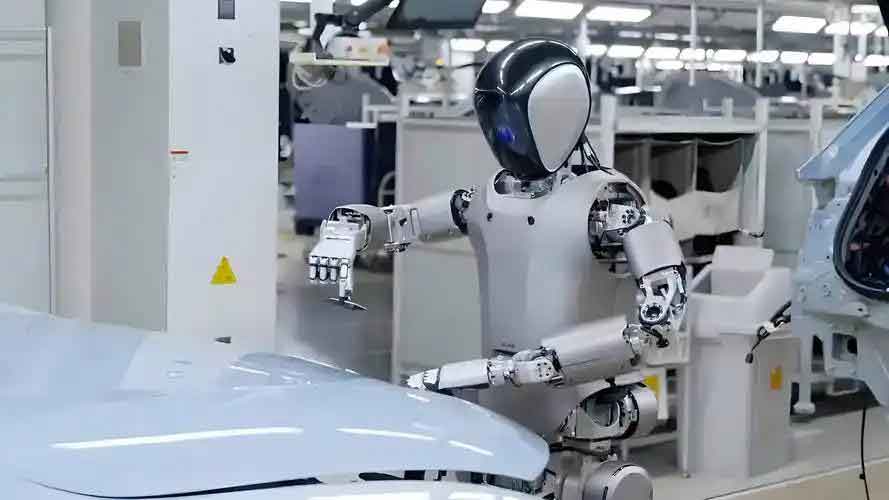
The development of humanoid robots is accelerating, but practical applications remain limited, often focusing on demonstrations rather than real-world use. Currently, humanoid robots are primarily utilized in scientific research, education, and exhibition displays, with industrial applications still in experimental phases. Areas such as home care and health assistance see insufficient deployment, highlighting a gap between technological prowess and everyday utility. To address this, experts emphasize the need to overcome key bottlenecks in motion control, intelligent perception, and cost reliability. For instance, the complexity of bipedal walking and precise arm operations in humanoid robots demands high stability and energy efficiency, yet current systems struggle with durability and power consumption. Moreover, the high costs of core components like servo motors and AI chips hinder widespread adoption, while reliability in continuous operation requires further validation. The application environment for humanoid robots lacks sufficient error tolerance, and business models remain unclear, making it challenging to justify their use over existing solutions like traditional robotic arms or automated guided vehicles in industrial settings, or to foster user acceptance in domestic roles.
- Three Technical Pathways for Embodied Intelligence
In an interview, Wang Binrui, Vice President of China Jiliang University, outlined three main technical routes for embodied intelligence. The first is the human-like bionic approach, exemplified by companies such as Tesla and Ubtech, which emphasizes bipedal walking, dexterous hand operations, and full-body perception. This route benefits from closely mimicking human movement and interaction, potentially adapting to complex environments like home services and medical care. However, challenges include dynamics control and energy management, as ensuring stability while balancing endurance and cost remains a critical hurdle. The second route involves specialized robots, such as those developed for manufacturing tasks like quality inspection, transportation, or patrol, which may not aim for full human resemblance but prioritize adaptability and efficiency in specific processes. These humanoid robots offer faster deployment and clearer business models, yet they suffer from poor cross-scenario versatility and require breakthroughs in flexibility and scalability. The third route is algorithm-driven and platform-oriented, centered on large models, reinforcement learning, and multimodal perception to build a “general intelligent base” that empowers various robot forms. For example, some firms advocate for “software-defined robots,” where AI algorithms continuously evolve operational skills. This approach allows for rapid iteration of intelligence and open ecosystems, but it imposes higher demands on hardware compatibility and safety verification. Wang Binrui summarized that these pathways are not mutually exclusive but complementary, with future development focusing on standardizing hardware platforms, enabling adaptive algorithms, and fostering modular collaboration across the industry chain to make embodied intelligence efficient in specific tasks while progressing toward generalization.
The market for humanoid robots in China leads in scale but lags in application depth, with scenarios often limited to research, education, and exhibitions. Currently, humanoid robots are more about showcasing skills than practical use, and their deployment in industrial trials or民生 (livelihood) sectors like elderly care is minimal. Wang Binrui highlighted three technical bottlenecks that humanoid robots must overcome to enter industrial and civil applications effectively. First, the complexity of motion control: humanoid robots require极高的 (extremely high) precision in bipedal walking and flexible arm operations, but gaps persist in stability, durability, and energy efficiency. Most current humanoid robots use motor drives, whereas biological systems rely on muscle-driven mechanisms that offer inherent compliance and functionalities unattainable with motors. Second, insufficient intelligent perception and decision-making: in lab or exhibition settings, actions are often pre-set or choreographed, but real-world environments demand real-time sensing, dynamic planning, and adaptability, necessitating enhanced synergy among sensors, algorithms, and computing power. Third, cost and reliability constraints: high-performance components like servo motors, force-control joints, and AI chips are expensive, driving up overall costs, while stability and maintainability under continuous operation need further verification.
From an application perspective, the current environment for humanoid robots lacks adequate error tolerance, and business models are not well-defined. For instance, in industrial contexts, traditional solutions like robotic arms and AGVs already handle specific tasks efficiently, making it unclear whether humanoid robots offer significant advantages. In home care and health sectors, achieving safety, natural human-robot interaction, and user willingness to pay requires exploration. Thus, the phenomenon of “leading in scale but lacking in application” is not surprising at this stage. It is foreseeable that as control algorithms break through, core components become more cost-effective, and the “irreplaceability” of humanoid robots is validated in applications, industrialization will accelerate into a fast lane.
- Promoting Deep Collaboration in the Industry Chain
The embodied intelligence industry chain is extensive, covering core hardware, basic software, whole machine manufacturing, and application integration. However, the current state of collaboration among these segments is inadequate. Wang Binrui pointed out that the biggest issue is the lack of deep synergy across the chain. For example, chip companies often focus on general computing power without fully understanding the specific needs of embodied intelligence, such as real-time control and low-power inference. Sensor manufacturers prioritize accuracy and reliability but face challenges in matching with整机 (whole machine) structures and algorithm requirements due to incompatible interfaces and standards. Algorithm teams concentrate on model training but frequently overlook hardware computing limitations, resulting in difficulties in deploying algorithms onto end-user humanoid robots. Whole machine manufacturers expend significant resources on “secondary integration,” increasing development and application costs.
To foster collaborative development, Wang Binrui recommended efforts in four key areas. First, establish unified technical standards and testing specifications to address issues like interface incompatibility and inconsistent data formats, enabling upstream and downstream players to develop on a common benchmark. Second, promote cross-border collaborative innovation platforms that strengthen joint research among universities, research institutions, and enterprises, allowing algorithm teams to directly engage with hardware bottlenecks and manufacturing sectors to incorporate AI thinking from the product definition phase. Third, leverage the leading role of头部企业 (head enterprises) through open platforms, joint laboratories, and supply chain alliances to drive growth among small and medium-sized enterprises in the upstream and downstream. Fourth, provide policy guidance and financial support, increasing investment in key areas such as high-performance chips, domestic sensors, and critical component manufacturing to reduce the risk of “bottleneck” constraints.
| Category | Market Size (Billion Yuan) | Global Share |
|---|---|---|
| Embodied Intelligence | 52.95 | ~27% |
| Humanoid Robots | 82.39 | ~50% |
The integration of humanoid robots into various sectors depends on overcoming these hurdles, and the emphasis on collaboration is crucial for scaling applications. As the industry moves forward, the role of humanoid robots in transforming manufacturing, healthcare, and daily life will become more pronounced, but only if the technological and economic barriers are addressed. The potential of humanoid robots to act as versatile assistants in diverse environments underscores the importance of continued innovation and partnership across the ecosystem. In summary, while humanoid robots currently excel in demonstrations, their journey toward widespread adoption requires a concerted effort to enhance practicality, reduce costs, and build robust business models that align with real-world needs. The future of humanoid robots hinges on this balanced approach, paving the way for a new era of intelligent automation.
In conclusion, the path forward for humanoid robots involves not only technical advancements but also strategic alliances and policy support. By addressing the gaps in application and fostering a cohesive industry chain, stakeholders can unlock the full potential of humanoid robots, making them indispensable in both industrial and civil domains. The ongoing evolution of embodied intelligence will likely see humanoid robots becoming more adaptive and cost-effective, ultimately bridging the divide between demonstration and deployment. As these developments unfold, the global landscape for humanoid robots will continue to shift, with China playing a significant role in shaping the market and driving innovation. The focus must remain on creating sustainable ecosystems where humanoid robots can thrive, delivering tangible benefits to society and economy alike.