
In a significant move for the field of embodied intelligence, Tencent recently unveiled Tairos, an embodied intelligence open platform that represents a pioneering effort in China to provide modular models, development tools, and data services for embodied robots. This platform aims to accelerate the development of intelligent systems by integrating advanced software capabilities with hardware innovations, fostering a new era of collaboration in the robotics industry. Zhang Zhengyou, Chief Scientist of Tencent and Director of the Tencent Robotics X Laboratory and Futian Laboratory, emphasized in an interview that the core of this initiative lies in the seamless integration of body and intelligence, as well as software-hardware synergy, which are critical for the advancement of embodied intelligence.
Zhang explained that the model layer of Tairos includes multi-modal perception models, planning large models, and perception-action joint large models, which he analogized to providing the right brain, left brain, and cerebellum for embodied robots. This modular approach allows robot hardware manufacturers to select and customize components based on their specific needs, thereby enhancing the overall capabilities of embodied intelligence systems. The launch of Tairos marks a strategic step by Tencent to address the growing demand for sophisticated software in the embodied intelligence domain, where many companies struggle to balance hardware and software development.
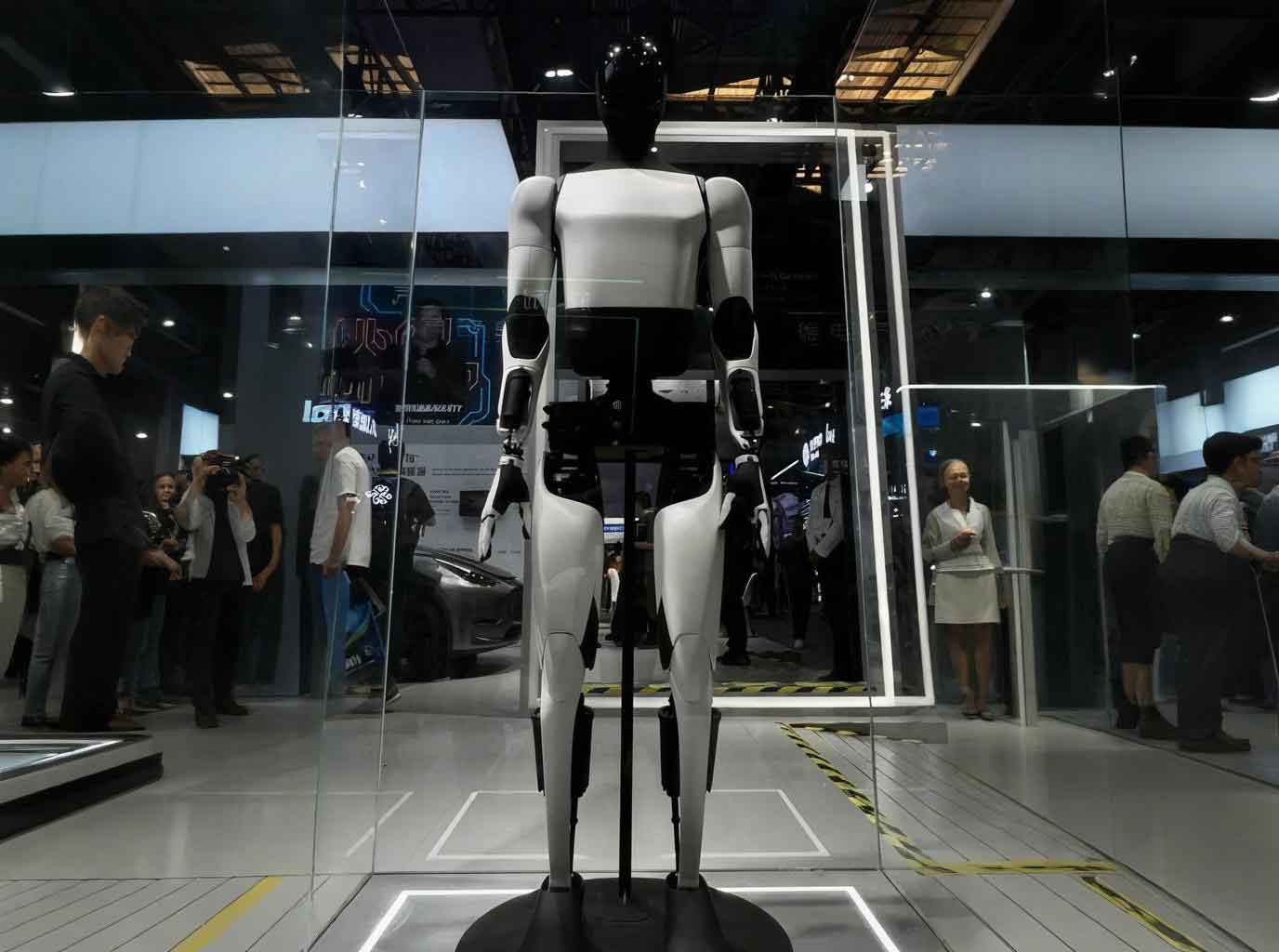
Since joining Tencent in 2018 to establish the Robotics X laboratory, Zhang’s team has developed a variety of robot prototypes, including multi-modal quadruped robots, wheel-legged robots, and dexterous hands, all aimed at pushing the boundaries of embodied intelligence. Through extensive surveys of over sixty domestic robot companies, the team identified a common challenge: many manufacturers excel in hardware but lack the resources to develop advanced AI software for embodied robots. This insight led Tencent to focus on opening up its software capabilities through Tairos, with the goal of fostering a healthier and faster-growing ecosystem for embodied intelligence. Zhang reiterated that Tencent’s primary focus is on evolving and sharing software expertise rather than manufacturing robots, highlighting the importance of collaboration in driving progress in embodied intelligence.
-
Bridging the Key Software Capabilities in Embodied Intelligence
Zhang illustrated the current limitations in embodied robots with a vivid example from a robot marathon, where a robot continued running even after its “head” detached, underscoring deficiencies in perception-action integration. He noted, however, that the industry is advancing rapidly, and future competitions may see fully autonomous embodied robots operating without remote controls. This progress is largely driven by the increasing emphasis on intelligence as a core element in robot evolution. During the Tairos launch event, a demonstration featuring a Yushu Robot G1 integrated with Tairos capabilities showcased this advancement: the robot successfully responded to the command “walk to my side,” demonstrating its ability to understand spatial concepts, locate the target, and plan a path accordingly.
Zhang shared an anecdote from the event that highlighted the unpredictable nature of embodied intelligence: “I asked the robot if it wanted a drink, and it replied, ‘Too busy, working overtime tonight.’ During rehearsals, it hadn’t given that response. This was the first time I heard it mention overtime—a small surprise that illustrates how intelligence in embodied robots can evolve.” Such instances reflect improvements in perception, planning, and action capabilities, but Zhang stressed that there is still much room for growth. For embodied robots to operate effectively in real-world environments, they must go beyond visual perception to include force and tactile perception. He explained, “If the ground is icy and not on a predefined track, visual sensors might miss it, but force perception through specialized sensors can enable quick adjustments. This is an area where embodied intelligence needs further refinement.”
Currently, hardware advancements in robotics are outpacing software improvements, primarily because developing embodied intelligence requires substantial investment and poses greater technical challenges. Zhang pointed out that from their surveys of numerous robot companies, it is clear that few can master both hardware and software for embodied intelligence, especially startups that may have strong hardware skills but limited AI capabilities. By leveraging Tairos, these companies can access advanced models and tools to enhance their software, thereby boosting overall performance. The phrase “integration of body and intelligence without obstacles” encapsulates Tencent’s vision for Tairos, which is dedicated to supplementing key software capabilities for robot hardware and application developers. Zhang emphasized that Tencent is committed to continuously evolving its software offerings and making them accessible, rather than venturing into robot manufacturing, thus reinforcing the importance of embodied intelligence in the broader robotics landscape.
-
Bipedal Humanoid Form Not the End Goal for Embodied Robots
Under Zhang’s leadership, the Tencent Robotics X laboratory has introduced a range of innovative prototypes, such as the multi-modal quadruped robot Max, the wheel-legged robot Ollie, the self-developed dexterous hands TRX-Hand, the robotic arm TRX-Arm, and the living environment robot prototype “Xiao Wu.” Launched in September 2024, “Xiao Wu” features a composite design with four legs and wheels, combining the ability to traverse obstacles with efficient mobility on flat surfaces. It is equipped with large-area tactile skin, multi-finger dexterous hands, and safe human-robot interaction systems, targeting applications in smart elderly care. Demonstrations in nursing home settings have shown “Xiao Wu” assisting with tasks like holding and supporting the elderly, fetching packages, and autonomously navigating while pushing wheelchairs, all of which rely on advanced embodied intelligence for perception and action.
Complex living environments represent Zhang’s primary area of interest and the central testing ground for embodied robots. He described these settings as highly challenging due to safety and robustness requirements, noting that using such difficult scenarios to drive research helps advance the intelligence level and core technologies of embodied robots, such as tactile sensor development, without the pressure of immediate productization. Zhang believes that frontier exploration in embodied intelligence involves significant uncertainties and should not be constrained by product deadlines, as that could lead to overly rigid, hardcoded solutions. Instead, the focus should be on innovative research that pushes the boundaries of what embodied robots can achieve.
Zhang also challenged the notion that bipedal humanoid forms are the ideal for embodied robots in human environments. He argued that since most living spaces are flat, bipedal locomotion may be less efficient, and standardizing on this form could limit creativity. “We need to explore whether there are more efficient, ideal robot forms for living environments beyond the humanoid shape,” he said, emphasizing the need for diverse morphological approaches in embodied intelligence. Reflecting on his decade-long plan since joining Tencent, Zhang admitted that applications in areas like elderly care are fraught with difficulties, but he remains optimistic about progress in the coming years. He explained that Tencent’s decision not to focus extensively on forms like robot dogs was driven by broader goals, as dwelling on earlier prototypes would have diverted resources from exploring more advanced embodied intelligence applications.
-
Public Enthusiasm Not a Bad Thing for Embodied Intelligence Development
Zhang highlighted that Tencent’s current priorities include optimizing model capabilities and simulation environments for embodied intelligence. He noted that each aspect—model development, data collection, and simulation—presents numerous challenges that require continuous improvement. For instance, simulating tactile perception in virtual environments remains a hurdle, as human-like touch resolution of about 1 millimeter is not yet achievable in simulations. This is crucial for embodied robots to interact naturally with their surroundings, and advancing these areas is essential for the evolution of embodied intelligence.
Furthermore, Zhang discussed the limitations of large language models in understanding the physical world compared to embodied robots. While text-based models can interpret descriptions, many real-world phenomena are indescribable in words, and 3D world models for embodied intelligence are still in early stages. “The cognitive understanding of the 3D world needed by embodied robots isn’t just about converting images to 3D; it requires a deeper, integrated perception,” he said. These complexities mean that no single company can tackle all challenges alone, and industry-wide collaboration is necessary. Zhang expressed Tencent’s willingness to open up its embodied intelligence software capabilities to support broader industry growth, acknowledging that some companies may fail due to technical immaturity, but such outcomes are typical in technological evolution and can drive overall progress in embodied intelligence.
In Zhang’s view, the high level of public and investor enthusiasm for embodied robots is beneficial rather than detrimental. He stated that industry stakeholders have a realistic understanding of the capabilities, limitations, and timeline for embodied intelligence development, while public expectations for robots to serve and integrate into daily life provide valuable motivation and testing opportunities. “This enthusiasm sets higher standards and offers practical environments for refining embodied intelligence systems,” he remarked. Concluding, Zhang emphasized that the embodied intelligence industry is still in its infancy, and the key priority is to channel existing capabilities and investments into building a more robust ecosystem. “How we move the embodied intelligence industry forward and enhance the entire ecosystem is what matters most,” he said, underscoring the collaborative effort required for sustained advancement in embodied intelligence.
The launch of Tairos and Zhang’s insights underscore a transformative period in robotics, where embodied intelligence is poised to redefine human-robot interactions. By focusing on software openness and cross-industry partnerships, Tencent aims to catalyze innovation in embodied robots, ensuring that the technology evolves in a way that is both practical and visionary. As embodied intelligence continues to mature, the integration of advanced models, real-world simulations, and public engagement will be critical in shaping a future where robots seamlessly assist in diverse environments, from homes to healthcare settings.