
In a spectacular display of technological prowess, the 2025 World Humanoid Robot Sports Games, held from August 14th to 17th, captivated global attention, transforming competitive arenas into living laboratories for the next generation of intelligent machines. The event was not merely a contest of speed and agility but a rigorous, real-world validation of humanoid robot capabilities, pushing the boundaries of what these machines can achieve. From sprinting tracks to factory floors, the performances hinted at a future where humanoid robots are no longer novelties but integral partners in various sectors.
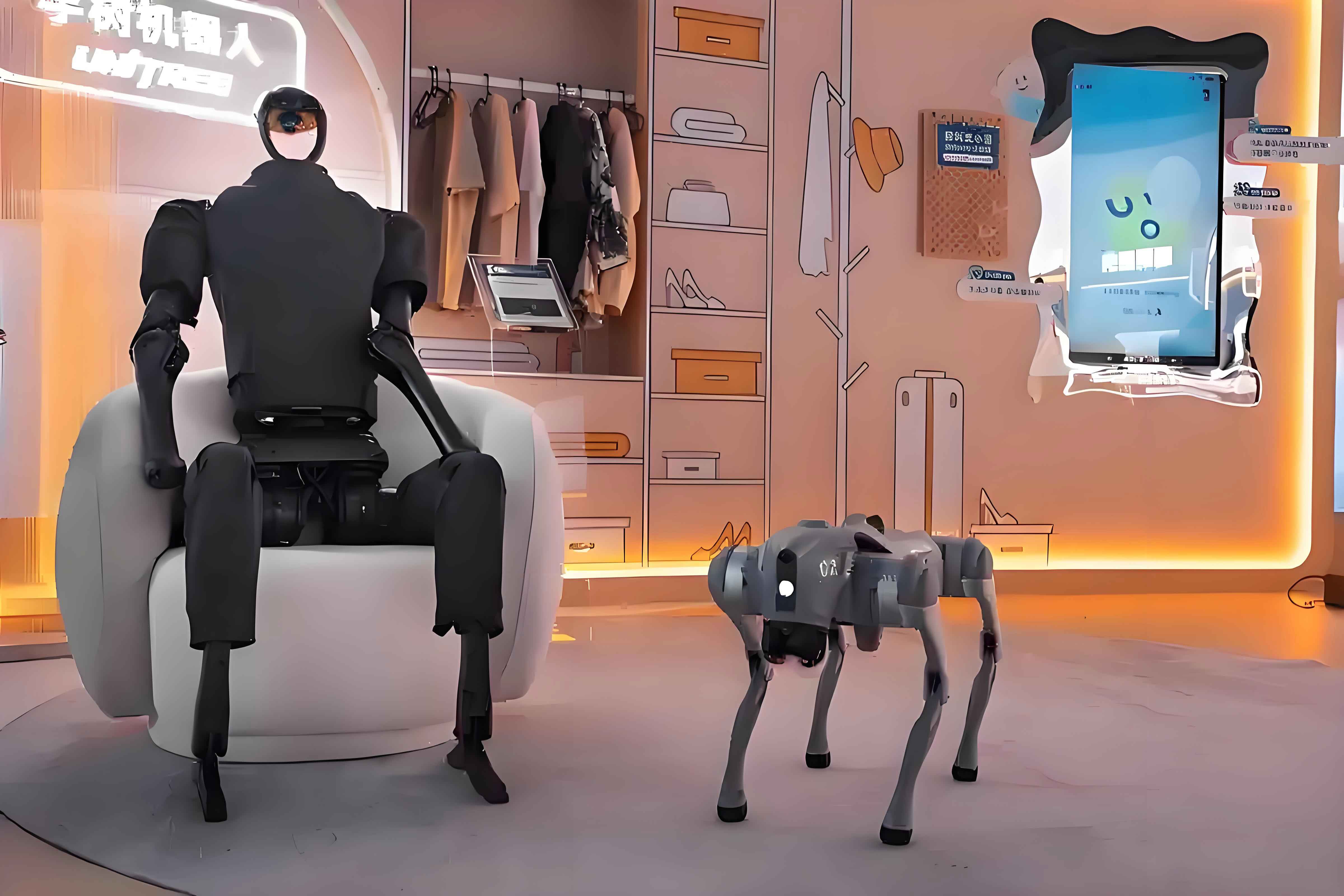
The games served as a critical milestone, demonstrating significant progress in the development and application of humanoid robot technology. While the public enjoyed the charming, sometimes humorous, antics of these machines, industry experts recognized the underlying advances in stability, coordination, and autonomous operation. The event underscored a broader trend: the rapid maturation of the humanoid robot industry, particularly in China, where a robust manufacturing ecosystem and strategic investments are fueling an unprecedented acceleration from research prototypes to practical, deployable assets.
- The Proving Ground: High-Stakes Competition for Humanoid Robot Technology
The core philosophy of the 2025 World Humanoid Robot Sports Games was unequivocally centered on verification. Unlike human athletics, where sportsmanship often shares the spotlight, this event was designed as an ultimate pressure test for embodied intelligence. The opening ceremony itself was a testament to this, featuring a series of complex demonstrations that showcased the growing reliability of humanoid robots in dynamic motion control and environmental adaptation. The graceful Tai Chi performance by UBTECH’s panda-inspired humanoid robot “YouYou” and Leju’s full-size “Kuafu” humanoid robot, the elegant catwalk of YouiBot’s “Xunxiao” humanoid robot, and the fluid dance moves of Zhongqing Robotics’ PM01 humanoid robot all pointed to a new level of sophistication in robotic movement.
As the games moved into official competitions like running, high jump, soccer, and floor exercises, the movements of the competing humanoid robots, while occasionally appearing awkward to the human eye, were in fact the result of deliberate engineering choices aimed at solving fundamental challenges. For instance, the high jump champion, Xingdong L7, adopted a distinctive “Super Mario” style jump. This was not a random quirk but a calculated approach to optimizing balance and power for vertical propulsion, a key area of research for improving the overall coordination and stability of bipedal humanoid robots. The 1500-meter track final provided a particularly illuminating example of autonomy, where UBTECH’s “Tiangang” humanoid robot secured second place with a time of 6 minutes and 55 seconds, notable for being the only competitor to run the entire race without any remote human control. This achievement highlights the critical strides being made in enabling humanoid robots to perceive their environment and make independent decisions in real-time.
The value of such high-level竞技赛事 extends far beyond the podium. History shows that competitive platforms often act as powerful catalysts for industrial breakthroughs. The Formula 1 (F1) racing series, for example, has been a historical driver for automotive innovation. Technologies like turbocharging, hybrid power systems, and carbon fiber monocoques, once exclusive to the racetrack, underwent rigorous validation in F1 before eventually trickling down to consumer vehicles, profoundly influencing efficiency, safety, and lightweight design in the broader auto industry. Similarly, the now-legendary DARPA Grand Challenges for autonomous vehicles, though short-lived, served as a foundational crucible. They propelled institutions like Carnegie Mellon University and Stanford University to the forefront of autonomous driving research, and their alumni went on to found or lead pioneering companies such as Waymo, General Motors’ Cruise, and Aurora. The intense, goal-oriented environment of these competitions accelerates problem-solving and fosters collaboration, compressing years of incremental research into focused bursts of innovation. The World Humanoid Robot Sports Games is poised to play a similar role, acting as the opening chapter for an industry on the cusp of widespread adoption, potentially reshaping daily life as profoundly as racing and esports have before.
- Bridging the Gap: Humanoid Robots Transition from Arena to Workplace
A central question surrounding humanoid robot development has always been their practical utility: can they truly “go to work”? The 2025 games provided a resounding, affirmative answer by integrating tasks that directly mirror real-world commercial needs. The competition evolved beyond pure athleticism to include practical skill tests set in simulated environments for hotels, hospitals, and factories. Tasks such as cleaning, sorting and dispensing medication, and moving materials were designed to address the very pain points that have historically hindered the commercial deployment of humanoid robots.
In the industrial scenario competitions, the Lingyi Intelligent Manufacturing team, representing Guangdong-based Lingyi iTech, demonstrated remarkable proficiency. Their humanoid robot solutions dominated the “Factory Material Handling” and “Mixed Material Sorting” categories, claiming gold medals in both, and also secured a bronze in the “Material Organization” event. This performance was not just about winning; it was a live demonstration of operational readiness. “This sports meet represents the world’s first comprehensive, real-world test for humanoid robots,” commented Yuan Qiang, a Senior Engineer at Lingyi iTech. “We have not only validated our own capabilities but also learned invaluable lessons from teams like Tiangang and Tsinghua’s Qianjue large model team regarding advanced embodied intelligence. We look forward to potential future collaborations.”
These successes are part of a broader, accelerating trend within Guangdong and across China, where humanoid robots are increasingly being deployed in practical settings. Leju Robotics has delivered its 100th full-size humanoid robot to BAIC Off-Road Vehicle and has secured additional orders from companies like NIO, BAIC Off-Road, and Jiangsu Hengtong. UBTECH, focusing on搬运, sorting, and intelligent picking processes, has its Walker S series undergoing practical training within the factories of Geely, BYD, Foxconn, and SF Express. Zhongqing Robotics has outlined ambitious plans for deployment in logistics and搬运 scenarios, aiming to deliver 3,000 humanoid robot units in the coming year.
The games also rigorously tested humanoid robot applications in more delicate environments. The pharmaceutical unpacking and dispensing competition required humanoid robots to break down large packages of medication and sort them into precise doses, a task demanding exceptional fine motor control and accuracy. Some teams encountered unexpected challenges, such as visual recognition systems being confused by the reflective surfaces of medicine blister packs. This prompted on-the-fly algorithmic upgrades, with one team eventually achieving a seamless, one-touch detachment of an entire blister pack—a feat that surprised even the judges and underscored the rapid problem-solving capabilities being developed. Similarly, the hotel cleaning module simulated a realistic clutter scenario with randomly distributed paper balls, plastic bags, and water bottles. The humanoid robots were required to identify the objects, plan an efficient cleaning path, and execute the task, showcasing the navigation and object manipulation skills critical for service-oriented humanoid robots to succeed outside the laboratory. From factory floors to hospital pharmacies, the humanoid robot is steadily evolving into the “new worker” and the “intelligent assistant.” While occasional errors may still occur, each precise operation conducted during the games served as powerful evidence: humanoid robots have indeed started their shift.
- The Engine of Growth: A Collaborative Ecosystem Propelling the Humanoid Robot Industry
The 2025 World Humanoid Robot Sports Games also functioned as a global showcase of industrial capability, and the results were telling. With 280 teams competing in 487 events, Chinese teams demonstrated overwhelming dominance, claiming the vast majority of medals, with only a few silver medals going to a German team. This remarkable performance raises a compelling question: how has China’s humanoid robot industry achieved such a rapid and impressive ascent in just a few years?
The answer lies not solely within the competition venue but deep within the nation’s industrial fabric. The on-stage performances were the culmination of years of dedicated research and development. “Since the first World Robot Conference was held in Beijing in 2015, China’s robotics industry has achieved a series of technological innovations and breakthroughs,” noted Xu Xiaolan, Chairman of the Chinese Institute of Electronics. “By 2024, patent applications from China accounted for two-thirds of the global total in the robotics field.” This massive investment in R&D has created a fertile ground for innovation in humanoid robot technology.
However, a more profound advantage stems from China’s globally unparalleled, complete, and highly efficient industrial supply chain. The country possesses the world’s largest and most comprehensive manufacturing base, providing a powerful foundation that supports the transition of the highly complex, integrated systems that are humanoid robots “from blueprint to product.” No other nation can currently match China’s capacity for localized, efficient sourcing of core components such as motors, reducers, sensors, and control systems. This supply chain resilience drastically reduces production costs and shortens development cycles for humanoid robot manufacturers.
The rise of the humanoid robot is also an inevitable outcome of the synergistic evolution of China’s high-end manufacturing sectors. Industry consensus suggests that 40% to 50% of a humanoid robot’s supply chain overlaps with that of new energy vehicles (NEVs), while another 30% to 40% relies on the technological accumulation of the 3C (computer, communication, and consumer electronics) industry. China’s strategic focus over the past decade on intelligent electric vehicles and consumer electronics is now paying dividends for the humanoid robot sector, transferring essential technology, talent, and supply chain resources. This “cross-border integration” is a defining characteristic of the industry’s growth in China. More than 20 automotive companies, including GAC Group, XPeng, and Xiaomi, have entered the humanoid robot arena. Meanwhile, companies like RoboSense and Lingyi iTech are transitioning from their roots in the automotive or Apple supply chain, migrating mature technologies such as LiDAR, high-precision structural components, and battery management systems to the humanoid robot domain. This model not only significantly lowers R&D costs but also dramatically accelerates product iteration. “The potential of the robotics market is ten times that of the automotive market,” stated Qiu Chunchao, CEO of RoboSense. “It will be a major trend for automotive companies and supply chain enterprises to jointly invest in robotics R&D.”
Furthermore, the richness and diversity of application scenarios in China provide a significant competitive edge. Companies like UBTECH and Leju have already integrated their humanoid robots into automotive factories for FAW Group and Dongfeng Motor Corporation, where they perform tasks such as parts handling and quality scanning, achieving a level of practical validation that is still limited overseas. While Tesla has attempted similar applications, its progress appears slower, constrained by a narrower range of initial use cases. The application-driven environment in China allows for faster feedback loops and continuous improvement of humanoid robot systems in real-world conditions.
The closing ceremony of the games marked another significant step forward with the official establishment of the World Humanoid Robot Sports Federation. This organization is committed to building a top-tier competition brand, formulating technical standards, promoting international cooperation, and fostering a global industrial ecosystem for humanoid robots. By hosting this landmark event, China has not only provided a platform for global exchange but has also begun to actively participate in the co-construction of the global humanoid robot ecosystem and the exploration of its governing standards. From the progressive localization of core components to synergistic innovation across upstream and downstream enterprises, and bolstered by sustained capital and policy support, a new landscape for the humanoid robot industry—driven by technological innovation, industrial convergence, and ecological clustering—is rapidly taking shape in China.
- Future Trajectory: The Path Forward for Humanoid Robot Integration
The demonstrations and discussions at the 2025 World Humanoid Robot Sports Games paint a clear picture of an industry in acceleration. The journey of the humanoid robot is transitioning from a focus on isolated technical achievements to a holistic integration into the economic and social fabric. The progress in autonomy, dexterity, and environment-specific adaptability showcased during the games indicates that the foundational technologies are maturing rapidly. The next phase will likely involve scaling production, further refining cost-effectiveness, and expanding the library of tasks that humanoid robots can reliably perform.
Key to this future will be the continued development and refinement of the underlying AI, particularly the large models that power embodied intelligence. The ability of a humanoid robot to understand natural language commands, learn from demonstration, and generalize skills across slightly varied situations will be crucial for achieving true general-purpose utility. The collaborations and knowledge exchange witnessed at the games, such as the one highlighted by Lingyi iTech, signal a growing recognition that no single entity holds all the answers; progress will be collaborative.
Ethical considerations, safety standards, and public acceptance will also play increasingly important roles as humanoid robots become more prevalent in workplaces and potentially public spaces. The establishment of the World Humanoid Robot Sports Federation is a positive step towards addressing some of these challenges through standardized testing and international dialogue. As the technology continues to evolve, the line between human capability and humanoid robot assistance will continue to blur, opening up new possibilities for productivity, care, and exploration. The games were not just a snapshot of the present; they were a window into a future where humanoid robots are ubiquitous partners, and that future appears to be arriving sooner than many anticipated.
The 2025 World Humanoid Robot Sports Games will be remembered as a pivotal moment—the point where the world saw, in a concentrated and compelling format, that the age of the practical humanoid robot is dawning. The combination of technological validation, clear commercial pathways, and a powerful supporting ecosystem suggests that the accelerated “onboarding” of these machines is not a speculative trend but an ongoing reality. The race is on, and the finish line is a world transformed by intelligent, mobile, and helpful humanoid robots.