
In the highly capital-intensive humanoid robot industry, where self-sustaining profitability remains a distant goal, amassing financial reserves has become a fundamental strategy for survival. On August 31, Ubtech Robotics, often referred to as the first listed humanoid robot company, announced a landmark strategic partnership with the internationally recognized investment firm, Infini Capital. The agreement includes a substantial $10 billion strategic financing facility and encompasses collaborative efforts to establish a manufacturing plant in the Middle East and invest in related industrial chains. This move highlights the accelerating pace of capital accumulation within the humanoid robot domain, as companies brace for a protracted and resource-heavy competition.
This financing arrangement, however, represents merely one facet of Ubtech’s aggressive capital-raising activities. Since its initial public offering less than two years ago, the company has engaged in five separate share placements and publicly disclosed six applications for bank credit lines, demonstrating the immense funding demands inherent in advancing humanoid robot technology. The race to develop truly productive humanoid robots is often described as a marathon, and in this high-cost environment, entities with more substantial capital reserves and more robust technological implementations are positioned to endure until the finish line. Although Ubtech has yet to achieve profitability, its commercial deployment of humanoid robots has gained significant momentum this year. Notably, the company secured a record-breaking contract and formed partnerships with leading industrial players such as BYD and Foxconn, establishing a critical foundation for subsequent technological iterations, expansion into new applications, and large-scale adoption of humanoid robots.
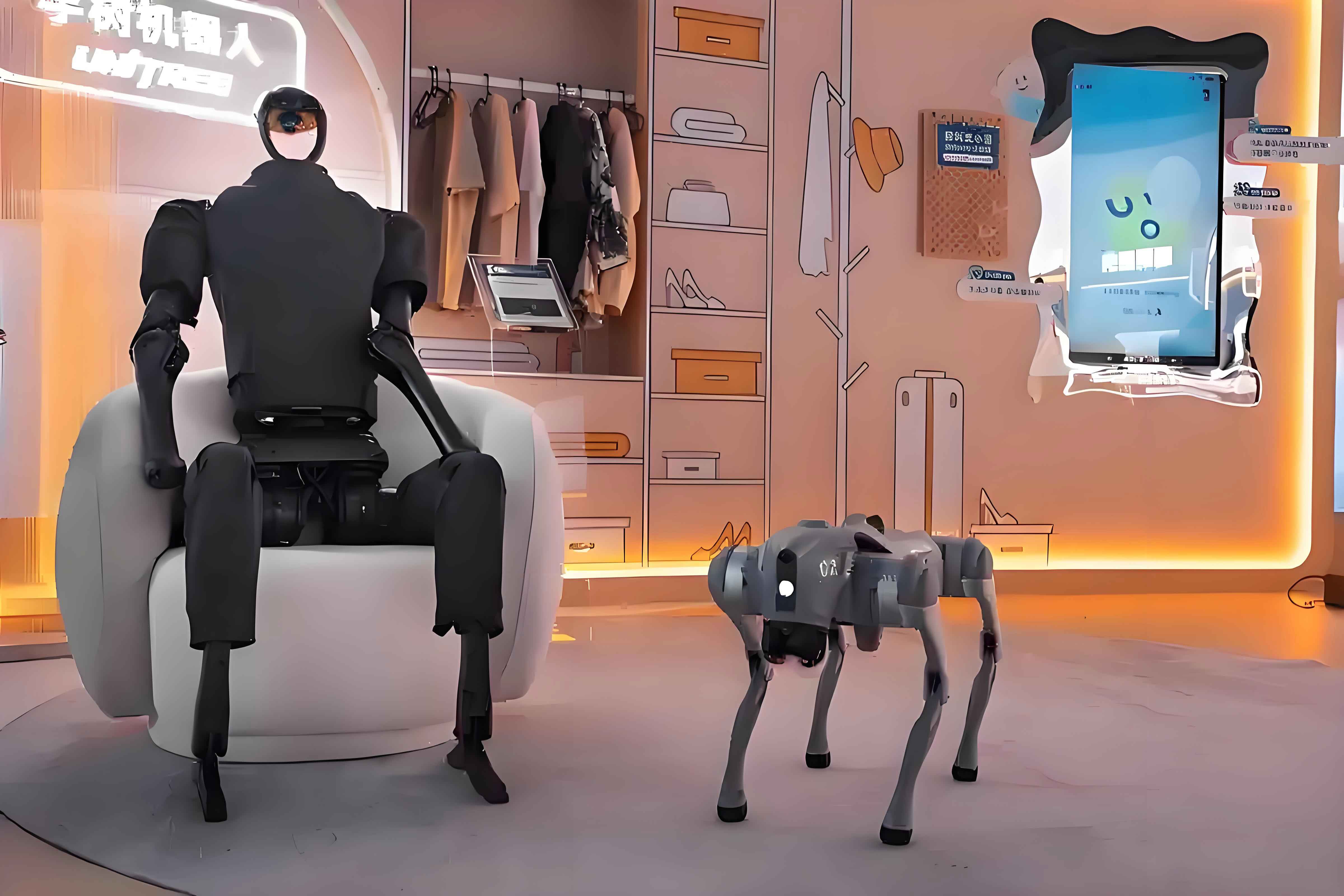
The collaboration between Ubtech and Infini Capital is structured around two primary pillars: financial support and industrial synergy. According to the cooperation agreement, Infini Capital’s high-tech investment fund will provide Ubtech with a strategic financing facility totaling $10 billion. This facility can be accessed through various mechanisms, including participation in share placements, subscription to convertible bonds, and the grant of a cash withdrawal right. Specifically, the provision granting Ubtech a rapid financing channel—a $10 billion cash withdrawal right exercisable as needed—is expected to significantly enhance the company’s capacity to execute major industrial initiatives. Beyond financing, the two parties have agreed to pursue multiple strategic industrial collaborations, leveraging their respective strengths to foster growth in the humanoid robot ecosystem.
Ubtech’s frequent capital market activities since its late 2023 listing are particularly noteworthy. The company has completed five share placements to date:
- August 2024: A share placement was conducted.
- October 2024: Another share placement was completed.
- November 2024: A further share placement took place.
- February 2025: An additional share placement was executed.
- July 2025: The most recent placement involved the issuance of 30,155,450 shares, raising gross proceeds of approximately HKD 2.47 billion. Cumulatively, these post-IPO placements have raised a total of HKD 4.54 billion.
In its announcements, Ubtech’s board stated that these placement initiatives are intended to raise capital for the continuous optimization and iteration of the company’s humanoid robot products, support future large-scale commercialization in global markets, and broaden its shareholder and capital base.
Concurrently, Ubtech has filed six applications for bank credit facilities since becoming a public company:
- January 2024: Applied for a credit line of 1 billion yuan.
- March 2024: Applied for a credit line of 1.8 billion yuan.
- August 2024: Applied for a credit line of 1.1 billion yuan.
- December 2024: Applied for a credit line of 1.95 billion yuan.
- May 2025: Applied for a credit line of 1.5 billion yuan.
- August 2025: Applied for a credit line of 200 million yuan.
In each instance, the company cited “business expansion” as the rationale for seeking these credit facilities, underscoring the ongoing operational and developmental costs associated with its humanoid robot ventures.
The underlying driver for this relentless pursuit of capital is the intrinsic nature of the humanoid robot sector. In recent years, the AI boom has catalyzed a surge in humanoid robot development, attracting investment on an unprecedented scale, particularly throughout the current year. Data from IT桔子 indicates that the number of investment events in China’s humanoid robot sphere has risen dramatically, from 40 in 2023 to 69 in 2024, and has already reached 111 events so far this year. Despite this influx of capital, the humanoid robot field remains fundamentally capital-intensive, with exorbitant research, development, and manufacturing costs posing significant hurdles. For example, Ubtech reported R&D expenses of 218 million yuan for the first half of 2025, accounting for 35.1% of its revenue. Even other players like宇树科技 (Yushu Technology), which reportedly achieved profitability as early as 2020, continue to actively seek funding, having completed a Series C round in June this year and subsequently receiving additional investment from the Beijing Robot Industry Development Investment Fund.
Wang Chao, founder of Wen Yuan Think Tank, provided expert insight into the market dynamics. “In recent years, the popularity of humanoid robots in the Chinese market has continued to rise. However, compared to general-purpose large models, their actual market potential still shows a significant gap,” he stated. Wang Chao pointed out that the humanoid robot market has not yet broken through in the to-C (consumer) segment, and in the to-B (business) sector, applications are largely confined to limited scenarios such as education and exhibition displays. Humanoid robots have not yet evolved into genuine productive forces. The entire industry remains in an early stage characterized by high capital concentration, and companies generally lack the ability to generate their own cash flow. Consequently, humanoid robot enterprises typically require continuous capital infusion to sustain their research, development, and operational activities.
Therefore, the proactive efforts by companies like Ubtech to secure financing and build capital reserves are part of a deliberate strategy often summarized as “stockpile provisions and bide your time” to navigate an anticipated future shakeout. Wang Chao elaborated further: “It is expected that in the second half of this year or in the next year or two, this sector will enter a capital winter period. At that time, the elimination contest will officially begin. The rule for survival will become extremely straightforward: whichever company has a thicker ‘blood bar’—greater financial reserves—will endure longer.” He emphasized that this trend is not unique to Ubtech; since the first half of the year, multiple companies in the humanoid robot space have been actively gathering resources to secure more initiative in the impending intense competition.
Focusing on Ubtech’s specific financial health, the company’s ability to generate its own profits—its “blood-making” capability—still requires improvement, as it continues to operate at a loss. The company recently released its interim业绩 report for 2025, revealing a net loss of 440 million yuan. Despite the loss, the overall financial picture showed marked improvement. The loss amount was substantially reduced compared to the same period last year, while revenue increased by 27.5% year-on-year, and gross profit grew by 17.3%.
Encouragingly, 2025 has witnessed a notable acceleration in Ubtech’s commercialization of humanoid robots. In April 2025, the company signed a procurement contract with a customer for a large number of bipedal humanoid robots. Then, in July 2025, Ubtech won a bid from Mi Yi Automotive for a robot equipment procurement project valued at 90.5115 million yuan, setting a new global record for the single highest contract value awarded to a humanoid robot enterprise. This project is expected to result in the delivery of 500 industrial humanoid robots within 2025. Furthermore, Ubtech has successfully established cooperative relationships with several industry leaders, including BYD, Dongfeng Liuzhou Auto, Geely Auto, FAW-Volkswagen Qingdao Branch, Audi-FAW, BAIC New Energy, SF Express, and Foxconn. Its industrial humanoid robot, the Walker S series, is recognized as the humanoid robot that has entered the highest number of factories globally for practical training and application purposes, signifying a solid step towards the real-world integration of humanoid robots.
The strategic importance of these developments cannot be overstated. As the humanoid robot industry progresses, the interplay between technological advancement, capital availability, and market adoption becomes increasingly critical. Ubtech’s recent financial maneuvers and commercial breakthroughs reflect a broader industry trend where securing adequate funding is not merely an option but a prerequisite for staying relevant in the long-term evolution of humanoid robotics. The $10 billion facility from Infini Capital, coupled with its other capital-raising activities, provides Ubtech with a significant war chest to navigate the anticipated challenges ahead, invest in next-generation humanoid robot technologies, and scale its operations internationally, particularly with the planned Middle East facility. The focus remains firmly on transforming the humanoid robot from a technological marvel into a commercially viable and widely deployed asset across various industrial and potentially consumer segments. The journey for humanoid robot companies is undoubtedly arduous, but with sustained capital injection and focused execution, the prospect of these machines becoming integral components of modern automation and daily life grows increasingly tangible.