
The harmonic drive gear, renowned for its high precision, compactness, and zero-backlash characteristics, is a pivotal component in advanced mechanical systems such as aerospace actuators, precision instrumentation, and robotic joints. At the heart of this transmission system lies the flexspline, a thin-walled, flexible cylindrical cup with external teeth that deforms under the action of an elliptical wave generator. This controlled elastic deformation enables efficient speed reduction and torque amplification through meshing with a rigid circular spline.
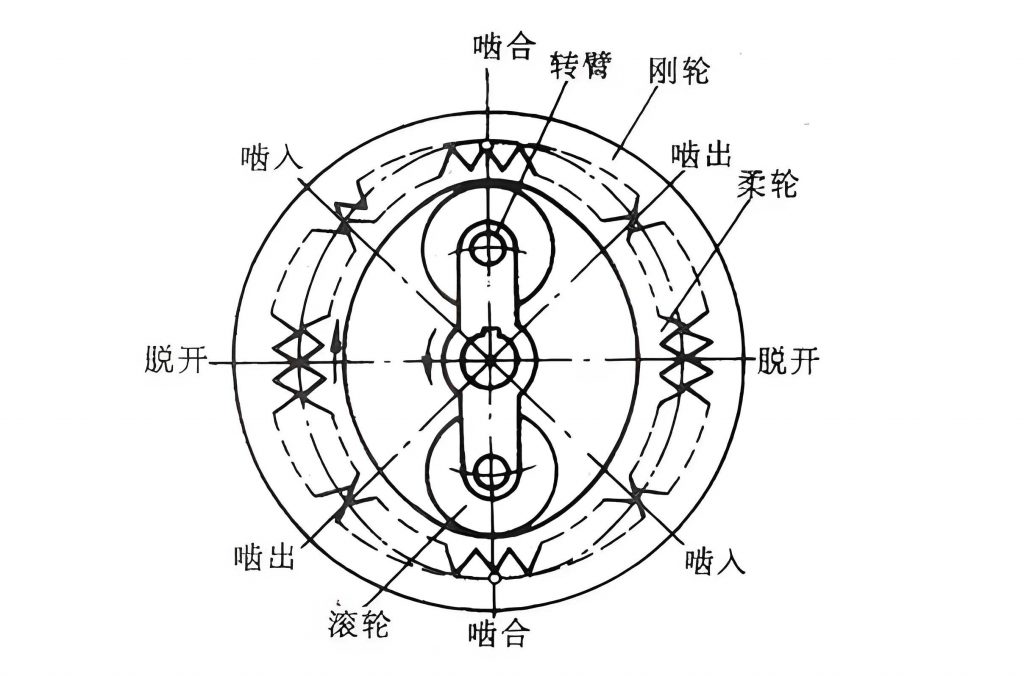
In pursuit of even more compact and lightweight designs, engineers have developed ultra-short cup flexsplines characterized by a significantly reduced length-to-diameter ratio (L/D). While advantageous for miniaturization, this design shift introduces critical mechanical challenges. The bottom of the cup, which serves as the mounting interface and structural anchor, transitions from a relatively low-stress region in longer flexsplines to a primary high-stress zone. Under operational loads, this region must withstand not only the complex bending stresses induced during assembly with the wave generator but also significant shear stresses resulting from the transmitted output torque. The superposition of these stress states makes the cup bottom a potential site for fatigue crack initiation and catastrophic failure, thereby dictating the overall durability and reliability of the entire harmonic drive gear assembly. Consequently, a thorough and accurate theoretical understanding of the load-induced stress distribution in the bottom of ultra-short flexsplines is paramount for robust design and optimization.
Theoretical Foundation: Modeling the Flexspline Bottom
To analyze the stress state theoretically, the complex geometry of the flexspline bottom is simplified into a more tractable mechanical model. The bottom is idealized as a thin, circular plate of constant thickness \(t\), clamped along its inner circumference at a radius \(r_0\) (corresponding to the outer edge of the mounting boss) and free at its outer edge of radius \(r_m\) (where it connects to the cylindrical wall). This “clamped-center” plate model effectively captures the primary boundary condition of a rigidly fixed center.
The deformation of this plate is driven by the axial displacement \(w(\varphi)\) of the adjoining cylindrical wall, which itself is forced into an elliptical shape by the wave generator. According to the semi-membrane theory of cylindrical shells, the axial displacement \(w_0(\varphi)\) at the open end of a cylindrical shell under elliptical deformation is given by the integral of its curvature change. The displacement function relevant for the plate boundary condition is:
$$ w(\varphi) = w_0(\varphi) – w_0(\pi/4) $$
where,
$$ w_0(\varphi) = – \frac{1}{2k} \int_{0}^{\varphi} \int_{0}^{\theta} \left( \frac{ab}{a^2 \sin^2 \eta + b^2 \cos^2 \eta} – r_m \right) d\eta d\theta $$
Here, \(k = l / (2r_m)\) is the length-to-diameter ratio, \(l\) is the length of the cylindrical wall, \(r_m\) is the mean radius of the flexspline’s neutral surface, \(a\) and \(b\) are the semi-major and semi-minor axes of the deformed neutral surface, and \(\varphi\) is the angular coordinate.
The resulting deflection \(w_1\) of the circular plate is symmetric and varies with both radius \(r\) and angle \(\varphi\). It can be separated into a radial function \(f(r)\) and the angular displacement \(w(\varphi)\):
$$ w_1(r, \varphi) = f(r) \cdot w(\varphi) $$
The radial function \(f(r)\) must satisfy the biharmonic equation \(\nabla^4 f = 0\) for plate bending. Its general solution in polar coordinates is:
$$ f(r) = \beta_0 + \beta_1 \frac{r^2}{r_m^2} + \beta_2 \ln \frac{r}{r_m} + \beta_3 \frac{r^2}{r_m^2} \ln \frac{r}{r_m} $$
The constants \(\beta_0, \beta_1, \beta_2, \beta_3\) are determined by applying the following boundary conditions that enforce compatibility and equilibrium between the plate and the cylindrical wall:
- At the clamped inner edge (\(r = r_0\)): Deflection is zero (\(w_1 = 0\)) and the slope is zero (\(\partial w_1 / \partial r = 0\)).
- At the free outer edge (\(r = r_m\)): The deflection matches the cylindrical wall’s displacement (\(w_1 = w(\varphi)\)) and the edge moment \(M_{\phi}\) is zero.
Solving this system yields specific values for the constants, completing the description of the assembly-induced deformation. This deformation generates internal moments within the plate: radial bending moment \(M_r\), circumferential bending moment \(M_\phi\), and twisting moments \(M_{r\phi}\). From plate bending theory, the resulting assembly stresses in the bottom are:
$$
\begin{aligned}
\sigma_r^{ass} &= -\frac{Et}{2(1-\mu^2)} \left[ w(\varphi) \frac{\partial^2 f}{\partial r^2} + \mu \left( \frac{w(\varphi)}{r} \frac{\partial f}{\partial r} + \frac{f(r)}{r^2} \frac{\partial^2 w}{\partial \varphi^2} \right) \right] \\[8pt]
\sigma_\phi^{ass} &= -\frac{Et}{2(1-\mu^2)} \left[ \mu w(\varphi) \frac{\partial^2 f}{\partial r^2} + \left( \frac{w(\varphi)}{r} \frac{\partial f}{\partial r} + \frac{f(r)}{r^2} \frac{\partial^2 w}{\partial \varphi^2} \right) \right] \\[8pt]
\tau_{r\phi}^{ass} &= -\frac{Et}{2(1+\mu)} \left( \frac{1}{r} \frac{\partial f}{\partial r} \frac{\partial w}{\partial \varphi} – \frac{f(r)}{r^2} \frac{\partial w}{\partial \varphi} \right)
\end{aligned}
$$
where \(E\) is the Young’s modulus and \(\mu\) is the Poisson’s ratio of the flexspline material.
Stress State Under Operational Load (Torque)
During operation, the harmonic drive gear transmits torque \(T\). This torque is reacted at the fixed bottom of the flexspline, inducing a shear stress distribution. For a thin annular plate fixed at its center and subjected to a torque at its periphery, the shear stress \(\tau^{load}\) is primarily in-plane and can be approximated using the torsion formula for a thin-walled circular section. At any radial coordinate \(r\), the shear stress due to the applied torque is:
$$ \tau^{load}(r) = \frac{T}{2\pi r^2 t} $$
This load-induced shear stress acts in the same direction (circumferential) as the assembly-induced shear stress \(\tau_{r\phi}^{ass}\) at any given point. Therefore, the total shear stress in the loaded flexspline bottom is the algebraic sum:
$$ \tau_{r\phi}^{total}(r, \varphi) = \tau_{r\phi}^{ass}(r, \varphi) + \tau^{load}(r) $$
$$ \tau_{r\phi}^{total} = -\frac{Et}{2(1+\mu)} \left( \frac{1}{r} \frac{\partial f}{\partial r} \frac{\partial w}{\partial \varphi} – \frac{f(r)}{r^2} \frac{\partial w}{\partial \varphi} \right) + \frac{T}{2\pi r^2 t} $$
The complete three-dimensional stress state at any point \((r, \varphi)\) in the bottom under load is thus defined by the radial stress \(\sigma_r^{ass}\), circumferential stress \(\sigma_\phi^{ass}\), and the total shear stress \(\tau_{r\phi}^{total}\). To assess the yielding risk under this multi-axial stress state, the von Mises equivalent stress \(\sigma_{eqv}\) is calculated. This criterion is particularly suitable for ductile materials commonly used in harmonic drive gear flexsplines, such as alloy steels:
$$ \sigma_{eqv}(r, \varphi, T) = \sqrt{ \frac{1}{2} \left[ (\sigma_r^{ass} – \sigma_\phi^{ass})^2 + (\sigma_r^{ass})^2 + (\sigma_\phi^{ass})^2 \right] + 3(\tau_{r\phi}^{total})^2 } $$
This equation shows that the equivalent stress depends on geometric parameters (via \(f(r)\) and \(w(\varphi)\)), material properties (\(E, \mu\)), and the operational load \(T\). It provides a comprehensive scalar measure of the stress severity at the flexspline bottom.
Numerical Verification via Finite Element Analysis
To validate the theoretical stress calculations, a detailed Finite Element Analysis (FEA) model was constructed. The model was based on a representative ultra-short harmonic drive gear flexspline, the CSG-25 type, with a length-to-diameter ratio of \(k=0.3\). Key geometric parameters are summarized in Table 1.
| Parameter | Symbol | Value | Unit |
|---|---|---|---|
| Mean Radius of Cylindrical Wall | \(r_m\) | 30.685 | mm |
| Deformed Neutral Surface Semi-Major Axis | \(a\) | 31.035 | mm |
| Deformed Neutral Surface Semi-Minor Axis | \(b\) | 30.335 | mm |
| Boss Outer (Clamping) Radius | \(r_0\) | 15.0 | mm |
| Wall and Bottom Thickness | \(t\) | 1.0 | mm |
| Cylindrical Length | \(l\) | 18.411 | mm |
| Length-to-Diameter Ratio | \(k\) | 0.3 | – |
| Young’s Modulus | \(E\) | 206,000 | MPa |
| Poisson’s Ratio | \(\mu\) | 0.3 | – |
| Radial Function Constant | \(\beta_0\) | 8.5631 | – |
| Radial Function Constant | \(\beta_1\) | 35.8121 | – |
| Radial Function Constant | \(\beta_2\) | -4.3294 | – |
| Radial Function Constant | \(\beta_3\) | -8.3394 | – |
The entire flexspline and the elliptical wave generator were modeled using SHELL63 elements to achieve computational efficiency while accurately capturing bending behavior. The inner circumference of the cup bottom (radius \(r_0\)) was assigned a fixed boundary condition. Surface-to-surface contact was defined between the flexspline’s inner wall and the wave generator. Analyses were performed in two sequential steps: 1) Assembly Stress Analysis, simulating the insertion of the wave generator with zero torque, and 2) Load Stress Analysis, where the calculated assembly state was used as a pre-stress condition and a torque was applied to the teeth of the flexspline while the bottom remained fixed.
1. Verification of Assembly Stresses
The theoretical predictions for assembly-induced stresses (\(\sigma_r^{ass}, \sigma_\phi^{ass}, \tau_{r\phi}^{ass}\)) were compared against FEA results along radial paths at key angular positions: \(0^\circ\) (major axis), \(90^\circ\) (minor axis), \(45^\circ\), and \(20^\circ\). The agreement was excellent over most of the radius. For instance, radial and circumferential normal stresses decreased with increasing radius, while the shear stress increased. The maximum radial normal stress was approximately 210 MPa, located near the fixed edge at the major and minor axes. The magnitudes of the maximum circumferential stress and shear stress were about one-third of the radial stress, confirming that the bending-induced radial normal stress is the dominant component in the assembly stress state of the ultra-short harmonic drive gear flexspline bottom. Minor deviations near the outer edge (\(r \rightarrow r_m\)) in the FEA model are attributed to the local stress concentration at the junction with the cylindrical wall, an effect not captured by the simplified pure plate theory.
2. Verification of Load-Induced and Total Stresses
The analysis was conducted under two torque conditions: the rated torque \(T_{rated} = 87\) N·m and the instantaneous maximum allowable torque \(T_{max} = 395\) N·m.
Shear Stress Distribution: Under \(T_{rated}\), the total shear stress \(\tau_{r\phi}^{total}\) was maximum around the \(45^\circ\) location, with relatively low values at the major/minor axes. Under \(T_{max}\), the pattern shifted dramatically: the shear stress became maximum at the clamped edge (\(r = r_0\)) and uniformly high across all angles, decaying rapidly with increasing radius. This indicates that as torque increases, the load-induced shear term \(\tau^{load} = T/(2\pi r^2 t)\) dominates, and its \(1/r^2\) dependence concentrates the highest stress at the smallest radius, i.e., the fixed edge. The theoretical calculations matched the FEA results within 7% across both load cases.
Von Mises Equivalent Stress Distribution: The equivalent stress \(\sigma_{eqv}\) under \(T_{rated}\) showed a complex pattern, with maxima at the fixed edge near the major/minor axes, influenced by the significant assembly bending stresses. Under \(T_{max}\), however, the distribution simplified: the maximum \(\sigma_{eqv}\) occurred uniformly around the fixed edge (\(r = r_0\)), with a steep radial decay. At this high torque level, the shear stress component became the principal contributor to the equivalent stress. Table 2 provides a comparative summary of key stress values from theory and FEA at the critical fixed-edge location (\(r = r_0\)).
| Stress Component | Angular Location \(\varphi\) | Theoretical Value | FEA Value | Deviation | Condition |
|---|---|---|---|---|---|
| Max Radial Stress \(\sigma_r^{ass}\) | 0° (Major Axis) | 208 MPa | 215 MPa | ~3.3% | Assembly Only |
| Max Shear Stress \(\tau_{r\phi}^{total}\) | 45° | 68 MPa | 72 MPa | ~5.9% | Rated Torque (87 N·m) |
| Max Shear Stress \(\tau_{r\phi}^{total}\) | 0° | 265 MPa | 274 MPa | ~3.4% | Max Torque (395 N·m) |
| Von Mises Stress \(\sigma_{eqv}\) | 0° | ~280 MPa | ~290 MPa | ~3.6% | Max Torque (395 N·m) |
The close correlation between the theoretical predictions and the numerical simulation results validates the proposed analytical model for calculating load stress in the bottom of ultra-short harmonic drive gear flexsplines.
Conclusions and Design Implications
This study establishes a comprehensive theoretical framework for analyzing the complex stress state in the bottom of ultra-short cup flexsplines used in harmonic drive gear systems. The key findings and their implications for design are as follows:
- Dominant Assembly Stress: In the pre-loaded (assembled) state, the primary stress component in the cup bottom is the radial bending normal stress (\(\sigma_r^{ass}\)), which reaches its maximum at the fixed edge on the major and minor axes of the wave generator-induced ellipse. This stress is a direct consequence of the constrained bending deformation and is largely independent of torque.
- Torque-Dependent Shear Stress Transition: The operational torque introduces a significant shear stress component. Under moderate (rated) torque, the total shear stress profile is a combination of assembly and load effects, peaking around the \(45^\circ\) locations. As the transmitted torque increases to its maximum allowable value, the load-induced shear stress dominates, and its magnitude becomes inversely proportional to the square of the radius (\(\propto 1/r^2\)). This physically concentrates the maximum shear stress at the innermost fixed edge of the bottom, with a relatively uniform angular distribution.
- Critical Zone and Failure Risk: The von Mises equivalent stress analysis conclusively identifies the clamped inner circumference of the cup bottom (\(r = r_0\)) as the critical high-stress zone under full operational load. At the instantaneous maximum torque, the equivalent stress in this zone is primarily governed by the torsional shear stress. Therefore, this region is the most probable site for fatigue crack initiation and should be the primary focus for strength evaluation and design enhancement in ultra-short harmonic drive gear flexsplines.
- Validation and Model Utility: The strong agreement between the theoretical stress calculations and detailed finite element simulations confirms the accuracy and practical utility of the proposed clamped-center circular plate model. It provides designers with an efficient analytical tool to estimate stresses without resorting to computationally expensive FEA in the initial design stages. The model’s formalism, based on the function \(f(r)\), is also readily adaptable for analyzing flexspline bottoms with intentionally tailored variable thickness profiles aimed at stress reduction.
In summary, the successful integration of theoretical mechanics and numerical validation presented here offers a clear roadmap for understanding and mitigating stress-related failures in advanced, compact harmonic drive gear systems. By accurately predicting the load stress state in the flexspline bottom, engineers can optimize geometries, select appropriate materials, and apply targeted reinforcement strategies—such as local thickening or sophisticated contouring at the fixed edge—to enhance the durability and push the performance boundaries of these essential precision transmission components.