
The evolution of robotic end-effectors has been profoundly shaped by the pursuit of replicating the human hand’s unparalleled combination of dexterity, adaptability, and sensory perception. Traditional dexterous robotic hands, constructed from rigid metals and plastics, achieve precise motion through complex assemblies of motors, gears, and linkages. While capable of high-force, high-speed operations, their inherent rigidity poses significant limitations in unstructured environments, leading to potential damage to fragile objects and safety concerns during human-robot interaction. The emergence of soft robotics, utilizing materials with low elastic moduli, has introduced a paradigm shift. A dexterous robotic hand crafted from soft, compliant materials offers inherent safety, excellent environmental conformity, and robustness to uncertainties—qualities essential for next-generation automation, prosthetics, and service robotics. This article surveys the state-of-the-art in soft anthropomorphic dexterous robotic hands, analyzing their design, actuation, fabrication, modeling, control, and sensory integration, while outlining persistent challenges and future trajectories.
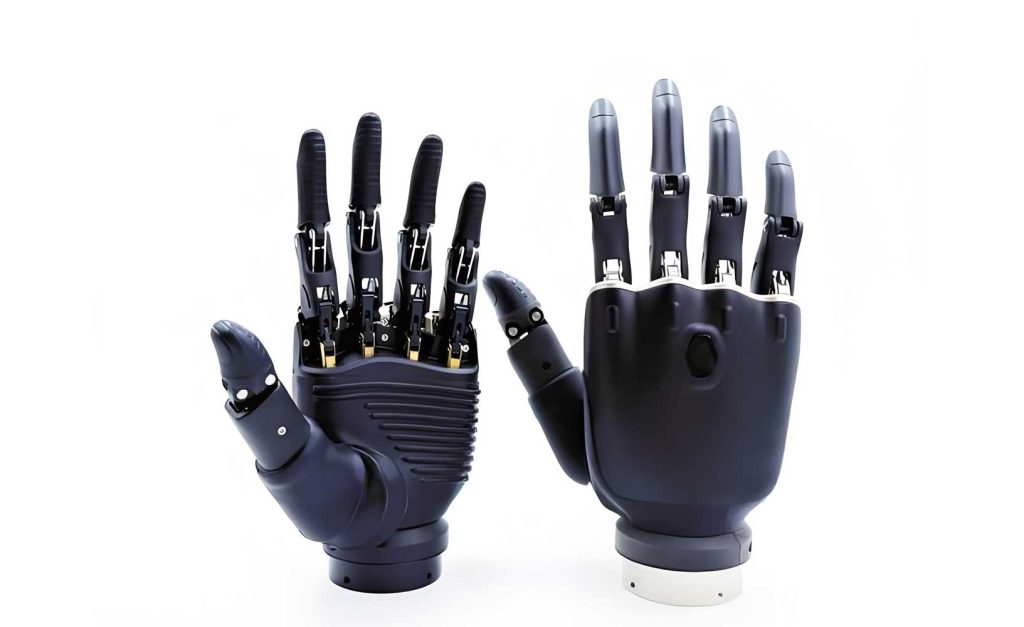
The human hand remains the ultimate archetype for a dexterous robotic hand. Its mechanical intelligence stems from a complex, compact arrangement of approximately 27 bones, 19 joints, and over 30 muscles. This anatomy allows for a vast range of motions including flexion/extension, abduction/adduction, and the crucial opposition of the thumb, enabling both powerful enveloping grasps and delicate in-hand manipulation. The hand’s performance is characterized by two key, often competing, attributes: grasping stability and manipulative dexterity. Mimicking this functionality is the core objective behind developing a soft anthropomorphic dexterous robotic hand. Based on their structural biomimicry and functional complexity, these hands can be categorized into three progressive tiers.
1. Dexterity and Grasping Capability: A Hierarchical Classification
1.1 Soft Multi-Fingered Grippers
These represent the foundational level, focusing primarily on the basic function of grasping. Typically featuring three or four pneumatically actuated soft fingers, they excel at enveloping objects of various shapes and sizes due to passive material compliance. Their design is simple, cost-effective, and reliable for repetitive pick-and-place tasks, such as in food handling or agricultural harvesting. However, their motion is often limited to a single, pre-programmed bending trajectory upon inflation. They lack independent finger control, a functional palm, and thus any capability for in-hand manipulation, placing them at the lower end of the spectrum for a true dexterous robotic hand.
1.2 Palm-Fixed Anthropomorphic Hands
This category marks a significant step towards human-like form and function. These hands typically feature five independently actuated fingers, mirroring the human hand’s morphology. The palm, however, is a passive structural element. Research focus here is on finger design, leading to several prominent architectures summarized in Table 1.
| Finger Architecture | Key Features & Advantages | Disadvantages & Challenges |
|---|---|---|
| Pure Soft Fingers (Single or Multi-Joint) | High compliance, inherent safety, low cost, excellent passive shape adaptation. | Limited output force and stiffness, complex modeling, larger size for multi-joint designs. |
| Rigid-Soft Hybrid (Rigid skeleton with soft actuators) | Increased output force and structural stability while retaining adaptability. | Stress concentration at rigid-soft interfaces, complex fabrication and modeling. |
| Tendon-Driven (Cables/Pulleys) | High force transmission, compatible with conventional motors, compact design. | Friction, hysteresis, cable wear and maintenance, nonlinear tension control. |
| Jamming/Stiffness-Tunable | Variable stiffness enables switching between compliant grasping and rigid manipulation. | Additional control complexity for jamming mechanism, slower response times. |
While these hands demonstrate improved grasping postures and stability over simple grippers, the fixed palm restricts critical degrees of freedom. The inability to adduct/abduct fingers or achieve full thumb opposition significantly limits their operational dexterity and the range of human-like grasps they can achieve, constraining their functionality as a fully capable dexterous robotic hand.
1.3 Palm-Actuated Anthropomorphic Hands
The most advanced tier incorporates actuation within the palm itself, recognizing the palm’s crucial role in human hand function. An actuated palm enables thumb opposition, cupping motions for enveloping grasps, and finger abduction/adduction, dramatically expanding the hand’s kinematic repertoire and workspace. This design is essential for achieving high scores on dexterity tests like the Kapandji test and for executing sophisticated in-hand manipulation tasks, such as rotating a pen or translating an object within the palm. Table 2 summarizes representative works in this category, highlighting the drive towards higher dexterity.
| Key Feature / Study Focus | Palm Actuation Method | Notable Achievements / Dexterity Metrics |
|---|---|---|
| Early ECF-driven Palm | Electro-Conjugate Fluid (ECF) micro-pumps | Demonstrated thumb opposition and palm flexion using novel fluidic actuation. |
| RBO Hand 2 | Dual pneumatic chambers | Underactuated design; achieved 31 out of 33 GRASP taxonomy grasps. |
| Hand with Flexible Thenar | Pneumatic mesh actuator at thenar eminence | Enhanced thumb mobility for gestural communication (e.g., sign language). |
| Blue Hand | Parallel bellows actuators in thenar region | 21 DoFs; achieved all GRASP taxonomy grasps, high Kapandji score. |
| RBO Hand 3 / BCL-26 | Multi-chamber pneumatic palm | Capable of complex in-hand manipulation (rotation, translation of objects). |
The progression from grippers to palm-actuated hands clearly illustrates the field’s trajectory toward higher biomimicry and functionality. The actuated palm is a key differentiator that unlocks the potential for a soft dexterous robotic hand to move beyond simple grasping into the realm of skilled manipulation.
2. Actuation Methods for Soft Dexterity
The choice of actuation fundamentally influences the design, performance, and application of a dexterous robotic hand. Soft hands predominantly employ one of three core actuation paradigms.
2.1 Fluidic Actuation
This is the most prevalent method due to its high force-to-weight ratio, simplicity, and direct compatibility with soft, inflatable structures. It can be subdivided into:
Pneumatic Actuation: Uses compressed air. Common embodiments include Fiber-Reinforced Elastomeric Actuators (FREAs) and PneuNets. Bending is achieved by pressurizing patterned chambers, with strain-limiting layers or fiber reinforcements guiding the deformation. The governing bending moment $M_b$ can be related to input pressure $P$ and actuator geometry:
$$M_b \propto P \cdot A \cdot r$$
where $A$ is the effective chamber cross-sectional area and $r$ is the moment arm. Pneumatic systems are lightweight and fast but require a pressure supply and are susceptible to leaks.
Hydraulic Actuation: Uses incompressible fluid, enabling higher force density and stiffness. It is particularly advantageous for underwater applications. However, it necessitates pumps and valves, leading to heavier and more complex systems.
2.2 Cable/Tendon Drive
This method mimics biological tendon-driven motion. Motors located in the forearm or palm pull cables routed through the fingers, causing flexion. It often leads to underactuated designs, where fewer actuators control many joints, simplifying control while promoting natural, enveloping grasps. The tendon tension $T$ required to produce a fingertip force $F_{tip}$ depends on the mechanism’s leverage, often modeled as:
$$F_{tip} = \eta \cdot \frac{T}{r_{pulley}}$$
where $\eta$ is an efficiency factor accounting for friction, and $r_{pulley}$ is the effective pulley radius. The main challenges are cable friction, hysteresis, and durability.
2.3 Smart Material Actuation
These materials change shape or stiffness in response to external stimuli.
Shape Memory Alloys (SMAs): Wires or sheets contract when heated (Joule heating or external source), generating actuation force. They offer high energy density and silent operation but suffer from low bandwidth, hysteresis, and cooling challenges.
Other Stimuli-Responsive Materials: Includes Electroactive Polymers (EAPs), which deform under electric fields, and liquid crystal elastomers activated by heat or light. While promising for direct, silent actuation, they generally produce smaller strains or forces and are less mature for application in a full dexterous robotic hand.
| Actuation Type | Energy Density | Bandwidth | System Complexity | Typical Application |
|---|---|---|---|---|
| Pneumatic | Medium | High | Medium (requires air supply) | General-purpose grasping, prosthetics |
| Hydraulic | High | High | High (sealed fluid system) | Underwater manipulation, high-force tasks |
| Cable-Driven | Medium (depends on motor) | High | Medium (routing and tensioning) | High-speed grippers, biomimetic hands |
| SMA | High | Very Low | Low (but needs heating control) | Compact, silent applications |
3. Materials and Manufacturing
The realization of a functional dexterous robotic hand hinges on suitable materials and fabrication techniques that embody softness, durability, and complexity.
3.1 Material Selection
Elastomers form the backbone of soft robotic hands. Silicone rubbers (e.g., Ecoflex, Dragon Skin) are ubiquitous due to their excellent elasticity, ease of processing, and biocompatibility. Thermoplastic Polyurethane (TPU) offers good abrasion resistance and can be 3D printed. For variable stiffness, researchers integrate Phase-Change Materials or Low-Melting-Point Alloys. Reinforcement materials are critical: inextensible fabrics (e.g., polyester) or fibers (e.g., Kevlar) are embedded as strain-limiting layers to guide bending and increase burst pressure, defined by the membrane stress equation for a cylindrical chamber:
$$\sigma_{hoop} = \frac{P \cdot r}{t}$$
where $P$ is pressure, $r$ is radius, and $t$ is wall thickness. Reinforcement helps withstand higher $\sigma_{hoop}$.
3.2 Fabrication Techniques
Molding and Casting: The traditional method. A 3D-printed or machined mold is filled with liquid elastomer, cured, and demolded. It allows for high-quality parts and embedded components but is time-consuming for iterative design.
Additive Manufacturing (3D Printing): Rapidly becoming the preferred method. Techniques like Multi-Jet Printing (MJP) with photopolymer resins or Fused Deposition Modeling (FDM) with flexible filaments enable the direct creation of complex, multi-material structures (e.g., rigid bones with soft joints, embedded channels) in a single process, accelerating prototyping and enabling intricate, monolithic designs for a dexterous robotic hand.
Laminated Object Manufacturing: Involves laser-cutting sheets of material (elastomer, fabric, adhesive) and stacking them to form actuators with embedded sensing and fluidic channels. It is precise and facilitates multi-material integration.
4. Modeling and Control Paradigms
The inherent compliance, nonlinearity, and high dimensionality of soft hands make modeling and control non-trivial challenges.
4.1 Kinematic and Dynamic Modeling
Unlike rigid robots with discrete joints, soft actuators deform continuously. The most common approximation is the Piecewise Constant Curvature (PCC) model. It assumes a soft limb bends into a circular arc with constant curvature $\kappa$. The arc parameters (curvature $\kappa$, plane of bending $\phi$, and arc length $s$) map to actuator inputs (e.g., pressures $P_1, P_2$). The transformation from the base to the tip of a segment is given by:
$$
T_{segment} =
\begin{bmatrix}
\cos^2\phi (\cos\kappa s -1)+1 & \sin\phi \cos\phi (\cos\kappa s -1) & \cos\phi \sin\kappa s & \frac{\cos\phi(1-\cos\kappa s)}{\kappa}\\
\sin\phi \cos\phi (\cos\kappa s -1) & \cos^2\phi (1-\cos\kappa s)+\cos\kappa s & \sin\phi \sin\kappa s & \frac{\sin\phi(1-\cos\kappa s)}{\kappa}\\
-\cos\phi \sin\kappa s & -\sin\phi \sin\kappa s & \cos\kappa s & \frac{\sin\kappa s}{\kappa}\\
0 & 0 & 0 & 1
\end{bmatrix}
$$
For a multi-segment finger, the total transformation is $T_{tip} = T_1 \cdot T_2 \cdot … \cdot T_n$. While PCC simplifies analysis, it ignores material nonlinearities, external loads, and complex deformation modes. Finite Element Method (FEM) simulations offer high-fidelity predictions of deformation and stress but are computationally expensive and not suitable for real-time control. Cosserat Rod Theory provides a more general continuum mechanics framework for dynamics but requires complex numerical solutions.
4.2 Control Strategies
Control approaches can be categorized along two axes: model dependency and feedback.
Open-Loop vs. Closed-Loop Control: Early soft hands often used open-loop control, where a predetermined input sequence (e.g., pressure profile) is applied. This is simple but vulnerable to disturbances and model inaccuracies. Closed-loop control utilizes sensor feedback (e.g., curvature, pressure, force) to regulate the hand’s state. A common framework uses PID control on measured curvature $\kappa_{meas}$ to achieve a desired curvature $\kappa_{des}$ by adjusting pressure:
$$P_{cmd} = K_p \cdot e(t) + K_i \cdot \int e(t) dt + K_d \cdot \frac{de(t)}{dt}, \quad \text{where } e(t) = \kappa_{des} – \kappa_{meas}$$
Model-Based vs. Data-Driven Control: Model-based controllers rely on the PCC or other analytical models to compute inverse kinematics/dynamics. Their performance is bounded by model accuracy. Data-driven methods, particularly Machine Learning (ML), have gained prominence for bypassing explicit modeling. Neural networks can learn the complex mapping from desired poses or tasks to actuator inputs directly from experimental data, or can interpret multi-modal sensory data for object recognition and grasp stability assessment. Reinforcement Learning is being explored for autonomous policy learning in manipulation tasks.
5. The Imperative of Tactile Perception
To transition from a blind gripper to an intelligent dexterous robotic hand capable of fine manipulation and safe interaction, rich tactile sensing is indispensable. The goal is to develop “electronic skin” (e-skin) that replicates the human skin’s ability to sense pressure, shear, vibration, and temperature.
5.1 Sensing Modalities and Integration
Flexible tactile sensors transduce mechanical stimuli into electrical signals. Table 4 compares the dominant transduction principles.
| Mechanism | Working Principle | Key Advantage | Key Challenge |
|---|---|---|---|
| Piezoresistive | Change in electrical resistance under strain/pressure. | Simple structure, easy signal acquisition. | Hysteresis, sensitivity to temperature. |
| Capacitive | Change in capacitance due to deformation of parallel plates. | High sensitivity, low power consumption, good for static force. | Susceptible to noise, complex wiring for arrays. |
| Piezoelectric | Generation of electric charge in response to dynamic strain. | High frequency response, self-powered for dynamic events. | Cannot measure static forces, pyroelectric effect. |
| Optical | Modulation of light intensity/path in waveguides upon deformation. | Immune to electromagnetic interference, high spatial resolution. | Requires external light source and detectors, packaging. |
Integration strategies are twofold: Embedded Sensors: Sensors are fabricated inside the soft structure during manufacturing (e.g., liquid metal channels in soft cavities, optical fibers in finger cores). E-Skin Patches: Sensor arrays are fabricated on flexible substrates and then attached to the hand’s surface. The trend is towards multi-modal distributed sensing, covering large areas of the hand with networks of sensors that provide rich spatial and temporal data for perceiving contact location, force distribution, slip, and object properties.
5.2 Role in Dexterous Manipulation
Tactile feedback closes critical perception-action loops. It enables:
Grasp Stability Monitoring: Detecting incipient slip through vibration or shear force changes allows for reflexive grip force adjustment.
In-Hand Manipulation: Feedback about contact forces and object motion is essential for dexterous tasks like rolling or sliding an object between fingers.
Object Exploration and Identification: By actively moving fingers over a surface, a dexterous robotic hand can use tactile data to infer texture, shape, and material properties.
The control law for a simple reflexive grip force adjustment based on shear force $F_s$ measurement could be:
$$F_g(t+1) = F_g(t) + \alpha \cdot |F_s(t)|$$
where $F_g$ is the commanded grasp force and $\alpha$ is a gain factor. More advanced schemes use ML models to directly map tactile sensor streams to manipulation commands.
6. Conclusions and Future Perspectives
The field of soft anthropomorphic dexterous robotic hands has made remarkable strides, evolving from simple compliant grippers to sophisticated systems capable of human-like grasps and basic manipulation. Key enablers have been advancements in soft actuator design (especially pneumatic and hybrid systems), multi-material additive manufacturing, and data-driven control methods. The integration of tactile sensing is rapidly progressing, promising to endow these hands with the perceptual intelligence needed for complex tasks.
However, significant challenges remain before a soft dexterous robotic hand can match the versatility and performance of its biological counterpart. Future research will likely focus on several interconnected frontiers:
- High-Strength, Variable-Stiffness Materials and Structures: Developing new composites and mechanisms that allow a hand to switch seamlessly between a soft, safe mode for interaction and a stiff, strong mode for powerful manipulation or tool use.
- Unified Modeling Frameworks: Creating more accurate and computationally efficient models that capture nonlinear material dynamics, hysteresis, and environmental contacts, potentially blending analytical models with real-time data assimilation.
- Embodied Intelligence and Advanced Control: Leveraging machine learning not just for perception, but for developing hierarchical control policies that combine low-level reflex loops (tactile) with high-level task planning (visual), enabling autonomous dexterous manipulation in unstructured environments.
- Dense, Multi-Modal Sensing Integration: Moving beyond individual sensors to develop truly sensorized skins with thousands of sensing elements providing simultaneous data on pressure, shear, temperature, and proprioception, all fabricated via scalable processes.
- System Integration and Practical Application: Addressing practical issues of durability, power efficiency, and seamless integration with mobile or humanoid robot platforms to transition laboratory prototypes into robust, field-ready dexterous robotic hands for healthcare, logistics, and domestic assistance.
The convergence of soft robotics, advanced manufacturing, machine intelligence, and sensory technology is poised to create a new generation of dexterous robotic hands. These systems will not only mimic the form of the human hand but will increasingly emulate its integrated function of sensing, reasoning, and acting, ultimately enabling robots to perform delicate and complex tasks alongside humans in our everyday world.