
In my experience working with archival systems, I have observed that archives, as crucial social information resources, hold immense significance for both individuals and society. However, the rapid development of society and the advancement of informatization have led to an exponential increase in archival volume. Carrier types have become increasingly diverse, and content is often scattered and overlapping. This presents a particular challenge for archives containing sensitive information, such as personal privacy, commercial secrets, or state secrets. Unauthorized disclosure of such materials can cause significant damage to personal, social, and national interests. The traditional, human-dependent processes of retrieval, filing, and shelving inherently carry unavoidable risks of error or mishandling. To address these critical pain points in contemporary archive management, achieving a physical separation between personnel and archives has become paramount. Establishing a secure, stable, precise, and efficient unmanned archive management mechanism is not just an improvement but a necessity.
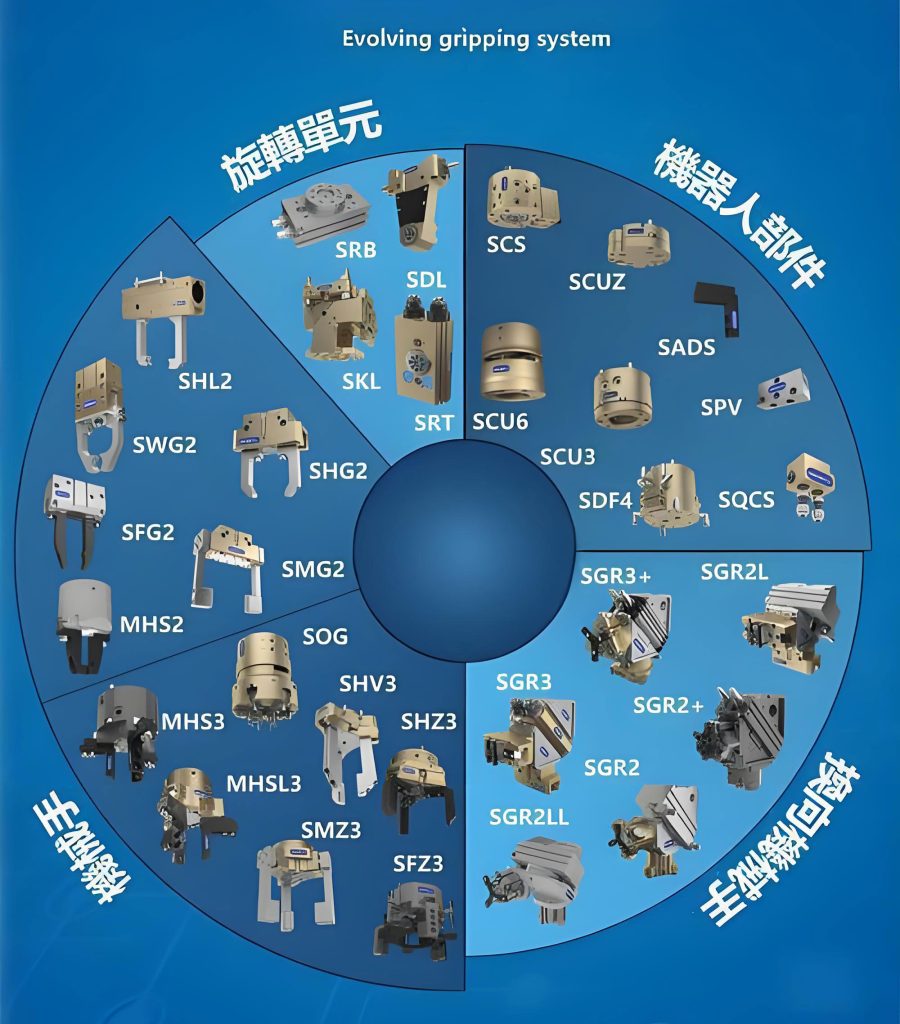
This article details my design and implementation of an end-effector for an unmanned archive retrieval robot intended for use within automated archival repositories. The primary function of this robotic end-effector is to work in tandem with a multi-degree-of-freedom robotic arm to execute the precise grasping and returning of archive boxes from densely packed shelves. Furthermore, the system is designed to report the results of each operation to a central supervisory computer via a fieldbus network. I will elaborate on this solution from three perspectives: the overall system design, the hardware design, and the software architecture.
1. System Overview and Problem Formulation
The core challenge was to create a reliable and safe interface between the robotic arm and the archive boxes. The designed end-effector for the archive robot comprises two main subsystems: the mechanical structure and the dedicated controller. The structural design, as I conceived it, consists of three primary components: an extension mechanism, a support structure, and a two-finger electric gripper. The electric gripper is responsible for the fundamental actions of gripping and releasing the archive box. The support structure provides stability and ensures the gripper engages the archive at its center of mass, preventing tilt or slippage. The extension mechanism is built around a ball screw linear slide, actuated by a stepper motor, which provides the necessary reach to engage with shelves of varying depths.
The controller for this end-effector serves as its brain. Its overarching function is to receive archival transaction commands from the host computer, parse these instructions, and orchestrate the precise movements of the electric gripper, stepper motor, and other peripherals to complete the assigned task of retrieving or replacing an archive box.
The operational workflow of the end-effector is a carefully sequenced state machine. Upon system power-up, both the gripper and the extension mechanism undergo an initialization routine. The electric gripper performs a self-calibration cycle by moving through its full open-and-close range to determine its operational parameters. The extension mechanism uses a limit switch to verify if the slide is at its fully retracted “home” position; if not, the stepper motor is driven to achieve this state. Once initialized, the end-effector enters a ready state. The controller continuously listens on the 485 bus for task commands from the host. Upon receiving a valid command, it parses and executes the corresponding action sequence.
For a “retrieve archive” command, the sequence is as follows: the extension slide moves outward. Upon triggering the outer limit switch, slide motion halts. The electric gripper then closes its fingers. Once the gripper confirms a successful grip (e.g., via current sensing or positional feedback), the slide retracts inward until the inner limit switch is triggered, signaling the completion of the retrieval cycle. The “return archive” command follows a similar sequence but involves the gripper opening at the appropriate moment to release the box.
A critical safety feature I integrated into the end-effector’s design is an anti-collision mechanism. This addresses the risk of the gripper colliding with an archive box if the robotic arm’s visual recognition system misidentifies the exact positioning, which could cause irreparable damage to the archival material. The anti-collision structure incorporates a secondary, short-travel slide mounted on the primary extension slide. A photoelectric sensor monitors the position of this secondary slide. Under normal, collision-free operation, this sensor remains un-triggered. If a collision occurs, the force causes the secondary slide to displace, triggering the photoelectric sensor. The controller immediately responds to this interrupt signal by commanding the primary slide to retract fully to its home position and simultaneously sending a collision alert event to the host computer.
2. Comparative Analysis of End-Effector Actuation Strategies
Selecting the right actuation principle was fundamental. The following table summarizes the key considerations for common methods in the context of a delicate archival manipulation task.
| Actuation Type | Principle | Advantages | Disadvantages for Archive Handling | Suitability for this End-Effector |
|---|---|---|---|---|
| Pneumatic | Compressed air driving pistons/diaphragms. | High speed, simple structure, good power-to-weight ratio. | Requires bulky compressor/piping, poor force control, noisy, risk of sudden pressure loss. | Low. Precision and gentle handling are prioritized over speed. |
| Hydraulic | Pressurized fluid driving pistons. | Extremely high force, precise motion possible with servovalves. | Very complex, heavy, risk of fluid leaks (catastrophic for archives), high maintenance. | Very Low. Overly powerful and poses contamination risk. |
| Electric (Direct Drive) | Electric motor directly coupled to the mechanism. | Excellent precision, programmability, clean, quiet, good force/torque control. | Can be heavier and more costly for high-force applications. | High. Ideal for precise, programmable, and clean operation in an archive. |
| Shape Memory Alloy (SMA) | Material deformation via heating/cooling. | Compact, silent, biomimetic motion. | Very slow cycle time, low efficiency, complex thermal management, hysteresis. | Low. Speed and reliability are concerns. |
Based on this analysis, the purely electric actuation strategy was selected for this end-effector. It offers the precise control over position and gripping force essential for handling delicate archival materials without risk of damage, aligns with the trend towards electrification and digital control, and avoids the contamination risks associated with fluid-based systems.
3. Detailed Hardware Design of the End-Effector Controller
3.1. Core Processing Module
The brain of the end-effector controller is the STM32F103C8T6, a 32-bit microcontroller based on the ARM Cortex-M3 core. I selected this component for its robust performance, low power consumption, strong interference immunity, and cost-effectiveness—attributes that have made it a staple in industrial control applications. With a maximum operating frequency of 72 MHz, 64 KB of Flash memory, 20 KB of SRAM, and a rich set of peripherals including GPIOs, timers, ADCs, and communication interfaces, its capabilities are well-suited to the real-time control demands of the end-effector.
3.2. Power Supply Circuit Design
The archive robot system provides a 24V DC rail from a central lithium battery pack. The end-effector’s internal circuitry, however, requires multiple voltage levels. The stepper motor driver’s signal interface needs a 5V logic level, while the microcontroller and most other digital logic components operate at 3.3V. To derive these voltages efficiently and reliably, I designed a two-stage power conversion circuit.
The first stage uses an LM2596-5 switching regulator to step down the 24V input to a stable 5V output. This chip can deliver up to 3A, which is sufficient for the stepper driver signals and other 5V peripherals. The second stage employs an AMS1117-3.3 linear low-dropout (LDO) regulator to further step down the 5V rail to 3.3V for the microcontroller. The governing equations for the primary switching regulator’s output are given by the buck converter relationship, where the duty cycle \( D \) determines the output voltage \( V_{out} \):
$$ V_{out} = D \cdot V_{in} $$
For the LM2596 in its fixed 5V output version, this is internally set. The power dissipation on the linear LDO must be checked:
$$ P_{diss} = (V_{in\_LDO} – V_{out\_LDO}) \cdot I_{load} $$
Ensuring \( P_{diss} \) is within safe limits is crucial for reliability.
3.3. Input Signal Conditioning and Isolation
The end-effector relies on three NPN-type photoelectric sensors for state detection: two for the extension slide’s inner and outer limit positions, and one for the anti-collision mechanism. A photoelectric sensor typically outputs a high-impedance state when idle and switches to a low-level signal when triggered. To protect the sensitive microcontroller from electrical noise, transients, and ground loops originating from the motor drivers and other high-power components, I implemented optical isolation for all digital inputs. The circuit is designed such that when an external COM+ terminal is jumpered to 5V, it can accept a dry contact or open-collector signal. When the sensor activates, current flows through the internal LED of the optocoupler, turning on its internal phototransistor and pulling the microcontroller’s input pin low. The relationship is Boolean:
$$ \text{MCU\_Input} = \overline{\text{Sensor\_Active}} $$
This provides excellent noise immunity.
3.4. Output Drive Circuitry
Driving the stepper motor requires three control signals from the microcontroller: PUL (pulse), DIR (direction), and ENA (enable). The GPIO pins of the STM32 cannot source/sink enough current to directly drive these inputs on a typical industrial stepper driver. Therefore, a level translation and drive strengthening circuit is necessary. I utilized N-channel MOSFETs for this purpose. When the microcontroller’s GPIO is set high (3.3V), the MOSFET gate is driven high relative to its source, turning the transistor on and pulling the output terminal to ground (0V). A pull-up resistor on the driver side brings the signal to 5V when the MOSFET is off. Thus, the logic is inverted but robust:
$$ \text{Driver\_Signal} = 5V \cdot (1 – \text{MCU\_GPIO\_Logic}) $$
Where the MCU logic level is 1 for 3.3V and 0 for 0V.
3.5. Robust Communication Network Design
For system communication, I selected the RS-485 standard due to its differential signaling, excellent common-mode noise rejection, and suitability for longer-distance communication within a warehouse environment. The end-effector controller needs to communicate on two separate buses. One bus connects it as a slave device to the central host computer. A second, independent bus connects it as a master device to the intelligent electric gripper. Using two separate physical buses prevents potential data collision and priority issues that could arise if multiple masters (the host and the gripper’s internal controller in a hypothetical shared bus scenario) were on the same line.
To further enhance the electromagnetic compatibility (EMC) of the controller in an electrically noisy environment filled with stepper motors and other inductive loads, I incorporated full isolation on both 485 transceiver channels. This involves using isolated DC-DC converter modules (e.g., B0505S, B0303S) to create a floating power supply for the transceiver side and employing high-speed optocouplers to isolate the Tx, Rx, and enable signal lines. This design decisively breaks ground loops and protects the core logic.
3.6. Hardware Interface Summary
| Module | Key Component(s) | Interface Type | Voltage Level | Primary Function in End-Effector |
|---|---|---|---|---|
| Core Controller | STM32F103C8T6 | N/A | 3.3V | System orchestration, signal processing, state management. |
| Power Regulator | LM2596-5, AMS1117-3.3 | Power Input | 24V to 5V & 3.3V | Provide stable logic and peripheral voltages. |
| Sensor Input | Optocouplers (e.g., PC817) | Digital Isolated Input | 5V (Field) / 3.3V (MCU) | Read limit switches and anti-collision sensor safely. |
| Motor Driver I/F | N-MOSFETs (e.g., 2N7002) | Digital Output | 3.3V to 5V Translation | Drive PUL, DIR, ENA signals to stepper driver. |
| Host Communication | Isolated RS-485 Transceiver (e.g., ADM2483) | RS-485 Bus (Slave) | Isolated | Receive commands, send status/acknowledgments to host. |
| Gripper Communication | Isolated RS-485 Transceiver | RS-485 Bus (Master) | Isolated | Send control commands and read status from electric gripper. |
4. Software Architecture: A Hierarchical State Machine Approach
The firmware for the end-effector controller is architected around a hierarchical Unified Modeling Language (UML) state machine. This paradigm is exceptionally well-suited for embedded control systems, as it clearly defines the system’s behavior in response to events, promotes modularity, simplifies debugging, and enhances extensibility. Each functional block of the end-effector—initialization, communication parsing, gripper control, slide extension, and error handling—is modeled as a state or a nested sub-state machine.
Given the half-duplex nature of the RS-485 buses, the communication protocol with the host is designed as a master-slave, command-response scheme. The host acts as the master, and the end-effector controller is the slave. I defined a minimal yet sufficient set of commands for the end-effector’s operation, as summarized below:
| Command Code | Command Name | Host → End-Effector Payload | End-Effector Action | End-Effector → Host Response |
|---|---|---|---|---|
| 0x01 | Retrieve Archive | Target Shelf/Position ID | Execute full retrieve sequence. | Immediate ACK/NACK; Final result via Query. |
| 0x02 | Return Archive | Target Shelf/Position ID | Execute full return sequence. | Immediate ACK/NACK; Final result via Query. |
| 0x03 | Query Execution Result | None or Sequence ID | Report status of last/latest command. | Status Code + Detailed Result Code. |
The combination of these commands enables full control. For instance, the host sends a Retrieve command (0x01). The end-effector acknowledges receipt and begins execution. The host can then periodically poll with Query commands (0x03) to check if the operation is complete and whether it succeeded or failed.
4.1. Mathematical Formulation of the State Machine
The behavior of the end-effector controller can be formally described as a deterministic finite state machine (FSM). Let us define the core elements:
- State Set Q: \( Q = \{ \text{INIT, READY, EXTENDING, GRIPPING, RETRACTING, RELEASING, ERROR} \} \). The ERROR state may have sub-states.
- Input Alphabet Σ: \( Σ = \{ \text{cmd\_retrieve, cmd\_return, limit\_inner, limit\_outer, collision, gripper\_done, timeout} \} \).
- Output Alphabet Δ: \( Δ \) includes actions like drive_motor_out, close_gripper, send_status.
- Transition Function δ: \( δ: Q × Σ → Q \). This function defines the next state based on current state and input.
- Output Function ω: \( ω: Q × Σ → Δ \) (Mealy model) or \( ω: Q → Δ \) (Moore model).
A simplified transition for the retrieve operation can be expressed as a sequence:
$$ \text{READY} \xrightarrow[\text{send\_ack}]{\text{cmd\_retrieve}} \text{EXTENDING} \xrightarrow[\text{stop\_motor}]{\text{limit\_outer}} \text{GRIPPING} \xrightarrow[\text{start\_motor\_in}]{\text{gripper\_done}} \text{RETRACTING} \xrightarrow[\text{send\_success}]{\text{limit\_inner}} \text{READY} $$
If a collision input occurs during EXTENDING or GRIPPING, the transition is:
$$ \text{(any state)} \xrightarrow[\text{retract\_immediately, send\_alert}]{\text{collision}} \text{ERROR\_COLLISION} $$
This mathematical model was directly implemented in the embedded C code using a switch-case structure or a table-driven approach, ensuring predictable and maintainable control logic for the end-effector.
4.2. Error Handling and Status Reporting
The Query command response includes a status field indicating overall command state (e.g., BUSY, DONE, ERROR) and a detailed result code. This granular reporting is vital for remote diagnosis and system robustness. Potential result codes include:
| Result Code | Meaning | Likely Cause |
|---|---|---|
| 0x00 | Success | Operation completed normally. |
| 0xE1 | Collision Detected | Anti-collision sensor was triggered. |
| 0xE2 | Grip Failed / No Archive | Gripper reached position but detected no object. |
| 0xE3 | Archive Dropped | Gripper lost hold during transfer (e.g., via force sensor). |
| 0xE4 | Timeout on Slide Motion | Limit switch not reached within expected time. |
| 0xF0 | Communication Error with Gripper | No response from the electric gripper module. |
5. Kinematic and Force Analysis of the End-Effector
To validate the design, basic engineering analyses were performed. For the extension mechanism, the relationship between stepper motor steps and linear displacement is crucial. Given a ball screw with lead \( L \) (mm/revolution) and a stepper motor with \( S \) steps per revolution operating in \( m \)-microstepping mode, the linear displacement \( \Delta x \) per step is:
$$ \Delta x = \frac{L}{S \cdot m} $$
The force required to move the slide and the archive must be within the motor’s torque capability. The translational force \( F_{linear} \) at the screw is related to the motor torque \( \tau \) by:
$$ \tau = \frac{F_{linear} \cdot L}{2\pi \eta} $$
where \( \eta \) is the screw efficiency. This calculation ensures the selected motor can reliably move the end-effector assembly and its payload.
For the gripper, the primary requirement is to apply sufficient normal force \( F_n \) to create a frictional grip force \( F_{grip} \) greater than the weight of the archive \( W \) and any inertial forces during acceleration \( a \):
$$ F_{grip} = 2 \cdot \mu \cdot F_n \geq W \cdot (1 + \frac{a}{g}) $$
Here, \( \mu \) is the coefficient of friction between the gripper pads and the archive box material, the factor of 2 accounts for two contact points, and \( g \) is gravity. The electric gripper was selected and programmed to deliver a clamping force \( F_n \) that satisfies this inequality with a safety factor, while remaining low enough to avoid crushing the box.
6. Conclusion and Practical Evaluation
This article has presented a comprehensive solution for a robotic end-effector specifically designed for automated archive retrieval. The proposed end-effector employs an all-electric actuation strategy, enabling precise control over both positioning and gripping force—a critical requirement for handling delicate and valuable archival materials. The design emphasizes safety through its integrated anti-collision mechanism and robustness through isolated communication and power circuitry. The software architecture, built around a hierarchical state machine, provides a clear, modular, and extensible framework for controlling the complex sequence of operations involved in archive manipulation.
In practical testing within a mock archive repository environment, the end-effector demonstrated stable and reliable performance. It successfully interfaced with a robotic arm and a supervisory control system, accurately retrieving and replacing standard archive boxes from simulated shelving units. The system responded correctly to error conditions, such as simulated collisions, by executing safe shutdown procedures and reporting faults. The results confirm that the design meets its intended objectives, offering a viable and effective component for building secure, high-density, unmanned archive management systems. The modular nature of this end-effector design also suggests potential for adaptation in other lightweight material handling applications where precision and gentle manipulation are paramount.