
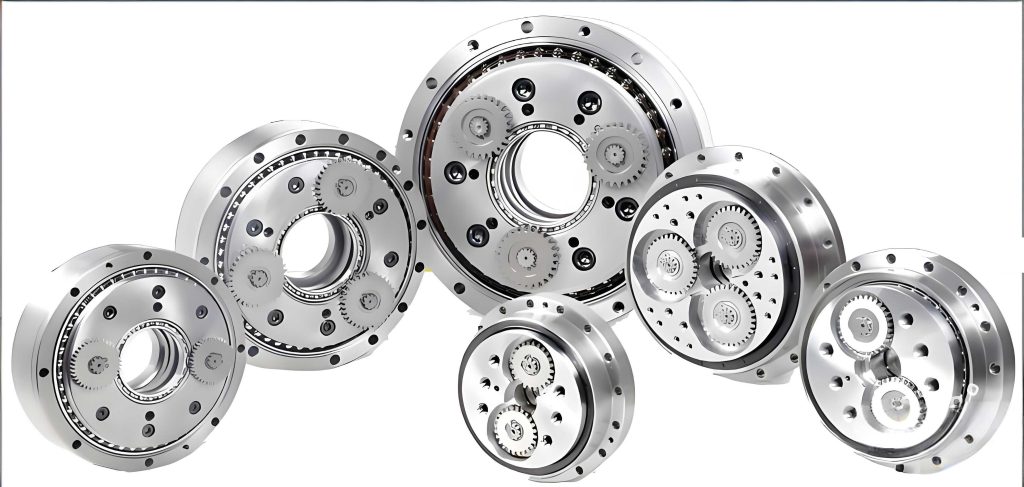
In modern industrial development, the rotary vector reducer has emerged as a critical component in robotics and precision machinery due to its advantages such as lightweight design, compact size, wide range of transmission ratios, long service life, stable accuracy, high transmission efficiency, and smooth operational performance. However, the complexity of fault causes in rotary vector reducers poses significant challenges for maintenance. Currently, fault detection primarily relies on manual inspection, which is inefficient, and traditional fault-handling methods often fall short in addressing the intricate issues of rotary vector reducers. This article proposes the construction of a fault knowledge graph for rotary vector reducers to enhance fault diagnosis speed, reduce difficulty, and shorten processing time. By analyzing and processing various data sources, extracting fault-related information, and visualizing it through software, we aim to create a scalable and accessible system for fault management in rotary vector reducers.
The rotary vector reducer is a core element in smart manufacturing equipment, but its fault types are diverse, and detection processes are labor-intensive and costly. Existing approaches, such as empirical summarization by experts or theoretical models based on vibration analysis, lack a systematic method for rapid fault cause retrieval. For instance, prior studies have focused on summarizing common faults like gear wear, oil leakage, or noise through manual experience, but these methods are not easily generalizable. To address this, we leverage knowledge graph technology, which represents knowledge in a graph format to model relationships between entities. This approach enables efficient querying and visualization, making fault diagnosis more intuitive and widely applicable for rotary vector reducers.
Knowledge graph construction involves several key steps: knowledge extraction, knowledge representation, knowledge fusion, knowledge reasoning, and knowledge storage. These steps are essential for building a domain-specific knowledge graph tailored to rotary vector reducer faults. Unlike general knowledge graphs that prioritize breadth, domain knowledge graphs require depth and accuracy, making them suitable for辅助 decision-making in fields like mechanical engineering. The process begins with data collection from various sources, including structured, semi-structured, and unstructured data. For rotary vector reducers, unstructured data, such as maintenance reports and research papers, are predominant, necessitating advanced extraction techniques.
In knowledge extraction, we employ methods like entity recognition, relation extraction, and event extraction. For rotary vector reducers, this involves identifying entities such as “gear fault,” “bearing vibration,” or “oil leakage,” and relations like “caused by” or “solved by.” Given the lack of structured data for rotary vector reducers, we primarily use neural network-based approaches to handle non-structured texts. The extracted information is then represented using Resource Description Framework (RDF) triples, which form the basis of the knowledge graph. An RDF triple consists of a subject, predicate, and object, such as (gear_fault, has_cause, gear_wear). This structured format facilitates machine understanding and processing.
To illustrate the knowledge representation, consider the following formula for RDF triples:
$$ \text{Triple} = (s, p, o) $$
where \( s \) represents the subject (e.g., a fault entity), \( p \) the predicate (e.g., a relation), and \( o \) the object (e.g., another entity or attribute value). For rotary vector reducers, we define entities like faults, causes, and solutions, and relationships between them. Additionally, we use production rules for knowledge representation, which can be expressed as:
$$ \text{Rule}: \text{IF } (s, p, o) \text{ THEN infer new knowledge} $$
For example, a rule might state: IF (gear, exhibits, abnormal_noise) AND (gear, has_condition, poor_lubrication) THEN (gear, fault_type, wear). This enables automated reasoning within the knowledge graph.
Knowledge fusion integrates data from multiple sources to ensure consistency. For rotary vector reducers, this involves entity alignment and disambiguation to resolve conflicts, such as different terms referring to the same fault (e.g., “gear wear” vs. “gear abrasion”). Fusion techniques enhance the reliability of the knowledge graph. Following this, knowledge reasoning deduces new insights from existing data. Using logical rules, we can infer implicit relationships, such as predicting potential faults based on historical data. For instance, if a rotary vector reducer shows signs of overheating and noise, the graph might infer a lubrication failure.
For knowledge storage, we utilize graph databases, specifically Neo4j, which efficiently manages nodes and edges representing entities and relationships. This storage method supports complex queries and visualization. In our implementation for rotary vector reducers, we processed data to create 32 entities, including fault types (e.g., gear fault, bearing fault), fault manifestations (e.g., vibration, noise), causes (e.g., manufacturing defects, operational errors), and solutions (e.g., improved lubrication, design modifications). The relationships among these entities are visualized as a graph, enabling intuitive exploration. Below is a table summarizing key entities and their counts in the knowledge graph for rotary vector reducers:
| Entity Type | Examples | Count |
|---|---|---|
| Fault Entities | Gear, Bearing, Shaft | 10 |
| Fault Manifestations | Wear, Breakage, Vibration | 5 |
| Fault Causes | Poor Manufacturing, Lubrication Failure | 6 |
| Fault Solutions | Process Standardization, Inspection | 7 |
| Recommendations | Avoid Overload, Proper Maintenance | 4 |
The visualization of the knowledge graph for rotary vector reducers allows users to navigate faults and their interconnections easily. For example, a node representing “gear fault” might connect to “wear” via a “has_manifestation” edge, and to “poor lubrication” via a “caused_by” edge. This structure supports rapid diagnosis by tracing fault chains. Furthermore, we developed a knowledge question-answering system based on the graph. The system comprises modules for question classification, parsing, response generation, and interaction. When a user inputs a natural language query, such as “What causes gear wear in a rotary vector reducer?”, the system classifies the question type, parses it into a structured query (e.g., Cypher query for Neo4j), retrieves the answer from the graph, and presents it using predefined templates.
The question-answering process can be modeled using the following steps, where \( Q \) represents the user query, \( C \) the classification, \( P \) the parsing, and \( A \) the answer:
$$ \text{Process}: Q \xrightarrow{\text{classify}} C \xrightarrow{\text{parse}} P \xrightarrow{\text{search}} A $$
For rotary vector reducers, this enables non-experts to quickly obtain fault-related information without deep technical knowledge. The system’s efficacy is demonstrated through reduced diagnosis time and improved accuracy in identifying root causes for rotary vector reducer issues.
In terms of data processing for rotary vector reducers, we manually annotated non-structured texts to extract relevant information. This involved categorizing faults based on location (e.g., gear, bearing, seal) and analyzing causes and solutions. The production rule representation was then applied to convert this data into RDF triples. For instance, a rule like “gear_fault → caused_by → improper_assembly” was defined and stored. We also incorporated mathematical models to enhance the knowledge graph. For example, the relationship between vibration amplitude and fault severity in a rotary vector reducer can be expressed as:
$$ A = k \cdot S $$
where \( A \) is the vibration amplitude, \( S \) the fault severity, and \( k \) a proportionality constant derived from empirical data. Such formulas enrich the graph with quantitative insights, aiding in predictive maintenance for rotary vector reducers.
Another critical aspect is the integration of time-series data from rotary vector reducer sensors. By incorporating metrics like temperature, noise levels, and operational hours, the knowledge graph can dynamically update fault probabilities. We use Bayesian inference to model this, where the probability of a fault \( F \) given evidence \( E \) is computed as:
$$ P(F|E) = \frac{P(E|F) \cdot P(F)}{P(E)} $$
Here, \( P(F) \) is the prior probability of a fault in a rotary vector reducer, and \( P(E|F) \) is the likelihood of observing evidence \( E \) (e.g., high vibration) given the fault. This probabilistic reasoning enhances the graph’s diagnostic capabilities for rotary vector reducers.
To manage the scale of data, we employed graph algorithms for clustering and pattern detection. For instance, community detection algorithms identify groups of related faults in rotary vector reducers, such as all issues stemming from lubrication problems. This aids in preventive strategies. Additionally, we created a table comparing traditional fault diagnosis methods with the knowledge graph approach for rotary vector reducers:
| Aspect | Traditional Methods | Knowledge Graph Approach |
|---|---|---|
| Speed | Slow, manual inspection | Fast, automated querying |
| Accuracy | Depends on expert experience | High, data-driven insights |
| Scalability | Limited to known cases | Easily expandable with new data |
| Accessibility | Requires specialized training | User-friendly via visualization |
| Cost | High due to downtime and labor | Reduced through efficient diagnosis |
The construction of the fault knowledge graph for rotary vector reducers involved iterative refinement. We started with a top-down design, defining high-level concepts like “fault” and “cause,” and then populated the graph with bottom-up data from texts and sensors. This hybrid approach ensured both structure and completeness. The graph currently includes over 100 relationships, such as “leads_to,” “requires_action,” and “prevented_by,” all tailored to rotary vector reducer contexts. For example, the relationship between “overload” and “shaft_breakage” is captured to warn users about operational limits.
In conclusion, the fault knowledge graph for rotary vector reducers significantly improves fault processing speed and reduces complexity. By leveraging knowledge graph technologies—including extraction, representation, storage, and question-answering—we have created a system that visualizes fault information, enabling quick retrieval and analysis. This approach not only lowers maintenance costs but also democratizes access to fault diagnosis for rotary vector reducers, making it viable for a broader audience. Future work will focus on integrating real-time monitoring data and expanding the graph with more fault scenarios, further enhancing its utility for rotary vector reducer applications in various industries.
The benefits of this knowledge graph extend beyond immediate fault handling. It serves as a foundation for predictive maintenance, where historical data from rotary vector reducers can train machine learning models to anticipate failures. For instance, by analyzing patterns in the graph, we can derive rules like: IF (rotary_vector_reducer, operation_hours, >10000) AND (rotary_vector_reducer, vibration_level, high) THEN (probability_of_gear_fault, increases). Such insights empower proactive measures, minimizing downtime for rotary vector reducers.
Moreover, the knowledge graph facilitates collaboration among engineers and technicians. By sharing a common visualization platform, teams can discuss fault cases and solutions for rotary vector reducers, fostering knowledge exchange. The graph’s adaptability allows updates as new fault types emerge, ensuring its relevance. As rotary vector reducers continue to evolve in robotics and automation, this fault knowledge graph will play a pivotal role in sustaining their performance and reliability.