
The rapid evolution of the technological landscape, driven by breakthroughs in artificial intelligence and robotics, presents a profound challenge and opportunity for higher education. To proactively respond to this new wave of scientific and industrial revolution, our Engineering Training Center has undertaken a strategic initiative to cultivate a new generation of compound engineering talents. These individuals must possess not only a solid theoretical foundation but also outstanding innovative capabilities, robust practical engineering skills, and the critical ability to identify and solve complex, interdisciplinary problems. The core of this initiative is the design, construction, and implementation of a comprehensive Intelligent Robot training platform. This platform serves as the cornerstone for a reconstructed “Engineering Experience — Engineering Training — Engineering Practice — Engineering Exploration” multi-tiered practical teaching system. It is explicitly designed to serve the “Four New” educational reforms, is open to students across diverse disciplines and academic levels, and aims to ignite student interest, foster innovation and practical skills, promote the application of cross-disciplinary knowledge, and ultimately ensure the realization of our university’s guiding principle of “Solid Foundation, Emphasis on Practice, and Rigorous Standards” in talent development.
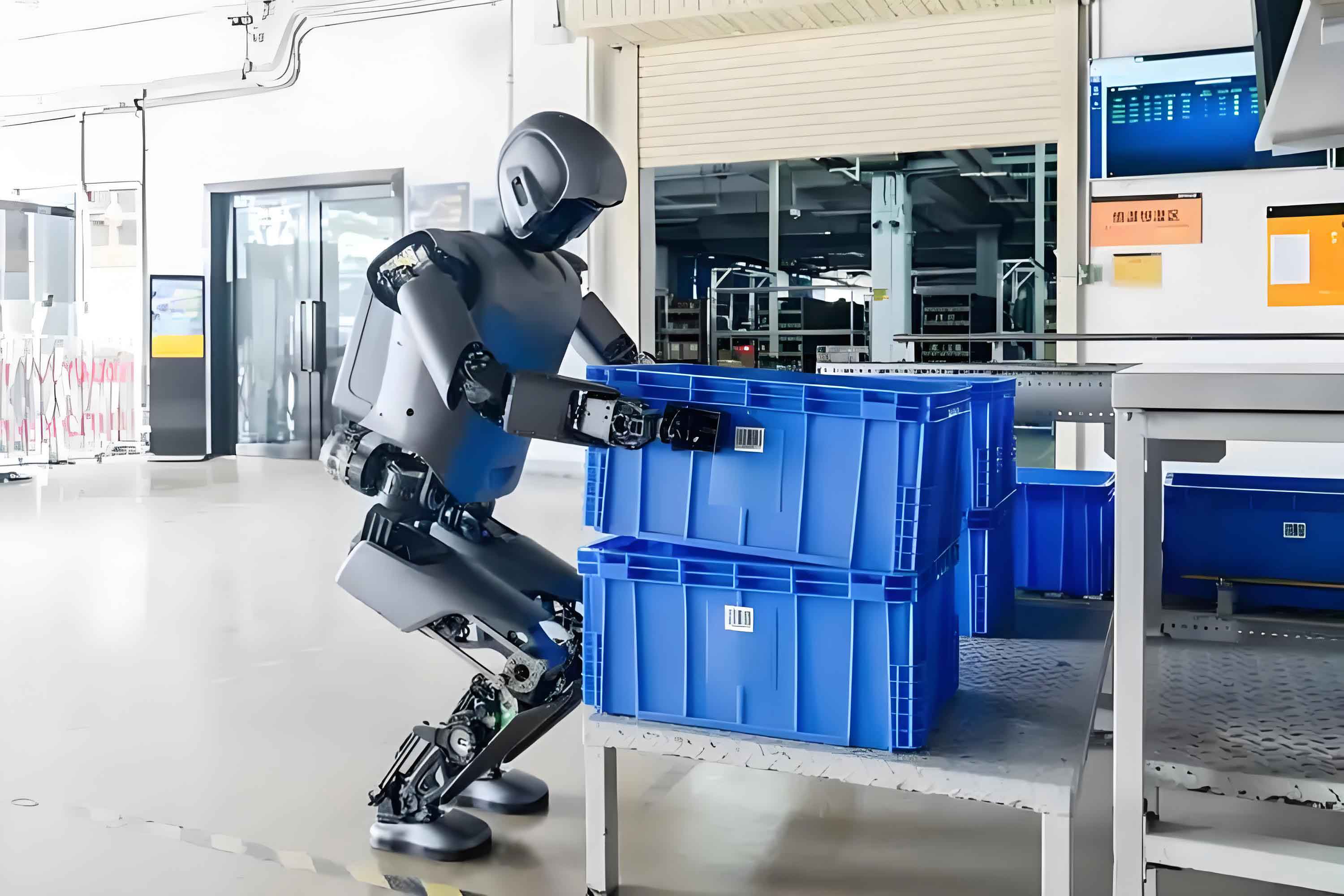
The integration of the intelligent robot into our curriculum is a deliberate move to bridge the gap between academic knowledge and cutting-edge industrial applications. As a quintessential representative of strategic emerging industries, AI-powered robotics finds utility in healthcare, logistics, education, and smart transportation. By incorporating hands-on training with advanced intelligent robot systems, we provide students with a holistic understanding of the underlying technologies, stimulating their curiosity and laying a strong foundation for potential future specialization in this dynamic field.
1. Architecture and Objectives of the Intelligent Robot Training Platform
1.1 Pedagogical Objectives
The training platform is built with clear, tiered learning objectives:
- To comprehend the fundamental technologies, current research trends, and broad applications of Artificial Intelligence.
- To understand the specific technologies, research focuses, and application domains of humanoid intelligent robots.
- To gain familiarity with the mechanical structure, sensor suite (e.g., cameras, IMUs, tactile, sonar), and software control architecture of a modern humanoid intelligent robot.
- To learn the basic principles of speech interaction and master the methodology for implementing a functional voice interface on an intelligent robot.
- To understand fundamental design principles for humanoid robot mechanisms and degree-of-freedom (DOF) allocation, grasp the basics of robotic kinematics, and acquire the skill to program and edit complex robot motions.
1.2 Core Training Equipment: The NAO Humanoid Robot
The centerpiece of our laboratory is the NAO humanoid intelligent robot. NAO stands 58 cm tall, weighs 4.3 kg, and is equipped with a sophisticated array of hardware:
- Actuation: 25 degrees of freedom (DOFs) providing dexterous movement.
- Sensing: Over 100 integrated sensors, including cameras, microphones, inertial measurement units, sonar rangefinders, and tactile sensors.
- Capabilities: Real-time face recognition, dynamic object tracking, multi-modal sensor data acquisition and processing, and intelligent bi-lingual (Chinese/English) speech dialogue.
This platform offers a rich, physically-embodied environment for students to experiment with core AI and robotics concepts, moving beyond simulation.
2. A Multi-Tiered Practical Teaching System for the Intelligent Robot
To cater to the varied backgrounds and progression levels of our student body, we have architected a scalable and progressive pedagogical framework centered on the intelligent robot. This system ensures that engagement with advanced engineering concepts is a continuous thread throughout the undergraduate and graduate experience.
| Course Tier | Duration (Hours) | Target Students | Core Content & Activities |
|---|---|---|---|
| Engineering Experience | 1-2 | All Freshmen (Engineering, Science, Medicine, Humanities) | Overview of AI & robotics. Demonstration of NAO intelligent robot capabilities. Introduction to engineering safety and culture. |
| Engineering Training | 8-16 | Sophomores & Juniors (Mechanical, Electrical, Computer, & related majors) | Hands-on modules: Speech Interaction, Motion Design, Integrated Behavior Programming using Choregraphe software. |
| Engineering Practice | 16+ (Project-based) | Motivated Juniors, Seniors, and Graduate Students | Application of skills in national/international robotics and AI competitions (e.g., National Engineering Training Competition, AI Innovation Challenges). |
| Engineering Exploration | Variable (Thesis/Project) | Final Year Undergraduates & Graduate Researchers | In-depth research projects, final year theses, or graduate research utilizing the intelligent robot platform for novel investigations. |
2.1 Engineering Experience: Igniting Interest
This introductory tier is designed for broad exposure. It focuses on cultivating initial engineering cognition, safety awareness, and cultural appreciation. Through interactive demonstrations of the NAO intelligent robot performing tasks like object tracking, voice commands, and simple dances, students from all disciplines gain a tangible sense of modern technology’s potential, planting seeds for future interdisciplinary collaboration.
2.2 Engineering Training: Foundational Skill Building
This is the core hands-on tier, employing a project-based, student-centered learning model. It breaks down into several key technical modules for the intelligent robot.
2.2.1 Intelligent Speech Interaction Module
Voice interaction represents a natural and intuitive human-intelligent robot interface. The process involves a pipeline: Automatic Speech Recognition (ASR) $\rightarrow$ Natural Language Processing (NLP) $\rightarrow$ Text-to-Speech (TTS).
The signal flow can be modeled as a system where an audio input signal $s(t)$ is processed. The probability of a word sequence $W$ given the acoustic signal $X$ is given by the fundamental ASR equation:
$$P(W|X) = \frac{P(X|W) P(W)}{P(X)}$$
where $P(X|W)$ is the acoustic model likelihood and $P(W)$ is the language model prior.
In our training, students use the “Speech Reco” behavior module in the Choregraphe software to implement dialogue. They learn to define keyword-triggered state machines. The module outputs an event $E$:
$$
E = \begin{cases}
\text{WordRecognized}, & \text{if } \exists w_i \in W_{\text{keywords}} \text{ in utterance} \\
\text{onNothing}, & \text{otherwise}
\end{cases}
$$
where $W_{\text{keywords}}$ is the user-defined set of trigger words.
Training progresses from structured dialogues (e.g., “Do you prefer cake or pie?”) to creative, open-ended conversation design, teaching students the logic flow of human-intelligent robot interaction.
| Parameter | Description | Student Learning Focus |
|---|---|---|
| Vocabulary / Keywords | Set of words the robot listens for. | Defining context-relevant command sets. |
| Confidence Threshold | Minimum certainty level to accept a recognition. | Balancing responsiveness and error tolerance. |
| Language Model | Statistical model of word sequences. | Understanding the role of context in recognition accuracy. |
| Dialog State Logic | Flowchart of robot responses. | Programming logical conversational pathways. |
2.2.2 Motion Planning and Dance Choreography
Creating smooth, human-like motion for an intelligent robot is a key challenge. Students learn to use Choregraphe’s timeline-based keyframe editor. A keyframe $K_i$ is defined as a vector of joint angles at time $t_i$:
$$K_i = [\theta_1, \theta_2, …, \theta_{25}]_{t=t_i}$$
A motion sequence $M$ is an ordered set of keyframes with interpolated trajectories:
$$M = \{K_1(t_1), K_2(t_2), …, K_n(t_n)\}$$
The primary constraint is maintaining dynamic balance. The robot’s center of mass (CoM) projection must remain within the support polygon defined by its feet. Students learn to check this condition iteratively. The balance condition for a static pose can be simplified as ensuring the CoM coordinates $(x_{com}, y_{com})$ satisfy:
$$x_{foot\_min} \leq x_{com} \leq x_{foot\_max}, \quad y_{foot\_min} \leq y_{com} \leq y_{foot\_max}$$
Practical lessons include managing joint stiffness, avoiding overly rapid movements ($\Delta t$ too small), and ensuring smooth transitions between large-motion keyframes to prevent instability.
2.2.3 Integrated Behavior Synthesis
This capstone module of the training tier requires students to combine speech interaction and motion control into a cohesive, interactive performance. For example, programming the intelligent robot to introduce itself, respond to a voice command like “dance,” execute a choreographed sequence, and then take a bow. This teaches system integration and event-driven programming for the intelligent robot platform.
2.3 Engineering Practice: Competition-Driven Innovation
This tier embodies the philosophy of “fusing competition with training, nurturing innovation through practice.” Students form teams to tackle challenges posed by prestigious competitions, using the intelligent robot platform as their development base. This real-world, goal-oriented pressure significantly enhances problem-solving skills, teamwork, and innovation capacity.
| Competition Name | Award Level | Year | Relevant Platform Skill |
|---|---|---|---|
| National University Engineering Practice and Innovation Ability Competition | Silver Award | 2023 | Integrated task design, sensor fusion |
| International “AI Youth” Innovation Challenge | First Prize | 2022 | Advanced human-robot interaction, computer vision |
| Provincial Artificial Intelligence Innovation Competition | Multiple First & Second Prizes | 2021-2023 | Speech interaction, motion choreography, behavior logic |
2.4 Engineering Exploration: Frontier Research
The platform serves as a testbed for advanced academic inquiry. Graduate students and final-year undergraduates undertake thesis projects exploring topics like multi-intelligent robot collaboration, advanced machine learning for robot perception, ethical AI in robotics, or developing new locomotion algorithms. This tier solidifies the platform’s role in pushing the boundaries of knowledge.
3. Platform Impact and Educational Outcomes
The intelligent robot training platform has been successfully deployed across multiple colleges within the university, encompassing fields such as Mechanical Engineering, Information Science, Computer Science, and Automotive Engineering. Annually, it engages thousands of students in various capacities.
The graduated, multi-tiered system aligns perfectly with cognitive learning patterns, emphasizing the fusion of theory and practice. By stimulating interest first, it guides students towards proactive learning and innovation. The platform has received highly positive feedback, with students reporting increased confidence in tackling complex systems. The measurable outcomes are evident in the steady stream of students participating and excelling in high-level competitions, as shown in Table 3, demonstrating the practical efficacy of this intelligent robot-centric approach.
4. Conclusion and Future Vision
The strategic integration of an intelligent robot实训 platform into the core of engineering practice education represents a proactive and necessary evolution. It directly addresses the imperative of the New Engineering reforms to produce graduates who are adaptable, innovative, and skilled in cross-disciplinary application. Our platform, through its structured “Experience-Training-Practice-Exploration” pathway, successfully demystifies advanced AI and robotics, transforms passive learners into active creators, and provides a tangible bridge between academic concepts and the technological frontier. The future development of this platform will focus on incorporating more advanced intelligent robot models, integrating cloud AI services for enhanced cognition, and fostering even stronger industry-academia collaboration to ensure our training remains at the cutting edge, continually empowering the next generation of engineers to shape the world with intelligent technology.