
In the rapidly evolving landscape of technology, the embodied AI robot sector stands out as a frontier of innovation, blending mechanical engineering, artificial intelligence, and real-world applications. As a researcher focused on industrial trends, I have observed that the development of embodied AI robots is not merely a technical pursuit but a transformative force shaping economies and societies. The global spotlight on this field was recently highlighted by events such as the world’s first humanoid robot half-marathon in Beijing in April 2025, which served as a crucible for cutting-edge technology, a barometer for industrial growth, and a showcase for future applications. This event underscores the dynamic nature of the embodied AI robot industry, where patent portfolios and investment activities are key indicators of vitality. Data reveals that nearly half of global patents in embodied AI robots originate from China, with capital increasingly flowing toward mature technologies. However, challenges like technical bottlenecks, regulatory gaps, and talent shortages persist. In this analysis, I will delve into the current status and future trends of the embodied AI robot industry in China, emphasizing patent landscapes and investment dynamics from a first-person perspective, while incorporating tables and formulas to elucidate key points. The embodied AI robot domain is poised for a shift from quantity-driven expansion to quality-driven maturation, driven by integrated innovation and ecosystem competition.
The global embodied AI robot industry has experienced significant growth over the past two decades, marked by surges in patent filings and investment inflows. From 2006 to 2024, a total of 4,429 patent families (comprising 6,556 individual records) were identified across 172 patent offices worldwide. Prior to 2015, annual patent applications for embodied AI robots remained below 100, but they increased to 156 in 2015 and skyrocketed to 739 by 2024. This exponential growth can be modeled using a simplified exponential function: $$ P(t) = P_0 \cdot e^{rt} $$ where \( P(t) \) represents the number of patent applications at time \( t \), \( P_0 \) is the initial application count, and \( r \) is the growth rate. For instance, from 2015 to 2024, the compounded annual growth rate (CAGR) for embodied AI robot patents approximates 22.5%, reflecting rapid technological advancement. This surge is largely attributed to breakthroughs in key technologies like convolutional neural networks (CNNs), lidar sensors, and GPU acceleration, coupled with the debut and iteration of flagship products such as Boston Dynamics’ Atlas in 2013. The global patent authorization ratio for embodied AI robots has shown a declining trend, indicating that innovation is entering a “deep-water zone” where challenges like full-body force control, advanced semantic understanding in unknown environments, low-power high-compute chips, and biomimetic materials pose greater difficulties. This decline underscores a transition from “wild growth” to “high-quality development” in the embodied AI robot sector. Moreover, the proportion of invention patents—a metric for innovation depth—has steadily increased, averaging around 50% from 2015 to 2024, with a notable jump to 65.25% in 2024. This spike is driven by the explosive integration of generative AI and large language models (LLMs) like ChatGPT, which act as “brains” for embodied AI robots, catalyzing fundamental inventions. The trend can be expressed as: $$ I(t) = \alpha \cdot \ln(t) + \beta $$ where \( I(t) \) is the invention patent percentage at time \( t \), and \( \alpha \), \( \beta \) are constants derived from historical data. Thus, the embodied AI robot industry is transitioning from a rapid growth phase to a mature stage, propelled by complex, fusion-driven innovation rather than single-technology pushes.
| Country/Region | Patent Applications | Percentage (%) |
|---|---|---|
| China | 2,609 | 48.98 |
| Japan | 768 | 14.42 |
| United States | 512 | 9.61 |
| South Korea | 398 | 7.47 |
| Europe | 287 | 5.39 |
| Others | 749 | 14.13 |
From a regional perspective, China leads as the primary source of embodied AI robot patents, accounting for nearly half of global filings, as shown in Table 1. Japan follows distantly, with a historical legacy dating back to WABOT-1 in 1973, the world’s first full-scale humanoid robot. Despite China’s later start, its rapid ascent in embodied AI robot innovation highlights strong technical capabilities and activity. This dominance is reinforced by investment trends: in 2023, there were only 28 investment events globally in embodied AI, but this number more than doubled to 77 in 2024. Notable cases include Figure AI’s $675 million Series B funding in February 2024, backed by giants like Microsoft and NVIDIA, and partnerships with OpenAI to develop AI models for humanoid robots. Other significant deals involve 1X Technologies from Norway and Sanctuary AI from Canada, as summarized in Table 2. These investments underscore a global race to advance embodied AI robot technologies, with capital consolidating around mature projects. The investment concentration can be quantified using the Herfindahl-Hirschman Index (HHI): $$ HHI = \sum_{i=1}^{n} s_i^2 $$ where \( s_i \) is the market share of each investment event by amount. In 2024, the HHI for embodied AI robot funding increased, indicating higher capital concentration. Thus, the global landscape for embodied AI robots is characterized by Chinese patent leadership and intensified investment in integrated AI-robotics solutions.
| Company | Country | Funding Date | Amount | Investors | Highlights |
|---|---|---|---|---|---|
| Figure AI | USA | February 2024 | $675 million | Microsoft, OpenAI Startup Fund, NVIDIA, Amazon Bezos, Intel, LG | Valued at $2.6 billion; collaboration with OpenAI for AI models; Azure cloud agreement with Microsoft. |
| 1X Technologies | Norway | January 2024 | $100 million | OpenAI (lead), Tiger Global Management | OpenAI’s first lead investment in robotics; focus on bipedal robot NEO as physical AI载体. |
| Sanctuary AI | Canada | July 2024 | Over $140 million | BDC Capital, InBC Fund | Notable for Phoenix robot, touted as first embodied AGI. |
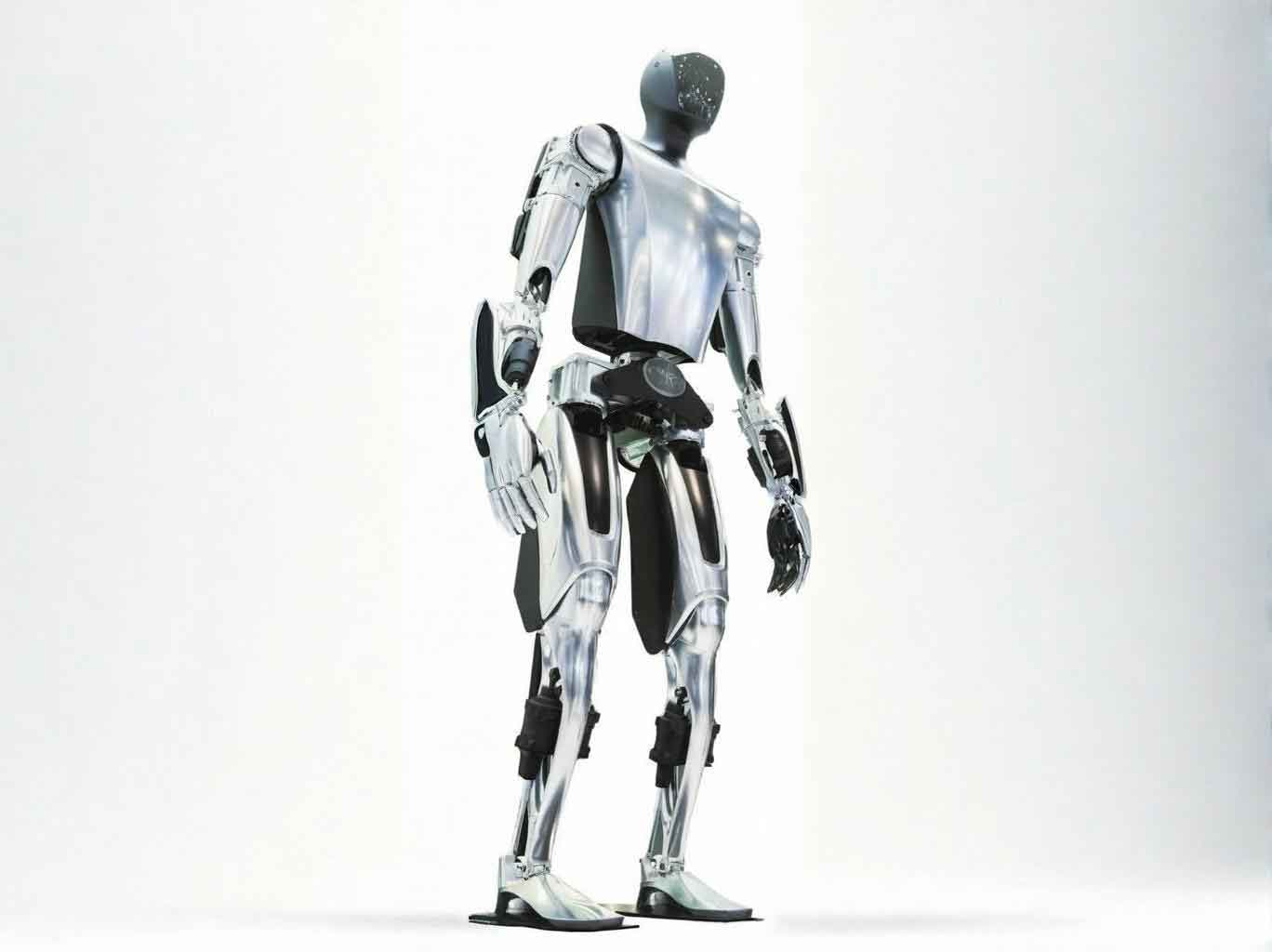
Turning to China, the domestic embodied AI robot industry exhibits robust growth, driven by prolific patent activity and vigorous capital inflows. In terms of provincial patent applications, Guangdong leads the nation, reflecting its superior innovation capacity and活跃度 in the embodied AI robot domain. This领先地位 is no accident; it stems from Guangdong’s robust industrial base, favorable policies, dynamic market, and collaborative ecosystems. The distribution can be visualized through a ranking of top provinces, but for brevity, the data highlights Guangdong’s dominance with over 800 patent applications, followed by Beijing and Jiangsu. The innovation output for embodied AI robots in China can be modeled as: $$ A_i = \gamma \cdot E_i + \delta \cdot P_i $$ where \( A_i \) is the patent activity in province \( i \), \( E_i \) represents R&D expenditure, \( P_i \) denotes policy support intensity, and \( \gamma \), \( \delta \) are coefficients. Among the top 15 patent applicants globally, Japanese firms hold a clear advantage in quantity, but Chinese entities—including 8 companies and universities—are actively布局, indicating a competitive yet追赶 posture. For example, Japanese applicants average 120 patents each, while Chinese applicants average 65, suggesting room for growth in embodied AI robot innovation density. The embodied AI robot patent landscape in China is further enriched by the插入 of advanced manufacturing capabilities, as depicted below, which underscores the integration of hardware and AI in production lines.
Investment in China’s embodied AI robot sector has accelerated dramatically. According to IT桔子 data, investment events rose from 28 in 2023 to 77 in 2024, and by June 23, 2025, there were 91 events totaling RMB 11.037 billion (approximately $1.5 billion). This translates to an average investment per event exceeding RMB 120 million, signaling a shift from early-stage exploration to large-scale funding for R&D and talent acquisition. Data from来觅 shows 387 investment transactions in the embodied AI robot field from September 2024 to September 2025, with 31 Pre-A rounds, 107 A rounds, and 249 B or later rounds. This distribution indicates capital is flowing toward mature technologies and头部 projects, as evidenced by the high proportion of later-stage rounds. The cumulative investment growth can be expressed as: $$ C(t) = \sum_{k=0}^{t} I_k $$ where \( C(t) \) is the total investment by time \( t \), and \( I_k \) is the investment in period \( k \). For embodied AI robots, \( C(t) \) shows an exponential rise post-2023, driven by market confidence and technological convergence. Thus, China’s embodied AI robot industry is on a fast track, buoyed by strong patent output and capital infusion, positioning it for global leadership.
Despite these advancements, the embodied AI robot industry in China faces significant hurdles that could impede progress. First, technical bottlenecks remain a core obstacle. While Chinese firms have made strides in multimodal perception, autonomous decision-making algorithms, and motion control mechanisms, their real-time decision-making in complex, unstructured environments lags behind international benchmarks. For instance, in outdoor scenarios like extreme weather conditions, embodied AI robots struggle with adaptability, limiting commercialization. This gap can be quantified using a performance metric: $$ \eta = \frac{P_{\text{robot}}}{P_{\text{human}}} $$ where \( \eta \) is the efficiency ratio, \( P_{\text{robot}} \) is the robot’s operational capability, and \( P_{\text{human}} \) is human-level performance. For embodied AI robots in hazardous settings, \( \eta \) often falls below 0.7, highlighting the need for breakthroughs in robustness and intelligence. Second, ethical and regulatory滞后 constrains规范发展. China has issued guidelines like the “New Generation AI Ethics规范” and “Humanoid Robot治理导则,” but these lack legal enforceability, creating ambiguities in liability and data privacy. In healthcare, exoskeleton robots approved by NMPA face legal voids in accident accountability, while data security concerns loom in domestic and public安全 applications. A regulatory framework score \( R \) can be defined as: $$ R = w_1 \cdot L + w_2 \cdot E $$ where \( L \) is法律 clarity, \( E \) is ethical oversight, and \( w_1 \), \( w_2 \) are weights. For China’s embodied AI robot sector, \( R \) is currently low, necessitating urgent reforms. Third, talent shortages severely curb innovation. Reports indicate an AI人才供需比 of 1:8, with algorithm工程师 roles taking 43 days to fill on average. Universities often misalign curricula with industry needs for embodied AI robots, exacerbating the skills gap. The talent deficit \( T \) can be modeled as: $$ T = D – S $$ where \( D \) is demand for embodied AI robot experts, and \( S \) is supply. In China, \( T \) is growing, urging enhanced education and产学研 partnerships. These intertwined challenges—technical, regulatory, and human—must be addressed collectively to unlock the full potential of embodied AI robots.
Looking ahead, the embodied AI robot industry in China is poised for transformative trends that will redefine competition and application. First, technology fusion will deepen, with “large model + robot” becoming the absolute mainstream. The collaboration paradigm between Figure AI and OpenAI will set a standard, where AI大模型 serve as the “brain” for embodied AI robots, enabling advanced cognition and decision-making. This integration enhances capabilities through a synergy equation: $$ C_{\text{robot}} = f(AI_{\text{model}}, H_{\text{hardware}}) $$ where \( C_{\text{robot}} \) is the robot’s overall competency, \( AI_{\text{model}} \) represents AI algorithm strength, and \( H_{\text{hardware}} \) denotes mechanical and electronic robustness. Future success in the embodied AI robot arena will hinge on软硬件一体 prowess, favoring firms with dual AI and engineering expertise. Second, application scenarios will drive growth, shifting from “demo spectacles” to widespread adoption across千行百业. Embodied AI robots will permeate industrial manufacturing (e.g., flexible assembly lines), warehousing and logistics (e.g., autonomous搬运), commercial services (e.g., guidance and delivery), and home settings (e.g., elderly care). The market penetration rate \( M \) can be estimated as: $$ M(t) = M_0 \cdot (1 + \lambda)^t $$ where \( M_0 \) is the initial adoption level, and \( \lambda \) is the growth rate driven by场景落地. Companies that offer tailored solutions for specific embodied AI robot applications will gain a competitive edge. Third, industrial ecosystem competition will emerge as the主旋律. No single entity can master all aspects of the embodied AI robot value chain; instead, alliances led by tech giants will form, integrating chips, components, software,整机, and applications. The ecosystem strength \( E_s \) can be expressed as: $$ E_s = \sum_{j=1}^{m} w_j \cdot L_j $$ where \( L_j \) are ecosystem layers (e.g., supply chain, R&D), and \( w_j \) are their importance weights. For China, fostering such ecosystems will be crucial for embodied AI robot产业 dominance. In summary, the embodied AI robot sector in China is evolving from investment-driven quantity expansion to technology-driven quality maturation, with future battles centered on integrated innovation,场景 depth, and生态构建.
In conclusion, the embodied AI robot industry in China stands at a pivotal juncture, characterized by global patent leadership, surging investments, and immense potential. From my analysis, it is clear that embodied AI robots represent a convergence of multiple disciplines, driving innovation through patents and capital. However, challenges like technical limitations, regulatory gaps, and talent deficits require concerted efforts in R&D, legal frameworks, and education. The trends point toward a future where embodied AI robots become ubiquitous, powered by AI fusion and ecosystem collaborations. As the industry transitions from量变 to质变, stakeholders must prioritize软硬结合 and sustainable growth to harness the full benefits of embodied AI robots. The journey ahead for embodied AI robots in China is not without obstacles, but with strategic focus, it promises to reshape industries and enhance human capabilities on a global scale.