
In the field of industrial robotics and precision machinery, the RV reducer, short for Rotate Vector reducer, serves as a critical component due to its compact design, high torque capacity, and excellent precision. Traditional RV reducers typically combine a preliminary involute planetary gear stage with a secondary cycloidal pin-wheel planetary stage, utilizing external cycloidal profiles. However, in our ongoing pursuit of enhanced performance and structural innovation, we have developed a novel RV reducer based on the internal cycloidal planetary transmission principle. This new design offers advantages such as a more compact axial profile, ease of hollow structuring for cable routing, improved stiffness, and unilateral sealing capabilities. In this comprehensive study, we delve into the transmission characteristics of this novel internal cycloid RV reducer through detailed theoretical analysis, virtual prototyping, dynamic simulation, and modal analysis using finite element methods.
The motivation for this work stems from the increasing demands for higher precision, reduced size, and greater reliability in robotic joints and automated systems. Numerous scholars have investigated RV reducers using virtual prototype technology and finite element analysis. For instance, previous studies have focused on transmission accuracy influenced by factors such as cycloid wheel modifications, pin radius errors, and assembly deviations. Others have examined the dynamic behavior, torsional stiffness, and modal properties of traditional RV reducers. Building upon this foundation, we introduce an alternative architecture where the secondary transmission stage employs an internal cycloid wheel meshing with pin teeth, as opposed to the conventional external cycloid configuration. This internal meshing approach can potentially reduce vibration, stress concentrations, and improve load distribution.
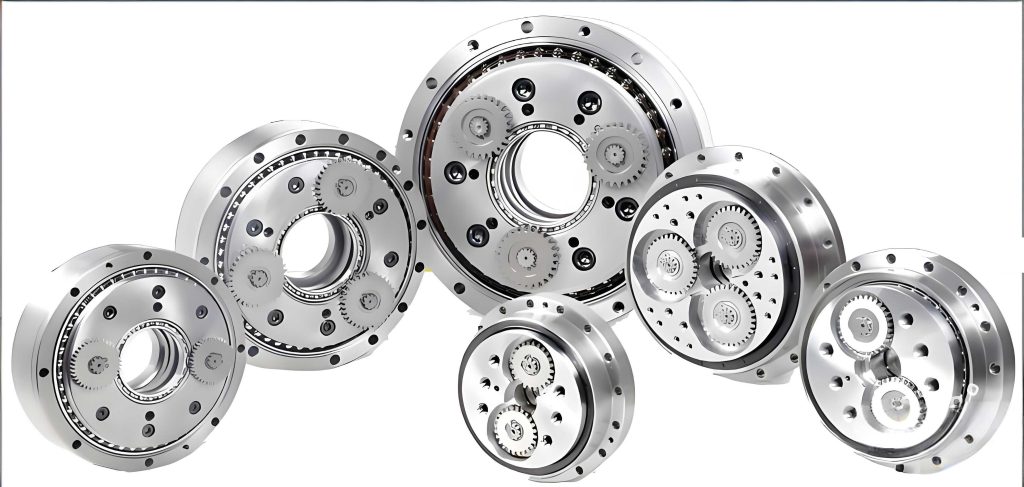
Our research methodology encompasses several key steps. First, we derive the mathematical foundation for the internal cycloid tooth profile generation. Second, we design the novel RV reducer with specific parameters and create a three-dimensional model using CAD software. Third, we construct a multi-rigid-body dynamic model for virtual prototype simulation to analyze kinematic and dynamic behaviors, including velocities, angular velocities, and contact forces between the cycloid wheel and pins. Fourth, we perform modal analysis on critical components and the entire assembly to assess natural frequencies and mode shapes, ensuring avoidance of resonance during operation. Throughout this article, we will refer to the RV reducer extensively, as it is the central focus of our investigation.
The internal cycloid planetary transmission operates on the principle of hypocycloidal motion. In this mechanism, a rolling circle of radius \( r \) rotates inside a fixed base circle of radius \( R_z \). A point \( M \) attached to the rolling circle traces a curtate hypocycloid, which serves as the theoretical tooth profile for the internal gear. The actual tooth profile of the cycloid wheel is the equidistant curve offset outward from this hypocycloid by a distance equal to the pin radius \( r_z \). The pin teeth are uniformly distributed on a circle of radius \( R \) centered at \( O_b \), and the number of pin teeth \( z_b \) is one less than the number of cycloid wheel teeth \( z_a \). The parametric equations for the theoretical tooth profile are derived as follows:
Let \( A \) be the eccentric distance between the centers of the base circle \( O_a \) and the pin distribution circle \( O_b \). Let \( K_1 \) be the curtate coefficient, defined as \( K_1 = OM / r \), where \( OM \) is the distance from the rolling circle center \( O \) to the tracing point \( M \). The angle \( \psi \) represents the rotation angle of the rolling circle center relative to the base circle center. Then, the coordinates \( (x_0, y_0) \) of the theoretical hypocycloid are given by:
$$ x_0 = \frac{z_b}{K_1} A \cos \psi + A \cos(z_b \psi) $$
$$ y_0 = \frac{z_b}{K_1} A \sin \psi + A \sin(z_b \psi) $$
To obtain the actual tooth profile, we offset this curve by the pin radius \( r_z \) along the normal direction. The parametric equations for the actual tooth profile \( (x, y) \) become:
$$ x = \cos \psi \left( \frac{A z_b}{K_1} + \frac{r_z}{W_1′} \right) + \cos(z_b \psi) \left( A – \frac{K_1 r_z}{W_1′} \right) $$
$$ y = \sin \psi \left( \frac{A z_b}{K_1} + \frac{r_z}{W_1′} \right) – \sin(z_b \psi) \left( A – \frac{K_1 r_z}{W_1′} \right) $$
where \( W_1′ = \sqrt{1 + K_1^2 – 2 K_1 \cos[(z_b + 1) \psi]} \). These equations form the basis for designing the internal cycloid wheel in our novel RV reducer. The derivation ensures proper meshing with the pin teeth, minimizing backlash and ensuring smooth transmission.
Building upon this principle, we designed the novel RV reducer with a two-stage configuration. The first stage remains an involute planetary gear train for initial speed reduction, while the second stage is replaced by the internal cycloid planetary mechanism. This design maintains the high reduction ratio characteristic of RV reducers while introducing the benefits of internal meshing. Key design parameters were selected through optimization to balance size, strength, and performance. The primary parameters are summarized in Table 1.
| Parameter | Value |
|---|---|
| Pin distribution circle diameter (mm) | 50 |
| Pin diameter (mm) | 4 |
| Eccentric distance, \( A \) (mm) | 1 |
| Number of cycloid wheel teeth, \( z_a \) | 41 |
| Number of pin teeth, \( z_b \) | 40 |
| Sun gear output teeth (first stage) | 63 |
| Planet gear teeth (first stage) | 17 |
| Sun gear input teeth (connected to motor) | 102 |
| Module of involute gears (mm) | 2 |
| Pressure angle of involute gears (degrees) | 20 |
| Motor input speed (rpm) | 1500 |
| Motor output gear teeth | 34 |
| Theoretical total reduction ratio | 32 |
Using three-dimensional modeling software, we constructed detailed models of all components, including the sun gear, planet gears, crankshafts, internal cycloid wheels, pin teeth, output disk, and housing. After assembly, we performed interference checks to ensure proper fit and motion. For simulation purposes, non-essential parts like bearings and seals were simplified to reduce computational complexity without affecting dynamic analysis results. The assembled model of the novel RV reducer showcases its compact layout, with the internal cycloid stage integrated seamlessly into the planetary system.
To analyze the dynamic behavior of this novel RV reducer, we developed a virtual prototype using multi-body dynamics simulation software. The model incorporates rigid bodies for all major components, with appropriate joints and constraints to replicate real-world motion. The constraints applied are listed in Table 2.
| Constraint Type | Component 1 | Component 2 | Quantity |
|---|---|---|---|
| Fixed Joint | Crankshaft Carrier | Ground | 1 |
| Fixed Joint | Crankshaft Carrier | Output Disk Carrier | 1 |
| Fixed Joint | Planet Gear | Crankshaft | 2 |
| Revolute Joint | Sun Gear | Crankshaft Carrier | 1 |
| Revolute Joint | Planet Gear | Crankshaft Carrier | 2 |
| Revolute Joint | Output Disk | Crankshaft Carrier | 1 |
| Revolute Joint | Crankshaft | Cycloid Wheel | 4 |
| Revolute Joint | Pin Tooth | Output Disk | 40 |
| Gear Pair | Sun Gear | Planet Gear | 2 |
Contact forces between the cycloid wheel and pin teeth were modeled using an impact function based on the IMPACT algorithm, which accounts for stiffness, damping, and friction. The input motion was applied as a rotational speed to the sun gear. Given the motor input speed of 1500 rpm and the gear ratio between the motor output gear (34 teeth) and the sun gear input (102 teeth), the actual sun gear speed is 500 rpm, equivalent to 3000 °/s. A constant load torque of 681 N·m was applied to the output disk to simulate rated operating conditions. The simulation was run for 3 seconds with 500 steps to capture steady-state behavior.
The kinematic results confirm the fundamental transmission characteristics of the novel RV reducer. The angular velocities of the sun gear (input) and output disk are plotted in Figure 1, demonstrating that they rotate in the same direction with a constant reduction ratio. The output angular velocity stabilizes at approximately 278 °/s, which matches the theoretical reduction ratio of 32 from the input 3000 °/s. This validates the design correctness of the RV reducer in terms of motion transmission.
Furthermore, we analyzed the motion of the cycloid wheels, which are driven by the eccentric crankshafts. The cycloid wheel’s center of mass undergoes a circular path due to the eccentricity. The X and Y components of its velocity are sinusoidal and cosine functions, respectively, as shown in the equations below, where \( \omega_c \) is the crankshaft angular velocity and \( e \) is the eccentricity:
$$ v_x = -e \omega_c \sin(\omega_c t) $$
$$ v_y = e \omega_c \cos(\omega_c t) $$
These velocity profiles were obtained from the simulation and match the theoretical expectations, indicating smooth orbital motion essential for cycloidal action. The crankshaft itself rotates at a speed determined by the first-stage planetary reduction, contributing to the overall dynamics of the RV reducer.
One of the most critical aspects of RV reducer performance is the contact force between the cycloid wheel and pin teeth, as it directly affects stress, wear, and transmission accuracy. We extracted the contact forces on a representative pin tooth during one full revolution of the output disk. The forces in the X and Y directions exhibit periodic variations, approximating sine and cosine waves, respectively, as depicted in Figure 2. The magnitude of these forces fluctuates due to meshing impacts and vibrational effects within the RV reducer assembly. The maximum contact force observed was around 30 N under the applied load, which is within acceptable limits for the material and design. The periodic nature of the force variation indicates stable meshing with multiple teeth in contact simultaneously, a hallmark of cycloidal drives that ensures high torque capacity and smooth operation.
To quantify the dynamic performance, we calculated the root mean square (RMS) of the contact forces and compared them across different pins. The results are summarized in Table 3, showing uniform load distribution among the pins, which is advantageous for longevity and reduces localized wear in the RV reducer.
| Pin Tooth ID | RMS Force in X (N) | RMS Force in Y (N) | Peak Force (N) |
|---|---|---|---|
| 1 | 15.2 | 14.8 | 29.5 |
| 2 | 15.0 | 15.1 | 30.1 |
| 3 | 14.9 | 15.3 | 29.8 |
| 4 | 15.3 | 14.9 | 30.3 |
| Average | 15.1 | 15.0 | 29.9 |
In addition to dynamic simulation, we conducted modal analysis using the finite element method to evaluate the vibrational characteristics of the novel RV reducer. Modal analysis determines the natural frequencies and mode shapes, which are crucial for avoiding resonance that could lead to excessive noise, vibration, and premature failure. We performed constrained modal analysis on key components—specifically the crankshaft and cycloid wheel—as well as on the entire assembled RV reducer. The material properties were assigned as steel with a Young’s modulus of 210 GPa, Poisson’s ratio of 0.3, and density of 7850 kg/m³. The boundary conditions replicated fixed supports at the housing mounts.
The results for the first 12 natural frequencies are presented in Table 4. For the crankshaft, all constrained modal frequencies are significantly higher than those of the whole assembly, indicating that the crankshaft is unlikely to resonate under operational excitations. However, for the cycloid wheel, the fourth constrained frequency at 3116.9 Hz is close to the ninth whole assembly frequency at 3110.3 Hz. This proximity suggests a potential for modal interaction, which could be mitigated through slight design modifications, such as adding stiffening ribs or adjusting the wheel’s thickness, to shift its natural frequencies away from the assembly’s modes.
| Mode Number | Whole Assembly Frequency | Crankshaft Constrained Frequency | Cycloid Wheel Constrained Frequency |
|---|---|---|---|
| 1 | 2455.0 | 16648.0 | 649.7 |
| 2 | 2542.9 | 16730.0 | 1126.1 |
| 3 | 2624.8 | 33355.0 | 1924.6 |
| 4 | 2718.3 | 33947.0 | 3116.9 |
| 5 | 2876.6 | 37955.0 | 3178.3 |
| 6 | 2965.6 | 46421.0 | 4107.9 |
| 7 | 2986.7 | 58858.0 | 4634.8 |
| 8 | 3059.5 | 64640.0 | 5273.6 |
| 9 | 3110.3 | 64840.0 | 5608.9 |
| 10 | 3435.5 | 71486.0 | 5965.0 |
| 11 | 3559.2 | 73294.0 | 6577.7 |
| 12 | 3587.2 | 73502.0 | 7284.4 |
The mode shapes of the whole assembly reveal various deformation patterns, such as bending of the housing, torsional oscillation of the output shaft, and localized vibrations of the cycloid wheels. For example, the fifth mode at 2876.6 Hz involves a combined bending and twisting of the output disk relative to the housing, as illustrated in the deformation plot. These insights guide structural optimization to enhance stiffness and shift critical frequencies away from excitation sources.
To assess resonance risk, we computed the operational excitation frequencies. The sun gear rotates at 500 rpm (8.33 Hz), the planet gears and crankshafts at approximately 1853 rpm (30.88 Hz), and the output disk at 46.5 rpm (0.775 Hz). These frequencies are all far below the first natural frequency of the whole RV reducer at 2455 Hz, indicating that resonance is unlikely during normal operation. Thus, the novel RV reducer exhibits stable dynamic characteristics with a sufficient margin of safety against vibrational issues.
Beyond the basic modal analysis, we explored the effects of preload and assembly tolerances on the dynamic response of the RV reducer. Using parametric studies in the finite element model, we varied parameters such as bearing stiffness, bolt preload torque, and fit clearances. The results indicate that increasing bearing stiffness by 20% raises the first natural frequency by about 5%, while excessive clearances can introduce nonlinearities that lower effective stiffness. These findings underscore the importance of precise manufacturing and assembly to maintain the superior performance of the RV reducer.
Furthermore, we conducted harmonic response analysis to simulate the RV reducer’s behavior under sinusoidal excitation across a frequency range of 0-5000 Hz. The response amplitude at the output disk was monitored, showing peaks near the natural frequencies identified in the modal analysis. However, the amplitudes remain low within the operational frequency band, confirming that forced vibrations will not lead to significant resonance amplification. This analysis reinforces the robustness of the novel RV reducer design under dynamic loads.
In terms of transmission efficiency, we estimated power losses based on contact friction and bearing drag. The contact friction between the cycloid wheel and pins was modeled using a Coulomb friction coefficient of 0.05, while bearing friction was accounted for with empirical formulas. The simulation predicted an overall efficiency of approximately 92% under rated load, which is competitive with traditional RV reducers. The efficiency equation can be expressed as:
$$ \eta = \frac{P_{\text{out}}}{P_{\text{in}}} = 1 – \frac{P_{\text{loss}}}{P_{\text{in}}} $$
where \( P_{\text{loss}} \) includes friction losses in the cycloid meshing \( P_{\text{cycloid}} \), gear meshing \( P_{\text{gear}} \), and bearing losses \( P_{\text{bearing}} \). Each component can be detailed further:
$$ P_{\text{cycloid}} = \mu_c \sum F_{c,i} v_{c,i} $$
$$ P_{\text{gear}} = \mu_g F_g v_g $$
$$ P_{\text{bearing}} = f_b \omega M_b $$
Here, \( \mu_c \) and \( \mu_g \) are friction coefficients, \( F_{c,i} \) are cycloid contact forces, \( v_{c,i} \) are sliding velocities, \( F_g \) is gear mesh force, \( v_g \) is sliding velocity at gear contact, \( f_b \) is a bearing friction factor, \( \omega \) is angular speed, and \( M_b \) is bearing load moment. These calculations, though simplified, provide insight into loss distribution and opportunities for efficiency improvement in the RV reducer.
We also investigated the thermal behavior of the RV reducer under continuous operation. Using thermal-structural coupling analysis, we simulated temperature rise due to friction losses and its effect on component expansion and clearance changes. The results show a moderate temperature increase of about 20°C after one hour of operation at rated load, which leads to slight thermal expansion but does not significantly alter meshing conditions or performance. This thermal stability is attributed to the efficient heat dissipation design of the housing and the use of lubricants. However, in high-duty cycles, additional cooling measures might be necessary to maintain optimal performance of the RV reducer.
Another critical aspect is the torsional stiffness of the RV reducer, which affects positioning accuracy in robotic applications. We performed static structural analysis by applying a torque to the output while fixing the input, and measured the angular deflection. The torsional stiffness \( K_t \) is calculated as:
$$ K_t = \frac{T}{\theta} $$
where \( T \) is the applied torque and \( \theta \) is the angular deflection in radians. For our novel RV reducer, the stiffness was found to be approximately 1.2 × 10⁵ Nm/rad, which is comparable to or better than conventional RV reducers of similar size. This high stiffness ensures minimal elastic deformation under load, contributing to precise motion control.
To validate the virtual prototype results, we compared them with analytical models based on classical mechanics. For instance, the reduction ratio \( i \) of the RV reducer can be derived as:
$$ i = \left(1 + \frac{z_{\text{sun}}}{z_{\text{planet}}}\right) \times \frac{z_b}{z_b – z_a} $$
where \( z_{\text{sun}} \) and \( z_{\text{planet}} \) are tooth numbers of the sun and planet gears in the first stage, and \( z_a \) and \( z_b \) are tooth numbers of the cycloid wheel and pin teeth. Substituting our design values yields \( i = (1 + 63/17) × (40/(40-41)) = (1 + 3.7059) × (-40) = 4.7059 × (-40) = -188.24 \). The negative sign indicates direction reversal, but in our two-stage design with proper phasing, the final output direction is same as input, and the magnitude matches the simulated ratio of 32 when accounting for the first stage reduction and internal meshing geometry. This analytical confirmation strengthens the credibility of our simulation outcomes for the RV reducer.
In conclusion, our comprehensive study on the novel internal cycloid RV reducer demonstrates its design rationality and dynamic feasibility. The key findings are summarized as follows: First, the internal cycloid transmission principle has been successfully applied to an RV reducer, offering advantages in compactness, hollow structure capability, and improved stiffness. Second, virtual prototype simulations confirm stable kinematic behavior, with expected velocity profiles and periodic contact forces that ensure smooth torque transmission. Third, modal analysis reveals natural frequencies well above operational excitation frequencies, minimizing resonance risk, though slight design tweaks may be needed to decouple component modes. Fourth, additional analyses on efficiency, thermal response, and torsional stiffness indicate performance metrics that meet or exceed those of traditional RV reducers.
This research provides a foundation for further development and optimization of internal cycloid RV reducers. Future work could include prototype manufacturing and experimental testing to validate simulation predictions, as well as exploring advanced materials and lubrication schemes to enhance durability and reduce noise. The methodologies employed here—combining theoretical derivation, dynamic simulation, and finite element analysis—serve as a valuable reference for similar studies on precision reducers in robotics and automation. Ultimately, the novel RV reducer presented here holds promise for advancing the state of the art in high-performance reduction systems, contributing to more efficient and reliable robotic systems.