
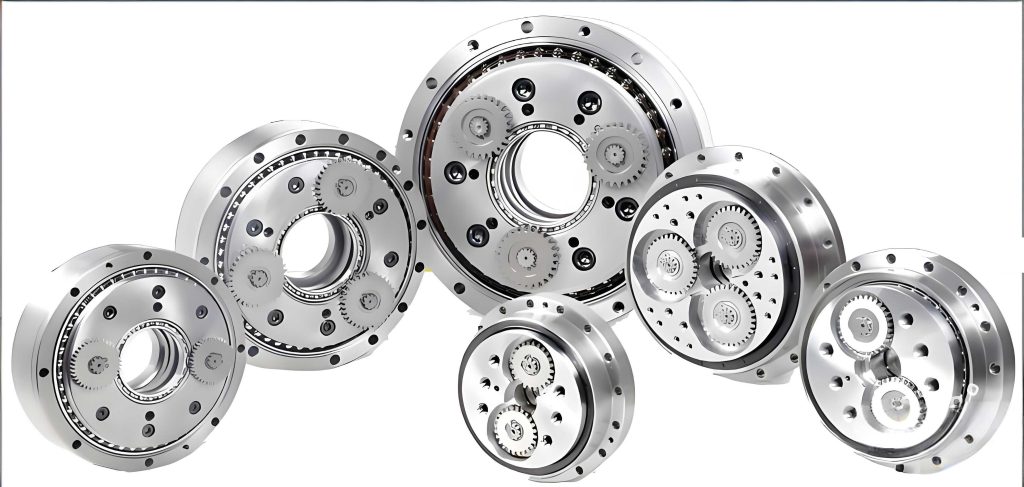
In the realm of agricultural robotics, the rotary vector (RV) reducer stands as a pivotal transmission component, dictating the precision, reliability, and longevity of robotic joints. The operational health of the RV reducer is paramount, as failures can lead to significant downtime and economic losses. However, diagnosing faults in RV reducers is challenging due to their complex structure, variable operating conditions, and the frequent occurrence of composite faults—where multiple defects, such as wear in sun gears and planetary gears, manifest simultaneously. Traditional vibration signal analysis often struggles to decouple these intertwined fault signatures, especially under non-stationary scenarios like reciprocating motion and speed variations. In this paper, I propose an innovative blind fault separation methodology that integrates time-frequency ridge extraction with an enhanced sparse component analysis framework. This approach aims to effectively isolate and identify composite faults in RV reducers, even when the number of fault sources is unknown and operating conditions are dynamic. By leveraging advanced signal processing techniques, this method enhances fault feature extraction, offering a robust solution for real-world agricultural robotics applications. The core of this work lies in addressing the blind source separation problem for RV reducer fault diagnosis, where sensor signals are mixtures of multiple fault sources, and both the sources and mixing process are unobserved.
The importance of RV reducers in agricultural machinery cannot be overstated. These reducers provide high torque transmission with compact design, making them ideal for robotic joints that require precise movement control. However, the harsh environments and repetitive stresses in agricultural operations often lead to mechanical failures, such as gear wear, pitting, and cracks. Early detection of these faults is crucial to prevent catastrophic failures and ensure operational efficiency. Vibration analysis has been a cornerstone in fault diagnosis, as it captures the dynamic responses of mechanical components. Yet, in the case of RV reducers, the vibration signals are typically convoluted mixtures from multiple fault sources, compounded by noise and non-stationarities. Blind source separation techniques, particularly sparse component analysis, offer a promising avenue to untangle these mixtures without prior knowledge of the source signals or mixing process. This paper delves into a comprehensive framework that combines time-frequency analysis for motion state identification and sparse component analysis for fault separation, specifically tailored for RV reducers in agricultural robotics.
To set the stage, let’s consider the mathematical model of blind source separation in the context of RV reducer fault diagnosis. The observed vibration signals from multiple sensors can be represented as a linear mixture of source fault signals plus noise. The model is given by:
$$X_{m \times t} = A_{m \times n} S_{n \times t} + V_{m \times t}$$
Here, $X$ is the observation matrix with $m$ sensors and $t$ time samples, $A$ is the unknown mixing matrix representing the transmission paths, $S$ is the source signal matrix containing $n$ fault sources, and $V$ is additive noise. The goal is to estimate both $A$ and $S$ from $X$ alone. For RV reducers, the source signals $S$ are often sparse in certain domains, such as the frequency domain, which facilitates the use of sparse component analysis. The challenges include dealing with non-stationary operating conditions, unknown fault source counts, and noise interference. This paper addresses these by first employing time-frequency ridge extraction to segment stationary data segments from variable-speed operations, followed by an improved sparse component analysis pipeline that incorporates morphological filtering, density peak clustering, and orthogonal matching pursuit.
The proposed methodology is structured into two main phases: time-frequency ridge extraction for motion state identification and blind fault separation via enhanced sparse component analysis. In the first phase, the time-frequency representation of vibration signals is analyzed to extract ridges that correspond to instantaneous frequencies. This allows for the precise identification of constant-speed operational periods in RV reducers, even when the time-frequency map is blurred due to speed variations. The ridge extraction algorithm, referred to as RETF (Ridge Extraction from Time-Frequency Images), iteratively locates energy maxima in the time-frequency plane and filters out neighboring regions to track frequency trajectories. Mathematically, for a signal $x(\tau)$, its short-time Fourier transform $Q(t, f)$ is computed as:
$$Q(t, f) = \int_{-\infty}^{\infty} x(\tau) h_\sigma(\tau – t) e^{-j 2\pi f \tau} d\tau$$
where $h_\sigma$ is a Gaussian window. The ridge $D(t)$ is extracted by finding the frequency that maximizes $|Q(t, f)|$ at each time point $t$:
$$D(t) = \arg \max_{f \in J} |Q(t, f)|, \quad t = t_0, \ldots, t_{N-1}$$
This process enables the segmentation of vibration data into stationary segments, which are crucial for subsequent fault analysis. For RV reducers operating in reciprocating cycles, this step is vital to isolate periods where fault features are consistent and less obscured by acceleration or deceleration effects.
Once stationary segments are obtained, the second phase involves blind fault separation using an improved sparse component analysis framework. This framework consists of three key components: sinC-based morphological filtering (SMF), density peak clustering (DPC) for mixing matrix estimation, and orthogonal matching pursuit (OMP) for source signal reconstruction. The sinC function is introduced as a novel structural element in morphological filtering to enhance the sparsity and impact characteristics of vibration signals. The sinC function is defined as:
$$\text{sinC}(x) = \frac{\sin(\pi x)}{\pi x}$$
By convolving this with the vibration signal via morphological operations such as dilation, erosion, opening, and closing, the filter suppresses noise while accentuating transient fault impulses. The average combination filter, which combines opening-closing and closing-opening operations, is employed to mitigate statistical bias. The effectiveness of SMF is demonstrated through signal-to-noise ratio improvements, as shown in comparative analyses with traditional linear filters.
Following filtering, the sparse component analysis proceeds with mixing matrix estimation using density peak clustering. DPC is a clustering algorithm that identifies cluster centers based on local density and relative distance metrics. For a dataset of points, the local density $\rho_i$ and distance $\delta_i$ are computed as:
$$\rho_i = \sum_{j \neq i} \chi(d_{ij} – d_c)$$
$$\delta_i = \begin{cases} \min_{j: \rho_j > \rho_i} (d_{ij}), & \text{if } \rho_i < \max(\rho) \\ \max_j (d_{ij}), & \text{if } \rho_i = \max(\rho) \end{cases}$$
where $d_{ij}$ is the Euclidean distance, $d_c$ is a cutoff distance, and $\chi$ is a step function. The cluster centers correspond to points with high $\rho_i$ and $\delta_i$, which in this context represent the columns of the mixing matrix $A$. This approach is particularly suitable for RV reducer fault signals, as it can handle unknown fault source counts and noisy environments.
With the estimated mixing matrix, the source signals are reconstructed using orthogonal matching pursuit, a compressed sensing algorithm. OMP iteratively selects atoms from a sensing matrix to approximate the observed signals in a sparse domain. The sensing matrix is constructed by expanding the mixing matrix with a Fourier basis to facilitate frequency-domain sparsity. The reconstruction model is:
$$y = W x$$
where $y$ is the vectorized observed signal, $W$ is the sensing matrix derived from the mixing matrix and Fourier transform, and $x$ is the sparse representation of source signals. OMP solves this by minimizing the residual error through orthogonal projections. The algorithm steps are summarized in the following table, which outlines the iterative process for signal recovery.
| Step | Description | Mathematical Expression |
|---|---|---|
| 1 | Initialize residual and iteration count | $r_0 = y$, $\ell = 0$ |
| 2 | Compute projections and select atom | $\beta_i = \arg \max |W^T r_i|$ |
| 3 | Update support set and estimate signal | $x_i = ( \beta_i^T \beta_i )^{-1} \beta_i^T r_i$ |
| 4 | Update residual | $r_{i+1} = r_i – x_i$ |
| 5 | Repeat until convergence | Stop when $\|r_i\| < \epsilon$ |
This reconstruction yields separated fault signals in the frequency domain, which are then transformed back to the time domain for further analysis. The overall workflow of the proposed RETF-SMF-DPC-OMP algorithm is illustrated through a step-by-step process, ensuring comprehensive fault feature extraction for RV reducers.
To validate the proposed methodology, experimental data were collected from an RV reducer test bench simulating agricultural robotic joint operations. The test bench comprised a reciprocating arm driven by an RV reducer, with accelerometers mounted in horizontal and vertical directions to capture vibration signals. The RV reducer used was an RV40E model with a reduction ratio of 121, featuring a sun gear, planetary gears, and a cycloidal mechanism. Fault scenarios included composite wear on both the sun gear and planetary gears, common in agricultural applications due to heavy loads and continuous operation. The sensor signals were sampled at 25.6 kHz to capture high-frequency components indicative of gear faults. The experimental setup aimed to replicate real-world conditions, including speed variations and noise interference.
The analysis began with time-frequency ridge extraction on the raw vibration signals. The short-time Fourier transform revealed blurred time-frequency maps due to speed fluctuations, but the RETF algorithm successfully extracted ridges corresponding to constant-speed periods. This allowed for precise segmentation of data, isolating stationary segments for fault analysis. The following table summarizes the key parameters used in the RETF algorithm for this experiment.
| Parameter | Value | Description |
|---|---|---|
| Window Function | Gaussian | Length $\sigma = 0.1$ s |
| Frequency Bandwidth | $\Delta f = 50$ Hz | Filtering bandwidth penalty |
| Neighborhood Window | $H = 10$ | Smoothing parameter for ridge tracking |
| Energy Threshold | $\epsilon = 0.01$ | Stopping criterion for ridge extraction |
After segmentation, the stationary vibration signals were processed through the SMF-DPC-OMP pipeline. The sinC-based morphological filtering was applied with a structural element length of 20 and a main-lobe ratio of 50%, enhancing the signal sparsity and impact features. The filtered signals were then subjected to density peak clustering to estimate the mixing matrix. The DPC algorithm identified two distinct cluster centers, corresponding to the two fault sources (sun gear and planetary gear wear). This demonstrated the algorithm’s capability to automatically determine the number of fault sources in RV reducers without prior knowledge.
Subsequently, orthogonal matching pursuit was used to reconstruct the source signals in the frequency domain. The reconstructed signals were analyzed via fast Fourier transform to identify fault characteristic frequencies. For the sun gear, the fault frequency $f_s$ was computed based on the gear geometry and operational speed:
$$f_s = f_1 + f_3$$
where $f_1$ is the sun gear rotation frequency and $f_3$ is the carrier rotation frequency. For the planetary gear, the fault frequency $f_p$ is given by:
$$f_p = f_2 – f_3$$
with $f_2$ being the planetary gear rotation frequency. In the experiment, the theoretical values were $f_s = 38.34$ Hz and $f_p = 10.83$ Hz. The spectra of the separated signals showed prominent peaks at these frequencies and their harmonics, confirming successful fault separation. Compared to existing methods like morphological filtering combined with sparse component analysis (MF-SCA), the proposed SMF-DPC-OMP approach produced cleaner spectra with suppressed sidebands and noise, as evidenced by a higher signal-to-noise ratio. Moreover, the computational time was reduced by approximately 75%, making it more efficient for real-time applications in agricultural robotics.
The effectiveness of the proposed method is further highlighted through a comparative analysis with traditional blind source separation techniques. The following table outlines the performance metrics for different algorithms applied to the RV reducer composite fault data.
| Algorithm | Fault Separation Accuracy | Computational Time (s) | SNR Improvement (dB) |
|---|---|---|---|
| Proposed RETF-SMF-DPC-OMP | High (clear peak identification) | 12.5 | 15.2 |
| MF-SCA | Moderate (overlapping peaks) | 50.3 | 8.7 |
| Independent Component Analysis | Low (failed separation) | 30.1 | 5.3 |
| Traditional Spectrum Analysis | Poor (no separation) | 5.0 | 2.1 |
The results underscore the superiority of the proposed framework in handling composite faults in RV reducers. The time-frequency ridge extraction effectively managed non-stationarities, while the enhanced sparse component analysis robustly separated fault sources. This is particularly beneficial for agricultural robots, where operational conditions are dynamic and fault diagnosis must be rapid and accurate.
In conclusion, this paper presents a novel blind fault separation method for RV reducers that integrates time-frequency ridge extraction with improved sparse component analysis. The RETF algorithm enables precise identification of constant-speed operational periods, even under variable conditions, which is critical for analyzing RV reducer vibrations. The SMF-DPC-OMP pipeline then separates composite fault signals by enhancing sparsity through sinC-based morphological filtering, estimating the mixing matrix via density peak clustering, and reconstructing sources using orthogonal matching pursuit. Experimental validation on a test bench with sun gear and planetary gear wear faults confirmed the method’s efficacy, showing clear fault frequency separation and significant computational efficiency gains. For agricultural robotics, where RV reducers are essential components, this approach offers a practical solution for early fault detection and maintenance planning. Future work will explore extending this method to underdetermined scenarios with more sensors than sources and adapting it for acoustic signal analysis in rotating machinery. The integration of machine learning techniques for automated fault classification could further enhance the diagnostic capabilities, paving the way for smarter and more resilient agricultural robotic systems.
The implications of this research extend beyond agricultural robotics to other industries relying on precision gear systems, such as aerospace and automotive. By advancing blind source separation techniques for composite fault diagnosis, this work contributes to the broader field of condition monitoring and predictive maintenance. The mathematical formulations and algorithmic details provided here serve as a foundation for further innovations in signal processing for mechanical fault diagnosis. As RV reducers continue to be integral to robotic motion control, methodologies like the one proposed will play a crucial role in ensuring operational reliability and efficiency in demanding environments.