
In recent times, the humanoid robotics sector has been abuzz with both exuberant investment and growing skepticism. As an observer deeply entrenched in the technological evolution of intelligent systems, I find the current discourse profoundly revealing. The comments from a prominent venture capitalist regarding the unclear commercialization paths and the subsequent divestment from humanoid robot companies have ignited a fierce debate. This debate is not merely about investment strategies; it is a critical examination of whether the humanoid robot industry is building sustainable value or merely riding a wave of speculative hype. The almost coincidental news of a leading humanoid robot company’s operational difficulties only serves to underscore the urgency of this inquiry. This article delves into the multifaceted challenges facing the humanoid robot domain, analyzing the data, the technological missteps, and the paramount need for viable application scenarios.
The surge in market activity is undeniable. Data indicates a remarkable influx of capital and entrepreneurial energy into robotics. However, a closer look reveals a concentration that may be problematic. The following table summarizes the recent boom in robot-related enterprises, with a particular focus on the humanoid robot segment.
| Metric | 2024 Data | Q1 2025 Data (Cumulative to March) | Primary Focus Area |
|---|---|---|---|
| New Robot-related Enterprise Registrations in China | > 190,000 (A decade-high record) | 44,000 additional new enterprises | Overwhelmingly hardware-centric |
| Total Financing for Humanoid Robot Companies in China (approx.) | > ¥7 billion | Data not fully aggregated | Prototype development and hardware iteration |
| Notable Trend | Severe technical homogenization, with numerous startups emulating high-profile models like Tesla’s Optimus. | ||
This table paints a picture of an industry in hyper-growth. Yet, the critical footnote is the alarming degree of imitation and redundancy. The pursuit of the humanoid robot form factor has become a high-consensus gamble, often divorced from practical utility. The fundamental question that many investors are now asking, and one that I echo, is: What is the tangible value proposition of a general-purpose humanoid robot in today’s economic and technological landscape?
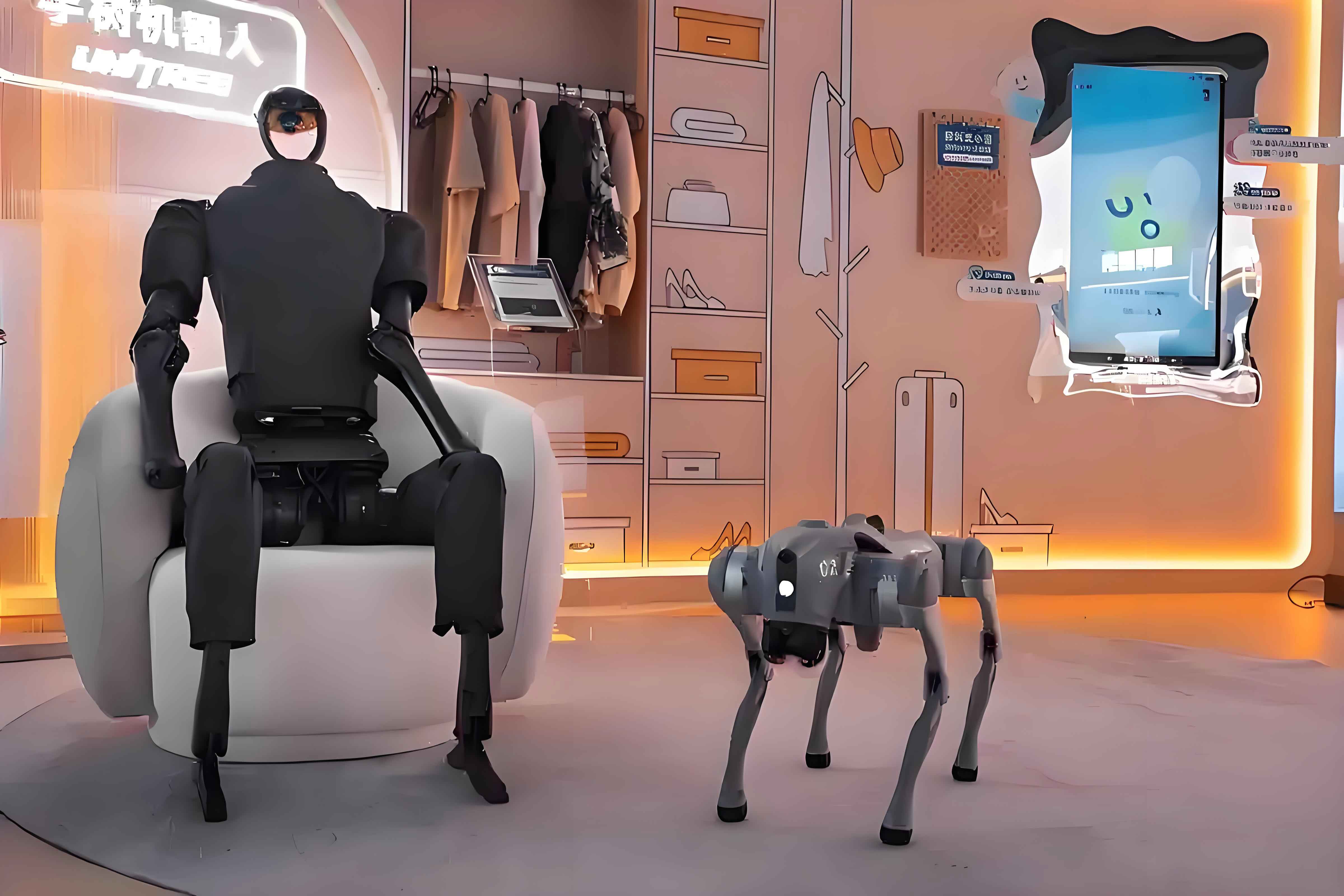
The visual representation of advanced humanoid robots and other robotic forms highlights the technological ambition. However, this ambition must be tempered by engineering and economic reality. The core of the problem lies in the difficulty of identifying scalable, cost-effective applications for a humanoid robot. Let’s consider the often-cited domain of domestic service. The envisioned scenario of a humanoid robot performing complex tasks like cooking or laundry with traditional tools is fraught with inefficiency. A more logical approach involves integrating specialized, non-anthropomorphic machines. We can model this decision logic. Let \( C_{hr} \) be the total cost of ownership for a general-purpose humanoid robot, \( P_{hr} \) its performance score across \( n \) diverse tasks, \( C_{sm} \) the cost for a set of specialized machines, and \( P_{sm} \) their aggregated performance. The value ratio \( V \) for each approach can be loosely expressed as:
$$ V_{hr} = \frac{\sum_{i=1}^{n} w_i \cdot P_{hr}(i)}{C_{hr}} $$
$$ V_{sm} = \frac{\sum_{i=1}^{n} w_i \cdot P_{sm}(i)}{C_{sm}} $$
Here, \( w_i \) represents the weight or importance of task \( i \). For most households and commercial settings, \( C_{hr} \) remains prohibitively high (often estimated in the tens of thousands of dollars), while \( P_{hr}(i) \) for any specific task \( i \) is typically inferior to a device engineered solely for that task. Consequently, \( V_{sm} \) almost always dominates \( V_{hr} \) for current technological and economic parameters. This simple formulation underscores why the search for a “killer app” for the humanoid robot is so challenging. The humanoid robot’s flexibility is its purported strength, but in practice, this leads to a “jack of all trades, master of none” dilemma, with associated high costs in mechanics, control, and power systems.
The industry’s focus has often been on technical supremacy in hardware—achieving more degrees of freedom, more fluid motion, more human-like appearance. This has led to an internal competition on specifications that may not correlate with external utility. The resource waste is significant. If \( R_{total} \) is the total R&D resource pool invested in humanoid robot companies, and \( \alpha \) is the fraction of that resource dedicated to duplicative hardware development (where \( \alpha \) is arguably close to 0.7 or higher based on observable trends), then the effective innovative output \( I_{effective} \) is diminished:
$$ I_{effective} = (1 – \alpha) \cdot R_{total} \cdot \eta $$
where \( \eta \) is an efficiency factor for non-duplicative research. The high value of \( \alpha \) directly reduces the resources available for solving the critical software and integration challenges that would enable real-world deployment of humanoid robots.
This brings us to the pivotal shift that must occur: from hardware-centric “technology demonstration” to software-driven “solution implementation.” The future of the humanoid robot, and indeed of embodied AI, hinges on “soft-hard synergy.” The hardware platform for a humanoid robot must evolve towards higher performance-per-unit-cost, but the true differentiation will come from the brain. The software system, powered by advances in large-scale pre-trained models, must achieve efficient environmental perception, real-time task planning, and adaptive learning. We can frame the learning efficiency \( \eta_{learn} \) of a humanoid robot as a function of its data ingestion rate \( D \), the computational efficiency of its models \( \Gamma \), and the relevance of its training to target scenarios \( \Phi \):
$$ \eta_{learn} = \frac{ \Phi \cdot \int D(t) \, dt }{ \Gamma^{-1} \cdot T_{training} } $$
Maximizing \( \eta_{learn} \) requires prioritizing \( \Phi \)—the alignment with practical use-cases. Training a humanoid robot primarily in controlled labs (\( \Phi_{lab} \)) yields far lower real-world performance than training it on data from messy, unstructured environments (\( \Phi_{field} \)). This is the crux of the commercialization gap. Investors are increasingly wary of funding endless cycles of hardware iteration in the absence of clear paths to gather \( \Phi_{field} \) data and demonstrate rising \( \eta_{learn} \) in economically valuable tasks.
Policy support, such as national guidelines aiming for batch production of humanoid robots by 2025, provides a vital tailwind. However, policy cannot manufacture demand or create sustainable business models. It can lower initial barriers through subsidies or research grants, but the ultimate test is in the market. A subsidy-driven scale-up, while potentially jump-starting manufacturing, risks creating a bubble if the underlying product lacks utility. The lifecycle cost \( LCC \) of deploying a humanoid robot solution must satisfy:
$$ LCC = C_{capex} + \sum_{t=1}^{T} \frac{C_{opex}(t) – B(t)}{(1+r)^t} < 0 $$
where \( C_{capex} \) is capital expenditure (robot cost), \( C_{opex} \) is annual operating cost, \( B(t) \) is the annual benefit or revenue generated, \( r \) is the discount rate, and \( T \) is the lifespan. Currently, for almost all proposed applications of humanoid robots, \( B(t) \) is too uncertain or too small to overcome the high \( C_{capex} \) and \( C_{opex} \), resulting in a positive \( LCC \) (i.e., a net cost). Until technological advances significantly alter this equation, commercial scaling will remain elusive.
So, where does this leave the aspiring humanoid robot industry? I believe the path forward requires disciplined segmentation and a ruthless focus on specific, high-value verticals before aspiring to general-purpose dominance. The following table contrasts the scattered current approach with a more focused potential pathway.
| Aspect | Current Predominant Model (Bubble Indicators) | Proposed Focused Model (Path to Sustainability) |
|---|---|---|
| Design Philosophy | General-purpose humanoid robot mimicking full human form and range. | Task-optimized humanoid robot (possibly simplified morphology) for targeted verticals (e.g., specific industrial maintenance, eldercare assistance). |
| R&D Priority | Hardware parameters (DOF, speed, payload). | Software stack for reliability, safety, and task-specific learning (\( \eta_{learn} \)). |
| Application Development | Seeking a problem for the humanoid robot solution. | Starting with a critical, expensive, and dangerous problem, then designing the necessary robotic solution. |
| Cost Structure Goal | Achieve lower cost through mass production of complex hardware. | Achieve lower \( LCC \) through higher \( B(t) \) in a niche, justifying a higher \( C_{capex} \). |
| Key Performance Metric | Demo success in controlled environments. | Mean Time Between Failure (MTBF) and ROI in field deployments. |
The transition is from “look what this humanoid robot can do” to “this is the specific problem this humanoid robot solves better and more economically than any alternative.” For instance, in certain constrained industrial inspection or maintenance roles where the environment is already structured for humans, a humanoid robot form might offer unique advantages over wheeled or fixed-arm robots. The value of \( B(t) \) in such a scenario—preventing downtime, ensuring worker safety—can be high and calculable, making the \( LCC \) equation potentially viable much sooner.
In conclusion, the observations about a bubble in the humanoid robot sector are well-founded. The explosive growth in company registrations and financing, coupled with a lack of corresponding growth in proven commercial applications, is a classic signature of an overheated market. The humanoid robot as a concept holds immense long-term promise, but the journey from laboratory marvel to household or industrial mainstay is longer and more arduous than early optimism suggested. It requires more than just better actuators or more expressive faces on the humanoid robot. It requires a fundamental reorientation towards integration, software intelligence, and above all, a deep understanding of real human and industrial needs. The companies that survive the inevitable consolidation will be those that master the economics of the humanoid robot, not just the engineering. They will be the ones that can demonstrate, with unwavering clarity, that their version of the humanoid robot makes undeniable financial sense in a specific, addressable market. The dream of a general-purpose humanoid robot companion may one day be realized, but the bridge to that future is built one practical, profitable, and specialized application at a time.