
As an observer and analyst within the field of advanced robotics, I am witnessing a pivotal moment in technological evolution. The convergence of breakthroughs in artificial intelligence, particularly large language models (LLMs) and computer vision, with sophisticated robotic hardware is accelerating the development of humanoid robots at an unprecedented pace. These systems, representing the pinnacle of embodied intelligence, are transitioning from specialized laboratory prototypes toward generalized agents capable of operating in diverse, unstructured environments. The global landscape is currently dominated by technological and industrial competition between the United States and China, setting the stage for a new era of automation. However, this rapid advancement brings with it a complex tapestry of intertwined safety risks—spanning technological dependence, cybersecurity, and cognitive security—that demand proactive and comprehensive governance strategies.
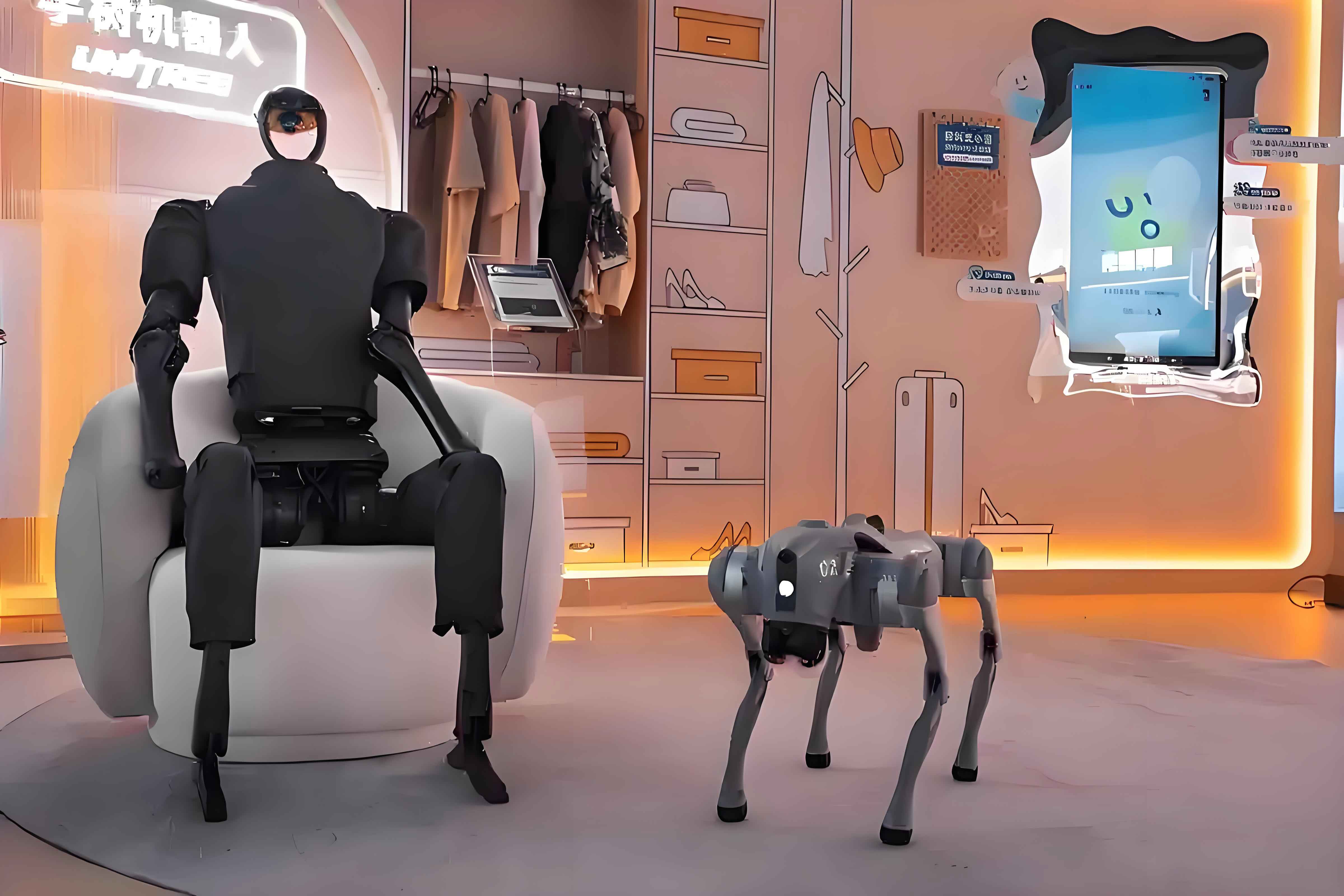
The image above captures the essence of this new generation of autonomous machines. The progression of the humanoid robot from a novel concept to a potential societal mainstay hinges on three core systems: the mechanical structure (“the body”), the motion control system (“the cerebellum”), and the intelligent perception system (“the brain”). While advancements in actuators, sensors, and control algorithms have rendered the physical form remarkably agile, the true transformative leap is occurring within the cognitive domain. The integration of multi-modal foundation models is endowing these machines with the ability to perceive, reason, and act upon the world in increasingly human-like ways.
I. The Global Trajectory: Trends Shaping the Humanoid Robot Ecosystem
The current development of humanoid robot technology is characterized by three dominant, interlinked trends: the rapid iteration of AI empowering generalization, a bipolar competitive landscape led by the U.S. and China, and the emerging discourse on ethics and geopolitical technology competition.
1. AI-Driven Generalization and the Path to Autonomy
The intelligence of a humanoid robot can be conceptualized across a spectrum of autonomy. This progression can be summarized by a maturity model, often categorized from L0 to L5.
| Autonomy Level | Designation | Capabilities | Current State |
|---|---|---|---|
| L0 | No Autonomy | Pre-programmed or remote-controlled only. | Obsolete for advanced systems. |
| L1 | Assisted Control | Basic automated mobility functions. | Foundation for all robots. |
| L2 | Partial Autonomy | Executes pre-defined tasks in structured environments. | Common in industrial settings. |
| L3 | Conditional Autonomy | Environment perception; can handle limited unexpected scenarios. | Current frontier for advanced humanoid robots. |
| L4 | High Autonomy | Robust cognition; adapts to varied, complex scenarios with minimal human oversight. | Active R&D target for next 5-10 years. |
| L5 | Full Autonomy | Complete embodied intelligence; learns, reasons, and acts independently in any environment. | Long-term theoretical goal. |
The leap from L2/L3 towards L4 is being fueled by foundation models. These models provide the “brain” with capabilities for natural language understanding, visual scene comprehension, and complex task planning. The core technological challenge lies in creating a unified model that translates perception and instruction into precise, physically viable action. This can be framed as an optimization problem where the humanoid robot must find an action sequence $A^*$ that maximizes the probability of successfully completing an instruction $I$, given its sensory perception of the environment $S$ and its internal world model $W$.
$$ A^* = \underset{A}{\arg\max} \, P(\text{Success} | I, S, W, A) $$
Where $A = {a_1, a_2, …, a_n}$ represents a sequence of kinematic actions. Recent breakthroughs like visual-language-action (VLA) models represent significant strides in solving this problem, enabling more natural, instruction-driven control of humanoid robot platforms.
2. The Bipolar Landscape: U.S. and China at the Forefront
The development race is creating a distinct bipolar structure. In the United States, innovation is primarily industry-driven, with entities like Tesla, Figure, Boston Dynamics, and tech giants such as NVIDIA and Google leading in hardware and foundational AI model research. Government support, while substantial in fundamental research through agencies like DARPA and NSF, has been less coordinated at a national strategic level for humanoid robot commercialization—a gap the industry is now actively lobbying to fill.
Conversely, China’s approach is characterized by strong top-down industrial policy. The 2023 “Guidance on the Innovation and Development of Humanoid Robots” explicitly outlines national goals to achieve world-leading status by 2027. This is backed by significant state and municipal funding, fostering a vibrant ecosystem of startups (e.g., Ubtech, Astribot, Fourier Intelligence) and attracting major tech and automotive firms. This combination of policy drive, market scale, and capital influx positions China as the primary challenger to U.S. technological leadership in this domain.
3. Emerging Ethical and Geotechnological Friction
As the technology matures, profound questions are surfacing. The ethical discourse encompasses privacy concerns due to pervasive sensor data collection, the potential for social confusion and misuse, economic displacement, and even philosophical debates on machine rights. Simultaneously, the humanoid robot is becoming a focal point in the broader U.S.-China technology competition. The framing of technological leadership as a zero-sum component of national power is injecting a strong geopolitical dimension into research, supply chains, and standard-setting, risking fragmentation of the global innovation ecosystem.
II. A Triad of Security Vulnerabilities
The complexity of the humanoid robot—as a fusion of advanced hardware, software, and AI—creates multiple vectors for security failure. These risks are not isolated but often compound each other.
1. Supply Chain Dependence and Technological Strangulation
The global supply chain for critical components remains a significant point of vulnerability. Many high-performance components essential for a competitive humanoid robot are dominated by a handful of non-domestic suppliers.
| Critical Component | Dominant Suppliers (Country) | Primary Risk |
|---|---|---|
| Precision Harmonic/ RV Reducers | Harmonic Drive (JP), Nabtesco (JP) | Market monopoly; potential export controls. |
| High-torque Density Servo Motors | Panasonic (JP), Yaskawa (JP), Beckhoff (DE) | Technology gap; dependency on specialized manufacturing. |
| Tactile & Force-Torque Sensors | ATI Industrial Automation (US), OnRobot (DK) | High cost; limited alternative sources. |
| High-performance AI Training/Inference Chips (GPUs) | NVIDIA (US), AMD (US) | Target of existing export restrictions; essential for AI brain development. |
This dependence creates a classic “bottleneck” vulnerability. In a climate of strategic competition, these chokepoints can be weaponized through export controls, investment screening, and diplomatic pressure on allied nations, potentially stalling the development of an entire domestic humanoid robot industry.
2. Cybersecurity in a Hyper-Connected Physical System
A humanoid robot is a network-connected cyber-physical system (CPS). Its attack surface is vast, encompassing its onboard computing, communication channels, cloud services, and the AI models themselves. Security threats can propagate from the digital to the physical realm with direct consequences.
Potential Attack Vectors and Impact:
- Network & Communication Attacks: Man-in-the-middle (MITM) attacks, jamming, or protocol exploitation can intercept data, inject false commands, or block vital updates. A compromised communication channel could lead to a hijacked humanoid robot.
- Software/Platform Vulnerabilities: Bugs in the operating system, control stack, or third-party libraries can be exploited for privilege escalation, denial-of-service (DoS), or remote code execution. An attacker gaining root access could completely subvert the robot’s controls.
- AI Model Integrity Attacks: Adversarial attacks can manipulate the robot’s perception. For instance, subtly altered visual patterns could cause misidentification of objects or obstacles, leading to hazardous actions. The decision-making logic itself could also be targeted.
- Data Security Breaches: As a mobile sensor platform, a humanoid robot collects vast amounts of potentially sensitive audio, visual, and location data. Breaches threaten personal privacy, corporate secrecy, and national security.
The risk equation here involves the probability of a successful attack $P_a$, the severity of the physical impact $I_p$, and the difficulty of mitigation $D_m$. The overall risk $R$ for a given vulnerability can be modeled as:
$$ R = \frac{P_a \times I_p}{D_m} $$
Mitigation requires reducing $P_a$ through robust coding and encryption, minimizing $I_p$ through safety-critical system design (e.g., kill switches, force limiters), and lowering $D_m$ via effective monitoring and response protocols.
3. Cognitive Security: The Peril of Data Poisoning
The most insidious risk may lie in corrupting the “mind” of the humanoid robot before it is even deployed. The AI models that drive cognitive functions are trained on massive, often web-scraped, datasets. An adversary can “poison” this training data to subtly bias or manipulate the model’s future behavior—a form of cognitive warfare applied to machines.
The mechanics of data poisoning involve injecting a small fraction of malicious samples into the training set $D_{train}$. The goal is to cause the learned model parameters $\theta$ to produce specific, targeted errors or exhibit biased behaviors when encountering certain triggers during operation. The success of poisoning often depends on the ratio of poisoned data $\alpha$ and its strategic selection.
$$ \underset{\theta}{\min} \mathcal{L}(f(x_i; \theta), y_i) \quad \text{for} \quad (x_i, y_i) \in D_{train} \cup D_{poison} $$
Where $D_{poison}$ contains malicious pairs $(x_j, \tilde{y}_j)$ designed to skew the loss function $\mathcal{L}$. For a humanoid robot, consequences could range from the propagation of social biases and misinformation to more dangerous scenarios where the robot’s ethical or operational guidelines are subverted—for example, ignoring safety protocols under specific, attacker-chosen conditions. The scarcity of high-quality, clean training data in certain languages exacerbates this vulnerability, as a smaller corpus is easier to influence proportionally.
III. Constructing a Multilayered Defense: Strategic Responses
Addressing the multifaceted risks associated with humanoid robot development requires a holistic, multi-pronged strategy spanning technology, regulation, operational security, and data governance.
1. Fortifying the Foundation: Indigenous Innovation and Supply Chain Resilience
Reducing external dependencies is a strategic imperative. This involves a coordinated national effort:
- Comprehensive Technology Auditing: Systematically map the entire humanoid robot supply chain to identify critical bottlenecks and assess domestic R&D capabilities with precision.
- Targeted R&D Investment: Direct public and private capital towards foundational components: precision reducers, high-end servo systems, advanced tactile sensors, and AI chips. Incentive structures (tax breaks, grants) must align with these strategic goals.
- Forging Public-Private R&D Alliances: Establish consortiums linking leading enterprises, academia, and national labs to tackle specific “chokepoint” technologies, sharing risks and accelerating the translation of research into industrial-grade products.
The objective function here is to maximize technological self-sufficiency $S$ over a planning horizon $T$, subject to budget constraints $B$ and existing capability gaps $G$. It is a resource allocation optimization:
$$ \underset{x}{\max} S(T) = \sum_{i=1}^{n} w_i \cdot C_i(x_i, T) $$
$$ \text{subject to} \quad \sum_{i=1}^{n} c_i(x_i) \leq B, \quad \text{and} \quad C_i(0) = g_i \in G $$
Where $x_i$ is investment in technology sector $i$, $w_i$ is its strategic weight, $C_i$ is the resulting capability level, and $c_i$ is the cost function.
2. Building the Regulatory Scaffolding
Law and policy must keep pace with innovation to ensure safety and accountability. A layered regulatory approach is necessary:
| Regulatory Layer | Objective | Exemplary Measures |
|---|---|---|
| Specialized Legislation | Establish overarching safety and accountability principles for humanoid robots. | Draft a “Humanoid Robot Safety Management Act” defining lifecycle responsibilities, certification requirements, and incident liability. |
| Amended Existing Laws | Explicitly incorporate humanoid robots into existing legal frameworks for data, networks, and AI. | Extend the scope of Cybersecurity, Data Security, and AI Governance laws to cover the unique data flows and system integrity of these robots. |
| Technical Standards & Certification | Provide clear, actionable technical benchmarks for manufacturers and integrators. | Develop and mandate standards for human-robot interaction safety, secure communication protocols (e.g., for VLA models), and fail-safe mechanical design. |
3. Operationalizing Safety: Emergency Response and System Resilience
Despite best efforts, incidents will occur. A proactive operational security posture is critical:
- AI-Enhanced Threat Monitoring: Deploy runtime monitoring systems that use anomaly detection algorithms to identify deviations from normal behavioral patterns in a humanoid robot, triggering alerts or automatic safe-mode engagement.
- Incident Response Playbooks: Develop and regularly test detailed response protocols for scenarios ranging from individual robot malfunctions and cyber-attacks to widespread systemic failures. These must integrate technical containment, field operations, and public communication.
- Public-Private Security Fusion Centers: Create dedicated channels for real-time information sharing on vulnerabilities, threat intelligence, and active incidents between government agencies, robot manufacturers, and major operators, enabling coordinated defense and rapid response.
4. Ensuring Cognitive Integrity: The Data Vetting Imperative
Securing the AI “brain” requires a dedicated focus on the quality and security of training data.
- Establishing Trusted Data Provenance: Champion the creation of curated, high-quality, and ethically sourced datasets for training humanoid robot AI. National initiatives should fund the creation and maintenance of these “clean” data repositories.
- Developing and Deploying Poisoning Detection: Invest in R&D for algorithms that can statistically detect anomalies and potential poisoning attempts within massive training datasets before they are used to train mission-critical models.
- Fostering a “Clean Data Alliance”: Encourage collaboration among industry players, academia, and government to share best practices, tools, and (where possible) vetted data resources to collectively raise the security baseline for the entire ecosystem.
The defense against data poisoning requires constant vigilance. The effectiveness $E_d$ of a detection mechanism can be evaluated based on its true positive rate $TPR$ (catching poison) and false positive rate $FPR$ (rejecting good data), balanced against the cost $C_{clean}$ of data cleaning.
$$ E_d = TPR(\theta_d) – \lambda \cdot FPR(\theta_d) – \frac{C_{clean}}{B_{data}} $$
Where $\theta_d$ are the detection model’s parameters, $\lambda$ is a scaling factor for FPR cost, and $B_{data}$ is the value of the protected dataset.
In conclusion, the ascent of the humanoid robot represents one of the most significant technological frontiers of our time, promising to reshape industries and societies. Its journey from prototype to partner, however, is fraught with profound technical and security challenges. Navigating this path successfully requires more than just engineering brilliance; it demands a sophisticated, anticipatory governance framework that simultaneously fosters innovation, secures supply chains, hardens systems against digital and cognitive threats, and builds public trust. The nations and enterprises that can master this complex balance of acceleration and resilience will not only lead the next wave of automation but will also define the principles upon which our intelligent mechanical counterparts are integrated into the fabric of human civilization.