
As I delve into the realm of embodied intelligence, it becomes evident that the evolution toward general-purpose robots hinges on their ability to perceive, comprehend, and decide with high generalization. This requires training embodied models with massive datasets, yet the traditional approach of manual data collection is fraught with challenges—high difficulty, stringent requirements, and low efficiency. These issues form a critical bottleneck in advancing the intelligence of humanoid robots. In this article, I explore how NVIDIA’s synthetic data solution is redefining the training paradigm for humanoid robots, offering a comprehensive stack from simulation to deployment. The core challenge lies in bridging the gaps of data scarcity, the simulation-to-reality divide, and the high cost of trial-and-error in industrial applications. NVIDIA’s full-stack ecosystem—spanning DGX supercomputing for model training, Omniverse for digital twin simulation, and Jetson Thor for edge deployment—creates a closed-loop system covering “training, simulation, and deployment.” This provides robot developers with a complete toolchain from lab to factory. Through open-source foundation models like the GR00T N-series, the dual-system cognitive architecture, synthetic data generation with GR00T Blueprint, and the acceleration capabilities of the Isaac platform, NVIDIA has enabled breakthroughs in real-world scenarios for various enterprises. Here, I analyze the architectural design, key innovations, and industrial practices of this technological framework, examining how open ecosystems and vertical collaborations are driving humanoid robots from “high-precision demos” to “scalable productivity.”
The quest for general-purpose humanoid robots is a marathon, not a sprint. These machines are expected to perform complex tasks in diverse environments, from factories to homes. However, their intelligence is fundamentally limited by data availability. While large language models thrive on petabytes of internet data, humanoid robots struggle with mere gigabytes of effective training data for tasks like walking, grasping, and interacting. This disparity stems from several factors. First, the humanoid robot industry is relatively nascent, with limited data accumulation over the past five years. Industrial robots, though prevalent, differ significantly in physical structure, sensor configurations, and task scenarios, making data migration to humanoid robots impractical. Second, data collection is arduous and costly. Humanoid robots rely on multimodal sensory inputs—vision, force, touch—requiring precise synchronization at millisecond-level accuracy. Deploying high-precision motion capture systems and professional operators for hands-on teaching drives up expenses, and real-world industrial scenarios often involve resource-intensive production lines. Third, “data silos” persist, as companies guard datasets as competitive assets, and open-source communities offer only simplistic task data. Moreover, the lack of unified quality assessment frameworks risks erroneous annotations, leading to trust deficits in critical applications like healthcare. Thus, the “data famine” for humanoid robots is a pervasive barrier.
To address this, two primary paths emerge: building high-quality real datasets through resource integration and standardization, and leveraging physical simulation to generate training data efficiently. NVIDIA champions the latter with its synthetic data generation technology, which I consider a game-changer. The company’s Isaac GR00T Blueprint creates a “data granary” for humanoid robots, enabling imitation learning at scale. Traditionally, imitation learning relies on human demonstrations, but recording high-quality actions manually is slow—averaging one demonstration per minute—and prone to errors. In contrast, GR00T Blueprint synthesizes vast motion trajectories from minimal human demonstrations. For instance, it can generate 780,000 synthetic trajectories in 11 hours, equivalent to nine months of continuous human data collection. This synthetic data, when combined with real-world data, enhances training success rates significantly. The workflow involves data acquisition via Isaac Lab, where operators use devices like Apple Vision Pro to immersively control simulated robots, and trajectory synthesis through GR00T-Mimic, which interpolates key points to produce smooth, context-aware motions. The process ensures diversity by randomizing parameters like lighting, colors, and backgrounds, bridging the simulation-to-reality gap.
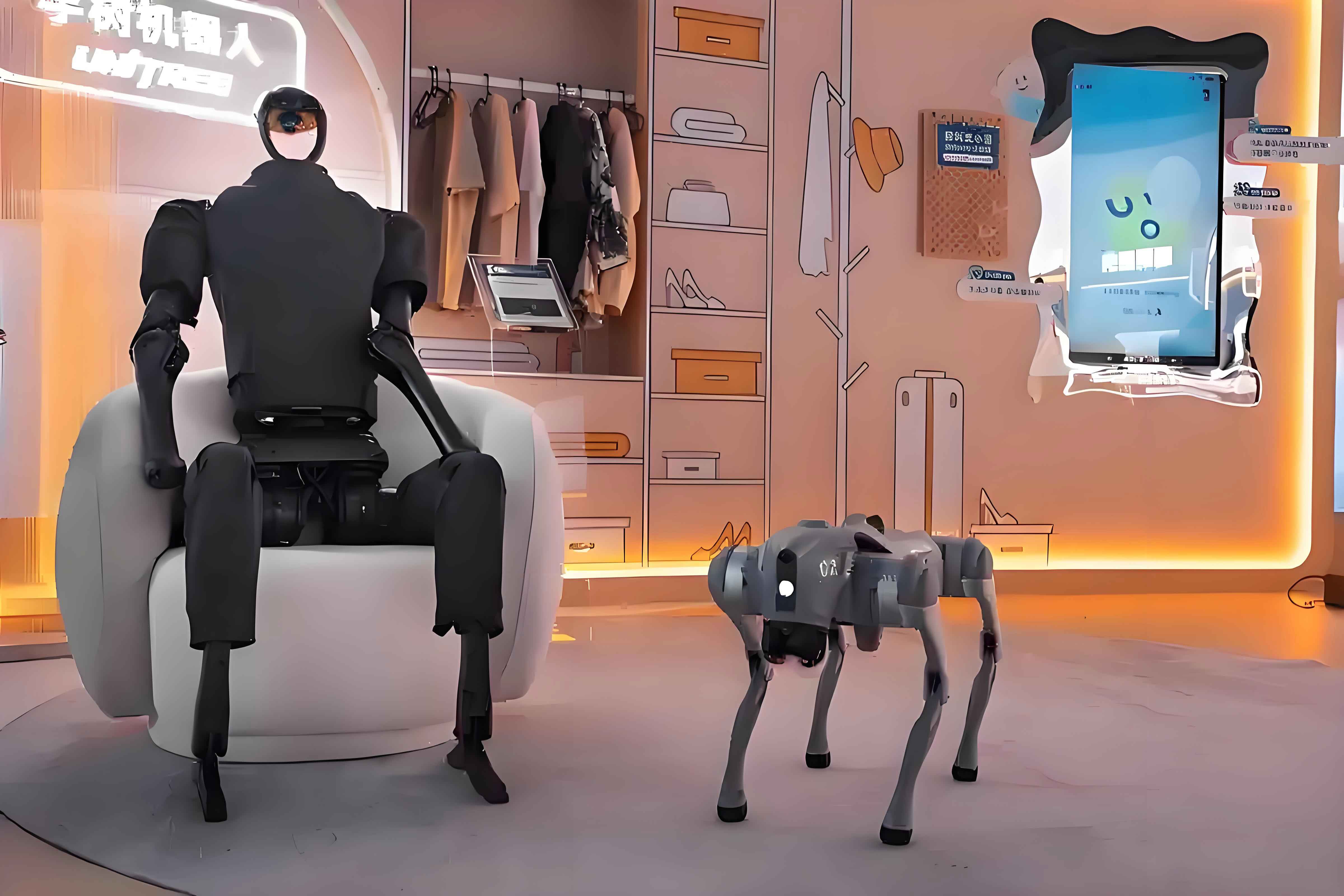
The efficiency of synthetic data generation is further amplified by NVIDIA’s Cosmos Transfer (WFMs), which uses simple text prompts to create high-fidelity simulation scenes in minutes instead of hours. This democratizes modeling and accelerates iteration. To quantify the impact, consider the performance gains in model training. NVIDIA’s Isaac GR00T N-series models are open-source foundation models for general humanoid robot reasoning and skills, processing multimodal inputs like text and images to output action commands. They exhibit strong cross-entity and cross-task generalization. When trained with a blend of internet data, human videos, and synthetic data from GR00T Blueprint, the GR00T N model shows a 40% performance improvement over training with real data alone. In May 2025, NVIDIA released Isaac GR00T N1.5, leveraging GR00T-Dreams Blueprint for synthetic data; researchers completed the upgrade from GR00T N1 in just 36 hours, a task that would have taken nearly three months with manual data collection. This underscores the transformative potential of synthetic data in advancing humanoid robot capabilities.
Let me elaborate on the mathematical underpinnings of this paradigm. The data generation process can be modeled as a function of time and diversity. Let \( D_{\text{real}} \) represent real data, \( D_{\text{synth}} \) synthetic data, and \( \alpha \) a blending coefficient. The total training data \( D_{\text{total}} \) is given by:
$$ D_{\text{total}} = \alpha D_{\text{real}} + (1 – \alpha) D_{\text{synth}} $$
The performance \( P \) of a humanoid robot model, measured as task success rate, scales with data volume and quality. Empirical studies suggest a logarithmic relationship:
$$ P = k \cdot \ln(D_{\text{total}}) + C $$
where \( k \) is a constant dependent on model architecture, and \( C \) is a baseline performance. With GR00T Blueprint, the synthetic data generation rate \( R_{\text{synth}} \) can be expressed as:
$$ R_{\text{synth}} = \frac{N_{\text{trajectories}}}{t_{\text{time}}} $$
For example, with \( N_{\text{trajectories}} = 780,000 \) and \( t_{\text{time}} = 11 \) hours, \( R_{\text{synth}} \approx 19.7 \) trajectories per second. This dwarfs the human demonstration rate \( R_{\text{human}} \approx 0.0167 \) trajectories per second (one per minute), highlighting a speedup factor of over 1000. Such efficiencies are critical for scaling humanoid robot training.
NVIDIA’s full-stack solution encompasses several key components, which I summarize in the table below to illustrate the ecosystem’s comprehensiveness:
| Component | Function | Impact on Humanoid Robot Training |
|---|---|---|
| DGX Supercomputers | High-performance computing for model training | Accelerates training of large-scale models like GR00T N-series, enabling faster iteration. |
| Omniverse Platform | Digital twin simulation and collaboration | Provides photorealistic environments for synthetic data generation, reducing reality gaps. |
| Isaac Sim | Robotics simulation with physics engine | Facilitates accurate simulation of humanoid robot dynamics and task scenarios. |
| Isaac Lab | Lightweight simulation for training | Enables efficient data acquisition via teleoperation and mimicry for humanoid robots. |
| GR00T Blueprint | Synthetic data generation toolkit | Produces diverse trajectories for imitation learning, addressing data scarcity. |
| Jetson Thor | Edge computing platform for deployment | Allows real-time inference and control of humanoid robots in physical settings. |
The integration of these components forms a virtuous cycle: synthetic data from simulations trains models on DGX systems, which are then validated in Omniverse digital twins and deployed via Jetson Thor. This closed-loop system mitigates the high costs and risks associated with real-world testing. For humanoid robots, this means accelerated learning curves and improved robustness. The GR00T N-series models, for instance, employ a dual-system architecture that combines fast, reflexive responses with slow, deliberative planning—mirroring human cognition. This architecture enhances adaptability for humanoid robots in unstructured environments. The training process involves reinforcement learning from human feedback (RLHF) and imitation learning, with synthetic data filling gaps in real demonstrations. The loss function \( L \) for training can be expressed as:
$$ L = \lambda_1 L_{\text{imitation}} + \lambda_2 L_{\text{reinforcement}} + \lambda_3 L_{\text{regularization}} $$
where \( \lambda_i \) are weights, and \( L_{\text{imitation}} \) leverages both real and synthetic demonstrations to guide the humanoid robot toward desired behaviors.
In industrial practice, NVIDIA’s technologies have catalyzed notable advancements. For example, a generative AI and simulation data provider successfully deployed the GR00T N1 model on automotive production lines, marking the first实战 application in such settings. By constructing realistic simulation environments with diverse scenarios, they generated large-scale teleoperation synthetic data through human-in-the-loop simulations. This data, combined with a “Real2Sim2Real + Realism Validation” framework, minimized the simulation-to-reality gap, allowing the humanoid robot to perform tasks like transporting inspected parts to precise locations. Another innovator in general embodied robotics leveraged Isaac GR00T-Teleop and GR00T-Mimic to create a massive open-source simulation dataset, AgiBot Digital World, which efficiently addresses data scarcity for humanoid robots. Their approach uses Isaac Sim’s high-fidelity rendering and physics engine to replicate training environments, generating expert trajectory data rapidly. This reduces data acquisition costs and time, fostering the integration of humanoid robots into society. Similarly, a company focused on embodied multimodal large models utilized Isaac Lab and Isaac Sim to build simulation testbeds for dexterous hand grasping models, accelerating the exploration of scaling laws and the deployment of泛化 grasping skills in real-world scenarios for humanoid robots.
The economic implications are profound. As humanoid robots transition from specialized tools to general-purpose digital laborers, synthetic data becomes a key enabler. Consider the cost comparison between traditional and synthetic data methods, as shown in the table below:
| Data Source | Time per 10,000 Trajectories | Estimated Cost (USD) | Diversity Score (1-10) |
|---|---|---|---|
| Human Demonstrations | ~167 hours (1 week) | 50,000 (including equipment and labor) | 6 (limited by human variability) |
| GR00T Blueprint Synthetic | ~0.14 hours (8.5 minutes) | 500 (computational resources) | 9 (high randomization) |
This stark contrast underscores why synthetic data is pivotal for scaling humanoid robot training. Moreover, the open ecosystem fostered by NVIDIA encourages collaboration, as seen with the Isaac platform’s adoption by various developers. The future trajectory points toward humanoid robots becoming ubiquitous in manufacturing, logistics, and service sectors. As Jensen Huang noted, “The era of general-purpose robots has arrived.” Indeed, with NVIDIA’s full-stack robotics solution, we are witnessing a new epoch of human-robot collaboration.
To further elucidate the technical nuances, let’s examine the simulation fidelity required for effective synthetic data. The realism of a simulation environment for humanoid robots can be quantified by parameters like physics accuracy, visual detail, and task complexity. Using Isaac Sim, the physics engine adheres to Newtonian laws, with dynamics described by:
$$ \mathbf{M}(\mathbf{q})\ddot{\mathbf{q}} + \mathbf{C}(\mathbf{q}, \dot{\mathbf{q}}) = \boldsymbol{\tau} $$
where \( \mathbf{M} \) is the mass matrix, \( \mathbf{q} \) the joint angles, \( \mathbf{C} \) Coriolis forces, and \( \boldsymbol{\tau} \) torques. For humanoid robots, this ensures stable locomotion and manipulation. Visual realism is enhanced by ray tracing and material properties, reducing domain shift when transferring learned policies to reality. The diversity of synthetic data is achieved through procedural generation, where parameters \( \theta \) (e.g., object textures, lighting angles) are sampled from distributions \( P(\theta) \). This yields a dataset variance \( \sigma^2_{\text{synth}} \) that approximates real-world variance \( \sigma^2_{\text{real}} \), crucial for generalization.
In conclusion, NVIDIA’s synthetic data approach is reshaping how we train humanoid robots. By overcoming data scarcity through technologies like GR00T Blueprint and the Isaac platform, it enables rapid iteration and robust deployment. The humanoid robot industry stands at a inflection point, where simulation-driven training could democratize access to high-quality data, breaking down silos and accelerating innovation. As I reflect on this journey, it’s clear that the fusion of generative AI and physical simulation will propel humanoid robots from niche demonstrations to mainstream productivity tools. The path forward involves continued refinement of simulation-to-reality transfer, standardized data formats, and collaborative ecosystems—all underpinned by NVIDIA’s visionary framework. Ultimately, the success of humanoid robots hinges on our ability to feed them with abundant, diverse data, and synthetic generation is the key to unlocking that future.