
As a researcher deeply involved in the field of mining robotics, I observe that the coal mining industry still faces critical challenges such as high safety risks, intensive labor demands, and low operational efficiency in underground operations. Driven by energy security and high-quality development strategies, the industry urgently requires intelligent technologies to achieve reduced-human or unmanned production. Mining robots, as core carriers, align closely with national energy security strategies and smart manufacturing upgrades, representing a strategic domain with both economic value and social significance. In my view, mining robots are not mere transplants of traditional industrial robotic arms or inspection equipment. Constrained by extreme and complex underground scenarios, discrete tasks, and strong process-oriented operations—coupled with poor network coverage and unreliable real-time communication—these robots must possess embodied intelligence. Therefore, I argue that mining robots are the practical form of embodied AI, and mining scenarios provide the most stringent and essential testing ground for embodied AI technologies.
However, current mining robots fail to genuinely adapt to actual mining needs. Their technical shortcomings manifest in three key areas. First, there is a lack of decision-making capability; most rely on pre-set programs for single tasks, leading to perception blind spots, decision delays, and inefficient multi-robot collaboration in dynamic environments. Second, environmental adaptability is insufficient, necessitating multi-modal motion control and terrain understanding. Third, interaction capabilities are weak, hindering efficient, precise, and safe underground operations. Embodied AI robots can embed environmental understanding into motion control, building dynamic environmental models through continuous interaction and trial-and-error learning. They exhibit superior environmental adaptability in unstructured scenes, enabling autonomous operations under strong disturbances. The vast industrial scale and ongoing technical investments in coal mine intelligent transformation offer an ideal scenario for engineering embodied AI. Particularly in underground operations, developing mining embodied AI robots has become a strategic necessity to ensure operational safety and stable energy supply.
Thus, based on national energy security strategies and practical pain points in mining safety, I propose constructing a technological system framework for mining embodied AI robots. This framework leverages core technologies like multi-modal perception fusion, dynamic environmental modeling, and reinforcement learning decision-making. It aims to provide innovative solutions for traditional industry intelligent transformation and energy security, holding profound academic and practical significance.
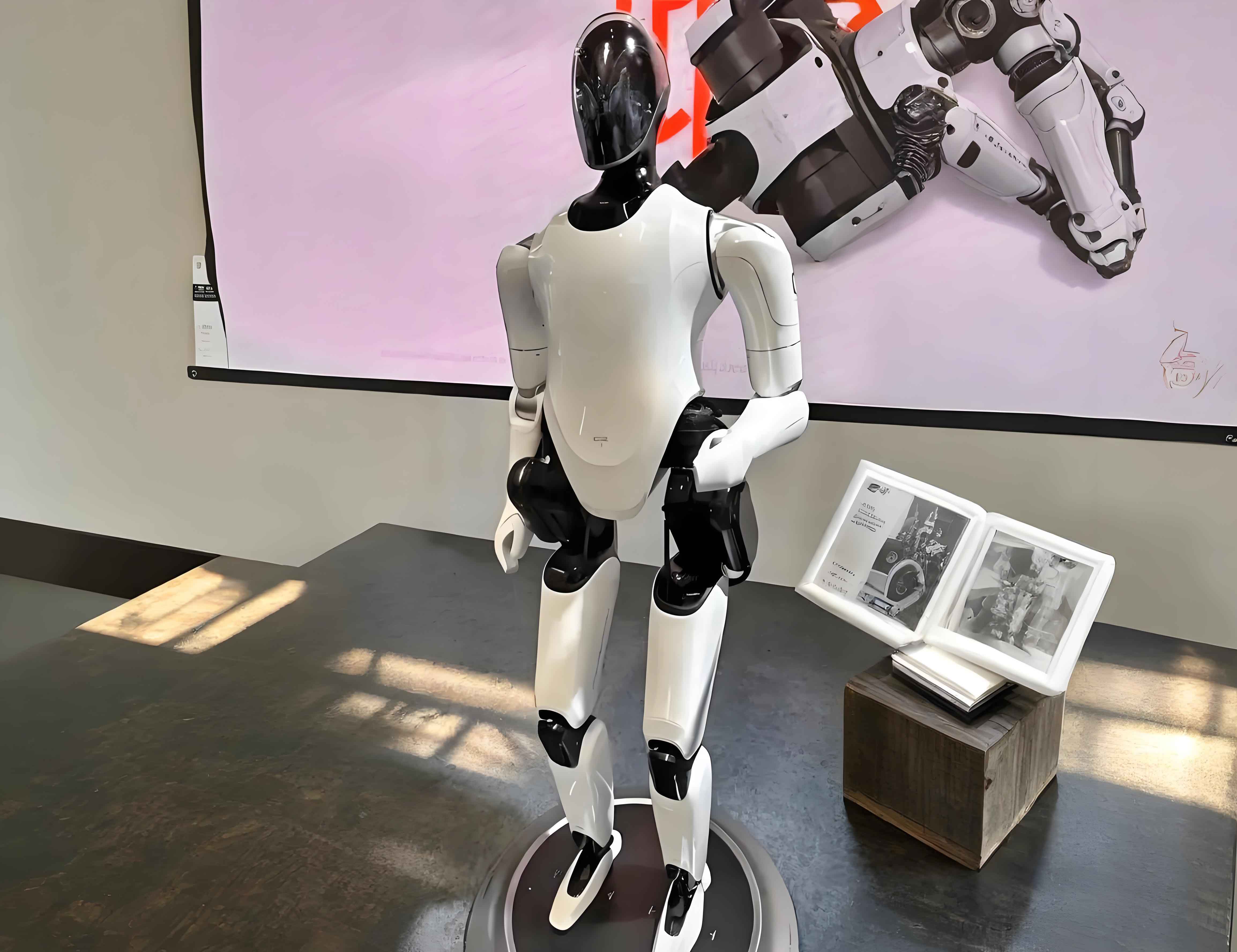
Currently, mining robot technology has entered the 2.0 development phase, with breakthroughs achieved in hardware aspects such as mechanical structure design, motion control systems, and basic perception modules. As mining intelligent construction deepens, it is crucial to address key technical challenges in multi-dimensional intelligent collaboration. These include multi-modal environmental perception and situational understanding, dynamic decision-making and autonomous planning, precise operational capabilities under complex working conditions, and adaptive mobility in unstructured scenes. Based on coal mine safety regulations, underground special conditions, and production process characteristics, I innovatively construct a technological architecture for mining embodied AI robots. This architecture consists of two main parts: the robot本体 system and the experimental support system. It transcends the simple perception-action mapping of traditional robots by integrating multi-modal perception data fusion, cognitive decision engines, and digital twin verification platforms. This forms a螺旋上升闭环 of physical space data collection, digital space model training, and physical space capability enhancement. The experimental support system provides continuously optimized algorithm models, scenario-specific knowledge bases, and safety verification for the robot本体. Data generated by the robot本体 in real scenarios feedback into the experimental system to refine training environments, ultimately enabling continuous evolution of embodied intelligence.
The mining embodied AI robot本体 system adopts a four-layer progressive technical architecture: perception-data-decision-execution. Through closed-loop feedback mechanisms, it achieves dynamic coupling of the perception-decision-execution chain, ensuring autonomous adaptability under extreme conditions like gas and dust. The perception layer uses heterogeneous multi-modal sensors for holistic perception of complex mining scenes, combining spatiotemporal synchronization and adaptive filtering algorithms for multi-source signal fusion to build high-confidence environmental representations. The data layer relies on边缘端本安算力 modules, employing lightweight data流 engines for毫秒级 real-time collection and preprocessing, with dynamic priority scheduling to ensure low-latency transmission of critical data. The intelligent decision layer, based on a类脑空间 architecture design, integrates spiking neural networks and deep reinforcement learning to construct a仿生 cognitive framework. It uses large model slicing techniques to tailor general foundation models into specialized inference units for mining scenarios, enabling端-云协同 hierarchical decision-making. The execution layer transforms decision commands into motion sequences via nonlinear model predictive control algorithms, combining impedance control and adaptive sliding mode strategies to enhance the robustness of robotic arms in unstructured environments.
The experimental support system employs a三位一体 technical architecture of data governance-simulation training-knowledge沉淀. It provides full-lifecycle capability evolution support for the robot本体, driven by三重迭代 of data-algorithm-knowledge to improve scene generalization and safety reliability. The data infrastructure layer builds a physical-virtual bidirectional mapping mining training field using digital twin technology, integrating high-precision motion capture devices and multi-physics simulation engines to generate comprehensive datasets covering geological structures, equipment interactions, and disaster evolution. The data governance layer defines standardized action templates for mining robot operations through standard behavior libraries, uses generative adversarial networks to augment长尾场景 data, and employs semi-supervised learning algorithms for automated cleaning and semantic labeling of multi-modal data. The training optimization layer deploys虚实融合 training platforms, using progressive and randomized strategies to enhance Sim-to-Real transfer efficiency, while constructing safety boundary constraint models for Monte Carlo risk verification of robot决策 strategies. The knowledge沉淀 layer mines process rules from historical operational data via graph neural networks, building domain knowledge graphs containing equipment parameters, geological features, and safety protocols, and designs meta-learning frameworks for online adaptive tuning of model parameters.
The robot本体 and experimental support systems form a协同进化 mechanism through bidirectional data flows. The experimental system optimizes simulation training environments using real-time operational data from the本体, while dynamically deploying enhanced decision models to the robot edge.异常工况 data generated during本体 execution trigger updates to the knowledge graph in the experimental system, enabling system-level capability leaps. This architecture addresses core challenges such as dynamic environmental perception, small-sample learning, and safe, trustworthy execution in mining embodied AI robots.
The task implementation under the mining embodied AI robot technological system is a complex systems engineering process involving multi-module collaboration and闭环迭代. It can be decomposed into dimensions such as perception and understanding, cognition and decision-making, operating systems, learning and adaptation, execution and control, digital twins and data management, hardware environments, and pilot validation. The perception and understanding module involves multi-modal data fusion for environmental perception, transforming physical world information into machine-understandable semantics and features to provide real-time, reliable perceptual inputs for upper-layer decision-making. This is the foundation for the “perception-decision-execution” closed loop of embodied intelligence. The cognition and decision-making module is a hierarchical behavior planning intelligent decision system, leveraging the knowledge reasoning and decision capabilities of large models to ensure task planning rationality and motion execution safety. The operating system serves as the resource scheduling hub for tools, operators, and models, enhancing协同 efficiency and scalability through standardized resource management. The learning and adaptation module is an intelligent iteration mechanism ensuring continuous robot evolution and adaptability to environmental changes and task variants. The execution and control module realizes precise translation of commands into actions, acting as the key link for implementing intelligent decisions into physical operations. The digital twin and data management module is the core carrier for system data闭环 and虚实映射. The hardware environment is the physical basis for robot “embodiment,” meeting special requirements like explosion-proof and intrinsic safety in mining scenes while providing computing power,动力, and communication support for perception, decision, and execution modules. The mining robot pilot platform is the validation scenario for technology落地, enabling systematic testing of hardware, algorithms, and software in real mining environments to complete the critical transition from laboratory to engineering, offering reliability and practicality verification for industrial application of mining embodied AI robots.
In embodied tasks for mining robots, the embodied AI agent must fully understand human intent in language instructions, actively explore the surrounding environment, comprehensively perceive multi-modal elements from virtual and physical environments, and execute appropriate operations to complete complex tasks. The deep integration of embodied AI with mining robots to achieve practical usability focuses on six directional tasks.
First, constructing the data system for mining embodied AI robots. Given the stringent requirements of complex underground conditions on perception and decision capabilities, a physical testing field must be built. This involves designing a basic verification field simulating standardized underground environments, integrating adjustable obstacle arrays and multi-spectral lighting systems to form a基础验证场域 covering typical operations like tunnel driving and equipment inspection. Modular design enables rapid重构 of tunnel cross-section sizes and slopes, supporting robot本体 kinematics parameter calibration. Synchronously, dedicated testing equipment for kinematics-dynamics acquisition systems is integrated, deploying optical motion capture systems and six-dimensional force sensor networks to construct a同步采集 architecture for joint space trajectories and end-effector forces. Inertial measurement units and motor current sensors are integrated to form a本体状态全息感知 matrix. A dynamic complex field with multi-terrain混合 scenes is developed, building an underground extreme condition simulation platform that integrates dynamic disturbances like模拟设备 vibration, personnel flow, and dust generation devices. Sudden task triggering mechanisms are set up to enable programmable reproduction of故障模式 such as sensor noise injection and communication link interruptions, verifying robot emergency response capabilities. After physical scene setup, data闭环 management is implemented to achieve collection-annotation-training-verification闭环. Through the hardware perception layer, a multi-modal data acquisition network is established, managing raw data via a three-dimensional标签体系 of geological conditions, equipment status, and task types. Lightweight preprocessing algorithms enable data compression and feature initial screening. A model training pipeline is constructed to support online incremental learning, and边缘计算 nodes are established for local data preprocessing.
Second, research on multi-modal environmental perception and multi-scene semantic understanding. To address issues of environmental perception failure and dynamic scene understanding不足 caused by恶劣工况 underground, a technical framework integrating multi-modal perception data and multi-level semantic parsing is搭建. A multi-modal environmental perception network is prioritized, using heterogeneous sensor data fusion. A spatiotemporal alignment architecture for视觉,音频, LiDAR, and gas sensors is designed to achieve point cloud semantic segmentation and 3D reconstruction of geological structures, extracting hazard features like tunnel cracks and water seepage.边缘端轻量化推理 engines are deployed to meet real-time response needs for predicting trends in tunnel deformation and gas concentration changes. A multi-scene semantic understanding mechanism is established, building a three-layer semantic关联体系 of perception data, environmental models, and operational tasks. The底层 uses self-supervised learning to map sensor raw data to physical parameters; the中层 models spatiotemporal relationships of tunnel topology and equipment distribution; the顶层 designs task-driven attention mechanisms for semantic parsing of typical operations like inspection, shotcreting, and搬运. A dynamic scene cognitive engine is搭建, developing a scene understanding module based on knowledge graphs that integrates environmental condition model libraries, equipment state推理 engines, and personnel behavior prediction models to achieve fusion decision-making from multi-source uncertain information.
Third, development of mining embodied AI agents. In高危, dynamic, unstructured mining environments, the behavior决策 of intelligent agents relies on algorithm models directly influenced by physical form and environmental dynamics. Developing mining embodied AI agents is key to transitioning intelligent robots from laboratory algorithms to practical use in complex scenes. Through虚实融合 training and本体-environment共进化 mechanisms, it addresses industry pain points like high实地测试 risks and weak algorithm generalization. There is an essential difference between mining embodied AI agents and traditional robot development. Traditional robot training paradigms often involve static dataset training and实地调参, relying on preset rules for fixed scenes. In contrast, embodied AI agents are based on high-fidelity virtual training environments, optimizing through the coupling system of body-environment-task to achieve终身学习 with bidirectional virtual-real interaction. They autonomously evolve dynamic environmental adaptation strategies through physical interaction, then replicate capabilities to实体机器人 via跨域迁移 technology, dynamically adapting to complex conditions.
Fourth, development of mining embodied simulation platforms. To address technical bottlenecks such as high实地测试 costs, long algorithm iteration cycles, and insufficient coverage of极端工况, a虚实融合 embodied AI simulation platform architecture is搭建. This enables closed-loop verification and rapid iteration of robot perception-decision-control algorithms, reducing real-scene testing risks and R&D cycles. High-precision virtual mining environment construction is performed through physical environment and equipment协同建模, including parametric modeling of tunnel topology, dynamic deformation simulation of geological bodies, and high-fidelity modeling of equipment and robots. For dynamic simulation of environmental elements, models like gas-dust耦合扩散, tunnel cross-section渐变, and seepage-water inflow dynamic processes are integrated. A multi-modal interaction simulation system is重点开发, establishing a hierarchical task scene体系. The基础场景层 covers常规作业 like fixed-site inspection, sump dredging, and tunnel shotcreting; the故障注入层 integrates typical equipment故障模式 like sensor failures and motor overloads; the应急场景层 constructs极端工况 like collapse burial and water inrush. Finally, a虚实融合 AI training architecture is搭建, designing virtual-real data mapping channels including state space alignment and action space calibration, and constructing distributed training platforms to support reinforcement learning model migration from simulation to real robots.
Fifth, research on embodied interaction implementation in mining scenes. To address core challenges like inefficient multi-robot collaboration, inflexible human-robot cooperation, and lagging emergency response, an embodied interaction solution integrating物理柔顺 interaction, multi-modal human-robot collaboration, and swarm intelligence is developed. This enables natural interaction and efficient collaboration between robots and complex mining environments, significantly enhancing operational safety and task execution efficiency. For interactions with unstructured objects like irregular ores and damp rock walls, where traditional rigid control易导致 contact力失控 or equipment damage, a physical interaction柔顺 control system is researched for operational robotic arms. Adaptive柔顺 operation algorithms based on impedance control are developed, building contact state recognition models to improve异常工况 prediction accuracy, reduce robotic arm operational energy consumption, and enhance safety and precision. For limitations of traditional interaction methods due to强噪声 and low illumination underground, and difficulties in achieving high-precision synchronization between physical space and digital twins, multi-modal human-robot interaction interfaces are researched, including mining-specific语音交互 systems and AR-assisted remote operation. Concurrently, digital twin-driven虚实交互 is tackled to achieve dynamic space mapping. For mining tasks requiring collaboration of multiple robots for inspection,辅助作业, and rescue, where traditional centralized scheduling is inefficient, distributed task allocation and dynamic协作 are studied. Mining tasks are deconstructed into subtasks, supporting dynamic combination and priority adjustment. Low-latency, high-reliability communication protocols are developed, deploying mobile边缘计算 nodes for local data packet processing to reduce core network load.
Sixth, research on virtual-to-real migration implementation in mining scenes. To address core challenges like significant domain differences between mining simulation and real scenes, high scene migration costs, and manual dependency for data annotation, a virtual-to-real migration solution integrating dynamic domain adaptation, progressive verification, and闭环 optimization is studied. By constructing跨域感知对齐 networks and self-evolving digital twin systems, efficient migration and continuous iteration of mining robot algorithms are achieved, reducing real-scene deployment costs and risks. Sim-to-Real domain adaptation technology is攻克 through virtual-real perception差异补偿, achieving跨域特征对齐, dynamic weight adjustment, and environmental disturbance injection. Based on迁移学习 frameworks, pre-training and parameter fine-tuning models are developed, using knowledge distillation to compress models for lightweight deployment. Mining tasks can be decomposed into independent modules like path planning, obstacle avoidance, and fine operation, with modular migration strategies designed to prioritize迁移已验证的功能 before extending to complex tasks. A digital twin闭环 optimization system is构建,搭建 bidirectional reinforcement learning frameworks to achieve虚实数据融合 and策略梯度修正. Environment evolution models are developed to dynamically update孪生体 parameters like environmental features, geological structures, and equipment wear based on real operational data.
As a case study of embodied AI plus mining fusion, consider the coal mine underground tunnel shotcreting robot. Addressing technical难点 like precise tunnel model measurement, adaptive nozzle end-effector trajectory planning, and real-time detection of shotcreting效果, the embodied AI characteristics of the shotcreting robot in perception, decision, and execution are analyzed. The development path and process innovation points for an embodied intelligent shotcreting robot are proposed, marking a leap from single-machine automation to system intelligence in coal mine robots and providing a technical paradigm reference for embodied intelligence in other mining辅助作业 robots.
In embodied intelligent特性设计 for the shotcreting robot, multi-dimensional technology integration achieves deep synergy between environmental perception and operational execution, enabling environmental self-adaptation, process self-optimization, and risk self-response to enhance precision and safety in深部开采 scenes. For本体设计, a hydraulically driven six-degree-of-freedom robotic arm is adopted, integrating high-precision angle/displacement sensors and end-effector pressure-flow monitoring modules to achieve motion trajectory control and real-time喷射参数 feedback. The传感系统 builds a multi-modal perception network, fusing LiDAR, ultrasonic ranging, and IMU data for autonomous tunnel positioning and dynamic obstacle avoidance. Combined with binocular vision and laser point cloud modeling, 3D geometric features of support areas are continuously updated. Simultaneously, multi-parameter sensors for methane, dust, temperature, and humidity are搭载 to构建 an environmental safety assessment system, providing real-time feedback on risk levels to trigger emergency shotcreting parameter adjustments. An autonomous decision and control architecture is designed,搭建 a hierarchical control framework: the perception layer implements dynamic mapping and pose estimation; the decision layer uses reinforcement learning-based path planning algorithms, optimizing喷射角度, distance, and movement speed based on tunnel geometry and shotcreting process requirements; the execution layer employs electro-hydraulic proportional closed-loop control to adjust hydraulic cylinder pressure and flow in real time, ensuring precise robotic arm motion trajectories.
The data-driven operational流程 of the shotcreting robot构建 a modeling-execution-evaluation闭环优化 system, technically realized in three协同 stages. Pre-operation, initial 3D reconstruction of the tunnel is completed via LiDAR, generating high-precision point cloud models automatically segmented into sprayable grid units. Based on deep learning models trained on historical operational data, parameters like rebound rate and thickness distribution are integrated to establish mapping relationships between slurry rheological properties and喷射压力, enabling pre-optimized configuration of process parameters. During operation, a multi-modal dynamic perception model is构建. When dust concentration exceeds thresholds, defogging processing and edge enhancement algorithms are triggered to ensure image recognition accuracy of visual systems in恶劣环境. Real-time point cloud registration compares tunnel surface morphology differences before and after shotcreting, driving online correction of喷射路径. Post-region shotcreting, secondary laser scanning generates thickness distribution heat maps to quantitatively evaluate key indicators like average thickness, uniformity coefficient, and material rebound rate. A digital twin mapping between operational parameters (pressure, speed, angle) and quality indicators is established, with现场数据 feedback to process models for iterative training, forming a continuous improvement闭环 of data collection-model optimization-execution verification.
Key core algorithms are攻克, such as underground tunnel wall perception fusion algorithms, online monitoring and anomaly diagnosis algorithms for shotcreting material composition based on multi-spectral sensing, and multi-modal sensor fusion construction quality dynamic evaluation algorithms面向喷射效率 and slurry consumption, meeting practical underground application needs of shotcreting robots. Process adaptability innovations are体现在 in two aspects. First, a layered喷射 strategy dynamically adjusts喷射层数 and interval times based on tunnel surrounding rock strength to reduce cracking risks. Second, an adaptive cleaning module automatically executes pipeline冲洗程序 using high-pressure water and compressed air via the robotic arm after shotcreting, preventing slurry solidification and blockage.
In summary, the coal mine embodied intelligent shotcreting robot addresses complex environment modeling challenges through multi-modal sensor fusion, achieves process self-adaptation via reinforcement learning and dynamic optimization algorithms, and establishes data-driven quality evaluation and strategy iteration mechanisms, serving as a典型范式 for融合 of embodied AI and mining embodied AI robots.
I systematically梳理 the technological system and industry upgrade path of mining robots driven by embodied intelligence, covering three main aspects. Technologically, mining robots have evolved from single-machine automation to embodied AI agents with perception-decision-execution closed loops. Key technologies like multi-modal data fusion and simulation training迁移 significantly enhance autonomy and reliability in complex conditions. In industry协同, the mining robot ecosystem needs to build a三位一体 support system of hardware processes-algorithm models-industry standards. Short-term, process adaptability challenges in scenes like shotcreting and搬运 must be攻克; long-term, generalization capability bottlenecks of embodied AI must be突破. In social value, cluster application of mining robots will drive industry evolution from humanized to unmanned to self-adaptive, providing systematic solutions to safety risks in高危作业 and labor shortages.
Current development of mining embodied AI still faces challenges from technical bottlenecks and application barriers. Technically, underground environmental characteristics显示了大模型训练精度,存在 data quality鸿沟; lack of virtual training environments restricts strategy migration效果, with significant simulation-reality differences. In application,跨领域协同不足 leads to many algorithm models failing to match actual process needs;标准体系缺位, with low coverage of standards for underground robot communication protocols and safety certification, hindering cross-vendor device interconnection and cluster collaboration.
Through systematic analysis of mining robot technology evolution paths, I predict a key inflection point in the 2.0 phase of coal mine robots within the next 3–5 years.面向矿山智能化升级需求, future research will展开 along three directions. Inspection robots will构建 a four-dimensional monitoring network of空-天-地-井;辅助作业 robots will form new embodied intelligent生产力;救援 robots will develop in clusters, achieving侦测-rescue bidirectional闭环. As embodied intelligence deeply couples with mining scenes, future mining robots will突破工具属性, and mining robot clusters will truly become “thinking steel miners,” inevitably propelling China’s mining intelligence into a new era of reduced-human, unmanned, and intrinsically safe operations.
The technological framework for mining embodied AI robots can be summarized with key formulas and tables. For instance, the perception layer fusion can be represented as:
$$ \mathbf{z}_t = f(\mathbf{s}_v, \mathbf{s}_l, \mathbf{s}_a; \theta_p) $$
where $\mathbf{z}_t$ is the fused perception state at time $t$, $\mathbf{s}_v$, $\mathbf{s}_l$, $\mathbf{s}_a$ are visual, LiDAR, and auditory sensor inputs, and $\theta_p$ are perception model parameters. The decision layer reinforcement learning value function is:
$$ V^\pi(s) = \mathbb{E}_\pi \left[ \sum_{k=0}^\infty \gamma^k r_{t+k} | s_t = s \right] $$
where $V^\pi(s)$ is the state-value function under policy $\pi$, $\gamma$ is the discount factor, and $r_t$ is the reward. The execution layer model predictive control minimizes:
$$ J = \sum_{k=0}^{N-1} \left( \mathbf{x}_{t+k|t}^T \mathbf{Q} \mathbf{x}_{t+k|t} + \mathbf{u}_{t+k|t}^T \mathbf{R} \mathbf{u}_{t+k|t} \right) $$
subject to dynamics $\mathbf{x}_{t+1} = g(\mathbf{x}_t, \mathbf{u}_t)$, with $\mathbf{Q}$ and $\mathbf{R}$ as weight matrices.
Table 1 summarizes the layered architecture of the mining embodied AI robot本体 system:
| Layer | Key Components | Functions |
|---|---|---|
| Perception | Heterogeneous sensors (视觉, LiDAR, audio, gas), spatiotemporal fusion algorithms | Holistic environmental perception, high-confidence representation |
| Data | Edge intrinsic-safe computing, lightweight data流 engines, dynamic scheduling | Millisecond real-time collection, preprocessing, low-latency transmission |
| Intelligent Decision | 类脑空间 architecture, spiking neural networks, deep reinforcement learning, large model slicing | Hierarchical decision-making, scenario-specific inference |
| Execution | Nonlinear model predictive control, impedance control, adaptive sliding mode | Motion sequence generation, robust operation in unstructured environments |
Table 2 outlines the six directional tasks for embodied AI plus mining fusion:
| Task Direction | Focus Areas | Expected Outcomes |
|---|---|---|
| Data System Construction | Physical testing fields, modular scene重构, data闭环 management | Standardized验证场域, real-time data pipelines for training |
| Multi-modal Perception & Semantic Understanding | Sensor fusion, edge推理, knowledge graph-based scene parsing | Dynamic environmental understanding, hazard feature extraction |
| Embodied AI Agent Development | 虚实融合 training, body-environment共进化,跨域迁移 | Autonomous adaptation strategies, reduced实地测试 risks |
| Simulation Platform Development | High-fidelity virtual environments, multi-physics simulation,故障注入 | Closed-loop algorithm verification, faster iteration cycles |
| Scene Interaction Implementation | 柔顺 control, multi-modal human-robot interaction, distributed协作 | Natural interaction, efficient multi-robot collaboration |
| Virtual-to-Real Migration | Domain adaptation, progressive validation, digital twin闭环优化 | Effective algorithm transfer, lower deployment costs |
For the shotcreting robot case, Table 3 lists key deployment elements for embodied intelligence:
| Element Type | Specific Instances | Role in Embodied AI |
|---|---|---|
| Image Data | High-resolution cameras for tunnel environment capture | 识别 structure, obstacles, spray areas; input for vision models |
| Point Cloud Data | LiDAR-generated 3D point clouds of tunnels | Precise environmental modeling, geometry feature extraction |
| Robot State Data | Joint positions,运动量,力传感器 readings | Real-time feedback for control, adaptation to contact forces |
| Process Logs | 作业日志 recording spray volume, rebound rate, time | Data for iterative learning and process optimization |
| Text Instructions | Operational commands from personnel | Enabling remote control and task scheduling via natural language |
The evolution of mining embodied AI robots hinges on continuous innovation in algorithms like multi-sensor fusion, expressed as:
$$ \hat{\mathbf{x}}_t = \arg \min_{\mathbf{x}} \sum_{i=1}^N w_i \| \mathbf{z}_t^i – h_i(\mathbf{x}) \|^2 $$
where $\hat{\mathbf{x}}_t$ is the estimated state, $\mathbf{z}_t^i$ are measurements from $N$ sensors, $h_i$ are observation models, and $w_i$ are adaptive weights. Reinforcement learning policies can be optimized via:
$$ \pi^* = \arg \max_\pi \mathbb{E}_{\tau \sim \pi} [R(\tau)] $$
with trajectory $\tau = (s_0, a_0, s_1, \dots)$ and return $R(\tau)$. These formulas underscore the mathematical foundation enabling embodied AI robots to learn and adapt in mining environments.
In conclusion, the integration of embodied AI into mining robotics represents a transformative shift toward autonomous, safe, and efficient operations. By advancing the technological system and implementation path detailed here, mining embodied AI robots will play a pivotal role in reshaping the industry’s future.