
As I reflect on the rapid advancements in robotics, I am struck by the profound parallels between teleoperation in space exploration and the evolution of humanoid robots on Earth. The delicate dance of remote control, exemplified by lunar sampling missions, mirrors the intricate balance and mobility sought in humanoid robot design. In this article, I will delve into these themes, exploring how precision engineering and innovative algorithms are shaping the future of robotics, with a particular focus on the humanoid robot as a cornerstone of this progress.
The concept of teleoperation, akin to a sophisticated “claw machine” game, has been demonstrated with remarkable success in extraterrestrial environments. Operating from a distance of 380,000 kilometers, engineers achieve millimeter-level accuracy in manipulating sampling tools on the Moon. This feat is not merely technological; it is a testament to human ingenuity and rigorous preparation. Through countless ground-based simulations, teams hone their skills, ensuring that every movement is precise and every action deliberate. The stakes are high—a slip could mean the loss of valuable samples—but the reward is a deeper understanding of our celestial neighbor.
Similarly, the development of humanoid robots represents a quest to replicate human locomotion and interaction. A recent breakthrough involves a humanoid robot capable of walking at unprecedented speeds on challenging terrain. This humanoid robot, standing 142 centimeters tall and weighing 38.5 kilograms, utilizes advanced stability mechanisms to maintain balance even when subjected to external pushes. Its walking speed of 2.1 meters per second sets a new benchmark, showcasing how humanoid robots are evolving from static prototypes to dynamic agents capable of navigating real-world environments.
| Humanoid Robot Model | Height (cm) | Weight (kg) | Max Walking Speed (m/s) | Terrain Adaptation | Stability Features |
|---|---|---|---|---|---|
| Advanced Research Humanoid | 142 | 38.5 | 2.1 | Rugged, uneven surfaces | Active disturbance rejection, robust control |
| Standard Bipedal Platform | 150 | 55 | 1.5 | Flat ground | Basic balance algorithms |
| Agile Humanoid Prototype | 130 | 40 | 1.8 | Moderate slopes | Reinforcement learning-based adaptation |
| Social Interaction Humanoid | 120 | 30 | 0.5 | Indoor environments | Emphasis on safe, slow movement |
The stability of a humanoid robot is often governed by control theories that ensure it remains upright under various conditions. One fundamental approach is the Proportional-Integral-Derivative (PID) controller, which adjusts the robot’s actuators based on error signals. Mathematically, this can be expressed as:
$$ u(t) = K_p e(t) + K_i \int_0^t e(\tau) d\tau + K_d \frac{de(t)}{dt} $$
Here, \( u(t) \) represents the control output, \( e(t) \) is the error between desired and actual states, and \( K_p \), \( K_i \), and \( K_d \) are tuning parameters. For a humanoid robot, this controller helps maintain balance by continuously correcting deviations, such as those caused by uneven ground or external forces.
Walking speed in a humanoid robot is a function of stride dynamics. The average velocity \( v \) can be modeled simply as:
$$ v = f \times L $$
where \( f \) denotes step frequency and \( L \) is stride length. For instance, with a stride length of 0.5 meters and a frequency of 4.2 steps per second, a humanoid robot achieves 2.1 meters per second. Optimizing these parameters involves trade-offs between stability, energy efficiency, and terrain adaptability, which are central to humanoid robot design.
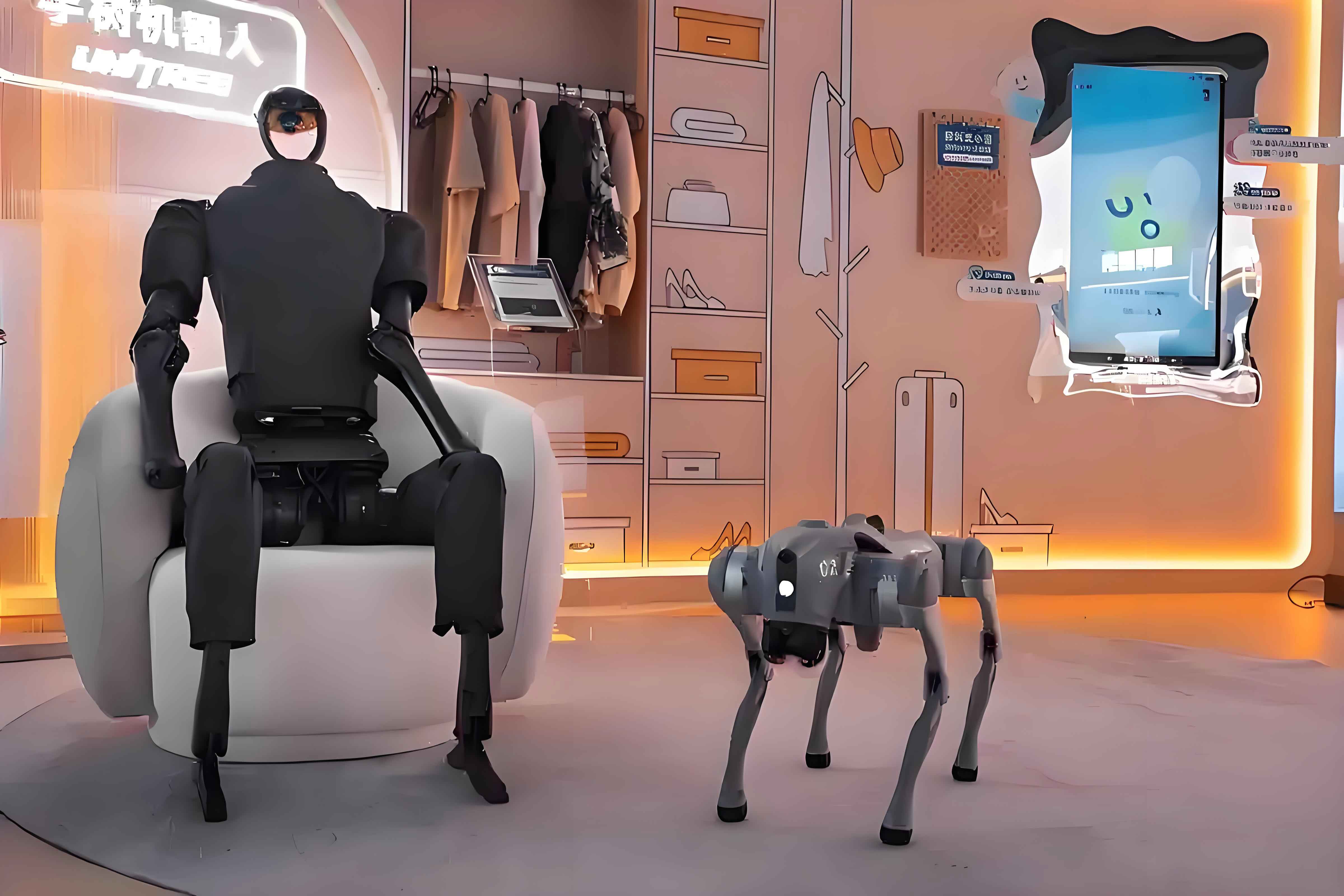
The image above illustrates the diversity in robotic forms, highlighting humanoid robots alongside other biomimetic designs. This visual emphasizes the ongoing research into creating machines that can seamlessly integrate into human-centric spaces, a key goal for the humanoid robot paradigm.
Teleoperation precision, as seen in lunar missions, relies on sophisticated feedback systems. The challenge of latency—the delay between command and execution—is mitigated through predictive algorithms. In controlling a humanoid robot remotely, similar techniques are employed. For example, model predictive control (MPC) optimizes future actions based on a dynamic model:
$$ \min_{\mathbf{u}} \sum_{k=0}^{N-1} \left( \| \mathbf{x}_{k+1} – \mathbf{x}_{ref} \|^2_{\mathbf{Q}} + \| \mathbf{u}_k \|^2_{\mathbf{R}} \right) $$
subject to \( \mathbf{x}_{k+1} = f(\mathbf{x}_k, \mathbf{u}_k) \), where \( \mathbf{x} \) is the state vector, \( \mathbf{u} \) is the control input, and \( \mathbf{Q} \) and \( \mathbf{R} \) are weighting matrices. This allows a humanoid robot to anticipate movements and adjust in real-time, even with communication delays.
| Application | Operating Distance | Precision Requirement | Key Technologies | Humanoid Robot Relevance |
|---|---|---|---|---|
| Lunar Surface Sampling | 380,000 km | 1 mm | Predictive displays, haptic feedback | Inspires remote manipulation for humanoid robots in space |
| Minimally Invasive Surgery | Local (within room) | Sub-millimeter | Force sensors, real-time imaging | Humanoid robot hands with delicate grip capabilities |
| Disaster Response Robotics | Up to 1 km | Centimeter | Autonomous navigation, sensor fusion | Humanoid robots navigating rubble for search and rescue |
| Industrial Assembly | On-site | Millimeter | Repeatable trajectories, vision systems | Humanoid robots performing complex manual tasks |
As I consider the future, the question of whether humanoid robots will communicate like humans looms large. Advances in artificial intelligence are paving the way for natural interactions. A humanoid robot equipped with natural language processing (NLP) can engage in dialogues using models like transformers. The attention mechanism, crucial for context understanding, is given by:
$$ \text{Attention}(Q, K, V) = \text{softmax}\left( \frac{QK^T}{\sqrt{d_k}} \right) V $$
where \( Q \), \( K \), and \( V \) are matrices derived from input sequences. This enables a humanoid robot to process language in a human-like manner, potentially leading to seamless communication.
Moreover, emotional intelligence in humanoid robots can be developed through affective computing. By analyzing facial expressions or vocal tones, a humanoid robot can recognize emotions and respond appropriately. Pattern classification algorithms, such as support vector machines (SVM), facilitate this:
$$ f(\mathbf{x}) = \text{sgn} \left( \sum_{i=1}^n \alpha_i y_i K(\mathbf{x}_i, \mathbf{x}) + b \right) $$
Here, \( K(\cdot, \cdot) \) is a kernel function, \( \alpha_i \) are Lagrange multipliers, and \( \mathbf{x} \) represents feature vectors. Integrating such capabilities makes the humanoid robot more adaptable and relatable in social settings.
The mechanical design of a humanoid robot involves intricate kinematics and dynamics. The motion of limbs can be described using the Denavit-Hartenberg parameters, with forward kinematics for a serial chain expressed as:
$$ \mathbf{T}_n^0 = \prod_{i=1}^n \mathbf{A}_i $$
where \( \mathbf{A}_i \) are homogeneous transformation matrices for each joint. For a humanoid robot, this framework allows precise control of end-effector positions, essential for tasks like grasping objects during teleoperation.
Energy efficiency is another critical aspect. The specific resistance \( \epsilon \), a dimensionless measure of locomotion cost, is defined as:
$$ \epsilon = \frac{P}{mgv} $$
with \( P \) as power consumption, \( m \) as mass, \( g \) as gravitational acceleration, and \( v \) as speed. Minimizing \( \epsilon \) is vital for extending the operational duration of a humanoid robot, especially in field applications.
| Joint Type | Typical Range (degrees) | Peak Torque (Nm) | Actuator Technology | Application in Humanoid Robot |
|---|---|---|---|---|
| Hip Flexion/Extension | -120 to 120 | 180 | Brushless DC motor with harmonic drive | Provides leg swing and balance adjustment |
| Knee Flexion/Extension | 0 to 140 | 220 | Series elastic actuator | Absorbs impacts during walking |
| Ankle Dorsiflexion/Plantarflexion | -45 to 45 | 120 | Magnetic gear motor | Fine-tunes foot placement for stability |
| Shoulder Rotation | -90 to 90 | 100 | Direct drive motor | Enables arm manipulation for teleoperation tasks |
Stability during bipedal walking is often analyzed using the Zero Moment Point (ZMP) criterion. For a humanoid robot, the ZMP must remain within the support polygon to prevent tipping. The ZMP coordinates \( (x_{zmp}, y_{zmp}) \) can be computed as:
$$ x_{zmp} = \frac{\sum_i m_i (z_i \ddot{x}_i – x_i \ddot{z}_i) + Mg x_{com}}{\sum_i m_i \ddot{z}_i + Mg} $$
$$ y_{zmp} = \frac{\sum_i m_i (z_i \ddot{y}_i – y_i \ddot{z}_i) + Mg y_{com}}{\sum_i m_i \ddot{z}_i + Mg} $$
where \( m_i \) are point masses, \( (x_i, y_i, z_i) \) their positions, \( M \) total mass, and \( (x_{com}, y_{com}) \) the center of mass. This principle guides the gait generation for a humanoid robot, ensuring dynamic stability.
Reinforcement learning (RL) is increasingly used to train humanoid robots for complex behaviors. The objective is to learn a policy \( \pi(\mathbf{a} | \mathbf{s}) \) that maximizes expected cumulative reward:
$$ J(\pi) = \mathbb{E}_{\tau \sim \pi} \left[ \sum_{t=0}^{\infty} \gamma^t r(\mathbf{s}_t, \mathbf{a}_t) \right] $$
Here, \( \tau \) denotes trajectories, \( \gamma \in [0,1] \) is a discount factor, and \( r \) is the reward function. Through simulation and real-world trials, a humanoid robot can learn to walk on varied terrains or perform dexterous tasks autonomously.
In teleoperation, bilateral control schemes enhance operator immersion. The force reflection can be modeled using impedance matching:
$$ F_m = Z_m \dot{x}_m – Z_s \dot{x}_s $$
where \( F_m \) is the force felt by the operator, \( Z_m \) and \( Z_s \) are impedance parameters, and \( \dot{x}_m \), \( \dot{x}_s \) are velocities of master and slave devices. This allows an operator to “feel” the environment through a humanoid robot, crucial for delicate manipulations like lunar sampling.
Looking ahead, the integration of sensor fusion in humanoid robots will enable richer perception. Combining data from cameras, lidar, and inertial measurement units (IMUs) improves localization and obstacle avoidance. The Kalman filter, a common fusion algorithm, updates state estimates via:
$$ \hat{\mathbf{x}}_{k|k} = \hat{\mathbf{x}}_{k|k-1} + \mathbf{K}_k (\mathbf{z}_k – \mathbf{H}_k \hat{\mathbf{x}}_{k|k-1}) $$
with \( \mathbf{K}_k \) as the Kalman gain. For a humanoid robot, this results in smoother and more accurate movements, essential for navigating unpredictable environments.
| Modality | Technology Enablers | Bandwidth Requirements | Humanoid Robot Implementation Challenges | Potential Impact |
|---|---|---|---|---|
| Speech Recognition | Deep neural networks, microphone arrays | Low to moderate | Noise robustness, real-time processing | Enables natural dialogue with humanoid robot |
| Gesture Understanding | Computer vision, skeletal tracking | High (video feed) | Latency, occlusion handling | Allows non-verbal communication with humanoid robot |
| Haptic Feedback | Force-torque sensors, vibrotactile actuators | Moderate | Hardware integration, safety | Enhances teleoperation realism for humanoid robot |
| Emotional Expression | LED displays, servo-driven faces | Low | Anthropomorphism, user acceptance | Makes humanoid robot more engaging and trustworthy |
The dynamics of a humanoid robot can also be analyzed using the Lagrangian approach. For a system with generalized coordinates \( \mathbf{q} \), the equations of motion are:
$$ \frac{d}{dt} \left( \frac{\partial L}{\partial \dot{\mathbf{q}}} \right) – \frac{\partial L}{\partial \mathbf{q}} = \boldsymbol{\tau} $$
where \( L = T – V \) is the Lagrangian, \( T \) is kinetic energy, \( V \) is potential energy, and \( \boldsymbol{\tau} \) represents generalized forces. This formulation aids in simulating complex movements for a humanoid robot, from walking to jumping.
Energy storage and management are pivotal for untethered humanoid robots. The power consumption \( P \) during walking can be approximated as:
$$ P = \sum_j \tau_j \dot{\theta}_j + P_{\text{electronics}} $$
where \( \tau_j \) and \( \dot{\theta}_j \) are torque and angular velocity at joint \( j \). Optimizing this through efficient actuators and control strategies prolongs battery life, making the humanoid robot more practical for extended missions.
In terms of societal impact, the deployment of humanoid robots raises ethical considerations. As these machines become more capable, issues such as job displacement, privacy, and autonomy must be addressed. Developing frameworks for responsible innovation ensures that the humanoid robot serves as a tool for human enhancement rather than a source of conflict.
To summarize, the journey from precise teleoperation on the Moon to agile humanoid robots on Earth underscores a relentless pursuit of technological excellence. Through tables, formulas, and personal reflection, I have explored how humanoid robots are evolving, driven by advances in control theory, artificial intelligence, and mechanical design. The humanoid robot, once a visionary concept, is now a tangible reality with the potential to revolutionize industries, aid in exploration, and perhaps one day, communicate with us as equals. As research continues, the synergy between human intuition and robotic precision will undoubtedly yield even more remarkable achievements, solidifying the humanoid robot’s role in our future.