
As a professional deeply involved in advanced manufacturing, I have witnessed the rapid evolution of humanoid robots from conceptual prototypes to pivotal elements in modern industry. The year 2025 marked a turning point where humanoid robots emerged as strategic assets, celebrated for their human-like morphology and exceptional adaptability in complex environments. This surge has ignited a global industrial race, with numerous enterprises investing heavily in research and development. However, the true cornerstone of this revolution lies not merely in algorithmic prowess but in the physical embodiment of these machines—specifically, the manufacturing of high-precision, high-reliability components that form their core structure. From agile joints and dexterous hands to robust skeletal frames, every motion and感知 of a humanoid robot hinges on micron-level accuracy in parts such as精密 gears, planetary roller screws, and intricate sensor housings. In my work, I have come to understand that achieving this precision is fundamentally dependent on breakthroughs in machining equipment and processes, including multi-axis centers, ultra-precision lathes, and cutting-edge tooling. This article, drawn from my firsthand experience, delves into the manufacturing technologies and equipment essential for humanoid robot components, emphasizing how innovations in these areas address critical challenges in accuracy, stiffness, and consistency.
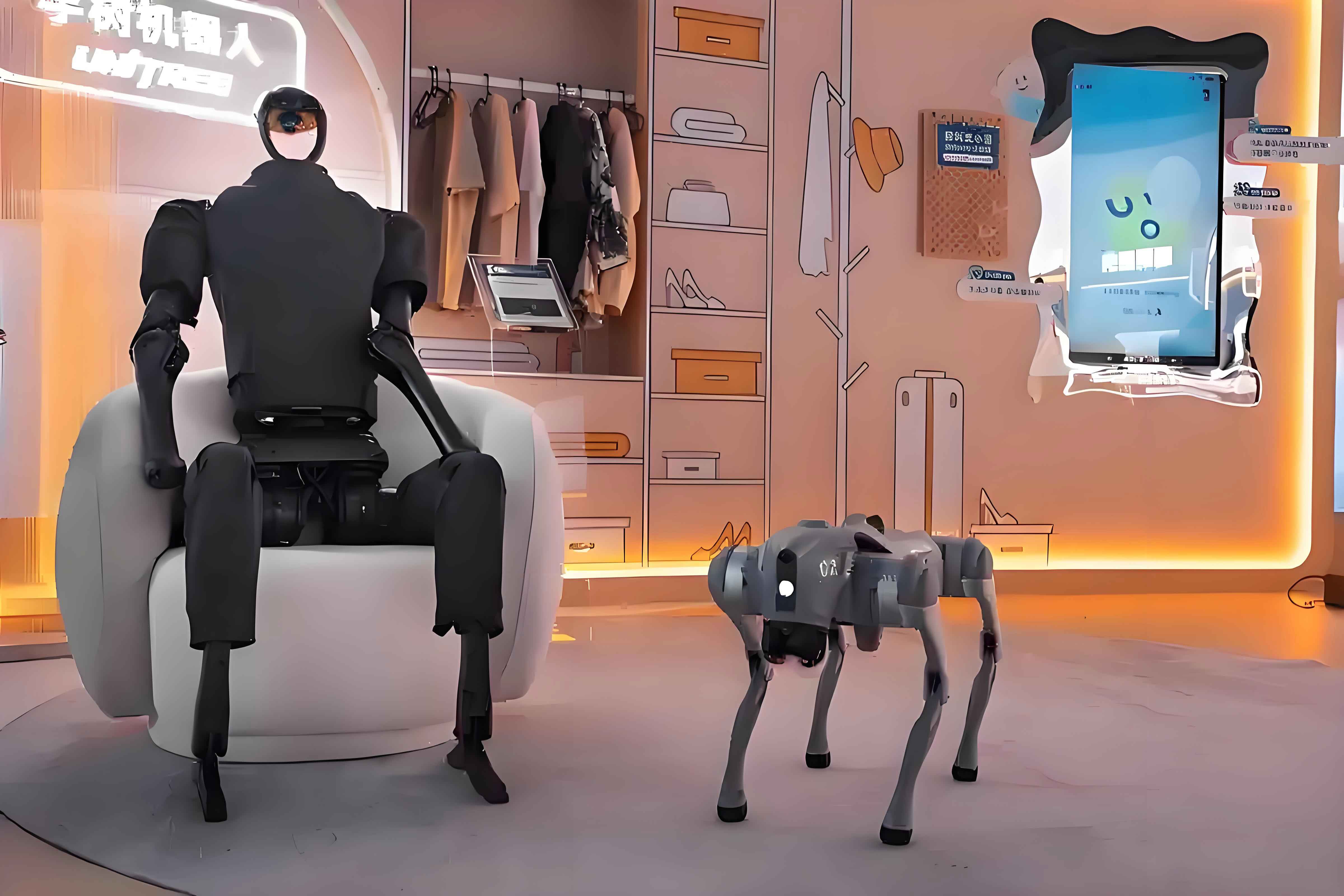
The journey toward reliable humanoid robots begins with the fabrication of key structural and actuation parts. These components often feature complex geometries—multi-faceted contours, deep cavities, and thin-walled sections—that demand simultaneous multi-axis machining to maintain tight tolerances. In my practice, I have utilized five-axis machining centers to tackle these challenges. For instance, when producing joint modules for humanoid robots,公差 requirements can be as stringent as 0.02 to 0.03 mm, roughly one-third the diameter of a human hair. Traditional three-axis machines fall short here due to their limited flexibility and longer processing times. Through my involvement, I have seen how advanced five-axis systems, with their high-rigidity gantry structures and precision rotary tables, enable stable micron-level output. One notable application involved machining complex cavity parts for overseas orders; switching from three-axis to five-axis machining reduced processing time from 24 hours per piece to 10.5 hours, boosting efficiency by over 50% while achieving a 100%合格 rate. This efficiency gain is crucial for scaling production of humanoid robot parts, where consistency across batches is paramount. The table below summarizes a comparison between traditional and five-axis machining for typical humanoid robot components.
| Parameter | Traditional Three-Axis Machining | Advanced Five-Axis Machining |
|---|---|---|
| Tolerance Achievement | 0.05 mm or higher | 0.02–0.03 mm (micron-level) |
| Processing Time for Complex Parts | 24 hours per piece (example) | 10.5 hours per piece (example) |
| Setup Reduction | Multiple fixtures required | Reduced to 2–3 setups |
| Equipment Efficiency | Lower, requires more machines | Higher, 1–2 machines replace 7传统 units |
| Applicability to Humanoid Robot Parts | Limited for intricate geometries | Full coverage of joints, hands, frames |
Beyond time savings, the stability of these machining centers is vital. In my experience,本地化 services and rapid deployment—such as achieving operational status within a day of installation—significantly shorten调试 cycles compared to imported equipment, which can take weeks. This agility allows manufacturers to quickly adapt to the dynamic demands of the humanoid robot industry. As production scales, the integration of multiple five-axis models has enabled comprehensive machining of entire humanoid robot series, with orders for these robots now constituting up to 50% of output in some facilities I have worked with. The mathematical relationship for precision in such machining can be expressed in terms of error accumulation. For a multi-axis system, the overall positioning error \( E_{\text{total}} \) is given by:
$$ E_{\text{total}} = \sqrt{ \sum_{i=1}^{n} (E_{\text{axis}_i})^2 } $$
where \( E_{\text{axis}_i} \) represents the error contribution from each axis. In high-precision五轴 machines, each axis is calibrated to minimize \( E_{\text{axis}_i} \), often achieving values below 1 µm, thereby ensuring \( E_{\text{total}} \) remains within the required tolerances for humanoid robot parts. This precision is critical for components like actuator housings, where misalignment can impair the performance of the entire humanoid robot.
Another cornerstone in manufacturing for humanoid robots is the production of planetary roller screws, which serve as superior alternatives to ball screws in high-load, high-precision applications. These screws are essential for motion control in humanoid robots, enabling both delicate finger movements and powerful manipulations. However, their manufacturing presents one of the most daunting challenges in precision engineering. To achieve lead errors of ≤5 µm, machining equipment must exhibit exceptional rigidity and process stability. In my work, I have turned to hard turning technologies as an efficient solution. Traditional grinding methods, while accurate, can be slow and less flexible. Hard turning, when performed on ultra-precision lathes, offers a compelling combination of speed and accuracy. For example, material removal rates can be up to 25 times higher than older generations, with efficiency improvements of 3–5 times while consistently meeting IT1–IT3 accuracy grades. This is particularly beneficial for humanoid robot applications, where批量 production of planetary roller screws is needed to meet growing demand.
The success of hard turning hinges on machine design. From my observations,全静压 spindle and guideway systems are key, providing near-zero backlash and superior damping characteristics. These features allow for重复定位精度 of 0.2 µm and spindle runout below 0.1 µm, enabling single-setup machining of complex螺纹 profiles to micron-level precision. The formula for lead error \( \Delta L \) in planetary roller screw manufacturing can be modeled as:
$$ \Delta L = k \cdot \frac{F_{\text{cut}}}{K_{\text{rigidity}}} + \epsilon_{\text{thermal}} $$
where \( k \) is a process constant, \( F_{\text{cut}} \) is the cutting force, \( K_{\text{rigidity}} \) is the machine rigidity, and \( \epsilon_{\text{thermal}} \) accounts for thermal drift. By maximizing \( K_{\text{rigidity}} \) through advanced designs,硬车削 machines minimize \( \Delta L \), ensuring compliance with the strict tolerances required for humanoid robot actuators. The table below outlines key parameters in planetary roller screw manufacturing via hard turning.
| Parameter | Typical Value/Requirement | Impact on Humanoid Robot Performance |
|---|---|---|
| Lead Error Tolerance | ≤5 µm | Ensures precise motion control in joints |
| Material Removal Rate | Up to 25× higher than legacy grinding | Reduces production time for screws |
| Machine Rigidity (K_{\text{rigidity}}) | Extremely high (静压 design) | Minimizes deflection during cutting |
| Surface Finish | Ra < 0.1 µm | Enhances durability and smooth operation |
| Single-Setup Accuracy | IT1–IT3 grade achievable | Eliminates realignment errors in assembly |
In addition to machining centers and lathes, cutting tools play a pivotal role in the manufacturing ecosystem for humanoid robots. I have worked extensively with advanced tooling solutions that cater to the small-part turning needs of components like细长轴 and精密 housings. Historically, foreign brands dominated this niche, but recent innovations have localized high-performance options. For instance, three-dimensional chipbreaker series have emerged, offering tailored geometries for different materials and operations. In my applications, the QF chipbreaker design, with its curved cutting edge extending to the tool tip, provides an optimal balance of sharpness and edge strength, making it ideal for high-surface-quality finishing on steel and stainless steel parts used in humanoid robot joints. Similarly, the QS chipbreaker addresses微参数加工 challenges in slender shafts—common in robotic fingers—through a specialized tip design that prevents chip entanglement. These tools are coated with advanced PVD layers, such as YNT251D with a metallic-ceramic coating for steel and YBG205H with a supercrystalline nanocomposite for stainless steel, both delivering international-grade performance.
The effectiveness of these tools can be quantified through tool life and surface integrity metrics. For example, tool wear \( W \) over time \( t \) in small-part turning for humanoid robot components can be approximated by:
$$ W(t) = C \cdot v_c^\alpha \cdot f^\beta \cdot a_p^\gamma \cdot t^\delta $$
where \( C \) is a material constant, \( v_c \) is cutting speed, \( f \) is feed rate, \( a_p \) is depth of cut, and \( \alpha, \beta, \gamma, \delta \) are exponents derived from empirical data. By optimizing这些 parameters with advanced tool geometries and coatings, tool life is extended, reducing downtime and cost—a critical factor in scaling humanoid robot production. The table below summarizes the applications of different tool series in humanoid robot manufacturing.
| Tool Series | Chipbreaker Design | Primary Applications in Humanoid Robots | Key Advantages |
|---|---|---|---|
| QF Series | Three-dimensional, curved edge | High-surface finishing on joint housings, actuator parts | Combines sharpness and strength for Ra < 0.2 µm |
| QS Series | Specialized tip for微参数 | Slender shafts in fingers, sensor mounts | Prevents chip issues in微小 parameter machining |
| QL Series | Large rake angle, open design | Efficient精加工 of steel/stainless steel frames | High material removal with fine finish |
Beyond these core technologies, the manufacturing of humanoid robot parts involves holistic considerations such as material selection, heat treatment, and metrology. In my projects, I have often collaborated with材料 scientists to choose alloys that offer high strength-to-weight ratios—essential for the轻量化 yet durable structures of humanoid robots. For example, aluminum alloys and titanium are frequently used for skeletal components, while tool steels are employed for high-wear parts like gears. Heat treatment processes, such as carburizing or nitriding, are applied to enhance surface hardness and fatigue resistance, critical for长期 reliability in dynamic humanoid robot applications. The relationship between material properties and machining parameters is complex; for instance, the cutting force \( F_c \) when machining a given material can be estimated using the Merchant equation variant:
$$ F_c = k_s \cdot A_c \cdot \left( \frac{\cos(\beta – \alpha)}{\sin \phi \cos(\phi + \beta – \alpha)} \right) $$
where \( k_s \) is the specific cutting pressure, \( A_c \) is the cross-sectional area of cut, \( \alpha \) is the rake angle, \( \beta \) is the friction angle, and \( \phi \) is the shear angle. Optimizing these variables through实验 design ensures efficient machining without compromising the integrity of humanoid robot parts.
Metrology is another cornerstone in my experience. To verify the micron-level tolerances of humanoid robot components, I rely on coordinate measuring machines (CMMs) and optical scanners. Statistical process control (SPC) is implemented to monitor consistency across production runs. For example, the capability index \( C_{pk} \) is used to assess how well a process meets specifications:
$$ C_{pk} = \min \left( \frac{\text{USL} – \mu}{3\sigma}, \frac{\mu – \text{LSL}}{3\sigma} \right) $$
where USL and LSL are the upper and lower specification limits, \( \mu \) is the process mean, and \( \sigma \) is the standard deviation. For humanoid robot parts, target \( C_{pk} \) values often exceed 1.67, indicating high process capability and minimal defect risk. This rigorous approach is vital for ensuring that every planetary roller screw or joint housing performs flawlessly in the final humanoid robot assembly.
Looking ahead, the future of humanoid robot manufacturing hinges on further advancements in digital integration and sustainability. From my perspective, the adoption of工业物联网 (IIoT) and artificial intelligence (AI) in machining environments is accelerating. Smart machines equipped with sensors can predict tool wear, adjust parameters in real-time, and optimize energy consumption—all contributing to more efficient production of humanoid robot parts. Additionally, additive manufacturing (3D printing) is emerging as a complementary technology for complex, low-volume components, though subtractive methods like五轴 machining and hard turning remain dominant for high-precision, high-volume needs. The convergence of these technologies will enable even greater customization and scalability for humanoid robots, paving the way for their widespread deployment in healthcare, logistics, and domestic services.
In conclusion, the realization of advanced humanoid robots is intrinsically tied to the prowess of manufacturing technologies. As I have detailed, five-axis machining centers, ultra-precision hard turning lathes, and innovative cutting tools form the backbone of precision component production. Each breakthrough in these areas—whether in rigidity, accuracy, or efficiency—directly translates to enhanced performance and reliability in humanoid robots. The journey from design to physical embodiment is fraught with challenges, but through continuous innovation in equipment and processes, we are steadily overcoming them. The humanoid robot revolution is not just a tale of software and algorithms; it is a testament to the silent, relentless progress in manufacturing that shapes our physical world. By embracing these advancements, we can look forward to a future where humanoid robots seamlessly integrate into society, driven by the精密制造 that赋予 them life.