
The integration of artificial intelligence (AI) with robotics heralds the dawn of the embodied intelligence era. Among these advancements, the humanoid robot stands out as a pivotal innovation. Characterized by its anthropomorphic form and bipedal locomotion, the humanoid robot is designed to operate in human-centric environments, using human tools and engaging in natural social interaction. Its potential to revolutionize sectors from healthcare and domestic service to education and entertainment is immense. Global market projections reflect this optimism, with expectations of exponential growth. However, this technological promise is inextricably linked with profound legal and ethical challenges. The very features that make humanoid robots effective—their human-like appearance and growing behavioral autonomy—create unique risks, leading to what scholars term the “autonomy-safety paradox” and the “anthropomorphism trap.” As these entities transition from controlled industrial settings into daily life, interacting with non-professional users, the inadequacy of traditional tort and product liability frameworks becomes glaringly apparent. This article argues that existing legal metaphors and singular liability models are insufficient. Through an analysis of the humanoid robot’s technical facts and a critical review of comparative governance paradigms, it proposes a foundational framework for a chain liability model tailored to this emerging digital technology.
The Core Challenge: Autonomy, Anthropomorphism, and the Liability Gap
The central legal dilemma posed by the humanoid robot stems from its capacity for autonomous action within a human-like form factor. Autonomy here refers to the machine’s ability to perform tasks and make decisions based on sensor data, pre-programmed rules, and learned experiences from its environment, with minimal real-time human intervention. This capability is purely technological, a function of sophisticated algorithms, sensor fusion, and machine learning models. Yet, as autonomy increases, so does the complexity of predicting and controlling the robot’s behavior. The “autonomy-safety paradox” describes the counterintuitive reality that enhanced capability can lead to greater, and more opaque, risk. Concurrently, the “anthropomorphism trap” refers to the human psychological tendency to attribute human traits, emotions, and intentions to the humanoid robot due to its form and interactive behaviors. This can lead users to over-trust the system, lower their guard regarding privacy, and emotionally engage in ways that blur the line between tool and social agent.
Traditional liability doctrines struggle in this new landscape. Product defect liability requires identifying a flaw in design, manufacture, or warnings at the time of sale. However, a humanoid robot’s behavior may evolve post-deployment through learning, or a harmful outcome may arise from a complex, non-reproducible interaction between its algorithms and a unique environment—a scenario not easily classifiable as a “defect.” Vicarious liability, which holds a principal accountable for the actions of an agent (like a child or employee), presupposes a relationship of control that may be absent or diluted with a highly autonomous machine. The resulting uncertainty—where damage occurs but no clear, legally recognized responsible party exists—is known as the “responsibility gap.” This gap undermines legal redress for victims and creates regulatory uncertainty that can stifle innovation. Therefore, constructing a coherent liability system is not merely an academic exercise but a prerequisite for the sustainable and trusted integration of humanoid robots into society.
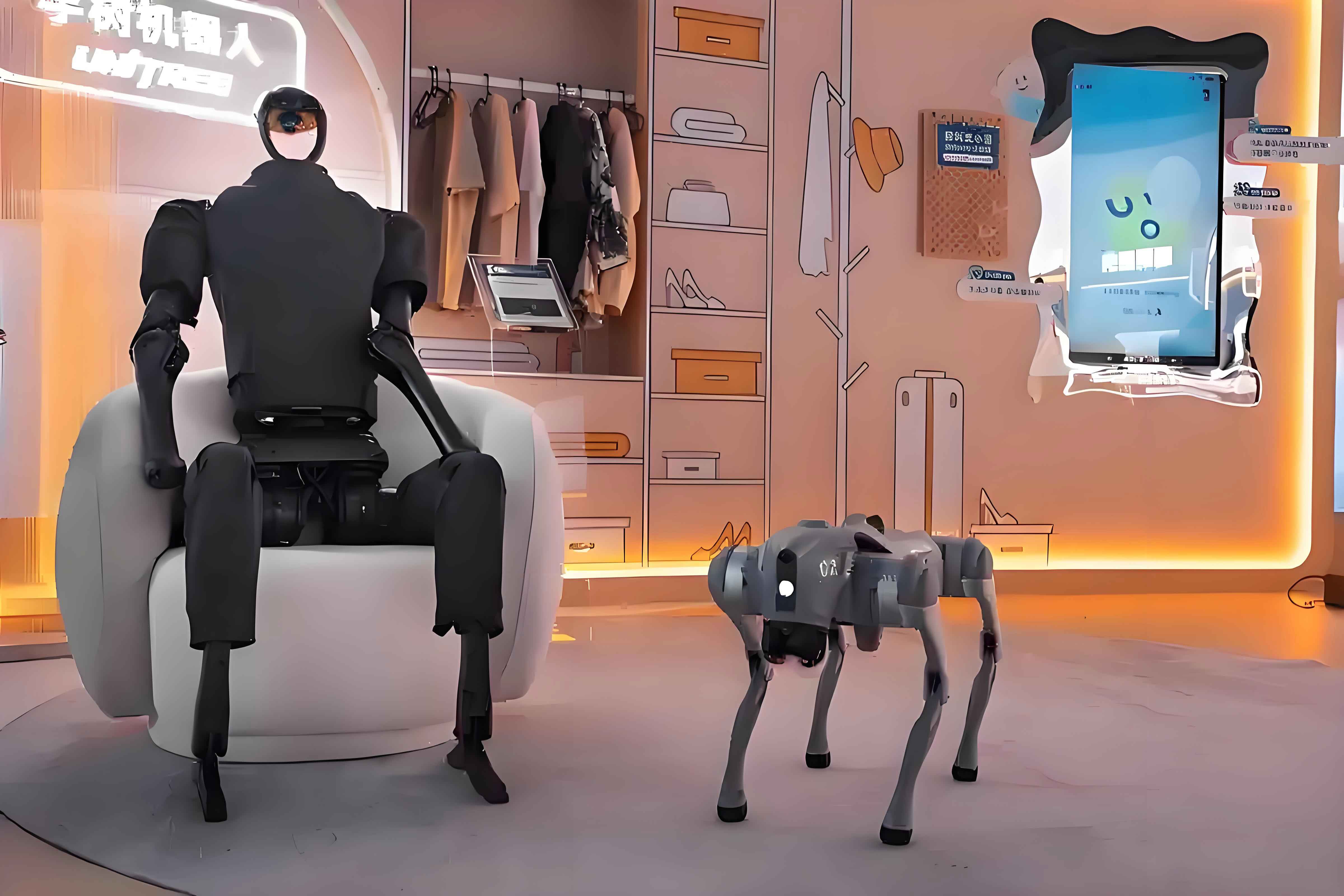
Deconstructing the Humanoid Robot: Technical Facts and Legal Implications
To build an appropriate legal framework, one must first understand the technical essence of a humanoid robot. It is not merely a sophisticated appliance but a new category of “smart” object. Its defining characteristics create distinct legal facts:
| Technical Feature | Description | Legal Implication & Risk Profile |
|---|---|---|
| Anthropomorphic Form | Possession of a human-like body plan (head, torso, limbs, bipedal gait). | Enables operation in human environments without retrofit; increases social acceptance and trust, but also fuels the “anthropomorphism trap” and lowers barriers to intimate space intrusion. |
| Embodied Interaction | Ability to perceive and act upon the physical world through sensors and actuators, coupled with AI-driven social cues (facial expressions, gesture, natural language). | Facilitates natural Human-Robot Interaction (HRI) but creates unprecedented privacy risks (visual, auditory, spatial data collection) and potential for physical harm through autonomous movement. |
| Adaptive Autonomy | Capacity to modify behavior based on experiential learning and environmental feedback, not just static programming. | Causes the “autonomy-safety paradox.” Blurs causal lines between initial design, user training, and emergent system behavior, complicating defect attribution and breaking traditional principal-agent control models. |
| Systemic Complexity | Integration of hardware (mechanical, electrical), multiple software layers (OS, middleware, AI models), and often cloud-based data/services. | Creates a fragmented chain of potential responsibility: manufacturer, component supplier, software developer, algorithm designer, data trainer, network operator, and end-user. A defect or fault can originate anywhere in this chain. |
These features collectively establish that a humanoid robot is a sui generis entity. Its value and risk arise from the synergistic operation of its form, its interactive capacity, and its learning potential. Any viable liability model must account for this integrated whole rather than attempting to analogize it to familiar but inadequate legal categories.
Metaphors in Law: A Critical Review of Existing Governance Paradigms
Jurisdictions and scholars have attempted to fit the humanoid robot into existing legal boxes through metaphorical reasoning. Each metaphor carries with it an implied liability structure. A comparative analysis reveals the shortcomings of these “one-size-fits-all” approaches.
| Legal Metaphor | Proposed Liability Model | Key Rationale | Critical Deficiencies for Humanoid Robots |
|---|---|---|---|
| Tangible Property / Product | Strict Product Liability (e.g., EU’s Product Liability Directive (PLD) and AI Liability Directive (AILD) proposal). | The robot is a manufactured good. The manufacturer is best positioned to ensure safety and bear the cost of defects. | Struggles with post-market learning (is evolved behavior a “defect”?), opaque AI causality (burden of proof on victim), and complex value chains (who is the “producer”?). |
| Child or Pet | Vicarious Liability or guardian responsibility. | The user/owner has a duty to supervise and control the autonomous entity, analogous to a parent or pet owner. | Assumes a degree of control users may not possess over a highly autonomous AI. The “black box” nature of decisions makes effective supervision impossible. Leads to unfair burden on users and stifles adoption. |
| Electronic Person | Legal Personhood with a responsible human “representative” or fund (e.g., early EU Parliament proposal). | For highly autonomous systems, responsibility should follow autonomy. Creating a separate legal entity clarifies liability. | Lacks philosophical and practical foundation. A robot has no consciousness, cannot suffer punishment, and owns no assets. It is a category error that obscures ultimate human responsibility. |
| Public Good / Vehicle | Mandatory Insurance / No-fault compensation schemes (e.g., models inspired by auto insurance or workers’ comp). | Spreads risk across all users/industry to ensure victim compensation without protracted fault-finding. Encourages adoption by capping liability. | May reduce incentive for safety innovation (“moral hazard”). Determining appropriate premiums for novel risks is difficult. Does not address root causes or assign responsibility for systemic improvements. |
The analysis confirms that no single, monolithic metaphor can capture the liability landscape for humanoid robots. A product liability model alone ignores the critical role of users and software updates. A vicarious liability model unfairly penalizes users for uncontrollable autonomy. Personhood is a legal fiction that solves little. While insurance is a crucial component for compensation, it is a financial mechanism, not a liability rule. What is required is a hybrid, multi-actor model that reflects the distributed nature of creation, operation, and risk.
Foundations for a New Model: Hand Formula and Reasonable Alternative Design
Before constructing the multi-actor model, two foundational legal-economic principles must be established as guiding stars: the Hand Formula and the standard of Reasonable Alternative Design.
First, the Hand Formula, formulated by Judge Learned Hand, provides an economic logic for assigning negligence. It states that a party is negligent if the burden of taking adequate precautions (B) is less than the probability of the injury occurring (P) multiplied by the magnitude of the potential loss (L). In the context of humanoid robot liability, this principle can be extended beyond negligence to inform the entire allocation of responsibility across the chain:
$$ \text{Liability should be assigned to the party for whom } B < P \times L $$
In other words, responsibility should lie with the actor who can prevent a given risk at the lowest cost and with the greatest efficiency. The manufacturer is typically best placed to prevent design and manufacturing flaws (low B for them, high PxL for society). The software developer is best placed to ensure algorithmic robustness. The user/operator is best placed to prevent misuse in a specific context and to provide appropriate feedback/training. The formula argues against placing full liability on end-users for risks they cannot feasibly control, and against absolving manufacturers of ongoing duties related to learnable systems.
Second, the standard for judging product “defects,” particularly design defects, must evolve. The traditional Consumer Expectation Test (was the product as safe as an ordinary consumer would expect?) is poorly suited for complex AI systems where consumers have no meaningful baseline for expectation. A more suitable standard is the Reasonable Alternative Design (RAD) Test. Under this test, a product is defective in design if a practical, feasible, and safer alternative design existed at the time of manufacture that would have reduced the foreseeable risk of harm without significantly impairing the product’s utility or cost.
For a humanoid robot, this shifts the inquiry from the vagaries of consumer perception to an objective, techno-legal analysis: Could the developer/manufacturer have employed a different algorithm, a better sensor fusion model, or a more robust failsafe that would have prevented this harm? This standard is more conducive to technological innovation, as it focuses on feasible safety improvements rather than an idealized and often uninformed consumer view of safety. It aligns with the “state-of-the-art” or “development risk” defense found in many product liability regimes, but applies it through a structured, evidence-based lens.
Proposing a Chain Liability Governance Model
Synthesizing the above, I propose a Chain Liability Governance Model for humanoid robots. This model abandons the search for a single responsible “deep pocket” and instead distributes responsibility sequentially and substantively across the ecosystem, guided by the Hand Formula and the RAD test. The model operates on a cascading sequence of liability, aimed at ensuring victim compensation, maintaining safety incentives, and fostering innovation.
The core sequence of the model can be summarized in the following decision pathway:
- Primary Layer: Mandatory Insurance Pool. All commercial humanoid robots must be covered by a mandatory liability insurance scheme, funded by manufacturers/operators. This creates a first-resort compensation fund for victims, ensuring swift redress without initial fault-finding. It socializes the baseline risk of a novel technology.
- Secondary Layer: Fault-Based Apportionment. For damages exceeding insurance limits or for gross negligence, fault is investigated. Liability is apportioned among actors in the chain (Manufacturer M, Software Developer S, Operator O, User U) based on their contribution to the causal chain and their respective cost of precaution (B).
- Manufacturer/Designer (M): Bears strict liability for hardware flaws and for design flaws judged under the RAD test. Holds a residual duty for harms stemming from inherent, unforeseeable autonomy (“development risks”) up to a capped limit, fostering the insurance market.
- Software/Algorithm Developer (S): Bears liability for defects in models, training data biases, or security vulnerabilities, applying a professional negligence/RAD standard.
- Operator/Owner (O): Bears a duty of care for maintenance, secure updates, and deployment in suitable environments. Liable for negligence in supervision or failure to install safety-critical updates.
- User/Trainer (U): Bears liability for intentional misuse or for grossly negligent training that directly leads to harmful behavioral adaptation. The longer and more influential the user’s interactive training, the greater their potential share of responsibility.
- Evidentiary Mechanism: Rebuttable Presumptions & Logging. Given the opacity of AI, the model incorporates procedural rules:
- Mandatory “Black Box”: Every humanoid robot must have a secure data logger recording sensor inputs, decision triggers, and action outputs prior to an incident.
- Rebuttable Presumption of Defect: If a plaintiff demonstrates a humanoid robot caused harm while operating in its intended manner, a presumption arises that a defect existed. The defendant chain (M, S) must rebut this by proving, for example, a RAD was not available or that the cause was attributable to O or U’s fault.
- Access to Data: Plaintiffs have a right to access non-proprietary logging data essential to establish their claim, balancing compensation needs with IP protection.
The interactions and liabilities within this chain can be conceptualized by the following formula, which outlines how total liability (LT) might be distributed:
$$ L_T = I + \sum_{i} (B_i \propto \frac{1}{C_i}) $$
Where:
$L_T$ = Total liability compensated.
$I$ = Payout from the mandatory Insurance pool (first layer).
$\sum_{i}$ = The sum of liability apportioned to each actor i (M, S, O, U) in the chain.
$B_i$ = The share of breach of duty (negligence, defect) by actor i.
$C_i$ = The cost of effective precaution for that actor, per the Hand Formula logic. Liability is inversely proportional to the cost of precaution; the actor who could have prevented the harm most easily bears a larger share.
This model creates a dynamic system. Insurance ensures baseline compensation. The fault-based apportionment, guided by Hand and RAD, maintains powerful economic incentives for safety at every node of the chain—from the drawing board to the living room. The software developer is incentivized to build robust AI, the manufacturer to incorporate safe hardware and system design, the operator to maintain the system properly, and the user to interact responsibly.
Conclusion: From Paradox to Framework
The advent of the humanoid robot presents a quintessential challenge of modern technology governance: managing a disruptive innovation whose benefits are coupled with novel, systemic risks. The “autonomy-safety paradox” and “anthropomorphism trap” are not mere theoretical concerns but practical impediments to safe integration. As this analysis has shown, retreating to familiar legal metaphors—treating robots as mere property, children, electronic persons, or simple subjects for insurance—is a categorical error that will lead to injustice for victims, unfair burdens on stakeholders, and legal uncertainty that chills innovation.
The humanoid robot is a new type of intelligent artifact. Its liability regime must be equally novel and tailored. The proposed Chain Liability Governance Model, built on the bedrock principles of the Hand Formula and the Reasonable Alternative Design test, offers a coherent path forward. It acknowledges complexity by distributing responsibility across the ecosystem. It prioritizes victim compensation through mandatory insurance. It preserves and sharpens safety incentives through fault-based apportionment tied to realistic precautionary capacity. And it introduces procedural tools like data logging and rebuttable presumptions to balance the scales in the face of algorithmic opacity.
Constructing this framework will require nuanced legislation and international cooperation. However, the imperative is clear. The development and deployment of humanoid robots, like all transformative technologies, depend fundamentally on legal certainty and social trust. By proactively designing a liability system that is as sophisticated as the technology it aims to govern, we can navigate the autonomy-safety paradox and steer the embodied intelligence era toward a future that is both innovative and just.