
In an industry often captivated by flashy demonstrations and conceptual hype, we have chosen a path less traveled—one that prioritizes real-world utility over spectacle. While many humanoid robots struggle to transition from lab floors to practical applications, we focus on deploying our creations in the most demanding environments: emergency response, military reconnaissance, and other specialized scenarios. This strategic pivot is not an evasion but a deliberate “flanking maneuver” that leverages high-value niches to drive technological maturation. By immersing our humanoid robots in these extreme conditions, we are not just testing their limits; we are redefining what it means for a humanoid robot to create tangible value where it matters most.
The journey begins with a sober assessment of the humanoid robot landscape. The field is rife with prototypes that can walk smoothly on polished surfaces but falter in unstructured terrains. This “can walk but can’t work” dilemma represents a fundamental gap between demonstration and deployment. We believe the true Turing test for a humanoid robot is not merely mimicking human form but demonstrating resilience and utility in scenarios where human safety is at risk. Hence, our mission centers on developing humanoid robots that excel in specialized operations, serving as pioneers in hazardous settings while laying groundwork for broader adoption.
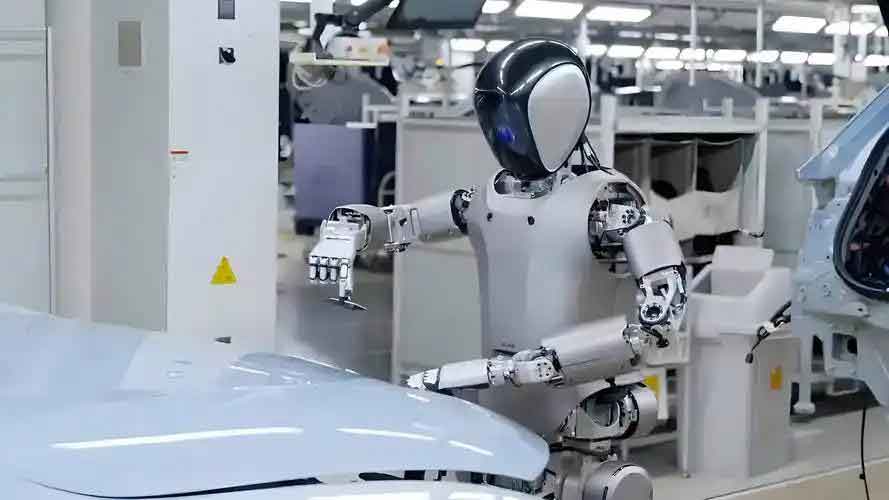
Our strategic focus on specialized scenarios stems from a core value proposition: in the early stages of humanoid robot development, when costs are high and capabilities are evolving, it is imperative to target markets with the highest willingness to pay and strongest need. Specialized domains, such as disaster relief or border patrol, offer precisely that. Here, the strategic value of a humanoid robot that can replace humans in life-threatening situations far outweighs cost considerations. This approach allows us to avoid premature competition in cost-sensitive consumer markets and instead concentrate on pushing technological boundaries and ensuring reliability. Table 1 summarizes the key advantages of this strategy.
| Advantage | Description | Impact on Humanoid Robot Development |
|---|---|---|
| High Value Recognition | Specialized users prioritize performance over cost, enabling focus on advanced features. | Facilitates investment in cutting-edge hardware and software for humanoid robots. |
| Reduced Cost Pressure | Avoids early price wars in commercial markets, allowing iterative refinement. | Supports sustained R&D without compromising quality for the humanoid robot platform. |
| Real-World Validation | Extreme environments provide rigorous testing grounds for durability and functionality. | Generates authentic data to improve humanoid robot algorithms and mechanics. |
| Niche Market Leadership | Establishes credibility in high-stakes applications before expanding to broader sectors. | Builds a foundation for future scaling of humanoid robot technologies. |
To execute this strategy, we harness the strengths of China’s manufacturing ecosystem. Rather than building a closed supply chain from scratch, we act as integrators and demand definers, collaborating with mature suppliers in precision manufacturing, motor drives, and electronics. This agile supply chain enables rapid iteration for small-batch, high-performance components tailored to our humanoid robots. The result is a “fast-iteration” model that accelerates product optimization based on real-time feedback from field deployments. This synergy between innovation and industrialization is encapsulated in our engineering philosophy: performance leadership coupled with cost control. For instance, our platform-based modular architecture treats core components like building blocks, reducing complexity and expenses while maintaining high standards for the humanoid robot platform.
At the heart of our humanoid robot capabilities lies a breakthrough in actuation technology. We have developed proprietary high-torque-density servo motors and high-power-density joints that surpass international benchmarks. These advancements are quantified through three critical metrics: peak torque output, torque density, and response bandwidth. Torque density, defined as the ratio of torque to mass or volume, is a key indicator of efficiency. Mathematically, for a joint module, torque density $$ \tau_d = \frac{T}{m} $$ where \( T \) is the peak torque and \( m \) is the mass. Alternatively, for volumetric considerations, $$ \tau_{d_v} = \frac{T}{V} $$ with \( V \) representing volume. Our designs achieve superior values through innovative electromagnetic layouts and lightweight materials, enabling our humanoid robot to exhibit greater strength and agility relative to its size.
Response bandwidth, crucial for dynamic stability, relates to the system’s ability to react to disturbances. In control theory, bandwidth \( B \) is often derived from the transfer function of the joint system, influencing how quickly the humanoid robot can adjust to external forces. We optimize this via co-design of hardware and algorithms, minimizing latency to millisecond levels. This enhances the humanoid robot’s coordination, allowing for rapid maneuvers like sudden stops or turns during high-speed locomotion. Table 2 compares our joint specifications with typical industry standards, highlighting the performance leap.
| Parameter | Our Humanoid Robot Joint | Industry Average | Improvement |
|---|---|---|---|
| Peak Torque (Nm) | 500 | 300 | 67% increase |
| Torque Density (Nm/kg) | 250 | 150 | 67% increase |
| Response Bandwidth (Hz) | 100 | 50 | 100% increase |
| Weight (kg) | 2.0 | 2.5 | 20% reduction |
These technical achievements translate directly into enhanced motion capabilities for the humanoid robot. The high torque density grants superior “muscular” power, enabling jumps and heavy-load carrying. The rapid response bandwidth ensures stability on rough terrain, a must for specialized operations. Our “soft-hard synergy” approach integrates electromagnetic design with control algorithms that compensate for nonlinearities like gear backlash and friction. This vertical integration is formalized in our control law: $$ \tau_{cmd} = K_p e + K_d \dot{e} + f_{comp}(q, \dot{q}) $$ where \( \tau_{cmd} \) is the commanded torque, \( e \) is the position error, \( K_p \) and \( K_d \) are gain matrices, and \( f_{comp} \) is a compensation function based on joint state variables \( q \) and \( \dot{q} \). Such precision underpins the reliability of our humanoid robot in critical missions.
Our product portfolio reflects a scenario-driven philosophy, not a fixation on a single form factor. We deploy both bipedal humanoid robots and wheeled-arm variants, each tailored to specific task domains. The bipedal humanoid robot, dubbed the “ultimate terrain adaptor,” targets extreme unstructured environments where wheels fail, such as rubble-filled disaster zones. In contrast, the wheeled-arm humanoid robot serves as an “efficiency and mobility balancer,” excelling in patrol and logistics tasks with its swift wheeled movement. Additionally, we offer customized solutions for highly specific needs, leveraging modular components for rapid development. This diversification is strategic; the bipedal humanoid robot acts as a “special forces” unit for极限挑战, while the wheeled-arm humanoid robot forms a “main force” for routine operations. Table 3 outlines their comparative strengths.
| Product Type | Primary Scenarios | Key Advantages for Humanoid Robot | Technical Focus |
|---|---|---|---|
| Bipedal Humanoid Robot | Rescue, exploration in non-flat terrain | Superior obstacle negotiation, human-like mobility | Balance algorithms, joint endurance |
| Wheeled-Arm Humanoid Robot | Inspection, delivery in semi-structured areas | High speed, energy efficiency, stable platform | Wheel-control integration, arm dexterity |
| Custom Solutions | Unique military or industrial tasks | Rapid adaptation, task-specific optimization | Modular design, quick prototyping |
The true test of any humanoid robot technology is its migration from specialized to universal applications. We envision a future where our innovations benefit public services, manufacturing, and even households. The robustness honed in extreme settings makes our humanoid robot ideal for security patrols in airports or emergency aid in crowded spaces. In smart manufacturing, our modular joint systems can seamlessly integrate into collaborative robots, handling precise assembly or heavy lifting with force-controlled accuracy. The transition is guided by scalability principles: technologies validated in harsh environments often set benchmarks for reliability in milder contexts. For example, the safety algorithms refined for our humanoid robot in disaster scenarios are directly applicable to ensuring safe human-robot coexistence in domestic settings.
Looking ahead, the next paradigm shift in humanoid robot development will revolve around three cores: motion control, environmental interaction, and autonomous decision-making. We are positioning ourselves at the forefront of this evolution. While “embodied intelligence” gains traction, we emphasize that a capable “body” is prerequisite for any smart “brain.” Our humanoid robot platform, with its advanced actuation and control, provides that physical foundation. The convergence of large language models (LLMs) and vision-language models (VLMs) with our hardware will unlock new frontiers. Consider a hierarchical control framework: high-level task planning via LLMs generates instructions, which our humanoid robot executes through low-level motion controllers. This synergy can be modeled as $$ \mathbf{a} = \pi(\mathbf{s}, \mathbf{g}) $$ where \( \mathbf{a} \) is the action sequence for the humanoid robot, \( \pi \) is the policy derived from AI models, \( \mathbf{s} \) is the environmental state, and \( \mathbf{g} \) is the goal. Our role is to ensure that \( \mathbf{a} \) is translated into stable, precise physical movements.
To quantify progress, we monitor metrics across development cycles. Table 4 presents a longitudinal analysis of our humanoid robot performance improvements, based on field data from specialized deployments.
| Metric | Year 1 (Baseline) | Year 2 | Year 3 | Trend |
|---|---|---|---|---|
| Mission Success Rate (%) | 75 | 85 | 92 | Steady increase |
| Mean Time Between Failures (hours) | 50 | 120 | 200 | Significant growth |
| Terrain Adaptation Score (1-10) | 6 | 7.5 | 9 | Rapid enhancement |
| Energy Efficiency (km/kWh) | 2.0 | 2.8 | 3.5 | Continuous improvement |
Our approach is underpinned by a culture of strategic patience and technical rigor. We avoid distractions to cultivate specialized scenarios as a “fertile soil” for innovation. This path has enabled us to bridge the gap between demonstration and deployment for the humanoid robot. The lessons learned—scenario-defining products, vertical integration for technological breakthroughs, and platform thinking for cost management—offer a replicable paradigm for the global humanoid robot industry. As we migrate technologies from特种 to civilian spheres, we are laying the groundwork for an era where humanoid robots serve humanity broadly and reliably.
In conclusion, the evolution of the humanoid robot is not just about achieving human-like appearance but about mastering real-world functionality. Our journey through specialized scenarios has equipped our humanoid robot with unparalleled resilience and adaptability. By continuing to refine our hardware-software synergy and expand into new domains, we aim to set new standards for what a humanoid robot can accomplish. The future promises a seamless integration of intelligent decision-making and robust physical execution, with our humanoid robot at the core of this transformation. We invite collaborators and observers to join us in this endeavor, as we push the boundaries of possibility for the humanoid robot, one challenging scenario at a time.
To further illustrate our technical depth, consider the dynamics of a humanoid robot in motion. The equations of motion for a bipedal humanoid robot can be expressed using the Lagrangian formulation: $$ \mathbf{M}(\mathbf{q})\ddot{\mathbf{q}} + \mathbf{C}(\mathbf{q}, \dot{\mathbf{q}})\dot{\mathbf{q}} + \mathbf{G}(\mathbf{q}) = \boldsymbol{\tau} $$ where \( \mathbf{q} \) is the vector of joint angles, \( \mathbf{M} \) is the inertia matrix, \( \mathbf{C} \) captures Coriolis and centrifugal forces, \( \mathbf{G} \) represents gravitational forces, and \( \boldsymbol{\tau} \) is the torque input from our high-performance joints. Our control strategies optimize \( \boldsymbol{\tau} \) to maintain balance and achieve desired trajectories, even on uneven surfaces. This mathematical foundation is crucial for simulating and improving the humanoid robot’s behavior in virtual environments before real-world testing.
Moreover, our research extends to human-robot interaction metrics. For instance, we assess the safety of a humanoid robot in shared spaces using formulas like the collision risk index \( R_c = \frac{f_{contact}}{t_{exposure}} \), where \( f_{contact} \) is the frequency of potential contacts and \( t_{exposure} \) is the exposure time. By minimizing \( R_c \) through better sensing and control, we enhance the viability of humanoid robots in public settings. These efforts are part of a broader commitment to making the humanoid robot not only powerful but also trustworthy and accessible.
As we scale, economic factors come into play. The cost per unit of a humanoid robot often follows a learning curve: $$ C(n) = C_0 \cdot n^{-b} $$ where \( C(n) \) is the cost after producing \( n \) units, \( C_0 \) is the initial cost, and \( b \) is the learning rate. Our modular design and supply chain partnerships aim to increase \( b \), accelerating cost reduction as we expand production. This economic model supports our vision of eventually deploying affordable humanoid robots for everyday tasks.
In summary, every aspect of our work—from strategic choices to technical details—is geared toward advancing the humanoid robot as a practical tool. We believe that by starting with the hardest problems, we build a foundation that makes future applications easier. The humanoid robot is more than a machine; it is a catalyst for innovation across industries. And as we continue to learn from each deployment, we are confident that the humanoid robot will soon become an integral part of our collective toolkit, transforming challenges into opportunities one step at a time.