
Witnessing the transformative journey of polyetheretherketone (PEEK) from a niche, imported specialty polymer to a cornerstone of domestic advanced manufacturing has been nothing short of remarkable. As a high-performance engineering plastic sitting at the pinnacle of the polymer pyramid, its exceptional properties have long been recognized. However, the convergence of policy support, technological self-sufficiency, and the explosive emergence of new application frontiers—most notably humanoid robots—has catapulted this material into an unprecedented golden age of development. This article explores the multifaceted ascent of PEEK, examining its properties, the shifting global and domestic landscapes, the catalysts of demand, and the technical hurdles that define its future trajectory.
PEEK belongs to an elite class of high-performance thermoplastics, characterized by an exceptional combination of properties that make it indispensable for demanding applications. Its molecular structure, based on a backbone of aromatic rings linked by ether and ketone groups, confers remarkable stability. The key properties that define its value proposition include:
- High Strength-to-Weight Ratio: PEEK offers mechanical strength comparable to many metals at a fraction of the density, enabling significant weight reduction—a critical factor in aerospace, automotive, and robotics.
- Excellent Thermal and Chemical Resistance: It maintains performance at continuous service temperatures up to 250°C and is highly resistant to a wide range of chemicals, including hydrocarbons, acids, and bases.
- Outstanding Wear and Friction Properties: It has a low coefficient of friction and high resistance to abrasion, making it ideal for bearings, seals, and gears.
- Inherent Flame Retardancy: PEEK exhibits excellent flame resistance with low smoke and toxic gas emission, meeting stringent aerospace and transportation standards.
- Good Electrical Insulation: It maintains stable dielectric properties across a wide range of frequencies and temperatures.
The performance can be quantified and compared using several key metrics. For instance, the specific strength (strength-to-density ratio) is a crucial figure of merit for lightweighting:
$$ \text{Specific Strength} = \frac{\sigma}{\rho} $$
where $\sigma$ is the tensile strength and $\rho$ is the density.
The following table provides a comparative overview of PEEK against other high-performance polymers and a common metal:
| Material | Density (g/cm³) | Tensile Strength (MPa) | Continuous Use Temp. (°C) | Key Advantages |
|---|---|---|---|---|
| PEEK | ~1.30 | 90-100 | ~250 | Balanced properties, processability |
| Polyimide (PI) | ~1.42 | >100 | >300 | Extreme temperature resistance |
| Polyphenylene Sulfide (PPS) | ~1.35 | 80-85 | ~220 | Chemical resistance, cost-effective |
| Aluminum 6061 | ~2.70 | ~310 | ~150-200 (practical) | High strength, conductive |
For decades, the global PEEK supply was dominated by a handful of Western corporations, creating a significant dependency for markets like China. This landscape has fundamentally reshaped. The global production capacity, estimated around 15,000 tonnes, remains concentrated but is seeing vigorous expansion from new players. A simplified breakdown of the traditional vs. emerging supply structure is as follows:
| Region/Player Type | Approx. Capacity Share | Status & Trend |
|---|---|---|
| Traditional Leaders (e.g., Victrex, Solvay, Evonik) | ~65% | Mature production, expanding in Asia |
| Chinese Domestic Producers | Growing rapidly | Capacity under construction exceeds 6,000 tonnes |
This shift is primarily driven by top-down strategic policy. National development plans have consistently identified advanced materials, including PEEK, as a critical pillar for fostering strategic emerging industries such as new energy, aerospace, and the low-altitude economy. Being listed in key catalogs for new material application demonstration provides significant impetus for domestic adoption and R&D investment. This policy framework has empowered local enterprises and research institutions to accelerate the indigenization process, transforming the market from one of import reliance to one of technological parity and even leadership in certain aspects.
The demand side tells an even more compelling story. While global PEEK consumption has grown at a steady pace, the Chinese market has consistently outpaced it, acting as the primary growth engine. Projections indicate this trend will continue, fueled by the relocation of global manufacturing and the rise of new domestic applications.
$$ \text{CAGR}_{\text{China, 2019-2022}} \approx 18.6\% $$
$$ \text{CAGR}_{\text{Global, 2019-2022}} \approx 9.0\% $$
$$ \text{Projected CAGR}_{\text{China, 2022-2027}} \approx 16.8\% $$
No single factor exemplifies this demand surge more than the advent of the humanoid robot. Often labeled as the “mass production元年” for humanoid robots, the current period is seeing a frenzy of development and prototyping. The core design imperatives for a viable humanoid robot align perfectly with PEEK’s property portfolio:
- Lightweighting for Efficiency and Safety: Reducing mass directly lowers power consumption, extending operational duration. Perhaps more critically, a lighter humanoid robot poses less kinetic energy threat if it falls or collides in human environments. PEEK’s low density is fundamental here.
- High Strength and Stiffness for Structural Integrity: Limb bones, joint housings, and the skeletal frame must withstand continuous dynamic loads. PEEK’s high specific strength ensures durability without adding weight.
- Wear Resistance for Longevity: Gears, bearings, and joints in a humanoid robot are subject to constant friction. PEEK’s excellent wear properties reduce maintenance needs and increase service life.
- Precision and Dimensional Stability: Accurate movement requires components that do not deform under stress or temperature variation. PEEK’s stability supports the precision engineering required for sophisticated humanoid robot actuators.
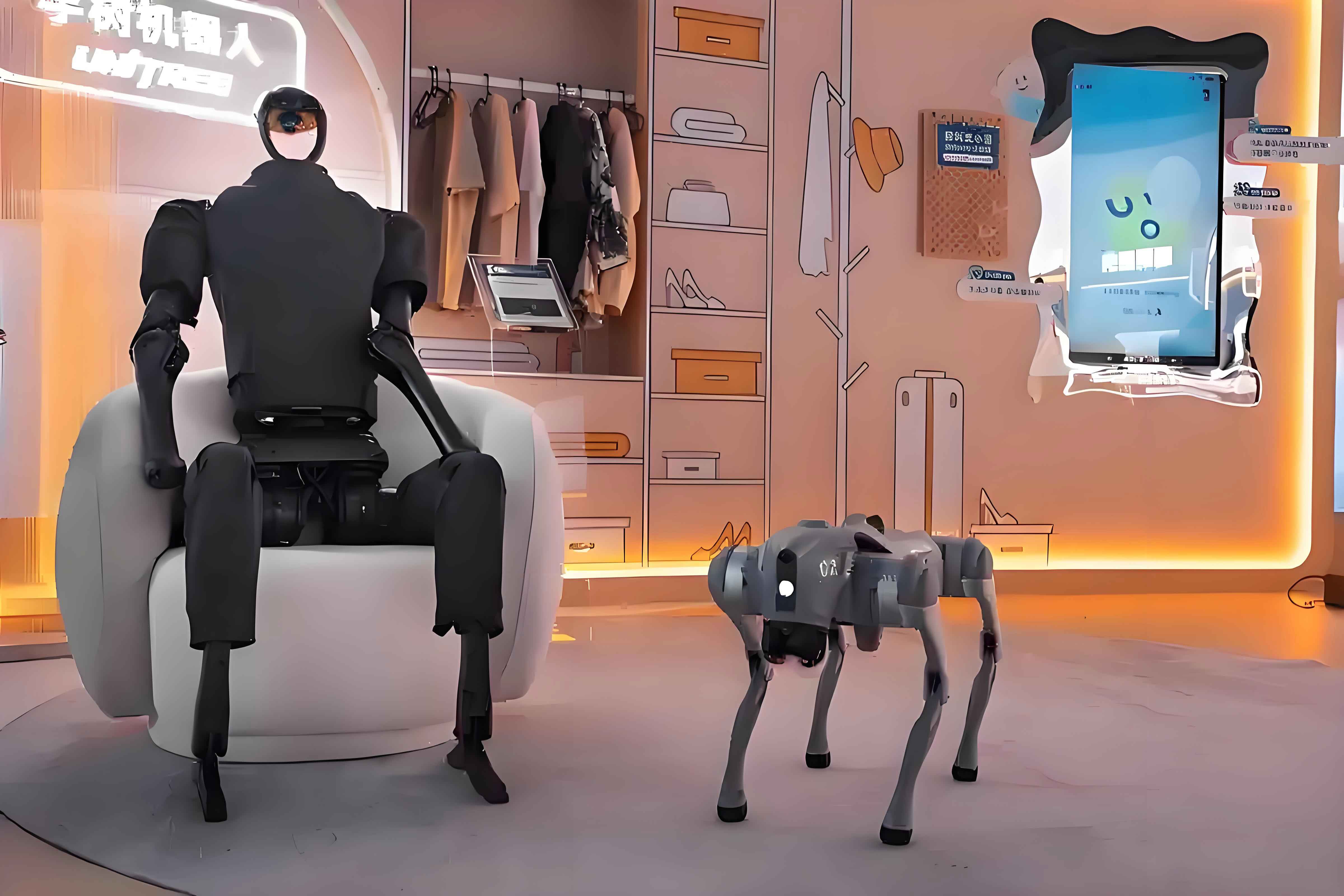
The material demand from this sector, while starting from a small base, has the potential for exponential growth. If composite designs are widely adopted, estimates suggest a significant material pull. For instance, one projection posits:
$$ \text{PEEK per 100k humanoid robots} \approx 195 \text{ tonnes} $$
With initial production volumes forecast in the tens of thousands of units, the humanoid robot industry is poised to become a major new growth vector for PEEK, transitioning from a high-end niche to a volume-driven application.
The potential extends far beyond humanoid robots. The “substitution for steel” and lightweighting trends are pervasive across modern industry. PEEK’s versatility allows it to penetrate a diverse spectrum of high-value sectors, as summarized below:
| Application Sector | Specific Uses | Key Property Leveraged |
|---|---|---|
| Aerospace & Low-Altitude Economy | Wire harness conduits, cable connectors, drone propellers/motors, environmental control system parts, interior components. | Lightweight, flame retardant, high temperature & chemical resistance. |
| New Energy Vehicles | Insulation components for batteries and motors, wear parts in powertrains, lightweight brackets. | Electrical insulation, chemical resistance (coolants), weight reduction. |
| Medical Implants | Spinal fusion cages, trauma fixation devices, dental abutments. | Biocompatibility (ISO 10993), bone-like modulus (stress shielding reduction), sterilizability. |
| Electronics & Semiconductors | Wafer carrier components, probe sockets, insulation in high-frequency connectors. | High purity, low particulate generation, excellent dielectric properties. |
| Industrial Equipment | Seals, bearings, pump vanes, and valves for corrosive/ high-temperature fluid handling. | Exceptional wear/chemical/thermal resistance, reducing downtime. |
However, the path to sustained, high-quality growth is paved with significant technical and industrial challenges. The industry’s evolution is a story of continuous攻坚 (assault on difficulties).
1. Core Monomer Supply and Synthesis: The production of PEEK relies on high-purity monomers, chiefly difluorobenzophenone (DFBP). DFBP alone can account for over 50% of the raw material cost. Its purity directly influences the polymer’s molecular weight, crystallinity, and final mechanical properties. Domestic breakthroughs in synthesis工艺, such as optimized Friedel-Crafts acylation routes, have been crucial in securing a stable, high-quality supply chain and reducing dependency.
2. Polymerization and Processing: The dominant commercial synthesis route is nucleophilic substitution, which offers precise control over polymer architecture:
$$ \text{HO-Ar-OH + F-Ar’-F} \xrightarrow[\text{Catalyst}]{\text{High Temp., Dipolar Aprotic Solvent}} \text{[-(Ar-O-Ar’-C(=O))-]_n} + \text{by-products} $$
While yielding superior material, this process requires harsh conditions, high-purity inputs, and complex post-treatment, contributing to cost. Process optimization for yield improvement and energy reduction remains a key focus.
3. The Frontier of Composites – CF/PEEK: The true performance ceiling of PEEK is unlocked through composite technology. Carbon Fiber Reinforced PEEK (CF/PEEK) represents the pinnacle, combining the strength and stiffness of carbon fibers with the toughness and chemical resistance of the PEEK matrix. The rule of mixtures provides a simplified view of composite property enhancement:
$$ P_c = V_f P_f + V_m P_m $$
where $P_c$ is the composite property (e.g., modulus), $V_f$ and $V_m$ are the fiber and matrix volume fractions, and $P_f$ and $P_m$ are the respective properties.
CF/PEEK is the material of choice for the most demanding applications in aerospace (engine components, drone airframes) and is expected to penetrate critical, high-stress关节 in humanoid robots. Mastering the technologies for producing consistent, high-quality CF/PEEK prepregs and parts—such as melt impregnation, automated tape laying (ATL), and automated fiber placement (AFP)—is a significant barrier. Domestic capability in this area is nascent but growing, with several companies actively developing related technologies and products.
4. Cost Competitiveness and Capacity Scaling: For PEEK to achieve widespread adoption in high-volume applications like automotive or consumer humanoid robots, cost reduction is imperative. This involves economies of scale from new capacity, optimization of all synthesis steps, and recycling technologies. The industry faces a classic scaling challenge: building capacity ahead of demand to drive down cost, which in turn stimulates further demand. The current wave of capacity expansion, if managed well, will be vital for transitioning PEEK from a premium to a performance-advantaged material.
In conclusion, the PEEK industry stands at a critical inflection point. The first phase—achieving domestic production capability and breaking foreign monopolies—has largely been accomplished. The current phase is defined by explosive, multi-sector demand pull, most vividly illustrated by the dawn of the humanoid robot era. The final phase, now underway, is a deep, technology-intensive battle for supremacy in advanced composites, cost efficiency, and application engineering. The future of PEEK is not merely about producing more resin; it is about mastering the entire value chain—from ultra-pure monomers to tailored composite solutions—to meet the exacting requirements of next-generation industries. As this material revolution continues to unfold, PEEK is solidifying its role not just as a high-performance plastic, but as a foundational enabler of strategic autonomy and technological leadership in the 21st century.