
As a participant-observer in the field of embodied intelligence, I witnessed a landmark event that reshapes our understanding of mobility and machine potential. On a clear day by the Tongming Lake in Beijing’s Yizhuang district, the 21.0975-kilometer half-marathon course was bisected into parallel realities. In one, human athletes pushed their physical limits; in the other, a diverse cohort of humanoid robot contestants embarked on a groundbreaking interspecies race. This was the world’s first half-marathon exclusively for humanoid robot platforms.
The starting line was a spectacle of biomechanical engineering. The competitors embodied a wide spectrum of design philosophies: from the towering 1.8-meter “Tiangong Ultra” to agile, child-sized “Toddler” models, and even hyper-realistic androids. This event was not merely a race but a high-stakes, public stress test for twenty teams from universities, research institutes, and companies across China’s major innovation hubs like Beijing, Shanghai, Guangdong, and Zhejiang.
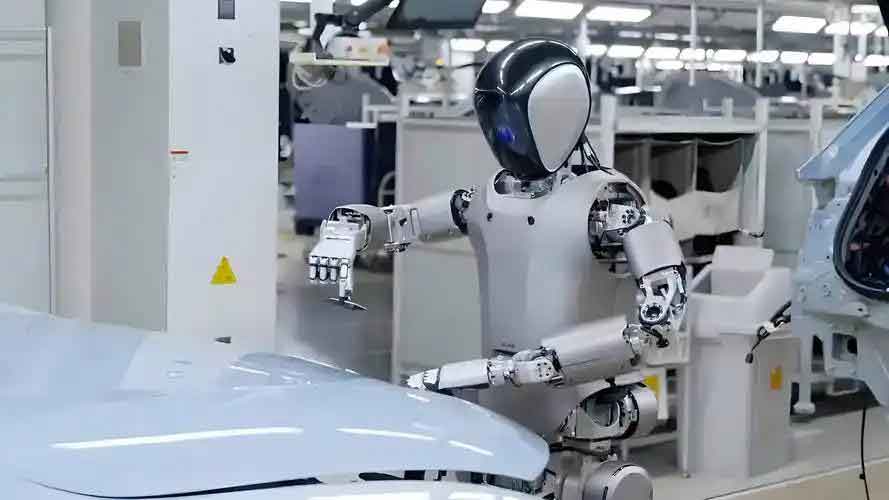
Beyond the marathon track, a far more consequential and intense industrial competition is proliferating across the nation. The marathon serves as a powerful metaphor for the sprint underway in the humanoid robot industry. National strategies have laid the groundwork, issuing policies to standardize development, guide strategic industrial layout, and stimulate innovation. Provincial and municipal governments have responded vigorously, releasing detailed implementation measures to foster industrial innovation and upgrading. Nascent industrial clusters dedicated to the humanoid robot supply chain are beginning to crystallize.
Capital, sensing the seismic shift, has flooded into the sector with tens of billions in funding. The humanoid robot is rapidly transitioning from a precision exhibit in laboratory cleanrooms to a pivotal “weapon” for regions vying for supremacy in future industries. According to relevant industry analyses, the Chinese humanoid robot market size is projected to reach approximately ¥8.239 billion in 2025, accounting for nearly 50% of the global total.
The Policy Catalyst: Fueling the Humanoid Robot Race
After 2 hours and 40 minutes of sustained locomotion, “Tiangong Ultra,” developed by a Beijing-based innovation consortium, crossed the finish line first. This victory was underpinned by months of intensive preparation focused on overcoming fundamental hardware and software challenges: achieving本体 stability, lightweight design, managing joint heat dissipation during prolonged operation, and refining motion control algorithms for superior coordination, gait optimization, and complex terrain navigation.
The success of such platforms is inextricably linked to the sophisticated “policy-capital-industry-application” innovation ecosystem constructed in cities like Beijing. A pivotal action plan released in mid-2023 set clear goals to establish the city as a global hub for robotics innovation, application demonstration, and high-end industry aggregation. This framework led to the creation of specialized innovation centers, uniting leading industry players and attracting top-tier R&D talent, where research personnel often constitute over 70% of the workforce.
Support continues to intensify. A subsequent action plan for embodied intelligence科技创新与产业培育 outlines ambitious targets for the 2025-2027 period, including breakthroughs in over 100 key technologies, development of more than 10 world-leading hardware/software products, support for over 100 innovation entities, cultivation of 50+ core upstream/downstream enterprises, and the mass production of 50+ product models targeting 100+ large-scale application scenarios, with total production scale aiming to be the first to break the 10,000-unit threshold and foster a trillion-yuan industrial cluster.
Following policy, capital accelerates the process. A massive robotics industry development fund, totaling ¥10 billion, was established to strategically invest in humanoid robot本体, core components, and innovative applications. This dual-driven model has significantly enhanced industrial agglomeration effects. In Beijing’s Yizhuang area alone, over 300 ecosystem enterprises have gathered, forming a complete industrial system encompassing “core components + six major robot categories,” with a supply chain scale exceeding ¥10 billion. Application scenarios are being aggressively expanded through special projects, deploying innovative robotic solutions in smart manufacturing for electronics assembly and aerospace component fitting.
The competitive landscape is national. Shanghai and Shenzhen are deploying equally robust strategies. Shanghai’s plans aim to cultivate a hundred-billion-yuan智能机器人 industry and build a globally influential innovation highland by 2025. A municipal official emphasized that the humanoid robot is a prioritized future industry, with support focused on industrial policy, scenario access, and resource matching to foster new quality productive forces.
Shenzhen, home to numerous leading robotics firms, benefits from a mature industrial system. It leverages the AI “brains” from local tech giants for high-level decision-making and possesses a strong foundation in key “cerebellum” components like vision sensors, force/torque sensors, and LiDAR for precise control. Its 2025-2027 action plan targets cultivating 10+ companies with valuation over ¥100 billion, 20+ with revenue over ¥10 billion, realizing 50+ application scenarios worth ¥1 billion each, and growing the associated industry scale to over ¥100 billion with more than 1,200 related enterprises.
| City/Region | Key Policy Instrument | Primary Industrial Targets | Focus Areas |
|---|---|---|---|
| Beijing | Embodied Intelligence科技 Innovation & Industry Cultivation Action Plan | 100+ tech breakthroughs; 10k+ unit production scale; 50+ core enterprises; ¥1T cluster. | Innovation策源地, foundational tech (AI, models), high-end R&D, comprehensive application. |
| Shanghai | High-Quality Innovative Development Action Plan for Intelligent Robotics | Cultivate ¥100B+ intelligent robot industry; Global innovation highland. | High-end industry transformation, integrated AI & robotics, open application scenarios. |
| Shenzhen | Embodied Intelligent Robot Technology Innovation & Industry Development Action Plan | 10+ ¥100B-val. firms; 50+ ¥1B-scale scenarios; ¥100B+ industry scale; 1200+ firms. | Industrial integration, hardware-software synergy, scale manufacturing, commercialization. |
| Zhejiang/Hangzhou | Localized Support for “Chain Leader” Enterprises | Full-cycle enterprise growth support; Industrial space provision; Cluster strengthening. | Nurturing champions, supply chain completeness, manufacturing capacity expansion. |
The Enabling Environment: From Policy to “Ultra-Convenient” Service
The competition extends beyond grand strategies to the granular level of execution and ecosystem support. Cities are offering attractive policy packages featuring massive industry funds, subsidized operational costs for space and computing power, and direct financial subsidies for entrepreneurship and R&D.
The experience on the ground reflects this. Representatives from companies in Beijing highlight the city’s powerful talent aggregation from top global universities and research institutions, creating a continuous infusion of intellectual capital. The government’s role is often described as “ultra-convenient,” with district-level committees proactively communicating new policies, assisting with talent recruitment, promotional support, and critically, connecting companies with potential application scenarios.
In Hangzhou’s High-Tech Zone, support is tailored to the lifecycle of a company. For a standout humanoid robot maker that gained national fame, the local government provided stage-specific policies, from startup support for student entrepreneurs to “chain leader” enterprise status. A crucial intervention was the repurposing of existing industrial buildings to create standard factory space to meet the exploding production demand for quadruped and humanoid robots.
Shanghai’s approach is marked by precision support in key leverage areas. Industry insiders note that policies on computing power subsidies, pilot access to downstream application scenarios, and support for data collection center construction have tangibly promoted industrial chain collaboration. A mature local supply chain effectively reduces production costs and enhances product competitiveness.
This is institutionalized in specialized incubators, such as one in Shanghai’s Caohejing district, which positions itself as a “mini-industrial chain aggregation base.” It operates on three closed loops: technology, finance, and support, aiming to build a complete chain from research to industrialization. It has attracted enterprises across the value chain:整机制造, dexterous hand R&D, embodied “brains,” and core components (motors, ball screws, reducers). The goal is to create a one-stop “supermarket” for humanoid robot entrepreneurs, drastically shortening supply chain对接 time.
Regional Specialization and Cluster Dynamics
The national push, combined with local execution, has led to emerging patterns of regional specialization and distinct cluster characteristics within China’s humanoid robot ecosystem. A walk through a robotics company in Shanghai reveals this future: workbenches strewn with precision parts for仿生 fingers, humanoid robots recharging at docking stations, and engineers testing a remarkably expressive android whose face, driven by nearly 30 micro-motors, can replicate the subtlest human micro-expressions in real-time through a multimodal interaction system.
Industry analyses corroborate this geographical division. National-level specialized “Little Giant” enterprises and listed companies in robotics are predominantly concentrated in the Beijing-Tianjin-Hebei (BTH), Yangtze River Delta (YRD), and Pearl River Delta (PRD) regions, forming clusters represented by Beijing, Shanghai, and Shenzhen. A review of a global top 100 list of relevant publicly traded companies shows firms from the PRD, YRD, and BTH account for nearly 80% of the Chinese companies on the list.
A deeper dissection across the “Body,” “Brain,” and “Integration” dimensions reveals clear strengths:
- Body (Hardware &本体): YRD enterprises are heavily focused on the R&D and manufacturing of the humanoid robot本体—the physical structure, actuators, and sensors.
- Brain (AI & Decision-Making): The BTH region, and Beijing in particular, leverages its concentration of顶尖 universities to dominate in foundational technologies like underlying large-scale AI models and algorithms. On a related top list for “Brain” companies, Beijing housed two of the only three Chinese entries.
- Integration (System & Commercialization): The PRD, with its mature industrial配套 and efficient整合 capabilities, leans strongly toward整机 integration and commercialization. It accounted for half of the Chinese integrator companies on the analyzed list.
| Region | Core Metropolises | Primary Advantage & Focus | Representative Strengths |
|---|---|---|---|
| Beijing-Tianjin-Hebei (BTH) | Beijing | “Brain” & Foundational Tech | Top-tier AI talent, fundamental algorithm R&D, large model innovation, policy design. |
| Yangtze River Delta (YRD) | Shanghai, Hangzhou, Ningbo | “Body” & Precision Manufacturing | Advanced manufacturing ecosystem,精密加工,成熟 supply chain for本体 and components. |
| Pearl River Delta (PRD) | Shenzhen, Guangzhou, Dongguan | “Integration” & Scale Commercialization | High overlap with consumer electronics/auto supply chains, efficient assembly, cost optimization, rapid iteration. |
This specialization aligns perfectly with inherent regional advantages. The BTH region’s academic powerhouse provides a talent pool for core algorithm development. The YRD’s decades of experience in advanced manufacturing offers an unparalleled foundation for crafting the sophisticated “body” of a humanoid robot. The PRD leverages its dominant position in industries with highly overlapping supply chains—automotive and industrial robotics—to create a complete network from component production to final product assembly, yielding significant scale and cost benefits.
Executives in the field explicitly credit this clustered ecosystem. The partner of a prominent humanoid robot startup stated that building a mass-production-ready system from procurement to manufacturing, and advancing commercial deployment, is deeply reliant on the domestic supply chain, particularly the YRD cluster. They noted that Shanghai and the broader YRD possess a complete supply chain system, enabling an extremely high localization rate for almost all core hardware components.
This has fostered a powerful “cluster effect.” In Shenzhen’s Nanshan district alone, over 200 upstream and downstream enterprises and institutions in the humanoid robot industrial chain have gathered. More broadly, the localization rate for robot manufacturers’ supply chains in the Guangdong-Shenzhen area has exceeded 60%, creating a resilient and efficient production network.
Technical Frontiers & Industrial Challenges
The marathon highlighted both the progress and the persistent technical hurdles in humanoid robot development. The core challenges revolve around stability, efficiency, endurance, and cost, which can be framed mathematically.
1. Locomotion Stability & Gait Optimization: Maintaining dynamic balance over variable terrain is paramount. This involves continuous calculation of the Zero Moment Point (ZMP) or using more modern approaches like Whole-Body Control (WBC). The goal is to keep the robot’s center of pressure within its support polygon. A simplified stability margin $S$ can be considered:
$$ S = \min(d(p, \text{boundary}(P))) $$
where $p$ is the instantaneous center of pressure and $P$ is the convex hull of the ground contact points (the support polygon). The control system must dynamically adjust joint torques $\tau$ to maximize $S$ and prevent a fall, governed by equations of motion derived from the Lagrangian or Newton-Euler formulation:
$$ M(q)\ddot{q} + C(q, \dot{q})\dot{q} + G(q) = \tau + J^T F $$
where $M$ is the mass matrix, $q$ are joint angles, $C$ represents Coriolis and centrifugal forces, $G$ is gravity, $J$ is the contact Jacobian, and $F$ is the ground reaction force.
2. Energy Efficiency & Thermal Management: Running a marathon requires exceptional energy efficiency. The total energy cost $E_{total}$ for a distance $d$ is a function of the specific cost of transport (SCOT), often targeted to approach animal efficiency:
$$ E_{total} = m \cdot g \cdot d \cdot \text{SCOT} $$
where $m$ is mass, $g$ is gravity. For a humanoid robot, SCOT is heavily influenced by actuator efficiency $\eta$, transmission losses, and control strategy. Joint motor heating is a critical constraint, as excess heat $Q$ over time $t$ can degrade performance or cause failure: $Q = \int (I^2 R + \text{losses}) \, dt$, where $I$ is motor current and $R$ is resistance. Lightweight design (reducing $m$) and high-efficiency actuators (improving $\eta$) are therefore dual priorities.
3. Cost Structure & the Path to Commercialization: The high cost of premium humanoid robots remains a barrier to widespread adoption. The bill of materials (BOM) is dominated by actuators, sensors, and computing hardware. We can model a simplified cost evolution:
$$ C(t) = C_0 \cdot e^{-kt} + C_{fixed} $$
where $C(t)$ is unit cost at time $t$, $C_0$ is the initial high cost of cutting-edge components, $k$ is the learning/scale coefficient, and $C_{fixed}$ represents irreducible fixed costs. The industry’s trajectory depends on rapidly increasing $k$ through mass production, supply chain maturation, and design simplification.
| Technical Challenge | Mathematical/Engineering Description | Current Industry Focus & Solution Paths |
|---|---|---|
| Dynamic Stability | Maintaining $p$ within $P$ under disturbances. Solving real-time for $\tau$ in complex dynamics. | Advanced WBC algorithms, robust state estimation (IMU, foot force sensors), reinforcement learning for gait adaptation. |
| Energy Efficiency & Endurance | Minimizing SCOT; Managing $Q = f(I, R, t)$ in joints. | High-torque-density motors (e.g., harmonic/cycloidal drives), hybrid hydraulic-electric actuators, lightweight composite materials, predictive thermal management. |
| Cost Reduction | Accelerating the reduction of $C(t)$ by increasing $k$ (learning rate). | Supply chain localization, design for manufacturability (DFM), standardization of interfaces (关节), scaling production volume to achieve economies of scale. |
| Perception & Dexterous Manipulation | Fusing multi-sensor data (vision, LiDAR, torque) for 3D scene understanding; Fine force control for manipulation. | Vision-Language-Action (VLA) models,仿生灵巧手 with tactile sensing, sim-to-real transfer learning for training. |
The Integrated Ecosystem: A Formula for Leadership
China’s emerging strength in the humanoid robot arena is not attributable to a single factor but to the synergistic integration of a powerful formula: National Policy Direction (P) + Regional Cluster Specialization (C) + Capital Infusion (K) + Agile Entrepreneurial Ecosystem (E). This combination accelerates innovation velocity $V_{innovation}$.
We can conceptualize this as:
$$ V_{innovation} \propto \frac{P \cdot C \cdot K \cdot E}{T_{barrier}} $$
where $T_{barrier}$ represents systemic barriers (regulatory, technical, market). National policy ($P$) reduces $T_{barrier}$ by providing strategic clarity and support. Regional clusters ($C$) increase the efficiency of knowledge spillover and supply chain interaction. Capital ($K$) provides the fuel for R&D and scaling. The entrepreneurial ecosystem ($E$), characterized by incubators, talent mobility, and scenario access, drives rapid experimentation and iteration.
The result is a positive feedback loop. Policy and capital foster clusters, clusters attract talent and companies, successful companies validate the model and attract more capital and policy support, further strengthening the clusters. The humanoid robot half-marathon was a vivid public demonstration of progress within this loop. The race winners exemplified advances in hardware and control, while the very organization of the event demonstrated the application scenario exploration and public engagement fostered by this ecosystem.
The path forward is set. The focus is now on transitioning from remarkable prototypes to reliable, affordable, and useful products. The key performance indicators are shifting from marathon completion times to metrics like mean time between failures (MTBF), cost per unit, and task completion success rates in unstructured environments. The clusters will deepen their specialization: the BTH region refining the “brain,” the YRD perfecting the “body,” and the PRD streamlining the integration and path to global markets. In this high-stakes global race, China has structured a comprehensive and competitive ecosystem aimed at ensuring its humanoid robot not only finishes the marathon but also goes on to work seamlessly alongside humans in the factories, homes, and public spaces of the future.