
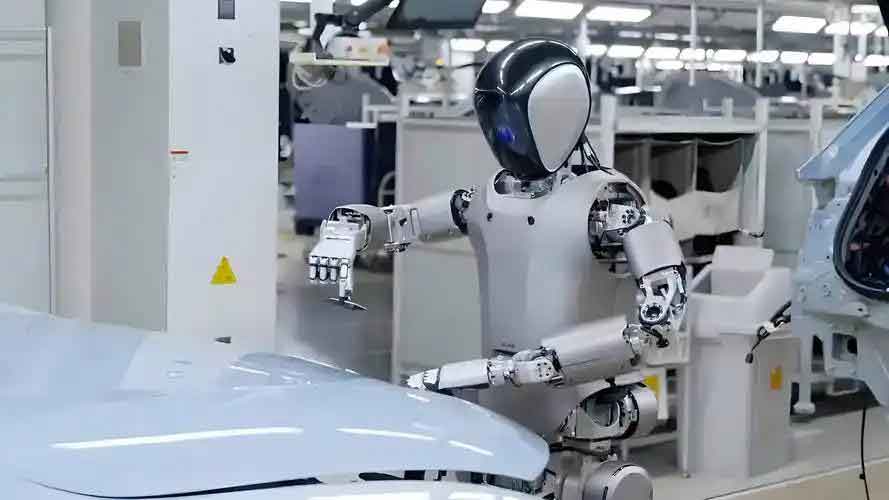
The journey from Boston Dynamics’ Atlas executing a flawless backflip to Tesla’s Optimus taking its first tentative steps, and on to Unitree’s H1 demonstrating fluid running and jumping, represents more than just technical prowess. It marks the ignition of profound public fascination and apprehension. The entry of global tech giants signals the dawn of a potential trillion-dollar market. The humanoid robot industry stands at a critical inflection point, transitioning from laboratory marvels to commercial products. While the technological “singularity” may lie ahead, the societal “singularity”—the moment of mass cultural and psychological reckoning—is upon us. The public harbors a dual consciousness: immense憧憬 for a future of robotic assistants alongside deep-seated fears of physical harm and societal disruption. Navigating this volatile landscape of public sentiment, dispelling misconceptions, assuaging fears, and guiding expectations constitute the paramount public relations challenge for the humanoid robot sector today.
The Quadripartite Cognitive Hurdle: Deconstructing Public Resistance
For the humanoid robot industry to flourish, it must first understand and address four fundamental cognitive barriers that threaten to derail its progress. These obstacles form a complex web of economic, technical, psychological, and perceptual concerns.
| Barrier Type | Core Fear / Issue | Potential Consequence | Public Perception Trigger |
|---|---|---|---|
| Societal Trust Crisis | Job Replacement & Economic Displacement | Social backlash, restrictive legislation, industry becoming a societal scapegoat. | Narratives focused solely on “cost reduction and efficiency.” |
| Technical Trust Crisis | Safety Failures & Ethical “Black Box” | Public panic, regulatory overreach, legal liability paralysis. | Any physical mishap (a fall, a mis-grab) amplified by media. |
| Psychological Trust Crisis | The “Uncanny Valley” Effect | Instinctive rejection, inability to form emotional bonds or trust with the robot. | Robots that are highly human-like but not perfectly seamless in movement or appearance. |
| Expectation Management Crisis | Overhyping & Subsequent Disillusionment | Loss of credibility, “hype backlash,” premature depletion of public goodwill. | Grandiose claims versus observable, clunky real-world performance. |
1. The “Job Stealer” Narrative and Societal Trust Erosion
The very design premise of the humanoid robot—to operate seamlessly in human-built environments—fuels anxieties of widespread job obsolescence. A communications strategy anchored exclusively in the grand narrative of “enhancing productivity and reducing operational costs” is perilous. It risks being perceived as cold, technocratic elitism, dismissive of the livelihoods of millions. This can inflame social resistance, catalyze political opposition, and ultimately lead to prohibitive regulations. The deeper peril lies in the industry becoming a focal point for broader societal fractures over automation and inequality. The core communication imperative is to reframe the discussion. The narrative must pivot from a discourse of simple replacement to one of complex collaboration and augmentation. The equation for public acceptance is not zero-sum. We must promote a vision where humanoid robots handle dangerous, dull, or dirty tasks, thereby elevating human work towards more creative, strategic, or interpersonal roles. The goal is to shift the industry’s image from that of a threatening disruptor to a valued partner in solving pressing human challenges.
2. The “Black Box” of Safety and Ethics
A humanoid robot is a unique convergence of advanced software algorithms and a potent physical entity. This fusion creates a distinct trust deficit. A failure in a robot’s autonomous decision-making is no longer a mere software crash in a virtual space; it manifests as tangible physical damage or personal injury. Each stumble or erroneous interaction, however minor technically, can be amplified into a sensational headline about “rogue robots,” triggering public alarm and precipitous regulatory action. Compounding this is the opacity of the “black box”—the inscrutable decision-making processes of complex AI models. The public’s inability to comprehend why a humanoid robot made a specific judgment breeds distrust. Concerns extend to data privacy, security against malicious hijacking, and the potential for weaponization. The unresolved ethical and legal quandary—Who is accountable for a robot’s actions?—looms as a chasm between technological capability and social acceptance. We can represent this erosion of trust due to opacity with a simple conceptual formula:
$$ \text{Trust}(T) \propto \frac{\text{Perceived Reliability}(R) \times \text{Transparency}(\tau)}{\text{Perceived Risk}(\rho)} $$
Where a decrease in Transparency ($\tau$) directly diminishes Trust ($T$), especially when Perceived Risk ($\rho$) is high.
3. The “Uncanny Valley”: A Psychological Chasm
Perhaps the most profound and instinctive barrier is the “Uncanny Valley” effect. As a humanoid robot‘s appearance and motion approach near-human fidelity but fall short of perfection—exhibiting slightly off eye movements, unnatural skin texture, or subtly jerky motions—it triggers a deep-seated sense of eeriness and revulsion in human observers. This is a psychological barrier largely immune to logical persuasion. It originates from a primal cognitive dissonance when classifying an entity that blurs the line between living and non-living. Initially, criticism may focus on technical flaws, but it swiftly evolves into a fundamental issue of psychological trust. There exists an emotional threshold for acceptance; only by meeting or exceeding it can genuine human-robot rapport be established. The public may admire the technical efficiency of a humanoid robot assembling a car, but they will struggle to trust or feel comfortable around an entity that subconsciously unsettles them. Overcoming this requires more than better engineering; it demands careful design and communication strategies that bridge this psychological gap. The Uncanny Valley can be modeled as a function of human-likeness:
$$
\text{Affinity}(A) = \begin{cases}
\text{Increases steadily} & \text{for low to moderate human-likeness } (H)\\
\text{Plummets sharply} & \text{near but not at perfect human-likeness } (H \approx 1)\\
\text{Rises again} & \text{at perfect or super-human likeness } (H = 1)
\end{cases}
$$
The goal for the industry is to either operate safely on the left side of the valley (clearly mechanistic but friendly) or invest extraordinarily to reach the peak on the right side.
4. The Peril of Overpromising: Hype and Its Backlash
The generative AI boom has lent a sheen of imminent feasibility to the humanoid robot field. Coupled with exuberant media coverage and speculative capital, this has created a bubble of inflated expectations. Society has been presented with a dazzling, often simplistic vision of the future, while the gritty reality of the technology’s current state—prone to errors, slow, and context-limited—remains under-communicated. Events like humanoid robot competitions, while newsworthy, often showcase this disparity, with robots stumbling, freezing, or failing commands. Media framing these as entertaining “fails” provides short-term attention but long-term reputational damage. It prematurely depletes the reservoir of public trust and goodwill. The risk is a classic “hype cycle” pattern: inflated expectations lead to a trough of disillusionment when reality cannot keep pace. Managing this expectation curve is critical. The communication must be recalibrated from promising revolutionary, overnight transformation to demonstrating steady, incremental, and verifiable progress. The sustainability of the industry depends on it.
The PR Pivot: Strategic Re-framing for Industry Breakthrough
To foster a healthy developmental trajectory, the humanoid robot industry must engineer a fundamental shift in public cognition through strategic communication across four dimensions. These are not mere messaging tweaks but foundational re-orientations.
| Pivot From | Pivot To | Core Communication Strategy | Exemplar Narrative/Design |
|---|---|---|---|
| “The Replaceer” Narrative | “The Collaborator” Narrative | Frame robots as partners that augment human capability and solve problems, not eliminate roles. | A eldercare robot facilitating family connection, not replacing it. |
| “The Technical Fortress” Model | “Transparent & Open” Systems | Demystify AI decisions through explainable AI (XAI), audible intent signaling, and open safety standards. | A robot verbally stating its intent and process before and during an action. |
| “Eerie Biomimicry” Design | “Friendly Tool” Aesthetic | Prioritize functional, non-threatening design over perfect human replication. Use form factors that signal purpose and safety. | A gripper hand designed for gentle, reliable holding, not anatomical accuracy. |
| “Disruptive Revolution” Promise | “Incremental Evolution” Roadmap | Set realistic, bounded expectations. Publicize iterative progress and focused applications rather than vague omnipotence. | Marketing a robot as a “dedicated cleaning assistant” today, with new skills added via updates. |
Pivot 1: From “Replaceer” to “Collaborator” in Narrative
The most critical reframing is ontological: redefining the humanoid robot‘s role in the human world. Consider “Ella,” a hypothetical eldercare robot. Under a “Replaceer” narrative, Ella might mechanically perform tasks—playing a pre-recorded video from a son and then disengaging. This cold transaction could heighten a senior’s sense of isolation, framing the robot as a poor substitute for human contact. Under a “Collaborator” narrative, Ella’s programming is geared toward emotional intelligence and facilitation. Noticing Mr. Li gazing at a family photo, Ella might gently suggest, “You seem thoughtful. Would you like me to call your granddaughter? I heard she aced her exam.” During the call, Ella could chime in supportively: “Mr. Li talks about you often. He’d love a visit when you’re free.” Here, the humanoid robot does not replace the familial bond; it actively catalyzes and strengthens it. The scene is transformed by a shift in perspective, positioning the robot as a warm, symbiotic partner. This narrative turn is essential to transition the industry’s public image from a source of anxiety to a solver of societal challenges and a creator of shared value.
Pivot 2: From “Technical Fortress” to “Transparent Openness”
Trust cannot be built on obscurity. To integrate into human society, the technological “black box” of the humanoid robot must be opened. The goal is to make the machine’s decision-making process perceivable and comprehensible. Returning to Ella assisting Mr. Li: In a “Fortress” mode, Ella would simply act, silently reaching for a water cup, potentially startling him. In a “Transparent” mode, Ella first communicates intent: “Mr. Li, may I fetch your water glass?” Upon consent, she narrates her process: “I see the cup on the table. I am navigating around the newspaper. I have a secure grip on the cup. The weight feels normal. Delivering it to you now.” This continuous feedback loop demystifies the robot’s actions, allowing the human to understand its logic and constraints. Transparency is not about showcasing technical specs; it is about translating algorithmic processes into human-relatable information. By making intent and action legible, technology transforms from an unsettling enigma into a bridge for cooperative trust.
Pivot 3: From “Eerie Biomimicry” to “Friendly Tool” in Design
Conquering the Uncanny Valley requires a deliberate design philosophy that prioritizes psychological comfort over photorealism. The aim is to foster emotional affinity, not to replicate a human. Consider Ella’s hand design for a task like handling eggs. A “Biomimetic” hand would feature five articulated fingers with synthetic skin. Its movements, though complex, might be slightly stiff or clumsy, risking crushing the egg. This “almost-human” appearance coupled with imperfect action sits squarely in the Uncanny Valley, triggering unease. Conversely, an “Affinity Tool” design would abandon perfect mimicry. The hand might be a three or four-fingered gripper with smooth, rounded forms, covered in soft-touch matte silicone, resembling a friendly cartoon hand or a specialized tool. Its movement is smooth, precise, and its gentle grip is achieved through integrated force sensors, not tendon simulation. Its appearance honestly communicates its function as a reliable, safe instrument. Therefore, the humanoid robot industry must often embrace a design language that is professional, tool-like, and clearly non-human, using functional friendliness to build trust and achieve genuine emotional acceptance.
Pivot 4: From “Disruptive Promise” to “Incremental Roadmap” in Expectation
The path to sustainable adoption is paved with managed expectations. Promising a “general-purpose servant” that will revolutionize life overnight is a recipe for disappointment. A more prudent approach is the “Progressive Specialist” model. If Ella were marketed with “Disruptive Promise,” she would be sold as an all-knowing, all-capable home manager, leading to inevitable frustration when she cannot perform an unpredicted task. Under an “Incremental” framework, Ella is introduced with a clear, limited scope: “I am your home cleaning assistant. I am excellent at vacuuming floors and wiping surfaces. You can ask me to ‘clean the living room.'” This sets a clear, verifiable boundary. As software improves, Ella can “learn” new, discrete skills through updates—perhaps laundry folding next year. The user experiences a journey of growing capability, fostering a sense of partnership and patience. This narrative aligns with the actual pace of technological iteration, buys R&D the necessary time, and builds long-term credibility through a series of small, delivered wins, thereby solidifying the humanoid robot‘s place in society.
The PR Empowerment Pathway: Building the Ecosystem
The role of public relations must evolve from being a reactive “firefighter” to a proactive “architect” and “gardener” for the industry. This involves systematic, long-term initiatives to educate, engage, and empower all stakeholders, cultivating a fertile ecosystem for the humanoid robot to grow.
| Empowerment Pillar | Primary Objective | Key Action Levers | Long-term Outcome |
|---|---|---|---|
| Education Empowerment | Demystify technology & build foundational literacy. | Public lectures, school competitions, university labs, public experience centers. | A knowledgeable public, reduced fear, and a future talent pipeline. |
| Community Empowerment | Co-create value & build advocacy networks. | Developer platforms, high-engagement user communities, cultivation of expert KOLs. | A robust ecosystem of creators, loyal early adopters, and credible third-party advocates. |
| Policy Empowerment | Shape a supportive & clear regulatory environment. | Co-drafting white papers, initiating public-sector pilot projects, engaging in global standard-setting. | Predictable regulations, government partnership, and smooth international market access. |
| Vision Empowerment | Manage expectations & inspire a credible future. | Telling value-centric stories, showcasing tangible progress, publishing realistic roadmaps with credible partners. | Sustained public and investor confidence based on trust, not hype. |
1. Education Empowerment for Societal Literacy: The first step is to replace ignorance with understanding. This involves launching multi-tiered educational campaigns: sponsoring national or school-level humanoid robot competition leagues to spark interest among youth; establishing open-source educational platforms and university partnerships to build a talent pipeline; and creating public experience centers in major cities where people can interact with humanoid robots in controlled, informative settings. Direct experience is the most potent tool to convert curiosity into comfort and, eventually, acceptance.
2. Community Empowerment for Ecosystem Growth: A technology is adopted by people, not markets. PR must focus on building passionate communities. This includes fostering a vibrant developer ecosystem with accessible SDKs and platforms, turning early adopters into strategic partners by deeply involving them in feedback loops and beta testing, and cultivating knowledgeable Key Opinion Leaders (KOLs) from academia and industry who can provide credible, nuanced commentary. These communities become the industry’s most authentic evangelists and a vital source of innovation.
3. Policy Empowerment for Regulatory Clarity: Proactive engagement with policymakers is non-negotiable. The industry must move early to co-create the regulatory framework, not fight it later. This involves publishing well-researched white papers that anticipate societal impacts, proactively launching pilot projects in collaboration with city governments (e.g., in public safety, healthcare logistics), and participating actively in international forums to shape global standards. The goal is to position the humanoid robot industry as a responsible, solution-oriented partner to government.
4. Vision Empowerment for Sustainable Confidence: Finally, PR must steward the industry’s long-term narrative. This means consistently communicating in terms of human-centric value rather than just technical specs. It requires a disciplined focus on demonstrating concrete, incremental achievements. Jointly publishing annual industry development reports with reputable research firms can paint a realistic, staged future roadmap, managing investment and public expectations. The vision sold must be aspirational yet anchored in demonstrable reality, building confidence through consistent, trustworthy communication.
The humanoid robot industry stands at a historic juncture. The societal “singularity”—the point where public sentiment crystallizes—demands immediate and sophisticated public relations strategy. The path forward is not merely about perfecting a backflip or a steady gait; it is about navigating the complex terrain of human fear, hope, economics, and ethics. By systematically addressing the four cognitive barriers through strategic narrative pivots and by executing a proactive four-pillar empowerment plan, the industry can transform itself. It can move from being an object of suspicion to becoming a trusted collaborator, from a source of anxiety to an engine of empowerment. The ultimate success of the humanoid robot will be measured not only in tasks accomplished but in the depth of trust it earns from the society it is designed to serve.