
As I walked through the halls of the 2025 World Robot Conference, the air was charged with an unmistakable sense of momentum. Humanoid robots were no longer static display pieces confined to glass cases; they were actively being purchased. By the end of the event, more than 19,000 robots had been sold through the conference channels, generating over 200 million RMB in direct sales revenue and attracting 1.481 billion RMB in financing. These numbers are not merely commercial statistics—they signal that the humanoid robot industry has crossed a critical threshold from research prototypes to mass production. The year 2025 is widely described as the “mass production year” for humanoid robots, and the evidence is compelling. Yet mass production is not simply about making more units. It is a complex system that tests every link in the chain: design, manufacturing, software, data, and model deployment. As one senior executive of a leading humanoid robot company put it to me, “Mass production is a system where the cumulative errors in the robotic design, production, manufacturing, software, data, and model processing chain are amplified layer by layer, eventually becoming a huge shackle.” That observation struck me as the central thematic tension of this new era: we are scaling up humanoid robots, but we must simultaneously shrink the errors that threaten to undermine that scaling.
The Consistency Imperative
At its heart, mass production demands consistency. A single prototype can tolerate imperfections; a thousand units cannot. In humanoid robots, consistency must be achieved across mechanical tolerances, sensor calibration, actuator response, software versions, and even the data pipelines that feed the learning systems. If a small error appears in one component, it propagates downstream and becomes magnified. I find it useful to model this phenomenon mathematically. Let us define a set of error sources \(e_1, e_2, \ldots, e_n\) along the production chain. If these errors are independent and roughly additive in logarithmic space, the total error \(E_{\text{total}}\) can be approximated by:
$$
E_{\text{total}} = \sqrt{\sum_{i=1}^{n} e_i^2}
$$
This root-sum-of-squares model assumes random independent errors. In reality, errors are often correlated, and a more conservative estimate is the sum of absolute errors:
$$
E_{\text{total}} \leq \sum_{i=1}^{n} e_i
$$
Either way, the total error grows with the number of stages in the pipeline. The implication is profound: to achieve a final error below a threshold \(E_{\text{target}}\), we must allocate error budgets across every stage. For instance, if we set a global final error budget of 1% and the pipeline contains 100 stages, the average per-stage error must be no more than 0.01%—a formidable engineering challenge. The executive I spoke with emphasized that “the meaning of mass production is to minimize errors in every step of production, design, and execution. This is also the foundation of data sharing.” He made an important link between physical consistency and data quality. If every robot is slightly different, then the data collected from one unit will not be transferable to another. For humanoid robots to learn robust skills, the fleet must share a common statistical baseline.
This consistency challenge manifests in several categories. The table below summarizes the key error sources I identified in discussions with engineers and executives at the conference.
| Category | Example Error | Impact on Final Product |
|---|---|---|
| Mechanical Design | Joint backlash and tolerance stack-up | Reduced positioning accuracy, uneven gait |
| Manufacturing | Injection molding warpage, CNC drift | Non-identical component geometries across units |
| Assembly | Improper torque, misaligned connectors | Intermittent electrical faults, mechanical noise |
| Sensor Calibration | Offset in IMU, camera intrinsic drift | Inconsistent state estimation and perception |
| Actuator Response | Motor controller latency variation | Skewed torque profiles, jerky motion |
| Software & Firmware | Version mismatch across units | Behavioral divergence in real-world tasks |
| Data Pipeline | Label noise, sampling frequency differences | Degraded model training and generalization |
One of the most elegant ways to capture the effect of many small manufacturing imperfections is through the concept of process yield. Suppose each production stage has a defect rate \(p_i\). The overall yield \(Y\) after \(m\) stages is:
$$
Y = \prod_{i=1}^{m} (1 – p_i)
$$
If each stage has a 99% success rate and there are 100 stages, the overall yield is only \(0.99^{100} \approx 0.366\), meaning only about 37% of final assemblies meet quality standards. This is untenable for cost-effective mass production. To achieve a yield of 95% across 100 stages, the average success rate per stage must be \(0.95^{1/100} \approx 0.9995\), i.e., a defect rate of just 0.05%. Such an exacting requirement forces companies to redesign both their parts and their processes. It also explains why many humanoid robot manufacturers choose to build their own factories rather than relying entirely on external contract manufacturers. By owning production, they can iterate on the process quickly and maintain tight statistical process control.
Commercialization: From Cash-Burning to Cash-Generating
Mass production is ultimately justified by commercialization. The 2025 conference data showed that consumers and businesses were willing to pay for humanoid robots in specific application areas. But the path to profitability depends on choosing the right scenarios in a deliberate order. I spoke with the chief financial officer of a humanoid robot company that has emerged as a commercial leader. He told me that their company had received more than 2,000 orders in the first half of the year, with total contract value exceeding 100 million RMB. This made it the second domestic company to cross the “thousand-unit sales” threshold for humanoid robots. The CFO emphasized that “finding a scenario that can land quickly is critical. We can start from verticals where robot performance requirements are relatively low and where we can quickly replace low-value labor, then gradually transition to scenarios that require more delicate manipulation.”
This “from shallow to deep” strategy is reminiscent of how industrial robots first entered automotive factories through spot welding—a relatively constrained task—before expanding to painting, assembly, and inspection. For humanoid robots, the immediate cash-rich scenarios include scientific research and education, exhibition and display, and cultural tourism. These environments are more forgiving: they require locomotion, speech interaction, and scripted gestures, but they do not demand high-precision manipulation under unstructured uncertainty. Let us denote a score \(V(s)\) for a scenario \(s\) based on three factors: cash-flow stability \(C(s)\), technical requirement \(T(s)\), and market size \(M(s)\). A simple linear scoring model is:
$$
V(s) = \alpha C(s) – \beta T(s) + \gamma M(s)
$$
where \(\alpha, \beta, \gamma\) are positive weights. Scenarios with high \(C(s)\), low \(T(s)\), and sizable \(M(s)\) are prioritized. The table below compares several scenarios based on my observations and interviews.
| Scenario | Performance Requirement | Cash-Flow Stability | Technical Threshold | Entry Priority |
|---|---|---|---|---|
| Scientific Research & Education | Basic locomotion, manipulation, API access | High (grants, institutional budgets) | Low to Medium | 1 |
| Exhibition & Display | Walking, speech, telepresence | High (brand budgets) | Low | 2 |
| Cultural Tourism & Guidance | Navigation, Q&A, light object handling | Moderate (ticket revenue, municipal funding) | Low to Medium | 3 |
| Logistics & Warehousing | Object grasping, mobile manipulation | Moderate (cost savings) | Medium | 4 |
| Healthcare & Assisted Living | Careful physical interaction, safety | High (aging population) | High | 5 |
| Industrial Precision Assembly | Sub-millimeter accuracy, force control | High (replacing humans in factories) | Very High | 6 |
This staged approach also creates a valuable feedback loop. Each deployed robot generates real-world operational data that improves the next generation of hardware and algorithms. The return on investment \(ROI\) for a given scenario can be expressed as:
$$
ROI = \frac{\sum_{t=1}^{T} \frac{N_t (r_t – c_t) – I_t}{(1 + d)^t} + \frac{S_T}{(1 + d)^T}}{I_0}
$$
where \(N_t\) is the number of robots deployed in year \(t\), \(r_t\) is revenue per robot, \(c_t\) is operating cost per robot, \(I_t\) is ongoing investment, \(d\) is the discount rate, and \(S_T\) is scrap or resale value. For early scenarios, the goal is not necessarily to maximize \(ROI\) immediately, but to keep \(r_t\) positive while reducing \(c_t\) through learning. The executive I met highlighted that their company’s revenue mix is gradually shifting toward industrial and service applications, but the initial cash flow from lower-difficulty scenarios is what allowed them to scale.
Supply Chain Muscle: Rapid Response at Scale
One of the most surprising stories from the mass production year is the resilience and speed of the supply chain. The CFO admitted that in the early phase of mass production, the main challenge was that upstream suppliers had not predicted such a large demand. When orders suddenly surged, however, the domestic supply chain responded with astonishing agility. “New and existing suppliers were able to adjust their production lines and deliver parts within one to two days,” he said. This rapid response capability is not accidental; it stems from years of investment in flexible manufacturing ecosystems, where small- and medium-sized factories can re-tool quickly for new components. But it also highlights a structural risk: relying on a fast but perhaps shallow supply chain can create quality inconsistencies. The key is to balance speed with rigorous incoming quality control.
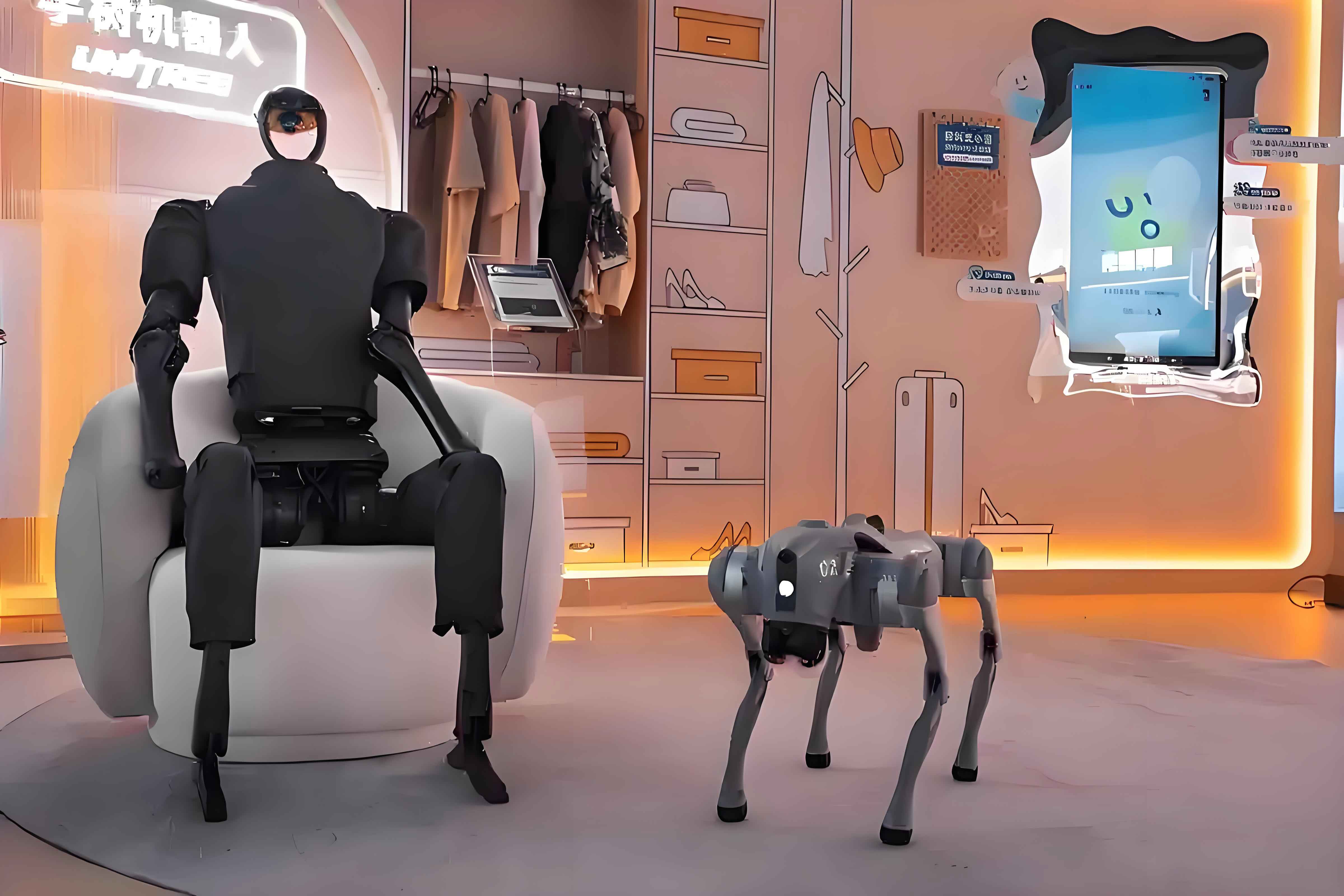
The company in question chose to establish three production bases in different regions of China rather than centralizing all manufacturing in one place. This distributed manufacturing strategy provides several advantages. First, it reduces logistics latency and allows regional suppliers to integrate more closely. Second, it enables disaster recovery—if one factory is disrupted, others can ramp up. Third, it gives the company direct oversight of the entire process. As the CFO said, “Because we own the factories, we are very familiar with the complete manufacturing process. With accumulated mass production experience, we can quickly iterate our production process based on customer feedback, ensuring efficient mass production and timely delivery.” Ownership of production also allows the company to pursue automation upgrades more aggressively. They are replacing manual assembly stations with automated screwdrivers, optical inspection systems, and robotic end-effectors that reduce human-introduced variation.
Let me model the production cost structure. Suppose total cost \(C_{\text{total}}\) consists of fixed costs \(F\) (tooling, factory depreciation, R&D amortization) and variable costs \(v Q\) per unit, where \(Q\) is quantity. Thus:
$$
C_{\text{total}} = F + v Q
$$
Average cost per unit is:
$$
c_{\text{unit}} = \frac{F}{Q} + v
$$
As \(Q\) increases, the fixed cost is amortized over more units, so \(c_{\text{unit}}\) decreases—classic economies of scale. In the mass production year, humanoid robot volumes are still small compared to smartphones or cars, but they are growing rapidly. If a company reaches 2,000 orders, the unit cost may drop significantly, making further price reductions possible and accelerating the virtuous cycle of adoption. I compiled the following table to illustrate the supply chain and production characteristics observed among leading firms.
| Indicator | Observed Value / Range | Implication |
|---|---|---|
| Supplier line re-tooling time | 1–2 days | Agile response to demand surges |
| Number of production bases | 3 | Geographic redundancy, shorter logistics |
| Max order backlog (first half) | > 2,000 units | Confirmed market demand |
| Contract value (first half) | > 100 million RMB | Revenue scale sufficient for reinvestment |
| Future expansion target | Overseas markets | Global deployment, but must ensure stable supply |
The CFO said that in the third quarter the company expects its mass production logic to become smoother, and in the fourth quarter and next year they plan to focus on overseas markets including Europe, America, Southeast Asia, and the Middle East. But he cautioned that “we must ensure stable supply of mass-produced products.” Global expansion introduces new complexities: certification, local regulations, after-sales services, and different ambient conditions. Yet it is essential for volume growth, because the domestic market alone may not support the scale required to drive unit costs down to consumer-electronics levels.
Data: The Brain Behind the Body
While the “muscle” of humanoid robots—their mechanical hardware and physical actuators—has matured, the true bottleneck lies in the “brain”: the models that process data and perform tasks. The CFO I interviewed was blunt: “The current commercialization bottleneck is in the models and data. The hardware side is relatively mature, but continuous technical breakthroughs are needed to meet the needs of specific scenarios.” This statement aligns with what I heard from multiple AI researchers at the conference. The central challenge is not simply collecting more data, but ensuring high data quality and appropriate scene diversity. As one executive from a robotics AI company argued, “The improvement of robot intelligence depends not on data volume and ontology diversity, but on data reliability and scene diversity.” This is a crucial reframing. For years, the deep learning community has worshipped at the altar of big data. But for humanoid robots, raw data has a serious problem: it is expensive, slow to collect, and often noisy.
Let us formalize the relationship between data quantity and model performance. In statistical learning theory, the expected generalization error \(R(\hat{f})\) of a learned function \(\hat{f}\) can be bounded by:
$$
R(\hat{f}) \le R_{\text{emp}}(\hat{f}) + O\left(\sqrt{\frac{d}{N}}\right)
$$
where \(R_{\text{emp}}\) is the empirical error on the training set, \(d\) is the effective capacity of the model, and \(N\) is the number of training samples. This bound suggests that doubling \(N\) reduces the last term by a factor of \(\sqrt{2}\), which is a slow improvement. Doubling the number of samples from 1 million to 2 million only reduces the sample-related error by about 29%. In contrast, if the data quality is poor, \(R_{\text{emp}}\) itself will be high, dominating the total error. Thus, for a fixed model capacity, improving data quality can have a larger impact than merely scaling up quantity.
Teleoperation is a major source of robot skill data. A human operator remotely controls a robot to perform a task such as pouring water or folding laundry, and the resulting sensor-motor trajectories are recorded as training data. This method produces high-quality demonstrations, but it has two serious limitations. First, data collection throughput is severely limited: one operator can produce only a few hundred trajectories per day. Second, the cost is high because it requires human time and expensive equipment. The supply–demand mismatch directly limits the efficiency of robot skill acquisition. Let \(C_{\text{data}}\) denote the total cost of obtaining a dataset with \(N\) demonstrable trajectories:
$$
C_{\text{data}} = N \cdot (C_{\text{collection}} + C_{\text{labeling}}) + C_{\text{teleop\_infra}}
$$
If \(C_{\text{collection}}\) is high, increasing \(N\) becomes prohibitively expensive. This is precisely why synthetic data generation has become a key research frontier.
Synthetic Data and the Path to Generalization
At the 2025 conference, I was impressed by several demonstrations of synthetic data pipelines. One prominent researcher from a well-known robotics startup described how his team uses computer graphics to reproduce the physical properties of the real world in simulation. They create a virtual interaction platform where objects with rigid and deformable bodies can be manipulated in realistic ways. The system supports complex actions such as grasping, opening a refrigerator, and pressing buttons on a remote control. By combining self-developed synthesis pipelines with reinforcement learning, the system can autonomously generate massive datasets of action trajectories. After simulation validation and visual rendering, these data are transferred to the real world. The researcher claimed that his team has constructed a trillion-scale synthetic dataset and, as a global first, built a billion-scale grasping synthesis database. From this, they trained a grasping foundation model called GraspVLA, which demonstrates excellent cross-scene generalization after being trained on the billion-scale synthetic data.
The power of synthetic data lies in the ability to control the data generation process. We can generate unlimited variations of scene configurations, lighting conditions, object materials, and robot poses. Let \(D_{\text{synth}}\) be generated by a function \(g\) that takes a random seed \(z\) and a physics engine \(\mathcal{S}\) and produces data:
$$
D_{\text{synth}} = \{ (s_i, a_i, s_{i+1}) \mid (s_i, a_i) \sim g(z, \mathcal{S}) \}
$$
Because \(z\) can be sampled thousands of times independently, we can easily produce hundreds of billions of transitions. The challenge is to ensure that the synthetic data are sufficiently aligned with the real world. If we denote the real-world data distribution as \(P_{\text{real}}(s,a)\) and the synthetic distribution as \(P_{\text{synth}}(s,a)\), the domain gap can be measured, for example, by the Kullback–Leibler divergence:
$$
D_{\text{KL}}(P_{\text{real}} \parallel P_{\text{synth}}) = \int P_{\text{real}}(s,a) \log \frac{P_{\text{real}}(s,a)}{P_{\text{synth}}(s,a)} \, ds\,da
$$
If the divergence is large, a model trained only on synthetic data will likely fail in the real world. Hence, the best approach combines synthetic data with a smaller amount of high-quality real data, using techniques such as domain randomization and fine-tuning. In the grasping foundation model case, the billion-scale synthetic database is used to pre-train a model, and then a modest number of real-world samples are used for adaptation.
| Aspect | Real Teleoperation Data | Synthetic Simulated Data |
|---|---|---|
| Acquisition Cost | Very high (human operator, equipment) | Low after simulation infrastructure is built |
| Throughput | Low (hundreds of trajectories/day) | Very high (billions of transitions) |
| Data Quality | High fidelity, but with human noise | Controllable, but may contain sim-to-real gap |
| Scene Diversity | Limited by physical setups | Unlimited via random sampling |
| Labeling | Expensive and sometimes ambiguous | Automatically generated by simulator |
| Best Use | Fine-tuning, safety verification | Pre-training, scaling up, exploring edge cases |
However, even with abundant synthetic data, we must address how to use it effectively. The executive from the robot company I mentioned earlier argued that “the key is to enable robots to learn from a human perspective and understand the laws of motion and physics—how the world operates.” Language is a highly abstract collection of information. It uses “tokens” to compress the world into discrete logical symbols. But the real physical world is continuous and open-ended. Objects are of countless kinds, each with its own materials and physical laws. For a robot to truly operate in the real world, it must learn not just to memorize actions but to infer the underlying rules that govern physical interactions.
This is the core philosophy behind the Qiyuan foundational model, developed by a leading humanoid robot AI lab. The model first learns general action rules—such as grasping, stacking, and folding—from large amounts of video, text, and robot manipulation data. Then it uses a mixture-of-experts system to adapt these rules to different robot hardware. In experiments, this “learn the law, not memorize the action” approach allows the model to quickly adapt to new tasks. For example, a model trained with a specific humanoid robot can be transferred to a different brand of robot, enabling the latter to learn clothes-folding with only a small amount of data. This is a remarkable leap in transfer learning. In conventional deep learning, fine-tuning a new robot often requires hundreds of thousands of samples. Here, the mixture-of-experts architecture finds a common representation across robot embodiments, reducing the sample complexity for new hardware to just a few hundred demonstrations.
Let me write a formal expression for this transferability. Let the shared underlying skill be represented by a latent variable \(z\). A policy for a given robot embodiment \(e\) is a function \(\pi_e(a_t \mid s_t, z)\). The mixture-of-experts approach approximates this as:
$$
\pi_e(a_t \mid s_t) = \sum_{k=1}^{K} g_k(s_t; \phi) \, \pi_k(a_t \mid s_t, z_k)
$$
where \(g_k\) is a gating network that depends on the state and robot-specific parameters \(\phi\). When a new robot is introduced, only the gating network or a small set of per-expert parameters needs to be updated, while the mixture modules \(\pi_k\) remain largely frozen. Thus, the number of required new samples \(N_{\text{new}}\) is drastically smaller than retraining from scratch.
The Industrial Application Gap: Why the Full Journey Is Still Long
Although humanoid robots have achieved commercial success in relatively controlled environments, their widespread adoption in industrial scenarios remains a distant goal. The executive from the humanoid robot company acknowledged this clearly: “Industrial scenarios have a relatively high entry barrier. Customers expect robots to reach the same level as humans in terms of cost, cycle time, and stability.” This triple requirement is daunting. Let me define a feasibility index \(F_i\) for an industrial task \(i\) based on cost \(c_i\), cycle time \(t_i\), and stability \(s_i\):
$$
F_i = \mathcal{I}\left( c_i \le c_{\text{threshold}} \right) \cdot \mathcal{I}\left( t_i \le t_{\text{threshold}} \right) \cdot \mathcal{I}\left( s_i \ge s_{\text{threshold}} \right)
$$
where \(\mathcal{I}(\cdot)\) is an indicator function. Even if two of the three criteria are met, the task is not economically viable until all three are satisfied. In many industrial settings, humans are remarkably cheap, fast, and robust. A human worker can perform a complex assembly task with a cycle time that is difficult for a humanoid robot to match. Moreover, the tolerance for variability is low: any deviation in the robot’s performance may interrupt the production line. So the index \(F_i\) remains zero for many tasks that would otherwise seem like natural fits for humanoid robots.
To move toward industrial viability, companies must tightly couple four pillars: hardware body, data pipeline, algorithms, and application-specific engineering. This coupling is not a linear process but a continuous iterative loop. I envision it as a cycle:
$$
\text{Hardware} \xrightarrow{\text{calibration}} \text{Data} \xrightarrow{\text{training}} \text{Algorithm} \xrightarrow{\text{deployment}} \text{Application} \xrightarrow{\text{feedback}} \text{Hardware}
$$
Each revolution of this cycle should reduce the error budget and improve the feasibility index. Let us define a composite maturity metric \(M\) for humanoid robots in industrial task \(i\):
$$
M_i(t) = \alpha \frac{1}{c_i(t)} + \beta \frac{1}{t_i(t)} + \gamma s_i(t)
$$
where the weights \(\alpha, \beta, \gamma\) are chosen based on the relative importance of cost, cycle time, and stability to the customer. In 2025, for most industrial tasks, \(M_i\) is still below the human baseline \(M_{\text{human}}\). But the rate of improvement is fast. In the next five years, I expect \(c_i\) to drop as production volumes scale, \(t_i\) to drop as algorithms become more efficient, and \(s_i\) to rise through more robust control and error recovery. Once \(M_i(t) > M_{\text{human}}\), the economic argument for humanoid robots becomes irresistible.
| Criterion | Human Worker (typical) | Humanoid Robot (2025) | Gap Status |
|---|---|---|---|
| Unit Labor Cost (hourly) | Variable, but low in many regions | Still high (depreciation + energy + maintenance) | Gap |
| Cycle Time | 2–5 seconds for repetitive tasks | 3–10 seconds with perception processing | Partially closed |
| Stability (uptime) | ~95% with breaks and fatigue | ~90% but improving | Needs improvement |
| Flexibility | High; can be retrained in minutes | Low; requires data collection and retraining | Gap |
| Safety | Can be injured | Always safe if properly controlled | Advantage |
One of the most difficult hurdles is the unpredictability of physical environments. Industrial settings are not fully structured; they contain variations in lighting, parts placement, and tool availability. The world model approach discussed earlier is designed to help robots cope with this variability. Instead of memorizing every object’s exact geometry, the model learns a probabilistic prediction of how the environment evolves. For a robot action \(a_t\), the world model estimates the next state distribution:
$$
p(s_{t+1} \mid s_t, a_t; \theta)
$$
Through model-based reinforcement learning, the robot can imagine many action sequences and select the one with the highest predicted success probability. This is akin to the way a human plans: we do not need to see every possible object variant to know that a cup will fall if pushed off the table. The world model abstracts the physical law “unsupported objects fall under gravity.” If humanoid robots can encode such laws from data, they will generalize much better across tasks and embodiments.
The Road Ahead: What the Mass Production Year Really Means
In my conversations with executives, engineers, and researchers at the 2025 World Robot Conference, a consensus emerged: the mass production year is not the end of a journey, but the beginning of a new one. It is a milestone that proves humanoid robots can be manufactured at scale and sold at meaningful volumes, but it also exposes the fragility of the current ecosystem. The “muscle” of the supply chain has proven to be remarkably flexible, adapting in days to unexpected demand. The “brain” of the data and model ecosystem, however, is still maturing. Data collection remains expensive, and synthetic data methods are only just beginning to deliver on their promise.
I find it useful to think of mass production as an enabler of data sharing. When thousands of identical robots are deployed across diverse environments, they generate a continuous stream of real-world interactions that can be aggregated and used to train better models. The consistency of mass production ensures that these data are statistically compatible across the fleet. If every robot has slightly different sensor offsets or actuator latencies, the pooled data will be polluted. Therefore, the same manufacturing discipline that reduces mechanical errors is also what makes the data useful. In the words of the executive I heard earlier, “The meaning of mass production is to minimize errors in production, design, and execution; this is the foundation of data sharing.”
Let me summarize the key quantitative relationships that define this era using a set of equations. The first is the error amplification equation, which reminds us that every stage matters:
$$
E_{\text{total}} = \sqrt{\sum_{i=1}^{n} e_i^2}
$$
The second is the cost–volume relationship:
$$
c_{\text{unit}} = \frac{F}{Q} + v
$$
The third is the generalization error bound:
$$
R(\hat{f}) \le R_{\text{emp}}(\hat{f}) + O\left(\sqrt{\frac{d}{N}}\right)
$$
And the fourth is the world model prediction:
$$
p(s_{t+1} \mid s_t, a_t; \theta)
$$
These equations capture the essence of the humanoid robot mass production challenge: control errors, scale production, curate data, and model the physical world. They are not independent; each one influences the others. A better world model reduces the need for billions of samples. A more consistent production line reduces the effective error \(e_i\), improving the yield and lowering the cost per unit. A lower cost per unit enables more deployments, which in turn generate more data.
As I look at the broader industry, I see three phases of development over the next decade. In the first phase (2025–2026), humanoid robots will continue to dominate in low-complexity service and educational scenarios. The supply chain will consolidate, and companies with in-house manufacturing will gain an edge in quality control. In the second phase (2027–2028), synthetic data and world models will improve to the point where industrial tasks with moderate complexity—such as machine tending and material handling—become economically viable. The feasibility index \(F_i\) will flip from 0 to 1 for several tasks. In the third phase (2029 and beyond), humanoid robots may enter high-precision assembly, and we might see the first fully autonomous humanoid work cells that can handle multiple tasks without reprogramming.
But I must also acknowledge the obstacles. The industrial labor market has a different structure than the service sector. Customers in factories require a very low mean time between failures (MTBF). As a rule, a robot must achieve an MTBF of at least 5,000 hours to be acceptable in a production line, whereas many current humanoid robots operate for 1,000–2,000 hours before requiring maintenance. This gap must be closed through better components, redundant systems, and predictive maintenance algorithms. Furthermore, humanoid robots are “single point of failure” machines: if one joint fails, the entire robot stops. In contrast, a traditional industrial robot arm with fewer joints has a smaller probability of failure at any instant, simply because it has fewer moving parts. Thus, the complexity of the humanoid form factor is both its greatest strength (versatility) and its greatest weakness (reliability).
Another obstacle is safety certification. When humanoid robots work alongside humans, they must satisfy international standards such as ISO 10218 for industrial robots or ISO/TS 15066 for collaborative robots. These standards define force, pressure, and speed limits. A humanoid robot with a 50 kg arm mass cannot safely operate at full speed in close proximity to humans without sophisticated collision detection and torque limiting. The current generation of humanoid robots is still learning to comply with these standards, and certification processes are slow. In my view, the first industrial-grade humanoid robots will not appear in unstructured assembly lines but in well-defined “humanoid-ready” cells where the environment is carefully controlled. This is analogous to how automotive manufacturing created dedicated zones for collaboration between humans and robots.
I also had the opportunity to discuss the future of humanoid robot data ecosystems with several researchers. They envision a future where robotic platforms, whether from different manufacturers, contribute anonymized data to a shared foundation model. The mixture-of-experts architecture makes this possible because each robot’s specific sensor module can be treated as a separate expert. However, this vision depends on standardized data formats and protocols for robot experiences. Currently, there is no such standard, and every company hoards its data as a competitive advantage. But the history of AI suggests that open, shared large-scale datasets accelerate progress. The ImageNet dataset transformed computer vision; something analogous could transform humanoid robotics. The challenge is more difficult because robot data is multimodal and physically grounded, but synthetic data generation could provide the common currency for sharing.
Let me quantify the potential impact of shared data. Suppose a single company can collect \(N_1 = 10^7\) trajectories per year. Across the industry, the total might be \(N_{\text{total}} = 10^9\) trajectories per year if all players share. The generalization error bound decreases as \(O(1/\sqrt{N_{\text{total}}})\), so the pooled data could reduce the sample-related error by a factor of 10 compared to a single company. That is a massive leap in capability. Even if some companies only share synthetic data, the industry as a whole benefits. This is why I believe that government-funded robot data infrastructure, similar to smart cities or digital twins, will emerge in the coming years.
The mass production year also brings a shift in engineering culture. In prototype development, engineers are used to hand-tuning each robot. In mass production, design for manufacturing (DFM) becomes non-negotiable. Every fastener, every cable route, every sensor housing must be designed so that a technician can assemble it quickly and correctly. Modularity is especially critical. If each arm is a distinct module, it can be replaced in minutes, allowing a technician to swap out a malfunctioning arm while the rest of the robot remains functional. This modularity also enables upgrade paths: customers can buy a new hand or a new sensor head without buying an entirely new humanoid. The companies that embrace modularity will capture more lifetime value per robot. The table below outlines the design principles that are emerging from this mass production phase.
| Principle | Description | Benefit |
|---|---|---|
| Modularity | Arms, hands, legs, and head as replaceable units | Faster service, easier upgrades |
| Testability | Built-in self-diagnostics at every subsystem | Rapid fault isolation and validation |
| Serviceability | Accessible connectors, clear color-coded cables | Lower maintenance time and cost |
| Design for Automation | Components designed for robotic assembly | Higher production yield and throughput |
| Sensor Fusion | Redundant sensors for state estimation | Increased robustness and fault tolerance |
I asked the CFO about the most surprising lesson from scaling up production. He replied that it was the supply chain’s adaptability. “We thought we would be the bottleneck,” he said, “but in fact, the ecosystem responded even faster than we expected.” This is an encouraging sign. The Chinese manufacturing ecosystem, with its dense network of SMEs, has long excelled at rapid prototyping. Now it is proving that it can also do rapid scaling. The key risk is whether quality can be maintained as the production ramps up. The CFO acknowledged that they are investing in automated inspection systems and statistical process control to catch defects before they propagate. He also mentioned that their overseas expansion will be powered by the same production bases initially, with local assembly later, to avoid import tariffs and regulatory friction.
Another theme I noticed was the growing importance of energy efficiency. A humanoid robot typically needs to carry a battery pack that provides 1–2 hours of continuous operation. For industrial use, four-hour shift operation is often mandatory. The energy consumption per step or per grasp can be optimized, but it competes with payload and speed. We can formalize the energy budget as:
$$
E_{\text{budget}} = \int_{0}^{T} P(t) \, dt \le E_{\text{battery}}
$$
where \(P(t)\) is the instantaneous power drawn at time \(t\). Reducing \(P(t)\) without sacrificing performance requires lightweight materials, high-efficiency motors, and regenerative braking in the joints. Some companies are exploring variable impedance actuators that store energy in springs, effectively reducing peak power. As the mass production matures, we will see a wave of hardware innovations focused not on peak performance in lab showcases, but on sustained performance over long deployment cycles.
I also noted a philosophical shift in how researchers view data. Early humanoid robot demos relied on scripted actions and teleoperation. The next generation aims to learn from vast corpora of demonstrations, videos, and even text instructions. The larger AI community has shown that transformers trained on massive text and image datasets produce emergent reasoning abilities. The humanoid robot community is now trying to achieve a similar emergence for physical control. The Qiyuan model I discussed earlier is a step in that direction. It treats control policies as tokens in a kind of “language of motion,” and it uses a mixture-of-experts architecture to decouple task-specific skills from robot-specific embodiments. This approach may eventually lead to a single foundation model that can control any humanoid robot, much as GPT-type models can generate text in many languages.
Let me elaborate on the mixture-of-experts idea with a mathematical formulation. Suppose we have \(K\) expert networks, each producing a distribution of actions conditioned on a state \(s\) and a learned skill context \(c_k\):
$$
\pi_k(a \mid s, c_k)
$$
The gating network \(g_k(s, e)\) where \(e\) is the robot embodiment, outputs probabilities over experts:
$$
q_k = \frac{\exp(g_k(s, e))}{\sum_{j=1}^{K} \exp(g_j(s, e))}
$$
The final policy is the mixture:
$$
\pi(a \mid s, e) = \sum_{k=1}^{K} q_k \, \pi_k(a \mid s, c_k)
$$
When a new embodiment \(e’\) arrives, we keep \(\pi_k\) frozen and only update the gating function \(g(\cdot, e’)\), which can be learned with a small number of samples. This reduces the sample complexity from \(O(N_{\text{full}})\) to \(O(N_{\text{gate}})\), which is often hundreds of times smaller. I have seen this architecture work in multi-task manipulation settings, where a single model could control both a quadrupedal robot and a wheeled humanoid by switching gates. It gives me confidence that the data bottleneck can be overcome.
Of course, no discussion of humanoid robots in 2025 is complete without acknowledging the public fascination with the technology. From walking robots to robotic dogs, the conference hall was filled with demonstrations that amazed visitors. But the difference this year was that many robots were marked “sold.” The 19,000 units sold at the conference represent real end customers, not just showpieces. This is a sign that the market is beginning to trust humanoid robots as viable tools. However, as with any new technology, there is a peak of inflated expectations. Some customers may be disappointed by the limited capabilities of the current generation. The industry must manage expectations carefully, promising only what can be delivered and overdelivering where possible. A single bad experience can poison the entire market.
Thus, the key to sustained growth is to choose application scenarios where the robot can genuinely deliver value. The CFO’s company did this by focusing on education and exhibition first, where the robot’s wow factor is itself part of the product. A humanoid robot that can walk, wave, and answer questions is enough for a museum display. For industrial use, the robot must have precision, speed, and reliability that surpass human performance. The gap is still wide, but the trajectory is clear. If the industry continues to improve at the current pace, I predict that by 2027 the first truly profitable industrial deployments of humanoid robots will emerge in sectors such as automated warehouse bin picking, machine tending, and repetitive assembly tasks that are ergonomically unsafe for humans.
One of the most elegant concepts to come out of the conference was the idea of “learning the laws of physics rather than memorizing actions.” This is reminiscent of how children learn: they do not need to see every possible object to know that if you push a glass off the table it will shatter. They understand gravity, rigidity, and cause-and-effect relationships. By training humanoid robots on world models that predict the future state of the environment, we can give them a similar intuition. The world model is trained using a self-supervised objective:
$$
\mathcal{L}(\theta) = \mathbb{E}_{(s_t, a_t, s_{t+1}) \sim \mathcal{D}} \left[ -\log p_\theta(s_{t+1} \mid s_t, a_t) \right]
$$
Once the world model is accurate, it can be used for planning. Instead of executing a fixed policy, the robot can search for a sequence of actions \(a_{0:H}\) that maximizes the cumulative probability of reaching a goal state \(s^*\):
$$
a_{0:H}^* = \arg\max_{a_{0:H}} \mathbb{E}_{p}\left[ \sum_{t=0}^{H} r(s_t) \right]
$$
This model-based planning approach is data-efficient because it can generate many imaginary rollouts from a single real-world transition. It also provides a natural way to transfer skills across embodiments: if two robots share the same world model, they can use the same planning algorithm, differing only in their action spaces.
The role of simulation, therefore, goes far beyond data collection. Simulation can also be used to test policies in edge cases that are too dangerous or too rare to encounter in real life. For example, a fall recovery policy can be trained in simulation for thousands of hours, covering a wide range of falling postures and floor materials. Let \(D_{\text{sim}}\) denote the simulated experience replay buffer. The robot can augment its real experience \(D_{\text{real}}\) with a weighted mix:
$$
D_{\text{total}} = D_{\text{real}} \cup \lambda D_{\text{sim}}
$$
where \(\lambda\) controls the relative importance of simulated data. Domain randomization—varying physics parameters such as friction, mass, and torque in simulation—ensures that the learned policy is robust to real-world uncertainty. This is how several companies are achieving impressive dexterity in robotic hands: purely through simulation, they can train a policy to rotate a pen or manipulate a cable harness.
Still, I should note a caveat: simulation cannot reproduce every aspect of the real world. Contact-rich tasks involving soft bodies, fluids, or transparent objects are notoriously difficult to simulate accurately. The tactile sensors required for fine manipulation are also hard to model in simulation. Therefore, the best strategy is a hybrid: pre-train in simulation, then fine-tune with real data. The fine-tuning phase can be quite short if the simulation is well- calibrated. In the grasping foundation model case, the model achieved cross-scene generalization after being pre-trained on billion-scale synthetic data and then fine-tuned with only a few thousand real grasps. This is a compelling demonstration that synthetic data + real adaptation is the way forward.
As I reflect on the overall state of humanoid robots in 2025, I am struck by how much progress has been made in a short time. A few years ago, humanoid robots were mostly brittle bipedal demonstrations that fell over at the first unexpected obstacle. Today, they are being manufactured in quantities that were unthinkable then, and they are performing useful tasks in real environments. The word “manufacturing” itself is a combination of a Latin root meaning “made by hand” and a suffix meaning “process.” Ironically, humanoid robots are now being made by machines and human hands together, in factories that are themselves becoming automated. This is a meta-moment for the industry: robots building robots.
I visited one production line where humanoid robots were being assembled in a nearly automated fashion. The line looked like a hybrid of a car assembly line and a cleanroom. Autonomous guided vehicles moved robot arms from station to station, while human workers performed fine cable routing and connector insertion. Each completed robot underwent a standardized calibration procedure that measured joint stiffness, sensor biases, and gait symmetry. The data from these calibrations were recorded in a digital twin that accompanied the robot throughout its life. This digital twin serves as both a quality record and a personal health log, enabling predictive maintenance. I believe that this marriage of mass production and digital twin technology is the true foundation for scalable humanoid robotics. Without it, the fleet cannot be managed, and the data cannot be trusted.
Let me provide a simple model of how a digital twin helps. Suppose robot \(j\) has a set of internal state variables \(X_j\). The real robot evolves according to \(X_{j,t+1} = f(X_{j,t}, a_t, \epsilon)\), while the digital twin evolves according to \(\hat{X}_{j,t+1} = \hat{f}(\hat{X}_{j,t}, a_t)\). The residual \(r_t = \|X_{j,t} – \hat{X}_{j,t}\|\) indicates model drift. When \(r_t\) exceeds a threshold, the robot is flagged for maintenance. This closed-loop monitoring is possible because mass production yields robots that are statistically similar, so the nominal model \(\hat{f}\) is accurate to begin with. Thus, mass production reduces the cost of monitoring and improves the accuracy of digital twins.
In the industrial arena, the digital twin can also be used to optimize the robot’s performance in a specific cell. Suppose the cell contains a humanoid robot and a conveyor belt moving parts. The robot must grasp each part in a bin and insert it into a fixture. The digital twin can evaluate different grasp strategies in simulation before the robot executes them, selecting the policy with the highest predicted success rate. This is effectively model-predictive control in the high-level decision space. The formula for selecting the best policy \(\pi^*\) is:
$$
\pi^* = \arg\max_{\pi \in \Pi} \mathbb{E}_{s \sim \mathcal{S}} \left[ V^\pi(s) \right]
$$
where \(V^\pi(s)\) is the expected cumulative reward when following \(\pi\) from state \(s\). Because the simulation is fast, we can evaluate many candidate policies in seconds and choose the best one. This capability is already being deployed in logistics and inspection tasks.
As the mass production year unfolds, the humanoid robot industry will increasingly be judged not by the number of demos on YouTube, but by the number of robots in service, the hours they operate without intervention, and the revenue they generate. The metrics I expect to see reported by leading companies over the next few years include: quarterly units shipped, average order value, fleet availability, mean time between failures, and data collection velocity. These metrics will replace gimmicky video views as the true indicators of industrial maturity.
Let me project a simple growth model. Let \(Q(t)\) be the cumulative number of humanoid robots deployed. A logistic growth model is a reasonable starting point:
$$
Q(t) = \frac{K}{1 + e^{-r(t – t_0)}}
$$
where \(K\) is the market saturation, \(r\) is the growth rate, and \(t_0\) is the inflection point. In 2025, the industry is probably just past the inflection point in early-adopter markets. If \(K = 10^7\) (10 million units) globally by 2040, \(r = 0.5\) per year, and \(t_0 = 2025\), then by 2030 \(Q(2030) \approx 0.62\) million units; by 2035 \(Q(2035) \approx 5.5\) million units. These numbers are speculative, but they illustrate why companies are investing so heavily in production capacity now: whoever can solve the mass production equation first will own the largest share of the cumulative volume.
The economics of humanoid robots also depend on software. Over time, the hardware will become commoditized, just as smartphones have largely standardized on a handful of chips. The differentiating factor will be the AI brain. This is why data pipelines and world models are so strategically important. The marginal cost of deploying a new task on a fleet of 1 million robots is close to zero if the model has already learned a general skill. Conversely, if every task requires custom training data, the cost becomes prohibitive. Therefore, the industry’s long-term winner will be the company that can create a general-purpose humanoid robot AI platform, similar to the way Android became a platform for phone apps. In fact, the mixture-of-experts architecture could be seen as an “app store” for robot skills: each expert is an app, and the gating network decides which app to run for which task.
I also want to address the common misconception that humanoid robots must look and move exactly like humans. The physical form factor is an engineering choice. In many tasks, a humanoid shape is beneficial because it can operate in environments designed for humans: stairs, door handles, tools, and workstations. But in other tasks, a specialized robot arm or a mobile base with a robotic arm would be more efficient. The mass production year, however, is pushing toward the humanoid form factor because it promises generality. A single humanoid robot can, in theory, replace a wide range of specialized machines. The total cost of ownership is lower if one machine can handle 80% of the tasks in a building, rather than requiring a different automation system for each task. This is the “general-purpose robot” thesis, and it is worth pursuing.
One of the most striking things I learned at the conference was about the relationship between hardware and data consistency. A researcher explained that when a robot is manufactured with slight variances, the model trained on data from one unit may not transfer to another. This is akin to a person who grows up speaking one dialect unable to understand another dialect. To avoid this, he recommends a “calibration to canonicalization” pipeline: each robot is calibrated at the factory to a standardized unit, so that even if its physical sensors differ, its software normalizes the readings to a common representation. This is analogous to the way color cameras are white-balanced. If every robot’s camera images are normalized to the same color space, then vision models can generalize across the fleet. Let \(\mathcal{C}\) denote a calibration function such that for any robot \(j\), the normalized sensor readings \(\tilde{s}_j = \mathcal{C}(s_j)\) lie on a common manifold. Then the policy \(\pi\) can be trained on \(\tilde{s}\) and deployed on any robot:
$$
\pi(a \mid \tilde{s})
$$
This normalization reduces the effective error \(e_i\) in the data pipeline, directly improving \(E_{\text{total}}\). It is a concrete example of how manufacturing consistency and data quality are intertwined.
In terms of software architecture, the humanoid robot stack of 2025 is quite complex. It includes perception (computer vision, audio, tactile), control (whole-body model predictive control, compliant joint control), navigation (SLAM, path planning), and higher-level reasoning (task planning, language understanding). These modules are often compiled into an “embodied intelligence” runtime that runs on embedded GPUs. The computational demand is high: a single humanoid robot may have 10–20 cameras, 2–6 LiDAR, and 20–50 force/torque sensors. Fusing all these data takes sophisticated real-time software. For mass production, the software must be updatable over-the-air, and the update process must support thousands of robots without bricking them. This is familiar territory for automotive and smartphone industries, but humanoid robots add the challenge of physical safety—a bad software update could cause a robot to fall on a person. Therefore, the software stack must include rigorous simulation-based validation before any update is pushed to the fleet. The validation system can use the digital twin to test the update in a virtual replica of each robot’s environment. If the twin simulation passes a certain number of test episodes, the update is approved. This is yet another reason why the digital twin infrastructure is crucial.
I asked several executives about the role of standards. Some argued that the humanoid robot industry is too young to standardize, and that premature standards would stifle innovation. Others said that without fundamental safety and interoperability standards, the market would fragment and consumer trust would erode. I lean toward a middle ground: standards for safety, data formats, and connectivity should be established early, while leaving the intelligence algorithms open. The data format standardization alone could unlock enormous value by enabling shared datasets and benchmarks. Imagine a public repository of robot manipulation trajectories, analogous to the common crawl for text. This would allow small startups and academic labs to contribute and benefit from a large corpus. The community could then train a powerful open-source world model, reducing the cost of entry and accelerating the whole field.
In the mass production year, the winners will not be the companies with the most flashy videos, but those with the most rigorous manufacturing operations and the most effective data flywheel. A data flywheel works as follows: robots in the field collect high-quality data; the data is used to train better models; better models are deployed to the robots, making them more capable and valuable; higher value leads to more sales; more sales lead to more deployed robots and thus more data. This loop can be expressed as:
$$
\text{Field Robots} \rightarrow \text{Data} \rightarrow \text{Models} \rightarrow \text{Capability} \rightarrow \text{Sales} \rightarrow \text{Field Robots}
$$
Each iteration of the loop improves the performance-per-cost ratio. The companies that can close this loop tightly, with minimal latency, will dominate the market. The key challenges are the delays and losses in data transmission, labeling, and model training. Edge computing and on-device learning are evolving to reduce these delays. In the future, a humanoid robot may learn a new task by observing a human once and updating the policy locally, then sharing the updated policy weights, not raw data, with the fleet. This would be true federated embodied learning.
However, we must be careful not to overstate the progress. At the 2025 conference, I noticed that many robots still struggle with robust, fast bimanual manipulation. They can fold a towel slowly, but not at a speed that matches a human. They can open a door, but they have difficulty if the door is weighted with a spring and wind is pushing against it. The gap between success rate 90% and 99% is enormous in industrial contexts. A robot that fails once in ten attempts is useless for a factory line that runs 24/7. Part of this gap is due to hardware limitations: force sensors are noisy, actuators are not backdrivable enough, and batteries drain quickly. Part is due to software: current motor policies are not very robust to distributional shift. The industry needs to invest heavily in robust sim-to-real transfer and in hardware-in-the-loop reinforcement learning.
Let me quantify the reliability requirement. Suppose a task requires \(N\) sequential steps per cycle, and the robot must complete \(M\) cycles per day without failure. If the probability of success per step is \(p\), the probability of completing the full cycle is \(P_{\text{cycle}} = p^N\). To achieve a 99% cycle success rate with \(N=100\) steps, the per-step success rate must be \(p = (0.99)^{1/100} \approx 0.9999\). Thus, a per-step error rate of 0.01% is required. Current humanoid robots are far from this for unstructured tasks. But the path is clear: bring \(p\) above 0.999 through better perception, control, and world modeling. Mass production also helps by providing more data to estimate \(p\) accurately and to debug failures.
I compiled the following equation for the required automation capability level \(L\):
$$
L = \log_{1-p_{\text{step}}} \left( \frac{1}{1-P_{\text{cycle}}^{\text{target}}} \right)
$$
This is a rearranged reliability equation. It shows that for high \(N\), even small improvements in per-step success translate into large gains in cycle success. This is an optimistic insight: we do not need to make each step perfect; we just need to push \(p\) slightly higher on a logarithmic scale. Hardware improvements in mechanical reliability and software improvements in predictive uncertainty expand the safe region of operation.
The other critical dimension is cost. In 2025, the average selling price of a humanoid robot is still high—tens of thousands of RMB—which limits the addressable market. But as production volumes scale, unit costs will decline. I expect to see price reductions of 20–30% per year in the first three years of mass production, similar to the price curves of industrial robots and electric vehicles. By 2028, entry-level humanoid robots may cost as little as 50,000 RMB, making them accessible to small businesses and households. This is the point at which true ubiquity begins.
Let me present a simple scenario for the cost of deploying a humanoid robot for a 24/7 operation. Let \(C_{\text{robot}}\) be the purchase price, \(L_{\text{life}}\) the lifetime in hours, \(E\) the energy cost per hour, and \(M\) the maintenance cost per hour. The hourly cost is:
$$
c_{\text{hour}} = \frac{C_{\text{robot}}}{L_{\text{life}}} + E + M
$$
If \(C_{\text{robot}} = 100,000\) RMB, \(L_{\text{life}} = 10,000\) hours, \(E = 5\) RMB/h, and \(M = 2\) RMB/h, then \(c_{\text{hour}} = 10 + 5 + 2 = 17\) RMB/h. In many regions, unskilled labor costs 25–30 RMB/h, so the robot is already cheaper, provided it is reliable enough to replace the worker. This simple calculation explains why the commercial logic is compelling. It also highlights the importance of service life: if \(L_{\text{life}}\) can be extended to 30,000 hours, \(c_{\text{hour}}\) drops to 10.3 RMB/h. Thus, durability is as important as purchase price.
Now I would like to summarize the main strategic insights from the mass production year in a table that I find useful for decision-making.
| Area | Key Insight | Actionable Implication |
|---|---|---|
| Manufacturing | Error accumulates across stages; yield drops exponentially. | Invest in calibration, statistical process control, and modular design. |
| Supply Chain | Ecosystem can respond in 1–2 days; owning factories aids iteration. | Maintain close supplier relationships and multi-site manufacturing. |
| Commercialization | Start with low-difficulty, cash-stable scenarios. | Use education/exhibition revenue to fund R&D for industrial tasks. |
| Data | Quality and scene diversity matter more than raw quantity. | Build synthetic data pipelines and teleoperation efficiency. |
| Modeling | Learn physical laws; use mixture-of-experts for embodiment transfer. | Prioritize world models and scalable gating architectures. |
| Industrial Deployment | Cost, cycle time, and stability must all meet human baselines. | Focus on tasks where robot advantages (safety, endurance) offset deficits. |
I have been impressed by the number of humanoid robot companies that are now actively recruiting not just robotics PhDs, but also manufacturing engineers, supply chain managers, and factory directors. This is a sign that the industry is maturing. The “rocket ship” phase of deep-tech startups often focuses on product demos, but the mass production year demands a more austere discipline. Founders must now think about bill of materials, tolerance stacks, supplier qualification, and yield rates. The transition from “venture-funded research lab” to “manufacturing company” is difficult, but it is the only way to achieve the scale required for profitability.
One particularly interesting development is the use of humanoid robots in the production of other humanoid robots. I saw small humanoid robots guiding visitors, while larger humanoid arms performed precision assembly tasks on the line. This may sound like a science fiction trope, but it is a sensible economic choice. If a humanoid robot is capable of inserting connectors and tightening screws, it can be used to assemble itself or its siblings. This creates a self-sustaining production network: the more robots you deploy, the more robots you can produce, reducing the required headcount. However, I note that self-replication is still far away; robots assist humans rather than replacing them in the assembly process. Still, the symbolic power of “robots building robots” should not be underestimated—it attracts financing and customer trust.
I also want to mention the importance of graceful degradation. A mass-produced humanoid robot will encounter component failures. The software should enable the robot to continue functioning with reduced capability rather than completely shutting down. For example, if a finger sensor fails, the robot can still grasp objects using tactile feedback from other fingers and rely on vision. If a knee joint has reduced torque, the robot can adjust its gait to use a less demanding walking pattern. This robustness can be learned in simulation and is a key selling point for industrial customers. The reliability metrics I mentioned earlier can be supplemented by a “degradation-aware” controller that maps the current health state of the robot to a safely reachable set of behaviors.
Let me formulate a degradation-aware policy. Let \(h \in \mathcal{H}\) denote the health state (e.g., number of functioning sensors, motor temperatures, joint friction). The policy \(\pi(a_t \mid s_t, h)\) conditions on health. During deployment, the health estimator \(\hat{h}_t\) is updated using diagnostic signals. The robot’s control objective becomes:
$$
\max_{\pi} \mathbb{E} \left[ \sum_{t=0}^{T} r(s_t, a_t) \right] \quad \text{subject to} \quad \Pr(\text{failure} \mid s_t, a_t, \hat{h}_t) \le \epsilon
$$
This constraint-aware optimization ensures that the robot avoids risky actions when its health is degraded. Such a system is feasible with modern control and learning methods, and it will be a differentiator among humanoid robot vendors.
In conclusion, the humanoid robot mass production year of 2025 is a watershed moment. The supply side has shown it can build thousands of units. The demand side has shown it will pay for the right applications. The remaining bottlenecks are data, model generalization, reliability, and cost. These are not insurmountable; they are simply engineering challenges that require continued investment. I am reminded of the early days of the smartphone industry: the first mass-produced smartphones were bulky, slow, and occasionally unreliable, but they improved with each generation. Humanoid robots are following a similar path, perhaps even faster. By 2030, I expect to see humanoid robots in factories, hospitals, hotels, and homes, performing tasks that are dull, dirty, and dangerous. The mass production year is not the finish line; it is the starting line. And for those of us witnessing this transformation, it is a privilege to see the interplay of muscles and brains—manufacturing supply chains and data-driven intelligence—come together to create machines that can truly understand and act in our physical world.