
The evolution of artificial intelligence is undergoing a profound paradigm shift. We are moving beyond systems that merely process information in isolation toward agents that perceive, learn, and act within the physical world. This frontier is defined by embodied AI robots—intelligent systems whose “intelligence” is fundamentally shaped by having a physical form that interacts with a tangible environment. This shift from disembodied algorithms to situated, physical agents fundamentally redefines human-AI interaction (HAI). Traditional HAI, often mediated through screens and keyboards, is giving way to a richer, more complex, and inherently multi-modal dialogue where the embodied AI robot becomes a collaborative partner sharing our physical space. The core of this new paradigm is the user experience—how humans feel, trust, and collaborate with these physically present intelligences. This article explores the theoretical foundations, methodological approaches, diverse applications, and future trajectories of human interaction with embodied AI robots, arguing that true fluency and comfort in this partnership hinge on a deep, interdisciplinary understanding of the interactive experience.
Theoretical Underpinnings: From Cognition to Collaboration
The study of human interaction with embodied AI robots is not merely a technical challenge; it is deeply rooted in theories from cognitive science, psychology, and sociology. These frameworks help us predict, explain, and design for the nuanced ways humans perceive and interact with physical AI agents.
A cornerstone theory is Embodied Cognition. This perspective asserts that cognitive processes are not confined to the brain but are deeply influenced by the body’s interactions with the world. An embodied AI robot leverages this principle. Its “understanding” emerges from sensorimotor loops—processing tactile feedback, navigating spatial constraints, and manipulating objects. For users, interacting with such an agent can feel more intuitive, as the robot’s learning and behavior are grounded in physical laws familiar to us. The cognitive alignment between human and machine can be modeled as a shared state evolution:
$$ S_{t+1}^{(H, R)} = f(S_t^{(H)}, S_t^{(R)}, A_t^{(H)}, A_t^{(R)}, E_t) $$
where \( S^{(H)} \) and \( S^{(R)} \) represent the internal states (goals, beliefs) of the Human and Robot, \( A \) their respective actions, \( E \) the environment state, and \( f \) the complex, embodied interaction function that updates this joint state.
A critical design challenge is captured by the Uncanny Valley hypothesis. As a robot’s appearance and behavior become more human-like but not perfectly so, user affinity increases until a point of sharp revulsion is reached. This has direct implications for the design of embodied AI robot faces and movement. Research suggests that a robot’s perceived mental capacity can modulate this effect; a highly capable agent might be forgiven for slight physical imperfections, shifting or flattening the “valley.” This relationship between human-likeness (H) and affinity (A) can be conceptually framed, though not precisely defined by a simple equation, as a function also dependent on perceived capability (C):
$$ A = g(H, C), \quad \text{where } \frac{\partial A}{\partial H} \text{ can become negative in specific regions of } H $$
Other pivotal theories include Theory of Mind (the ability to attribute mental states to others), which, when integrated into a robot, significantly boosts perceived helpfulness and service quality. Social Presence Theory explains how the physical co-presence of an agent fosters a sense of connection, which can be amplified through non-verbal cues like empathetic gestures or digital “stickers” on a screen. Furthermore, frameworks like the Human-in-the-Loop paradigm and Active Preference Learning formalize the collaborative process, viewing the human not as a mere operator but as a teacher and guide who shapes the robot’s behavior through feedback and demonstration.
| Theoretical Framework | Core Premise for Embodied AI | Key Research Insight |
|---|---|---|
| Embodied Cognition | Intelligence arises from the interaction between brain, body, and environment. | An embodied AI robot learns and acts through physical experience, making its behavior more comprehensible and its interaction more natural for humans. |
| Uncanny Valley | Highly human-like, yet imperfect, artificial figures elicit unease. | The design of an embodied AI robot‘s appearance must carefully balance realism with acceptability, which can be influenced by its demonstrated competence. |
| Theory of Mind (ToM) | Attributing beliefs, intents, and desires to others. | An embodied AI robot with simulated ToM is perceived as more socially intelligent and useful, enhancing collaborative task performance. |
| Human-in-the-Loop (HITL) | Integrating human judgment into autonomous systems for oversight and guidance. | Critical for safety and adaptability; the human provides high-level strategy and error correction for the embodied AI robot. |
Methodological Toolkit: Measuring the Interactive Experience
Understanding the multifaceted experience of interacting with an embodied AI robot requires a diverse methodological arsenal. Researchers employ both quantitative and qualitative techniques, often in combination, to capture objective performance metrics and subjective user perceptions.
Controlled Experiments are paramount. These can involve:
- Neurophysiological Measurements: Using EEG, fMRI, or galvanic skin response to measure subconscious cognitive load, emotional arousal, or mirror-neuron activity when users collaborate with or observe an embodied AI robot.
- Motion Capture & Pose Estimation: Precisely tracking human and robot movements during a collaborative task (e.g., assembly) to analyze coordination, fluency, and non-verbal communication cues.
- Eye-Tracking: Determining where users look during interaction—Do they look at the robot’s “eyes,” its manipulators, or the task space? This reveals attention分配 and trust in the robot’s actions.
- Simulated Environment Testing: Platforms like AI2-THOR or VRKitchen allow for safe, reproducible, and cost-effective testing of embodied AI robot algorithms and interaction paradigms in rich, customizable virtual worlds before physical deployment.
Subjective Methods provide the “why” behind the numbers:
- Questionnaires & Scales: Validated instruments measure constructs like trust, perceived usefulness, ease of use, satisfaction, and perceived safety. The Godspeed Questionnaire Series is commonly used to assess anthropomorphism, animacy, likeability, perceived intelligence, and perceived safety of robots.
- In-depth Interviews & Focus Groups: These yield rich qualitative data on user expectations, emotional responses, and unmet needs, informing iterative design improvements for the embodied AI robot.
- Case Studies & In-situ Observation: Deploying a prototype embodied AI robot in a real-world setting (e.g., a hospital ward, factory floor) and observing longitudinal interactions provides invaluable context about integration challenges and organic use patterns.
The choice and combination of methods depend on the research question. A study on trust might correlate physiological stress indicators (experiment) with post-task trust scale scores (questionnaire) and interview comments about specific robot actions that caused anxiety.
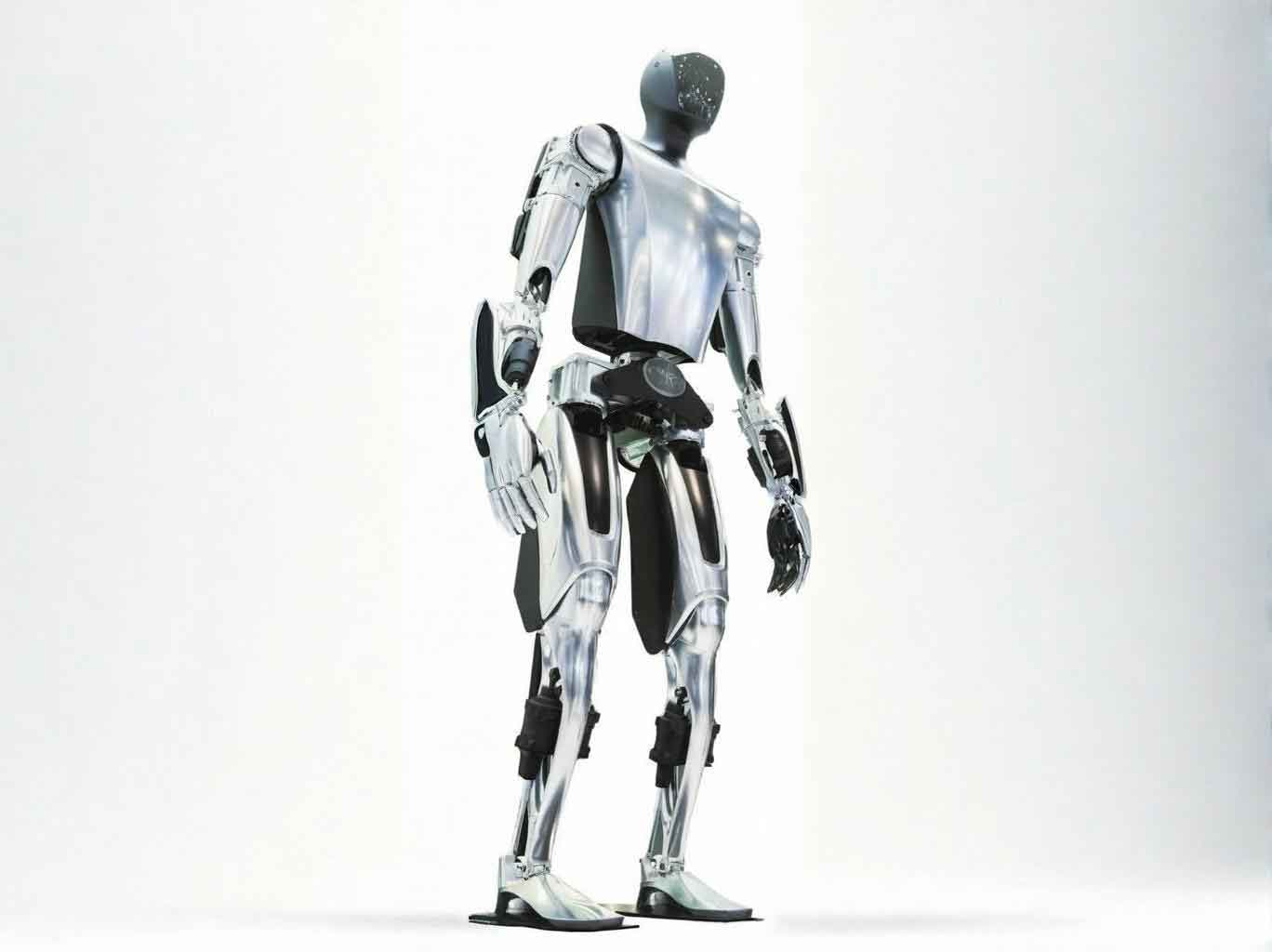
Application Landscapes: Where Embodied AI Robots Thrive
The unique value proposition of embodied AI robots—the fusion of AI with physical action—unlocks transformative applications across sectors. The experience design in each domain addresses specific user needs, from precision and safety to companionship and care.
1. Smart Healthcare
Here, the embodied AI robot acts as a surgeon’s extension, a rehabilitative coach, or a clinical companion. The interaction experience is built on extreme reliability, precision, and empathy.
- Surgical Robotics: Systems like the Da Vinci provide surgeons with enhanced 3D vision and wristed instruments that filter tremor. The HAI experience is about seamless control and trust; the robot becomes a transparent tool that augments human skill, modeled as a precision filter: \( A_{surgeon}^{out} = \Phi(A_{surgeon}^{in}) \), where \( \Phi \) represents the robot’s motion scaling and stabilization transform.
- Rehabilitation Robotics: Exoskeletons or robotic limbs assist patients in re-learning movements. The experience centers on adaptive support, where the robot provides “assistance-as-needed,” encouraging patient effort. The robot’s assistive force \( F_{robot} \) might be governed by a rule like \( F_{robot} = k \cdot (x_{target} – x_{patient}) \), where \( k \) adapts based on the patient’s ongoing performance and fatigue.
- Socially Assistive Robotics (SAR): Companion robots for the elderly or children with chronic illnesses. The experience is emotional and social. These robots use conversation, games, and reminders to combat loneliness, encourage medication adherence, and provide cognitive stimulation.
2. Intelligent Manufacturing & Logistics
This domain leverages the strength, endurance, and precision of embodied AI robots for collaboration alongside human workers. The key experience metrics are safety, intuitive communication, and task fluency.
- Collaborative Robots (Cobots): Designed to work safely without cages. Interaction involves gesture control, voice commands, and physical guidance programming (“lead-through teaching”). The experience must foster a sense of teamwork, with the robot anticipating human actions and maintaining a safe velocity field: \( \vec{v}_{robot} = f(\vec{d}_{human-robot}, \vec{v}_{human}) \), slowing down as distance decreases.
- Autonomous Mobile Robots (AMRs): For material transport in warehouses. The HAI experience for floor workers involves predictable navigation, clear signaling of intent (e.g., lights, sounds), and the ability to safely cross paths. The robot’s path planning algorithm must optimize not just for efficiency \( \min \int_{t_0}^{t_f} C(path(t)) dt \) but also for minimizing disruption to human workflows.
The integration of embodied AI robots into production lines represents a significant leap in adaptive automation, moving from static, programmed machines to flexible, perceptive teammates.
3. Autonomous Driving & Smart Transportation
An autonomous vehicle is the quintessential embodied AI robot on a grand scale. The “user” is often a passenger, making the in-cabin experience paramount. Key aspects include:
- Explainability and Trust: The vehicle must communicate its perception and intentions. This can be via augmented reality displays highlighting detected pedestrians or vocal explanations like “Stopping for the red light ahead.” Trust calibration is critical—over-trust and under-trust are both dangerous.
- Motion Planning for Comfort: Beyond safety, the driving style must be comfortable and predictable for passengers. This involves optimizing for smooth jerk (the derivative of acceleration): \( \min \int j(t)^2 dt \), subject to safety constraints.
- Passenger-Vehicle Interaction: Voice assistants for climate control or destination changes create a natural HAI experience within the cabin, transforming the car from a tool into a chauffeur.
4. Smart Elderly Care & Domestic Assistance
Perhaps the most socially impactful domain, where the embodied AI robot provides physical and social support for aging populations. Experience design focuses on dignity, ease of use, and reliability.
- Physical Assistance: Robots that can fetch items, provide stability for walking, or assist with dressing. The interaction must be respectful and non-intrusive, often initiated by simple voice commands.
- Cognitive & Social Support: Robots that lead memory games, remind about appointments, or engage in simple conversation to reduce social isolation and cognitive decline.
- Health Monitoring: Embodied agents can unobtrusively monitor daily activity patterns and vital signs, alerting caregivers or family members to potential health issues based on anomaly detection algorithms.
| Application Domain | Primary Role of Embodied AI Robot | Core User Experience Imperative |
|---|---|---|
| Smart Healthcare | Surgical assistant, rehabilitative coach, therapeutic companion. | Trust, precision, empathy, and adaptive support. |
| Intelligent Manufacturing | Collaborative worker (cobot), autonomous logistics agent. | Safety, intuitive communication, task fluency, and predictable behavior. |
| Autonomous Driving | Chauffeur and in-cabin assistant. | Safety, explainability, motion comfort, and natural in-vehicle interaction. |
| Smart Elderly Care | Physical aide, cognitive stimulant, and social companion. | Dignity, reliability, ease of use, and emotional connection. |
Future Trajectories: Toward Symbiotic Coexistence
The future of human interaction with embodied AI robots points toward deeper integration, driven by advances in AI and a more sophisticated understanding of human factors.
1. Theory Development Driven by Data & Neuroscience: Future theories will be less speculative and more data-driven. Large-scale interaction logs from millions of human-robot encounters will allow us to model complex experience factors algorithmically. Furthermore, neuroscience will provide a foundational layer, revealing how our brains encode intentions when working with an embodied AI robot and how neural synchrony might predict team performance, potentially described by a cross-brain coherence metric \( \gamma_{H-R}(t) \).
2. Methodological Innovation through Multi-Modal Fusion: The gold standard will be the synchronous fusion of data streams: speech, gaze, gesture, physiology, and robot sensor data. Advanced machine learning models (e.g., multimodal transformers) will synthesize these to infer user states—confusion, trust, stress—in real-time, allowing the embodied AI robot to adapt its behavior proactively.
3. Expansion into Novel and Critical Scenarios: Applications will extend to domains that are dangerous, dull, or dirty for humans. This includes:
- Disaster Response: Search-and-rescue robots navigating rubble.
- Precision Agriculture: Robots for delicate fruit picking or targeted weeding.
- Environmental Remediation: Robots cleaning up nuclear or chemical waste.
In these scenarios, the HAI experience for remote operators will focus on high-fidelity situational awareness through immersive telepresence and shared autonomy controls.
4. Establishing Human-Centered Ethical and Social Norms: As embodied AI robots become more pervasive, robust frameworks are needed for:
- Privacy & Data Security: Cameras and microphones on personal robots create intimate data. Transparent data policies and on-device processing are essential.
- Accountability & Explainability: When a collaborative action fails, who is responsible—the human, the robot designer, or the algorithm? Explainable AI (XAI) for physical actions is crucial.
- Long-term Social Impact: We must study the effects of prolonged companionship with embodied AI robots on human social development and mental health, ensuring technology serves to augment, not replace, human connection.
The journey toward seamless human-embodied AI robot collaboration is a grand interdisciplinary challenge. It requires not just breakthroughs in robotics and artificial intelligence but also sustained inquiry into the human psyche, social dynamics, and ethical philosophy. By placing the interactive experience at the center of research and design, we can steer the development of these powerful technologies toward a future where embodied AI robots are not just tools, but trusted, understandable, and beneficial partners in our shared physical world.