
As an educator deeply involved in the evolution of Human Factors Engineering (HFE) instruction, I have witnessed firsthand the transformative shift required in our pedagogical approaches. The rapid convergence of Embodied Intelligence, Generative Artificial Intelligence, large foundation models, and advanced humanoid platforms presents a pivotal opportunity to redefine experimental education in our field. Traditional HFE labs, often constrained by static tasks, fragmented knowledge application, and limited contextual fidelity, struggle to cultivate the systemic, innovative thinkers demanded by today’s complex socio-technical systems. This article presents a comprehensive framework for an experimental teaching system, fundamentally reimagined through the lens of embodied AI. This system is built on the core principle of intelligent technology as the foundation, human factors theory as the essence, and competency cultivation as the core. It leverages the embodied AI robot as the central experiential platform, integrated with generative AI for dynamic scenario generation and large language models for naturalistic interaction, to create immersive, intelligent, and systematic learning experiences.
The rationale for this paradigm shift is grounded in both educational theory and technological reality. Constructivist learning theory posits that knowledge is actively built by the learner through experience and reflection. Embodied cognition further asserts that cognitive processes are deeply rooted in the body’s interactions with the world. Technology-Enhanced Learning (TEL) frameworks provide the scaffolding for how advanced tools can amplify these processes. An embodied AI robot serves as the perfect nexus for these theories. It is not merely a tool but an active agent that students must design for, collaborate with, and analyze, thereby constructing a deep, practical understanding of HFE principles within a realistic, interactive loop of perception, decision, action, and feedback.
Theoretical Foundations and System Architecture
The proposed teaching framework is architected around a closed-loop “Theory-Practice-Competency” model, energized by embodied intelligence. The core educational pillars supporting this architecture are:
- Constructivism: Learning is an active, contextualized process of constructing knowledge. The framework employs project-based learning where students tackle open-ended, complex problems (e.g., “Design a human-robot collaborative assembly workstation”) rather than conducting isolated, verification-style experiments.
- Embodied Cognition: Cognitive understanding is inseparable from physical interaction. By programming, observing, and physically collaborating with an embodied AI robot, students gain an intuitive, visceral understanding of concepts like workload, situational awareness, and natural interaction paradigms that pure simulation or theory cannot provide.
- Technology-Enhanced Learning (TEL): Advanced technologies are leveraged not just for content delivery but as cognitive partners. The embodied AI robot, combined with AI models, acts as a dynamic, responsive “teachable agent” and a source of rich, multi-modal data, deepening the learning dialogue and enabling personalized exploration.
The system architecture translates these theories into a tangible structure centered on the “Perception-Interaction-Decision-Action” pipeline of an intelligent agent, mapped directly onto HFE learning objectives. This is visually and functionally represented by the integration of a humanoid platform as the primary experiential medium.
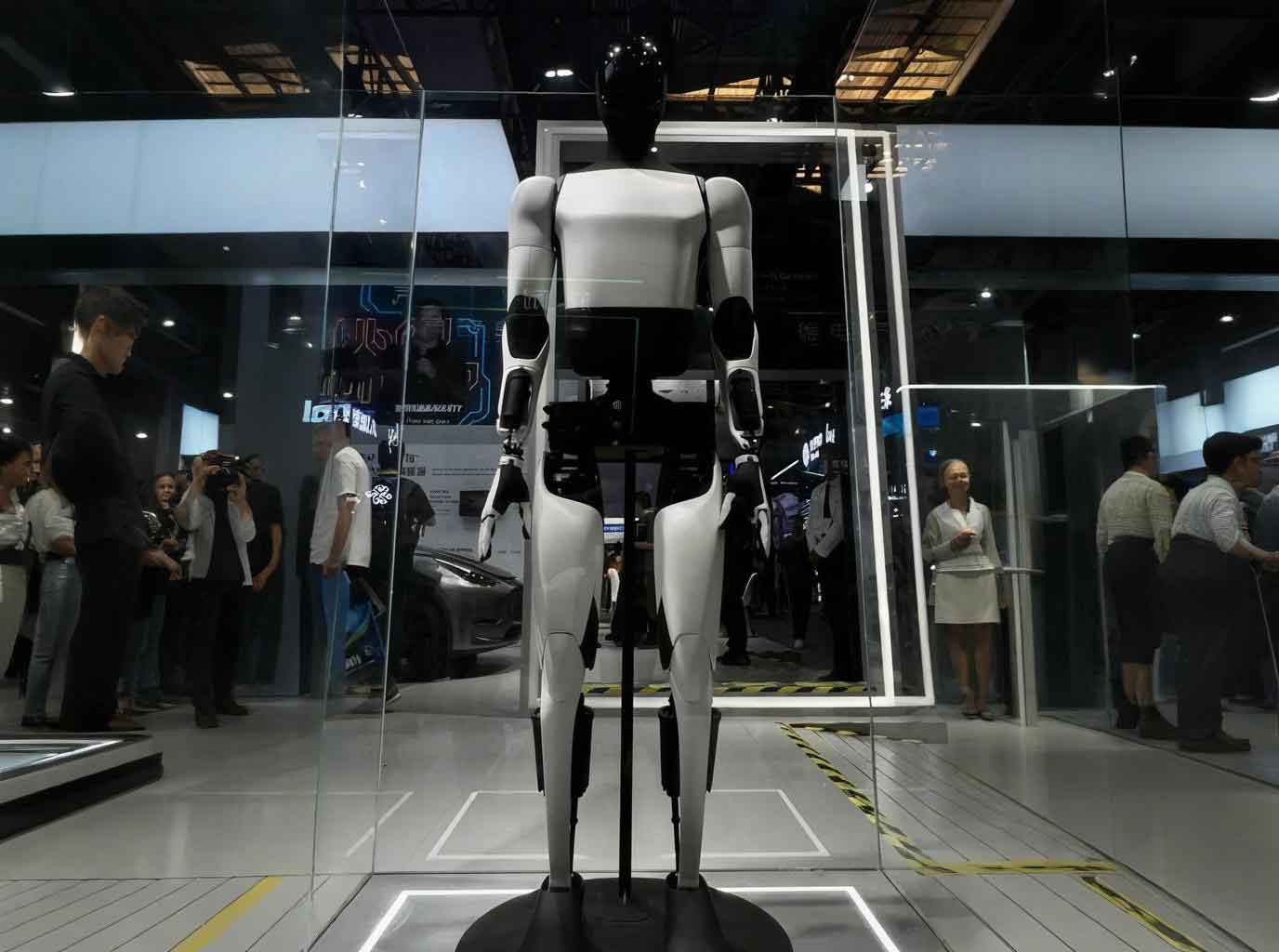
The physical presence and capabilities of the embodied AI robot are what enable this high-fidelity mapping. Its sensors (cameras, microphones, force-torque) become the instruments for studying human perception and designing machine perception systems. Its actuators and motion planners become the subject of workspace design and safety analysis. Its AI “brain,” potentially augmented by cloud-based large models, becomes the focus for interaction design and task allocation studies. This transforms the laboratory from a collection of instruments into a cohesive, intelligent system that students must analyze and optimize holistically.
Deconstructing the Framework: Modules, Content, and Technology Integration
The framework is decomposed into four synergistic modules, each corresponding to a core stage in the embodied intelligence pipeline and targeting specific HFE competencies. The following table outlines this integrated design:
| Embodied AI Module | Human Factors Knowledge Focus | Experimental Learning Objectives | Key Enabling Technologies | Cultivated Competencies |
|---|---|---|---|---|
| Perception & Situation Awareness | Visual/auditory perception, attention allocation, signal detection theory, cognitive workload. | Design sensor suites for an embodied AI robot; analyze its and human’s attention in multi-task scenarios; evaluate workload in monitoring tasks. | Robot vision/audio processing; eye-tracking systems; EEG/GSR for cognitive load; Generative AI to create dynamic visual/auditory signals. | Understanding human sensory limits; designing for effective machine perception; data-driven analysis of situational awareness. |
| Interaction & Communication | Human-Computer Interaction (HCI) principles, multi-modal communication, user-centered design, natural language interfaces. | Design and evaluate multi-modal (voice, gesture, GUI) interfaces for controlling/collaborating with an embodied AI robot; assess usability and user experience. | Robot speech synthesis/recognition; gesture recognition cameras; Large Language Models (LLMs) for natural dialogue; Generative AI for UI prototype generation. | Multi-modal interface design; usability testing skills; integrating NLP into tangible systems. |
| Decision & Task Analysis | Hierarchical Task Analysis (HTA), cognitive task analysis, mental models, human-automation/robot teaming, function allocation. | Decompose a complex task (e.g., logistics fetching) for human-robot teams; model the decision logic for the embodied AI robot; perform cognitive workload prediction and allocation. | AI planning algorithms; LLMs for task decomposition assistance; simulation software (e.g., CAD, process simulators) for workflow modeling. | System-level task modeling; rational function allocation between human and AI; predictive workload analysis. |
| Action & Safety in Workspace | Anthropometry, biomechanics, workspace design, safety engineering, error analysis, dynamic risk assessment. | Design a physically collaborative workspace for an embodied AI robot and a human; conduct safety risk assessment (e.g., using FMEA); optimize motion paths for efficiency and safety. | Robot motion planning and control; force/torque sensing for compliant control; VR/AR for immersive workspace simulation and validation. | Ergonomic workspace design; proactive safety engineering for dynamic agents; motion planning evaluation. |
The integration of technologies is not additive but multiplicative. For instance, in a “collaborative kitting” experiment, students might use a generative AI tool to create varied assembly instructions (Perception/Interaction), which the embodied AI robot must interpret. They then analyze the task (Decision) to decide which sub-tasks the robot should perform versus the human. Finally, they program the robot’s motions and design the shared table layout (Action/Safety), collecting data on completion time and subjective workload to iteratively optimize the system. This end-to-end experience encapsulates the core HFE philosophy within a modern, intelligent context.
Quantitative Foundations and Assessment
Moving beyond qualitative design, the framework emphasizes a data-driven, quantitative approach to HFE, facilitated by the embodied AI robot. Students learn to model and measure key performance and human state metrics. For example, cognitive workload during a monitoring task with an embodied AI robot can be modeled using a simplified version of the Multiple Resource Theory, where total workload $W_{total}$ is a function of demands on different perceptual/cognitive channels:
$$W_{total} = \alpha \cdot V_{load} + \beta \cdot A_{load} + \gamma \cdot C_{load}$$
where $V_{load}$, $A_{load}$, and $C_{load}$ represent visual, auditory, and cognitive/decision loads, respectively, and $\alpha, \beta, \gamma$ are weighting coefficients students can empirically derive through experiments correlating robot task parameters with physiological (e.g., pupil dilation) or performance metrics.
Similarly, the efficiency of a human-robot collaborative task can be evaluated using a metric like Collaborative Efficiency ($CE$), which compares the performance of the teamed system to theoretical solo performance:
$$CE = \frac{T_{human\_alone} + T_{robot\_alone} – T_{team}}{T_{human\_alone} + T_{robot\_alone}} \times 100\%$$
Here, $T_{team}$ is the time for the human and embodied AI robot to complete the task together, while $T_{human\_alone}$ and $T_{robot\_alone}$ are their respective times working alone (the latter requiring students to consider full automation feasibility). An optimal design should maximize $CE$ while ensuring safety and acceptable human workload, leading to a multi-objective optimization problem that mirrors real-world engineering challenges.
Assessment within this framework is necessarily multifaceted. It moves from traditional lab reports to include design portfolios, system demonstration videos, peer reviews of collaborative designs, and analyses of the multi-modal data (log files, video, sensor data) generated by the embodied AI robot during task execution. The evaluation rubric emphasizes the synthesis of HFE theory with technical implementation, the creativity of the human-robot system design, the rigor of the experimental evaluation, and the ethical considerations of the proposed solution.
A Detailed Case Implementation: The Human-Robot Collaborative Kitchen
To concretely illustrate the framework, consider a semester-long project module titled “Human-Robot Collaborative Kitchen System: Analysis and Design.” This project integrates all four framework modules within a relatable yet complex domain.
Project Brief: Student teams are tasked with designing a safe, efficient, and user-friendly collaborative system where a human and an embodied AI robot (e.g., a platform like a Nadia or Digit robot) work together to prepare a meal. The project is phased to align with the curriculum.
| Phase (Weeks) | HFE Focus & Embodied AI Module | Student Activities & Deliverables | Technology & Embodied AI Robot Role |
|---|---|---|---|
| 1-3: Task & User Analysis | Decision & Interaction. HTA, user profiling, function allocation. | Decompose a recipe (e.g., stir-fry) into elemental tasks. Profile a target user (e.g., elderly, busy professional). Propose an initial human-robot task allocation matrix. | Use LLMs (e.g., GPT) to brainstorm task hazards and generate user persona narratives. The embodied AI robot is studied for its capability constraints. |
| 4-6: Perception & Interaction Design | Perception & Interaction. Interface design, multi-modal communication. | Design the robot’s perception system (What must it see/recognize?). Prototype the primary interaction mode: voice commands, a tablet GUI, or gesture. Conduct a cognitive walkthrough. | Program the embodied AI robot for basic object recognition (using its camera). Implement a simple voice command system. Use generative AI tools to create UI mockups. |
| 7-9: Workspace & Safety Engineering | Action & Safety. Anthropometry, workspace layout, risk assessment. | Design the physical kitchen layout using ergonomic principles. Conduct a Failure Modes and Effects Analysis (FMEA) for critical collaborative steps (e.g., handing a knife). Define robot speed/force limits in shared space. | Use CAD software for layout design. Simulate or program the embodied AI robot‘s motion paths. Implement a basic safety monitor (e.g., stop if human hand is detected in zone). |
| 10-12: Integration, Testing & Evaluation | All Modules. System evaluation, data analysis, iterative design. | Integrate subsystems. Conduct user trials, measuring task time, error counts, and subjective workload (NASA-TLX). Analyze data to propose one major design improvement. | The embodied AI robot executes the integrated task. Data is logged from robot sensors and user inputs. Statistical analysis tools are used to evaluate performance. |
Through this project, students engage with the embodied AI robot not as a black box but as a configurable system whose perception, decision-making, action, and safety parameters they must explicitly design based on HFE principles. They confront real trade-offs: a faster robot may increase efficiency but also risk; a complex voice interface may reduce physical load but increase cognitive load. The generative AI and LLMs act as brainstorming partners and rapid prototyping tools, while the physical robot provides the ground truth test of their designs’ practicality and safety.
Discussion, Challenges, and Future Trajectory
The implementation of this embodied AI-powered framework signifies a profound shift from teaching HFE as a set of isolated principles to fostering it as a dynamic, integrative practice for the age of autonomous systems. The embodied AI robot serves as the essential catalyst for this shift, providing a tangible, interactive focal point that makes abstract concepts like “situation awareness” or “shared autonomy” experientially real. It bridges the gap between the digital AI often discussed in HCI and the physical, situated intelligence that characterizes the next frontier of human-machine systems.
However, this approach is not without challenges. The initial cost and maintenance of advanced embodied AI robot platforms can be significant. Developing a curriculum that seamlessly weaves robotics programming with core HFE theory requires deep cross-disciplinary collaboration among educators. There is a steep learning curve for both instructors and students in managing the technical complexity. These challenges can be mitigated through strategic partnerships with industry, the use of scalable simulation platforms (like Gazebo or Isaac Sim) for initial concept testing, and a modular curriculum design that allows students to engage at different levels of technical depth.
The future trajectory of this framework is intrinsically linked to the evolution of the technologies themselves. As embodied AI robot platforms become more capable and affordable, and as AI models become more integrated with robotic control (leading to true “embodied foundation models”), the scope of feasible student projects will expand dramatically. Future iterations could involve swarms of robots, human-robot collaboration in virtual/ augmented reality, or the ethical co-design of robots for sensitive domains like healthcare. The core framework, however—centered on the Perception-Interaction-Decision-Action loop and the integration of HFE theory with hands-on experimentation—will remain robust and more critical than ever.
Conclusion
The construction of an embodied intelligence-powered teaching framework for Human Factors Engineering represents a necessary and transformative response to the demands of intelligent automation. By placing the embodied AI robot at the heart of the experimental learning experience, integrated with generative AI and large models, we transcend the limitations of traditional labs. This framework creates a contextualized, intelligent, and systematic paradigm where students actively construct knowledge through design, collaboration, and iterative optimization of complex human-robot systems. It cultivates not only technical proficiency in HFE methods but also the higher-order competencies of systems thinking, ethical reasoning, and innovative problem-solving. As we educate the next generation of engineers and designers who will shape our co-existence with intelligent machines, providing them with direct, meaningful experience through frameworks like this is not merely an educational improvement—it is an essential responsibility. The embodied AI robot in the lab is no longer just a teaching tool; it is the prototype, the partner, and the provocation through which the future of human-centered system design is being learned and invented.