
The rise of Embodied Artificial Intelligence (EAI) represents a fundamental paradigm shift within the broader AI landscape. Moving beyond purely digital cognition, embodied AI robots are intelligent agents that acquire knowledge and demonstrate intelligent behavior through direct physical interaction with their environment. This emphasis on the inseparability of perception, cognition, and action is breaking down the long-standing barrier between the information world and the physical realm. As a core component of future industries and a key driver of new quality productive forces, the development of embodied AI robots is poised to redefine industries, economies, and societal structures on a global scale.
The evolutionary path of EAI spans several decades, transitioning from early conceptual and technical萌芽 (1950s-1990s), through a prolonged period of accumulation and integration of robotics, computer vision, and machine learning (1990s-2022), into a current phase marked by accelerated breakthroughs, largely fueled by advances in large foundation models. Today, this technology is rapidly moving from science fiction into tangible, scalable application scenarios, attracting strategic attention from major economies worldwide.
I. Global Strategic Landscapes for Embodied AI Development
Leading nations and economic blocs have recognized the transformative potential of embodied AI robots and are actively crafting policies and roadmaps to secure leadership. Their approaches reflect distinct priorities, institutional frameworks, and societal needs.
| Region/Country | Strategic Philosophy | Key Initiatives & Focus Areas | Primary Goals for Embodied AI Robots |
|---|---|---|---|
| United States | Maintaining foundational leadership through intensive R&D and private-sector dynamism. | National AI R&D Strategic Plans, National Robotics Roadmap (2024), AI Infrastructure Initiatives (e.g., “Stargate”). | Ensure dominance in core AI technologies (LLMs, multimodal perception) to enable advanced embodied agents. Accelerate progress toward AGI through embodied systems. Foster a robust ecosystem for innovation and commercialization. |
| European Union | “Legislation-first,” emphasizing safety, ethics, and human-centric trust. | AI Act, Coordinated Plan on AI, various resolutions on robotics and AI ethics. | Guide the steady, safe, and ethically-aligned development of EAI. Establish a comprehensive governance framework. Promote EAI applications while enforcing stringent safety and fundamental rights protections. |
| Japan | Societal problem-solving, particularly aging demographics, with a focus on commercialization. | AI Strategy (multiple revisions), Society 5.0, Sixth Science, Technology and Innovation Basic Plan. | Drive realistic business applications, especially in care and service. Integrate embodied AI robots as key components of social infrastructure. Leverage AI and data to build a resilient, human-centered society. |
The value proposition of an embodied AI robot can be conceptualized as a function of its synergistic capabilities:
$$
V_{EAI} = \int_{0}^{T} [\alpha S(t) + \beta A(t) + \gamma L(t)] e^{-\delta t} dt
$$
Where:
- $V_{EAI}$ represents the total value generated over time.
- $S(t)$ denotes sensing and perception capability (multi-modal data input).
- $A(t)$ denotes action and manipulation capability (physical interaction).
- $L(t)$ denotes learning and cognition capability (adaptive intelligence).
- $\alpha, \beta, \gamma$ are weighting coefficients for each capability.
- $e^{-\delta t}$ is a discount factor accounting for technological obsolescence.
Global strategies aim to maximize $V_{EAI}$ by investing in the core components $S(t)$, $A(t)$, and $L(t)$.
II. China’s Pathway: Converging Opportunities and Formidable Challenges
Within China’s push for new industrialization and technological self-reliance, embodied AI robots are positioned as a strategic frontier. National and local policies are creating a fertile, though complex, environment for innovation and industrial development.
A. Strategic Positioning and Localized Ecosystem Development
National directives, such as the “Guidance on the Innovative Development of Humanoid Robots” and the “Implementation Opinions on Promoting the Innovative Development of Future Industries,” provide a top-level framework. They aim to build a secure innovation chain and industrial supply chain for embodied AI robots. Major metropolitan regions are actively implementing these visions:
- Beijing: Positioning itself as a national source of original innovation for embodied AI, exploring paths toward general intelligent agents.
- Shanghai & Shenzhen: Focusing on core technology breakthroughs, AI major special projects, and the integration of general-purpose models with robotic embodiments to drive application.
- Chengdu-Chongqing & Ningbo: Building specialized industrial clusters, such as “robotics + automotive electronics,” leveraging local manufacturing strengths to create innovation highlands.
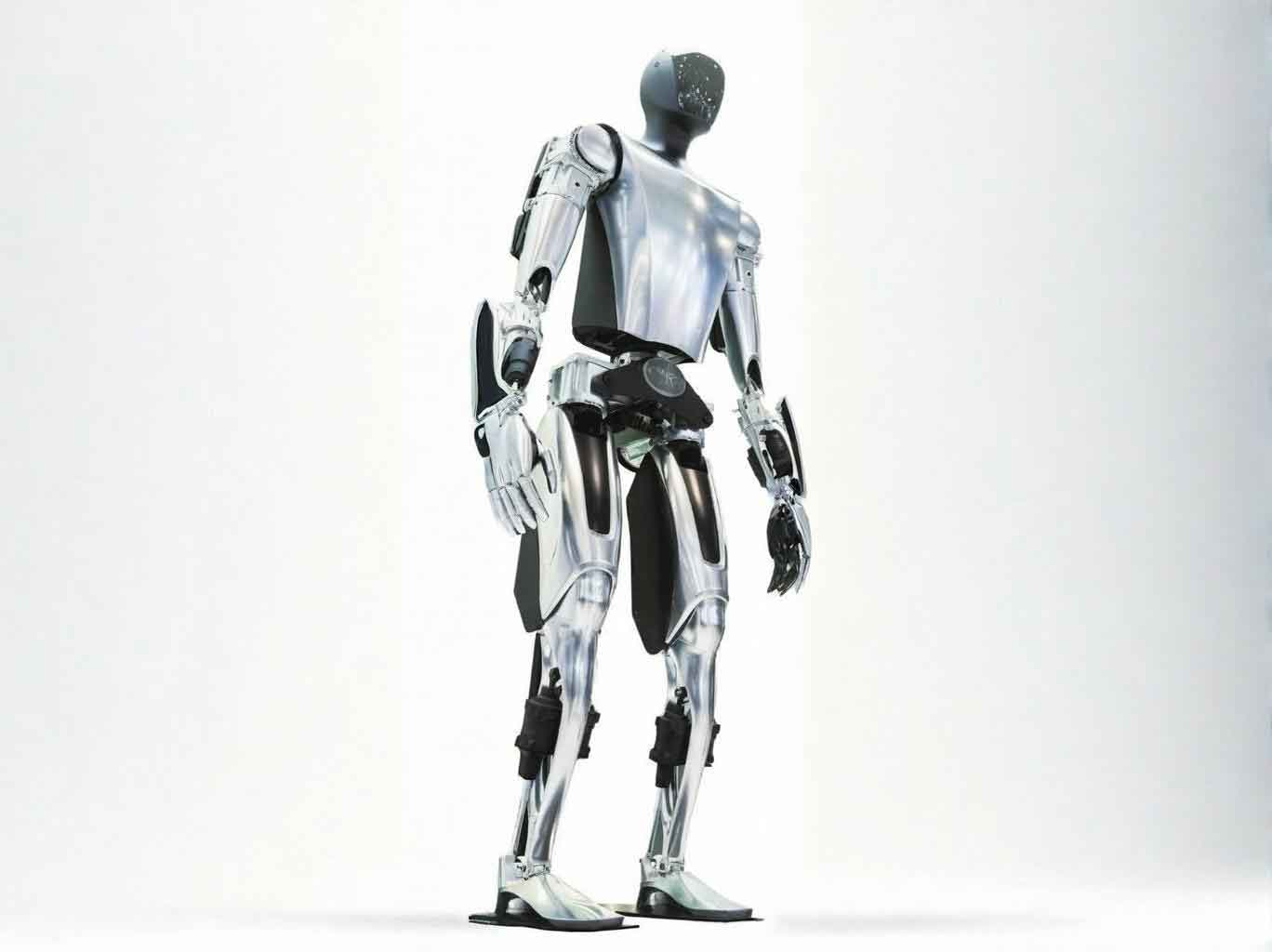
B. Multidimensional Challenges Impeding Progress
Despite the optimistic momentum, the path for embodied AI robots in China is fraught with significant technical, industrial, and governance hurdles that must be systematically addressed.
| Challenge Domain | Specific Bottlenecks | Impact on Embodied AI Robot Development |
|---|---|---|
| Core Technologies |
|
Limits the adaptability, generalization, and real-world reliability of embodied AI robots. Increases development cost and time. |
| Industrial Application |
|
Hinders the emergence of dominant product platforms and slows down commercial scaling and widespread adoption. |
| Standards & Governance |
|
Creates market uncertainty, raises regulatory risks, and potentially erodes public trust, stifling innovation. |
A fundamental computational challenge lies in achieving real-time, energy-efficient embodied cognition. This can be modeled as an optimization problem constrained by physical laws:
$$
C_{\text{embodied}} = \frac{P_{\text{env}} \cdot I_{\text{sensor}}}{A_{\text{actuator}} + D_{\text{delay}}}
$$
Where a high cognitive performance $C_{\text{embodied}}$ for an embodied AI robot requires maximizing the product of environmental complexity $P_{\text{env}}$ and sensor information richness $I_{\text{sensor}}$, while minimizing actuator response error $A_{\text{actuator}}$ and processing delay $D_{\text{delay}}$.
III. Strategic Imperatives for Future Development
Drawing from global experiences and confronting domestic realities, a coherent, multi-pronged strategy is essential for China to not only participate but lead in the era of embodied intelligence.
1. Reinforce Macro-Level Design and Long-Term Strategic Planning. A clear, national-level master plan for embodied AI robots is crucial. This should be complemented by specialized sectoral policies and detailed implementation rules. The goal is to provide stable, long-horizon strategic guidance that aligns local government initiatives and corporate R&D roadmaps, enabling the capture of early-mover advantages in critical application verticals.
2. Drive Demand-Led, Full-Chain Technological Innovation. Innovation must be anchored in real-world application scenarios. This requires building a robust technological system centered on key breakthroughs:
- Unified Multimodal Processing: Developing models that seamlessly integrate visual, tactile, auditory, and proprioceptive data.
$$F_{\text{fusion}} = \sum_{i=1}^{N} w_i \cdot \text{Transform}_{\theta}(M_i)$$
Where $F_{\text{fusion}}$ is the fused representation, $M_i$ are different modality inputs, and $\text{Transform}_{\theta}$ is a learnable transformation. - Algorithm-Architecture Co-design: Creating algorithms and hardware (neuromorphic chips, specialized processors) specifically optimized for the low-power, high-efficiency needs of mobile embodied AI robots.
- World Models and Simulation: Leveraging advanced simulation to generate synthetic training data and allow for safe, accelerated learning of complex physical interactions.
A “full-chain” deployment model—from basic research and integrated demonstration to industrial application—must be implemented cohesively.
3. Cultivate a Holistic Policy Ecosystem for Sustainable Industrialization. The interdisciplinary nature of embodied AI robots necessitates a supportive, cross-cutting policy framework:
- Infrastructure Investment: Public support for shared data platforms, “algorithm + computing power” cloud services, and standardized testing environments for embodied AI robots.
- Multi-chain Integration: Policies that actively foster the convergence of innovation chains, capital chains, and industrial supply chains, particularly encouraging SMEs and startups.
- Governance and Ethics: Proactive development of a regulatory sandbox, dynamic technical standards, and clear ethical guidelines to ensure responsible development and build public trust.
4. Champion Open Innovation and Global Collaboration. In a field as complex as embodied AI, isolation is a path to obsolescence. While strengthening indigenous capabilities, it is imperative to:
- Establish diverse international cooperation channels focused on solving fundamental scientific problems.
- Participate in and lead the development of global standards and ethical norms.
- Attract top global talent and foster knowledge exchange, particularly in hub regions like Beijing, Shanghai, and the Greater Bay Area.
The objective should be to create an interlinked network of regional and global innovation, contributing to and benefiting from the worldwide advancement of embodied AI robots for sustainable development.
The transition toward embodied intelligence is not merely a technological upgrade; it is the next great leap in the interaction between information systems and the physical world. For China, successfully navigating this transition requires a balanced, strategic, and persistent effort that addresses the full spectrum of technical, industrial, and socio-ethical dimensions. The embodied AI robot is more than a machine; it is a platform for the next generation of productivity, and its strategic development will be a defining factor in the global technological and economic order of the coming decades.
| Application Scenario | Technical Readiness | Market / Regulatory Readiness | Potential Economic & Social Impact |
|---|---|---|---|
| Industrial Manufacturing & Logistics | High (Structured environments) | High (Clear ROI, existing automation frameworks) | Very High (Productivity, precision, 24/7 operations) |
| Home Service & Elderly Care | Medium-Low (Unstructured, human-centric) | Medium (High cost, safety/trust barriers, privacy concerns) | High (Addressing labor shortages, improving quality of life) |
| Healthcare Assistance | Medium (Semi-structured, high-safety critical) | Low-Medium (Stringent regulatory approval, high liability) | Very High (Surgical precision, rehabilitation, patient monitoring) |
| Autonomous Vehicles & Drones | Medium-High (Defined as a subset of EAI) | Medium (Evolving regulations, public acceptance testing) | Very High (Mobility revolution, logistics optimization) |
| Education & Research | High (Controllable environments) | High (Clear pedagogical/experimental value) | Medium-High (Accelerating R&D, personalized learning) |
The ultimate algorithmic challenge for an advanced embodied AI robot is to learn a policy $\pi$ that maximizes cumulative reward in a partially observable, continuous physical world. This can be framed as a Partially Observable Markov Decision Process (POMDP) optimization:
$$
\pi^* = \underset{\pi}{\arg\max} \, \mathbb{E} \left[ \sum_{t=0}^{\infty} \gamma^t R(s_t, a_t) \, \bigg| \, a_t \sim \pi(o_t, h_t), \, o_t \sim O(s_t) \right]
$$
Where $s_t$ is the true world state, $o_t$ is the agent’s observation, $h_t$ is the history of past observations and actions, $a_t$ is the action taken by the embodied AI robot, $R$ is the reward function, and $\gamma$ is a discount factor. Solving this at scale and with efficiency is the core research pursuit driving the field forward.