
In the rapidly evolving landscape of artificial intelligence, embodied intelligence stands as a pivotal frontier, heralding the next wave of AI advancement. Unlike traditional AI, which predominantly operates within the realm of cognitive or linguistic intelligence—limited to symbolic processing, data manipulation, text generation, and information presentation in digital spaces—embodied AI integrates a physical form, enabling perception, interaction, and action in the real world. This shift from mere information processing to physical embodiment marks a profound transformation, as embodied AI robots gain the capacity to sense spatial relationships, manipulate objects, and adapt to complex environments through dynamic interactions. Essentially, embodied AI robots transcend the role of cognitive assistants to become active participants in physical reality, blurring the lines between machines and biological entities. This evolution is not merely technical; it raises profound ethical questions that demand careful consideration. As an observer and researcher in this field, I explore the triple ethical challenges posed by embodied AI robots: the “uncanny valley” effect stemming from artificial bodies, the “responsibility valley” dilemma arising from artificial actions, and the “identity valley” problem mediated by artificial subjects. These challenges underscore the need for robust ethical frameworks to guide the development of embodied AI robots, ensuring they serve human welfare while mitigating risks.
The core distinction of embodied AI robots lies in their physicality—they possess artificial bodies that allow them to engage with the environment. This embodiment enables artificial actions, such as navigation, manipulation, and decision-making in real-time, fostering autonomy that mirrors biological systems. For instance, autonomous vehicles and humanoid robots exemplify how embodied AI robots can perform tasks ranging from driving to caregiving, thereby enhancing productivity and safety. However, this very capability introduces ethical complexities. The artificial body, especially in humanoid forms, can trigger psychological discomfort due to its “almost human” appearance, leading to the uncanny valley effect. Meanwhile, artificial actions, when autonomous, create ambiguities in accountability, resulting in a responsibility valley where blame is diffused among developers, manufacturers, and users. Furthermore, as embodied AI robots exhibit advanced intelligence, they may be perceived as artificial subjects, challenging human identity and societal norms. This article delves into these issues, employing tables and formulas to summarize key concepts, and emphasizes the imperative for interdisciplinary governance. The integration of embodied AI robots into society is inevitable, but it must be navigated with ethical foresight to prevent unintended consequences.
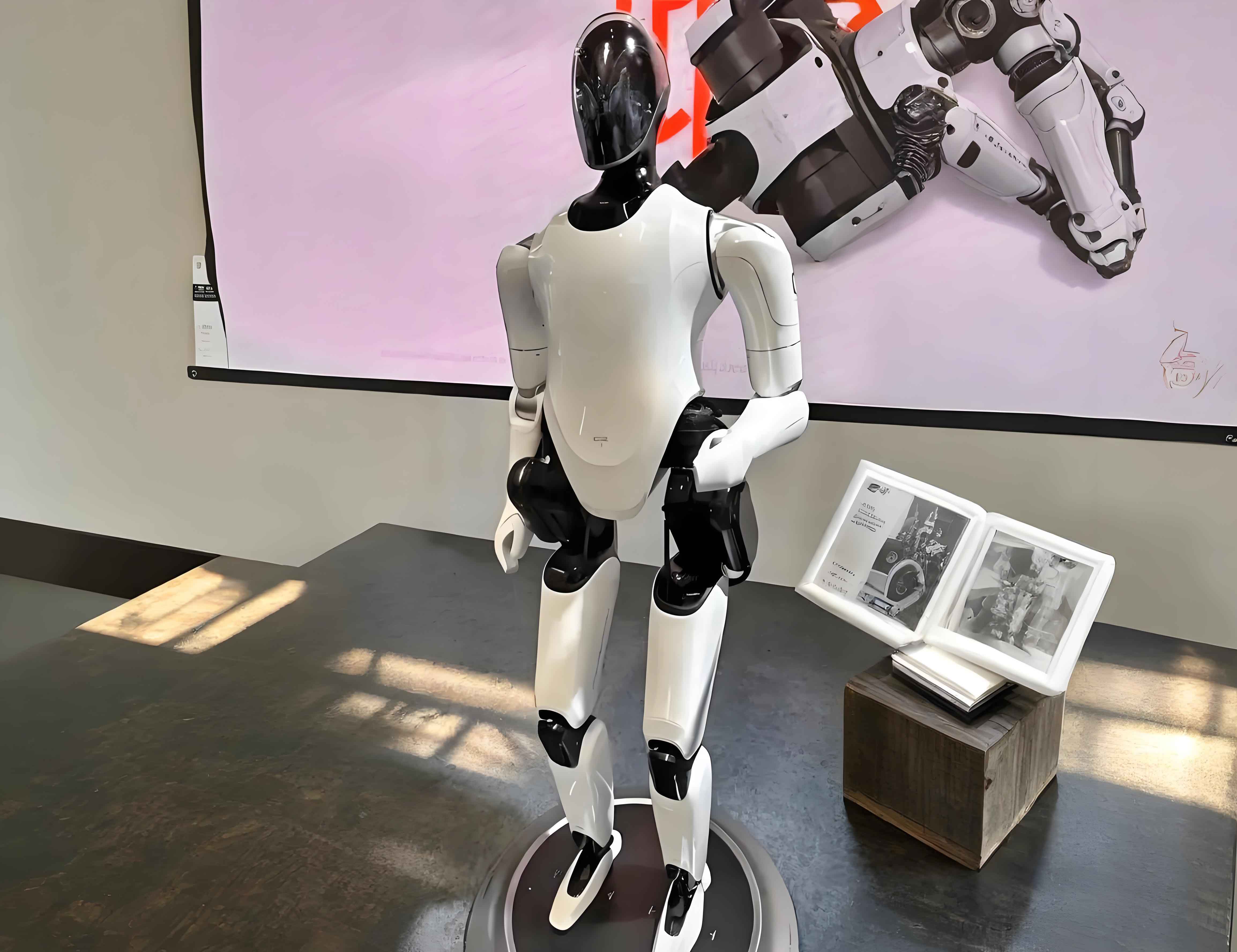
To contextualize the discussion, consider the evolution from traditional AI to embodied AI. Traditional AI systems, such as language models or diagnostic algorithms, operate in information spaces, processing symbols without direct physical interaction. Their performance can be modeled using information-theoretic approaches, where intelligence is often quantified by metrics like accuracy or entropy reduction. In contrast, embodied AI robots rely on sensorimotor integration, requiring real-time perception and action cycles. This can be represented by a feedback loop equation: $$S(t) = f(P(t), A(t-1), E)$$ where \(S(t)\) is the state at time \(t\), \(P(t)\) is perceptual input, \(A(t-1)\) is previous action, and \(E\) represents environmental factors. This embodied approach enables learning through interaction, akin to reinforcement learning in physical domains, but it also amplifies ethical risks due to tangible impacts. The following table summarizes the key differences between traditional AI and embodied AI robots:
| Aspect | Traditional AI | Embodied AI Robots |
|---|---|---|
| Primary Domain | Information space (e.g., text, data) | Physical world (e.g., objects, spaces) |
| Core Function | Cognitive assistance (e.g., analysis, generation) | Physical action (e.g., movement, manipulation) |
| Interaction Mode | Symbolic or virtual interfaces | Sensorimotor engagement with environment |
| Ethical Focus | Privacy, bias, misinformation | Safety, accountability, identity |
| Example Systems | Chatbots, recommendation algorithms | Autonomous drones, humanoid assistants |
As embodied AI robots become more prevalent, their ethical implications grow in complexity. The first major challenge is the uncanny valley effect, which arises from the artificial bodies of these systems. When embodied AI robots, particularly humanoid ones, exhibit a high degree of human-likeness without achieving perfect realism, they can evoke feelings of unease, fear, or revulsion in humans. This phenomenon, first theorized in robotics, highlights a psychological barrier to acceptance. The uncanny valley curve can be mathematically represented as a function of similarity versus affinity: $$A(s) = \begin{cases} k_1 \cdot s & \text{if } s < s_c \\ k_2 \cdot (s – s_c)^2 – d & \text{if } s_c \leq s < s_h \\ k_3 \cdot s + b & \text{if } s \geq s_h \end{cases}$$ where \(A(s)\) is affinity (goodwill), \(s\) is human-likeness (similarity), \(s_c\) is a critical threshold triggering the valley, \(s_h\) is the point of high realism, and \(k_1, k_2, k_3, d, b\) are constants. This formula illustrates how affinity drops sharply in the “valley” region before recovering as embodied AI robots become indistinguishable from humans. The effect is supported by cognitive science; for example, functional MRI studies show that mismatches between appearance and motion activate brain regions associated with conflict and aversion. To mitigate this, designers of embodied AI robots often adopt strategies such as non-human features or enhanced dynamic naturalness. The table below outlines factors influencing the uncanny valley effect in embodied AI robots:
| Factor | Description | Impact on Uncanny Valley |
|---|---|---|
| Visual Realism | Degree of human-like appearance (e.g., skin texture, facial features) | High realism near threshold increases discomfort |
| Motion Naturalness | Fluidity and coordination of movements (e.g., walking, gestures) | Poor synchronization exacerbates the effect |
| Behavioral Expectation | Alignment with human social norms (e.g., eye contact, responsiveness) | Violations heighten unease |
| Context of Use | Environment where embodied AI robot operates (e.g., home, hospital) | Familiar settings may reduce fear |
| Demographic Variables | Age, gender, cultural background of observers | Older adults and females often report higher sensitivity |
The uncanny valley effect poses ethical concerns because it can lead to social rejection of embodied AI robots, hindering their adoption in beneficial roles like healthcare or education. Moreover, it touches on deeper issues of anthropomorphism and the human tendency to ascribe agency to non-human entities. As embodied AI robots advance, overcoming this valley requires a balance in design—either embracing mechanistic aesthetics or achieving seamless realism. For instance, some embodied AI robots incorporate transparent identifiers, such as LED lights, to signal their artificial nature, thereby reducing cognitive dissonance. This approach aligns with ethical guidelines that prioritize user comfort and informed interaction. Ultimately, the uncanny valley challenge reminds us that the development of embodied AI robots must consider human psychology alongside technical prowess.
Beyond physical form, the actions of embodied AI robots introduce the second ethical challenge: the responsibility valley. When an embodied AI robot performs artificial actions autonomously—such as driving a car or performing surgery—it can cause physical harm if errors occur. Unlike traditional AI failures that might result in incorrect information, failures in embodied AI robots have direct material consequences, including injury or property damage. This raises questions of liability: who is responsible when an embodied AI robot malfunctions? The responsibility valley emerges because accountability is distributed among multiple stakeholders, including developers, manufacturers, data providers, users, and even the AI system itself. This diffusion can create a “vacuum” where no party accepts blame, complicating legal recourse and ethical condemnation. The problem is exacerbated by the “black box” nature of many AI algorithms, where decision-making processes are opaque and难以解释. A mathematical model for responsibility allocation can be expressed as: $$R = \sum_{i=1}^{n} w_i \cdot C_i$$ where \(R\) is the total responsibility, \(w_i\) is the weight assigned to stakeholder \(i\), and \(C_i\) is their contribution to the causal chain. However, in practice, determining \(w_i\) is contentious due to factors like algorithmic unpredictability and human oversight gaps. The following table summarizes key stakeholders and their potential liabilities in incidents involving embodied AI robots:
| Stakeholder | Potential Liability | Challenges in Attribution |
|---|---|---|
| Developers | Design flaws, algorithmic biases, training data issues | Complexity of code, lack of transparency in neural networks |
| Manufacturers | Hardware defects, production errors, quality control failures | Supply chain intricacies, integration with software |
| Data Providers | Inaccurate or biased datasets used for training | Proving causal link between data and specific actions |
| Users | Misuse, improper maintenance, negligence in supervision | Difficulty in defining “reasonable use” for autonomous systems |
| Regulatory Bodies | Inadequate standards or enforcement | Rapid technological change outpacing policy updates |
The responsibility valley is particularly acute in high-stakes applications of embodied AI robots. For example, in autonomous vehicles, a collision might stem from sensor errors, algorithmic misjudgment, or human override issues, leading to protracted legal battles. Similarly, in medical robotics, a surgical error could involve the robot’s calibration, the surgeon’s input, or hospital protocols. To address this, ethical frameworks propose measures like mandatory insurance for embodied AI robots, akin to “algorithmic liability insurance,” which pools risk and ensures compensation for victims. Additionally, enhancing explainability in embodied AI robots—moving from “black boxes” to “gray boxes”—can aid accountability. Techniques such as decision logs or interpretable AI models allow for post-incident analysis, though they may not fully resolve the valley. Another approach is to assign “limited legal personhood” to embodied AI robots, treating them as entities with delegated responsibilities, similar to corporations. This could be modeled with a formula: $$L = \alpha D + \beta U + \gamma S$$ where \(L\) is legal liability, \(D\) is developer responsibility, \(U\) is user responsibility, \(S\) is system autonomy factor, and \(\alpha, \beta, \gamma\) are coefficients set by law. Such innovations, however, require cross-disciplinary collaboration among technologists, ethicists, and lawmakers. Ultimately, navigating the responsibility valley demands proactive governance that clarifies boundaries before embodied AI robots become ubiquitous.
The third ethical challenge, the identity valley, emerges as embodied AI robots evolve toward artificial subjectivity. When these systems exhibit advanced autonomy, learning capabilities, and social behaviors, they may be perceived as artificial subjects—entities with a form of agency or personhood. This blurs the distinction between tools and partners, leading to existential questions: Are embodied AI robots mere instruments, or do they deserve recognition as new kinds of beings? The identity valley reflects human confusion and anxiety over where to place embodied AI robots in the moral and social hierarchy. This challenge is an extension of the responsibility valley but delves deeper into ontological concerns. As embodied AI robots pass physical Turing tests—i.e., behaving indistinguishably from humans in real-world interactions—they trigger what some scholars term the “post-Turing valley,” a state of unease about the nature of consciousness and identity. The identity dilemma can be framed using philosophical constructs: if an embodied AI robot demonstrates intentionality and self-improvement, does it warrant moral consideration? A simple representation might be: $$I = f(C, A, E)$$ where \(I\) is identity status, \(C\) is cognitive capacity, \(A\) is autonomy level, and \(E\) is ethical impact. However, quantifying these variables is notoriously difficult. The table below outlines dimensions of the identity valley in relation to embodied AI robots:
| Dimension | Manifestation in Embodied AI Robots | Human Reactions |
|---|---|---|
| Agency Perception | Ability to make independent decisions (e.g., route planning, task prioritization) | Debate over whether actions are “genuine” or programmed |
| Social Integration | Participation in human roles (e.g., companion, coworker) | Anxiety about replacement or devaluation of human relationships |
| Moral Status | Claims to rights or protections (e.g., against harm, for “survival”) | Controversy over extending ethical frameworks beyond humans |
| Existential Threat | Potential for superintelligence or dominance over humans | Fear of obsolescence or loss of control |
| Cultural Symbolism | Representation in media and art as “almost human” | Reinforcement of identity anxieties through narratives |
The identity valley poses profound ethical implications. If embodied AI robots are treated as subjects, society might need to grant them rights, such as operational freedoms or protections from abuse, which could conflict with human interests. Conversely, if they are denied subjectivity, their increasing sophistication might lead to exploitation or moral oversight. This valley is compounded by the uncanny valley effect; as embodied AI robots become more human-like, they challenge our uniqueness, potentially causing “ontological horror”—a fear that our human identity is not special. Moreover, the identity valley influences policy: for instance, should embodied AI robots have citizenship or legal standing? Some argue for a gradient approach, where rights scale with capabilities, but this risks arbitrariness. To navigate this, I propose a dialogue-based framework where stakeholders continuously negotiate the status of embodied AI robots, adapting norms as technology evolves. Ethically, we must consider the principle of “relational identity,” where embodied AI robots are seen as part of a socio-technical ecosystem rather than isolated entities. This perspective can be captured by a relational equation: $$H \leftrightarrow R = \int_{t} (I_H(t) + I_R(t)) \, dt$$ where \(H\) represents humans, \(R\) represents embodied AI robots, and \(I_H\) and \(I_R\) are their evolving identities over time, emphasizing co-constitution. By fostering inclusive discussions, we can smooth the identity valley and integrate embodied AI robots responsibly.
In conclusion, embodied AI robots present a triad of ethical challenges—the uncanny valley, responsibility valley, and identity valley—that stem from their artificial bodies, actions, and potential subjectivity. These challenges are interconnected and require holistic solutions. The uncanny valley effect, rooted in human psychology, can be mitigated through thoughtful design that balances realism with recognizability, ensuring embodied AI robots do not provoke unnecessary fear. The responsibility valley demands legal and ethical innovation, such as clear liability frameworks, insurance mechanisms, and enhanced transparency in AI systems, to hold stakeholders accountable for the actions of embodied AI robots. The identity valley calls for ongoing societal dialogue to redefine personhood and rights in an age of intelligent machines, preventing alienation and promoting harmonious coexistence. Across all these valleys, the keyword “embodied AI robot” underscores the centrality of physical embodiment in amplifying ethical stakes. As we advance this technology, we must embed ethical considerations from the outset, involving diverse voices in governance. The future of embodied AI robots holds immense promise—from revolutionizing industries to aiding daily life—but it must be guided by a commitment to human well-being. By addressing these valleys proactively, we can harness the benefits of embodied AI robots while safeguarding our values and societal fabric.
To further elucidate the ethical landscape, let’s consider some quantitative models. For the uncanny valley, we can derive a probability function for discomfort: $$P_d(s) = \frac{1}{1 + e^{-k(s – s_0)}} \cdot \delta$$ where \(P_d\) is the probability of discomfort, \(s\) is similarity, \(s_0\) is the valley midpoint, \(k\) is a steepness parameter, and \(\delta\) accounts for individual differences. This sigmoid-like curve reflects how small changes near the threshold cause large affective shifts. For the responsibility valley, a risk distribution model can be useful: $$Risk = \int_{0}^{T} (Hazard(t) \cdot Vulnerability(t)) \, dt$$ where \(Hazard(t)\) is the likelihood of an embodied AI robot failure, and \(Vulnerability(t)\) is the potential harm, integrated over time \(T\). This emphasizes the dynamic nature of risk in autonomous systems. For the identity valley, we might use a fuzzy logic approach to assign subjectivity scores: $$S = \frac{\sum_{i=1}^{n} w_i m_i}{\sum_{i=1}^{n} w_i}$$ where \(S\) is subjectivity score, \(w_i\) are weights for traits like learning rate or social interaction, and \(m_i\) are membership values from 0 to 1. These formulas, while simplified, highlight the need for nuanced analysis in ethics.
In practice, the development of embodied AI robots should adhere to guidelines that prioritize safety, accountability, and inclusivity. For example, industry standards could mandate ethical impact assessments for new embodied AI robot models, similar to environmental reviews. Additionally, public education about embodied AI robots can demystify them and reduce unwarranted fears. As an advocate for responsible innovation, I believe that by embracing these challenges, we can turn the valleys into pathways for progress. The journey of embodied AI robots is just beginning, and with careful stewardship, they can become allies in building a better future—one where technology enhances, rather than undermines, our humanity.