
As I reflect on the rapid evolution of artificial intelligence, I am struck by how deeply it has permeated every facet of our society. From the breakthroughs in deep learning and neural networks to the transformative power of large language models and computer vision, AI has fundamentally enhanced learning and predictive capabilities. This technological revolution has not only provided unprecedented convenience in knowledge acquisition and information processing but also innovated human-computer interaction. The rise of generative AI, driven by large language models, and the advent of multimodal AI have radically reshaped how we interact with machines. We stand at the brink of the strong AI era, where embodied AI robots—physical agents that interact directly with our world—are poised to become integral to our daily lives. This marks a profound shift toward a human-machine symbiotic society, where the boundaries between human and machine blur, fostering a new epoch of civilization.
The journey of AI, particularly in natural language processing, has been a long one. Since the Turing test in the 1950s, understanding and learning language have been central to AI development. Today, large language models represent a significant milestone, excelling in text generation, knowledge processing, question-answering, sentiment analysis, and complex task collaboration. The emergence of multimodal AI integrates voice, vision, text, and even tactile information, enabling perception and understanding of complex environments. Models like ChatGPT and Gemini have democratized AI, infiltrating everyday life through smart customer service, content creation, and visual generation. These advancements underscore AI’s role as a general-purpose technology, potentially paving the way to artificial general intelligence. As I observe this progress, I see embodied AI robots as the next frontier, bridging the virtual and physical realms to deepen human-machine integration.
Human-computer interaction has evolved dramatically from command-line interfaces to graphical user interfaces, and now to natural language and voice interactions. Technologies like Siri and Alexa have made speech-based interactions commonplace, while visual and gesture-based interactions are expanding in smart homes and virtual reality. However, the true distinction between human and machine intelligence lies in embodiment. Embodied intelligence refers to an agent’s ability to perceive, learn, and make decisions through interaction with the physical environment. Unlike traditional AI, embodied AI robots engage with the world via physical bodies, extending AI’s influence from the digital layer to the physical layer. This fusion of physical and virtual spaces unlocks vast possibilities for human-machine symbiosis. I believe that the development of embodied AI robots is accelerated by advances in lightweight large language models, vision-based models, and AI-driven scientific innovation, enhancing their knowledge and reasoning capabilities.
To summarize the progression of AI technologies leading to embodied AI robots, consider the following table:
| Technology Phase | Key Characteristics | Impact on Embodied AI Robots |
|---|---|---|
| Early NLP (1950s-2000s) | Rule-based systems, statistical methods | Laid foundation for language understanding, enabling basic robot commands |
| Rise of Deep Learning (2010s) | Neural networks, image recognition | Improved perception abilities for robots in visual tasks |
| Large Language Models (2020s) | GPT-style models, multimodal integration | Enhanced semantic understanding and interaction for embodied AI robots |
| Embodied Intelligence (Emerging) | Physical interaction, adaptive learning | Direct environmental engagement, making embodied AI robots autonomous in real-world settings |
The mathematical foundation of large language models often involves probability distributions for text generation. For instance, the probability of generating a sequence \( y \) given input \( x \) can be expressed as:
$$P(y|x) = \prod_{i=1}^{n} P(y_i | y_{<i}, p="" x)$$
where \( y_i \) is the \( i \)-th token, and \( y_{<i} \)="" ai="" coherent="" denotes="" dialogue.
In robotics, the perception-action cycle is crucial for embodied AI robots. This can be modeled using a reinforcement learning framework, where an agent learns a policy \( \pi \) to map states \( S_t \) to actions \( A_t \):
$$A_t = \pi(S_t)$$
The goal is to maximize cumulative reward \( R \), often formulated as:
$$R = \sum_{t=0}^{T} \gamma^t r_t$$
where \( r_t \) is the reward at time \( t \), and \( \gamma \) is a discount factor. This approach enables embodied AI robots to adapt in dynamic environments, such as navigating city streets or manipulating objects.
Digital infrastructure has been pivotal in supporting AI’s growth. The explosive demand for computing power, especially from large language models, exceeds the pace of hardware improvements per Moore’s Law. Thus, widespread digital infrastructure—like AI computing centers and edge computing—provides the necessary computational support. These systems generate massive computing power, process real-time data from IoT sensors, and offer collaborative assistance for environment monitoring and path planning. By interconnecting everything through sky-ground networks, digital infrastructure creates new fields within traditional physical environments, enhancing data collection and feedback loops. For embodied AI robots, this means seamless integration into urban settings, where edge computing reduces latency for real-time interactions. I envision a future where digital infrastructure and embodied AI robots co-evolve, forming the backbone of smart societies.
The concept of symbiosis, originally from biology, describes two species living in mutual dependence. In human-machine contexts, symbiosis evolves through stages: coexistence, cooperation, collaboration, and finally symbiosis. As embodied AI robots become more prevalent, we are transitioning toward a symbiotic society where humans and machines interact deeply in information processing, decision-making, and even emotional exchange. This relationship is not merely transactional but unified, reflecting a physical coupling. Scholars like Piero Scaruffi have speculated on technology’s impact: diminishment (loss of human skills), extension (augmentation of human capabilities), and inversion (creation of new entities through humans). With increasing AI integration, our daily lives rely more on interactive experiences with terminal AI, making human-machine symbiosis experience a key mode of perceiving and engaging with the world.
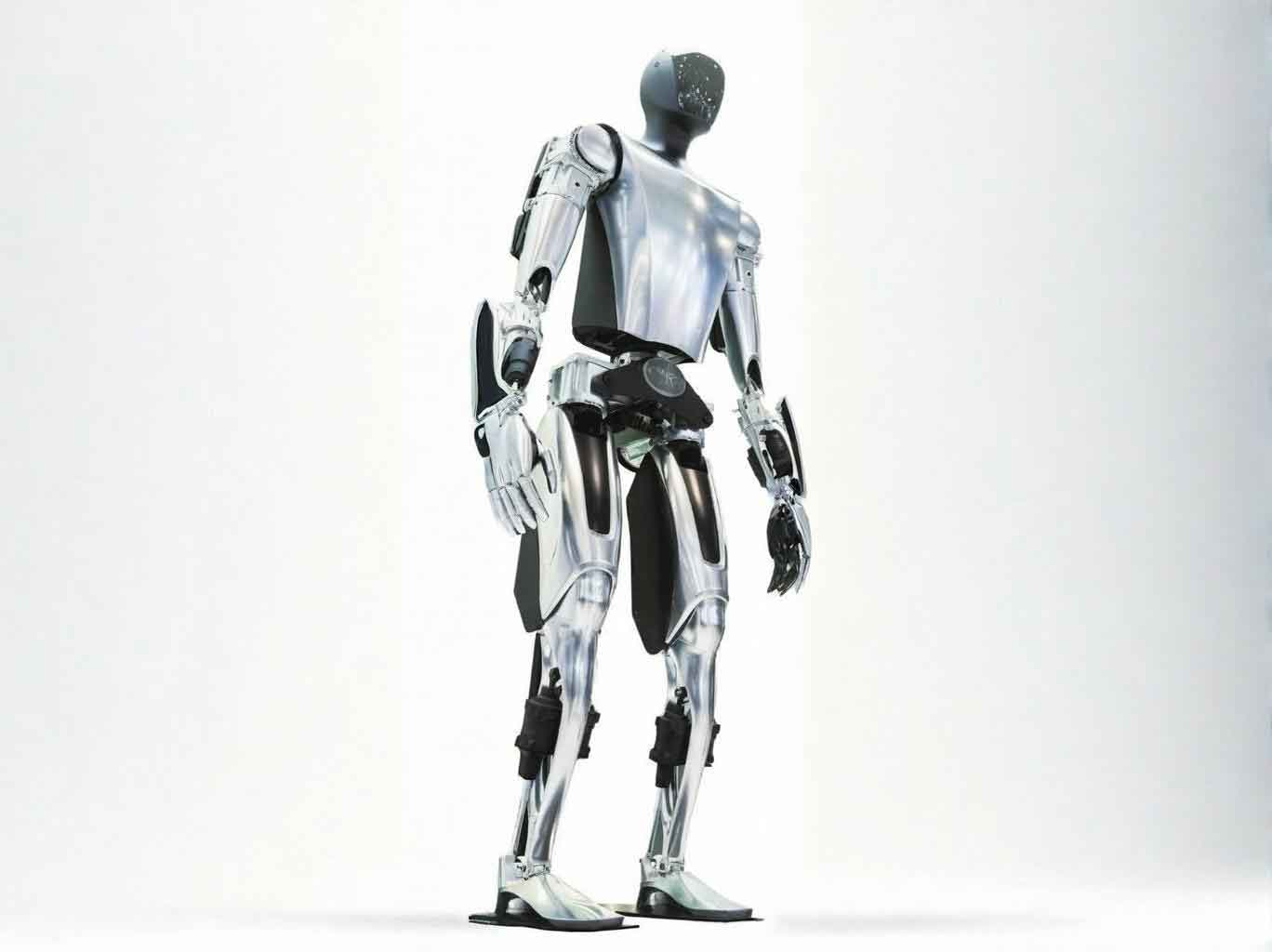
Embodied AI robots exemplify this symbiosis, moving beyond production value to emotional value. For instance, robots like Pepper and Jibo demonstrate human-like dialogue and emotional recognition, serving in healthcare and customer service. Industrial robotic arms and autonomous vehicles also showcase embodied intelligence in specialized tasks. The policy emphasis, such as China’s guidelines for humanoid robotics, underscores the push to develop AI-driven “brains” for enhanced perception and interaction. Regions like Haidian are pioneering initiatives to build innovation hubs for embodied AI, aiming to lead in core technologies and applications. I see embodied AI robots as catalysts for societal transformation, but this journey comes with challenges that require careful navigation.
Human society faces significant challenges with AI’s rise. As Karl Polanyi noted, technological revolutions like AI surpass the industrial revolution in societal impact, risking structural imbalances, governance lags, and global conflicts. Since intelligence is often linked to human consciousness and emotion, society may resist increasingly smart AI due to emotional排斥 (note: I must avoid Chinese; replace with “resistance”). We need deeper understanding and cultural shifts to dissolve human-machine antagonism and foster harmonious coexistence. Ethical issues will intensify as AI penetrates critical sectors like medicine and finance, necessitating new moral frameworks for human-machine symbiosis. Social mechanisms must ensure AI’s inclusivity, preventing digital divides and inequality. Legal systems should clarify accountability and regulation to prevent misuse. In my view, addressing these challenges is essential for a balanced future with embodied AI robots.
Looking ahead, human-centric perspectives like transhumanism and posthumanism may lead to different AI singularity scenarios. Human-machine co-evolution resembles a “double helix system,” where AI’s transformative path depends on our coexistence. We must achieve conceptual symbiosis, promoting ideological shifts toward partnership. Harmonious human-machine relations require dynamic adjustments across technology, society, and ethics, forming new theoretical and practical frameworks. I believe that overcoming the binary opposition between technology and humanities is key to advancing embodied intelligence and building inclusive coupled systems. Embodied AI robots will play a central role in this, acting not as tools but as collaborative partners in our shared evolution.
Urban spaces are prime arenas for this transformation. Cities, as hubs of human civilization, reflect technological changes. In the information age, cities themselves become products in global markets. Next-generation AI, particularly through embodied AI robots, is driving unprecedented urban变革 (note: avoid Chinese; use “transformation”). As smart technologies spread, digital-physical integration accelerates, upgrading industries and morphing cities from human-environment complexes to human-machine-environment intelligent entities with life-like self-evolution traits. With technology nearing a singularity, cities are突破 (note: avoid Chinese; use “breaking through”) traditional planning to generate future models. Embodied AI robots are already介入 (note: avoid Chinese; use “intervening in”) urban environments, aiding in maintenance and services like cleaning, security, and logistics delivery.
According to NVIDIA’s CEO Jensen Huang, future large-scale robots will include autonomous cars, drones, and humanoid robots—all forms of embodied intelligence that interact with urban spaces. This points to a fully AI-augmented city, where various functional areas become sites for human-machine collaboration. Companies and scholars are exploring this frontier. For example, Tencent’s WeCityX project proposes a “robot-friendly city” concept, optimizing physical and digital spaces for embodied AI robots’ daily integration. TESLASOFT suggests robots as architectural components, driving spatial design in projects like AI Park, where outdoor and indoor spaces are tailored for robot mobility. Researchers like Liang Jianing and Long Ying advocate strategies such as creating barrier-free dedicated spaces, improving public space governance, and deploying smart infrastructure.
As human-machine symbiosis solidifies, urban planning will undergo profound changes. Future spaces will cater not only to humans but also to human-machine composite needs, with smart sensors enabling high-level coordination. Embodied AI robots’ core trait is their intervention in physical environments, where intelligence manifests through dynamic interaction rather than virtual processing alone. This demands greater environmental embeddedness, allowing seamless integration into daily scenes. Thus, urban planning must redefine spatial functions from human-only to hybrid human-machine scenarios. Construction will emphasize spatial symbiosis, blending humans and AI in physical and digital realms. Spatial intelligence will underpin this, using AI to optimize infrastructure and design, fostering coexistence. The future city will be a living lab for human-embodied AI robot synergy, reshaping habitats for a new era.
To illustrate the applications of embodied AI robots in urban contexts, consider this table:
| Urban Domain | Role of Embodied AI Robots | Symbiotic Benefits |
|---|---|---|
| Public Services (e.g., cleaning, patrol) | Autonomous operation, real-time monitoring | Enhanced efficiency, reduced human labor, safer environments |
| Healthcare and Eldercare | Assistive tasks, companionship, monitoring | Improved care quality, emotional support, resource optimization |
| Logistics and Delivery | Autonomous vehicles, drone-based transport | Faster delivery, lower costs, reduced congestion |
| Smart Infrastructure | Integration with IoT for maintenance and control | Predictive upkeep, energy savings, adaptive city management |
| Education and Entertainment | Interactive tutoring, guided tours, gaming | Personalized learning, engaging experiences, cultural access |
The interaction between embodied AI robots and urban environments can be modeled using spatial analytics. For example, the efficiency of robot navigation in a city grid can be expressed as:
$$E = \frac{\sum_{i=1}^{N} d_i}{\tau \cdot N}$$
where \( E \) is navigation efficiency, \( d_i \) is the distance traveled by the \( i \)-th embodied AI robot, \( \tau \) is time, and \( N \) is the number of robots. This formula helps optimize paths for embodied AI robots in dense urban areas.
In conclusion, the convergence of AI and embodied intelligence opens boundless possibilities. Large language models enhance machines’ semantic understanding, while embodied intelligence translates cognition into action, enabling tangible interaction with physical spaces. This boosts AI’s “presence” in our lives. As AI technology advances, human-machine relationships will deepen, with machines evolving from tools to coexistent partners. Embodied AI robots are at the heart of this shift, driving us toward symbiosis and co-evolution.
AI’s invention not only grants machines self-cognitive abilities but also prompts human self-reflection. In coexisting with embodied AI robots, we must tackle technical challenges while preparing psychologically for cultural, ethical, and legal shifts. These changes will reshape social structures and behaviors. As embodied AI robots integrate into daily life and physical environments, urban spaces will transform dramatically. This revolution is not just technology-driven but a societal and cultural imperative, heralding a new phase of human civilization. I am optimistic that through thoughtful engagement, we can forge a future where humans and embodied AI robots thrive together in a harmonious, symbiotic world.