
As a researcher deeply immersed in the fields of robotics and artificial intelligence, I have witnessed a profound shift in our conceptualization of intelligent machines. The once-dominant paradigm of disembodied intelligence, processing symbols and data in isolation, is being challenged by a more integrative vision: embodied intelligence. This essay, from my perspective, will explore the central role of the embodied AI robot, particularly in humanoid form, as the physical instantiation of this new paradigm. The humanoid embodied AI robot is not merely a machine that performs tasks; it is an intelligent entity whose cognition is fundamentally shaped by its physical interactions with the world. I will discuss the evolution, core technologies, applications, challenges, and future trajectories of this fascinating field, arguing that the fusion of advanced AI with a human-like physical form represents one of the most significant technological frontiers of our time.
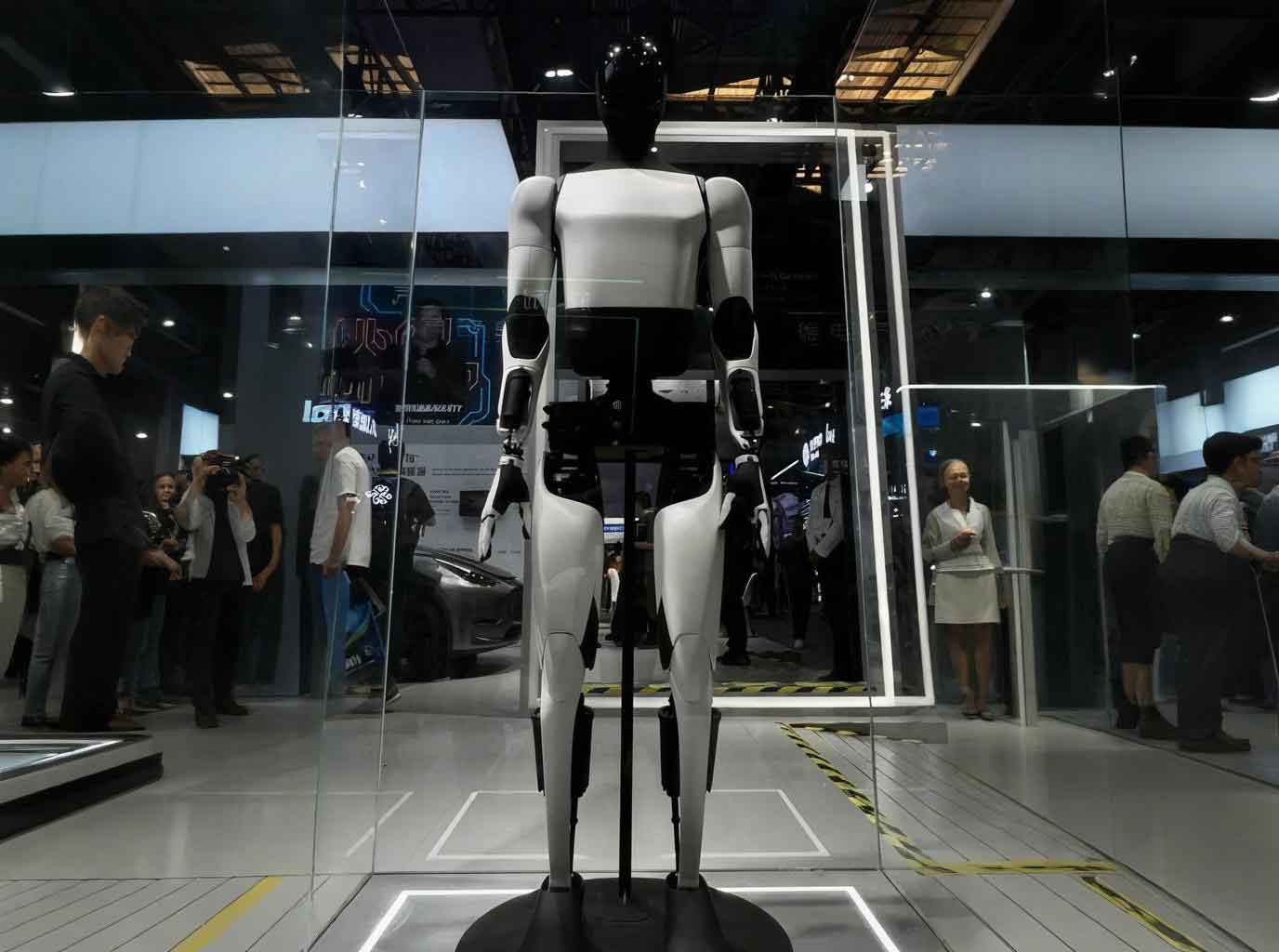
1. The Embodiment Paradigm: From Tools to Agents
The central thesis of embodied cognition is that intelligence cannot be separated from the physical body and its sensorimotor experiences. An embodied AI robot operationalizes this principle. Unlike a server running a large language model, an embodied AI robot learns, decides, and acts based on continuous, multi-sensory feedback from its environment. This closed-loop interaction is crucial for operating in the unstructured, dynamic worlds built for humans. The humanoid morphology is particularly compelling because it is optimized for this world—our tools, vehicles, stairs, and doors are designed for a bipedal form with dexterous limbs. Therefore, developing a humanoid embodied AI robot is not an exercise in mimicry but a pragmatic engineering choice for creating a general-purpose agent capable of seamless integration into human-centric environments. The ultimate goal is to move from robots that execute pre-programmed scripts to embodied AI robot systems that can understand, learn, and adapt their behavior in real-time.
2. Historical Evolution: A Journey Towards Integration
The journey of humanoid robotics mirrors the broader evolution of engineering and computing. I categorize this progression into distinct phases, summarized in the table below, which highlight the growing integration of physical capability and cognitive function in the embodied AI robot.
| Phase | Timeframe | Key Characteristics | Technological Focus | Limitations |
|---|---|---|---|---|
| Mechanical Prototyping | ~1970s-1990s | Proof-of-concept mechanics, basic actuation. | Stability, basic locomotion, rigid control. | Limited autonomy, no real-time sensing or adaptation. |
| Sensory Integration | ~2000s-2010s | Introduction of sensors (vision, force, IMU). | Dynamic balance, elementary environment perception, improved actuators. | Heavy, energy-inefficient, limited cognitive ability for complex tasks. |
| Dynamic Autonomy | ~2010s-2022 | High-dynamic motion, advanced model-based control. | Running, jumping, robust locomotion in rough terrain, early machine learning. | High computational cost for planning, limited “understanding” of tasks. |
| Cognitive Embodiment | 2022-Present | Fusion of large AI models with physical control. | Natural language instruction, zero-shot task planning, learning from simulation and demonstration. | Bridging the simulation-to-reality gap, safety and reliability of AI-driven actions. |
This evolution shows a clear trend: the embodied AI robot is transitioning from a sophisticated marionette to an increasingly autonomous cognitive agent. The current “Cognitive Embodiment” phase is revolutionary, as it leverages pre-trained knowledge from vast datasets to inform real-world physical action, a core ambition for any general-purpose embodied AI robot.
3. Core Technological Pillars of the Modern Embodied AI Robot
Building a competent humanoid embodied AI robot requires synergistic advances across multiple hardware and software disciplines. I will break down the key pillars that enable its functionality.
3.1. The Physical Body: Actuation, Structure, and Power
The body of an embodied AI robot is its fundamental constraint and enabler. Key requirements include high torque-to-weight ratio, backdrivability for force sensing, energy efficiency, and compact form factors. Modern electric actuators often combine high-torque density motors with harmonic drive reducers. The force at a joint can be approximated by:
$$ \tau = K_t \cdot I \cdot N $$
where $\tau$ is the output torque, $K_t$ is the motor torque constant, $I$ is the current, and $N$ is the gear reduction ratio. Achieving high $\tau$ while minimizing mass and inertia is a constant challenge. Furthermore, the structural design must balance rigidity for precise control with compliance for safe interaction and shock absorption. Power systems, primarily lithium-based batteries, define operational duration. The energy challenge is captured by:
$$ E_{operation} = \int (P_{computation} + P_{actuation} + P_{sensing}) \, dt $$
where minimizing $P_{actuation}$ through efficient gait generation and control is critical for a practical embodied AI robot.
3.2. Perception for Embodied Interaction
An embodied AI robot perceives the world not as a disembodied observer but as an actor within it. This necessitates multi-modal sensor fusion. Exteroceptive sensors (cameras, LiDAR) build environmental models, while proprioceptive sensors (encoders, IMUs, joint torque sensors) provide self-state awareness. The critical integration occurs in state estimation, fusing these data streams to accurately localize the robot and its limbs in space. A simplified filter update for pelvis state can be represented as:
$$ \hat{x}_t = f(\hat{x}_{t-1}, u_t) + K_t [z_t – h(\hat{x}_t)] $$
Here, $f$ is the dynamics model, $u$ is control input, $h$ is the sensor model, $z$ is the actual sensor reading, and $K$ is the Kalman gain. The goal is a consistent and accurate $\hat{x}_t$ (estimated state) for stable control. Emerging tactile and force-torque sensing in hands are vital for dexterous manipulation, closing the loop for physical interaction.
3.3. The Control Stack: From Stability to Dexterity
Control is what translates perception into action for the embodied AI robot. It is a hierarchical problem:
- Whole-Body Coordination (WBC): This high-level controller solves for joint torques $\tau$ that satisfy multiple constraints: motion tasks (e.g., foot trajectory), dynamics $\mathbf{M}\ddot{q} + \mathbf{C} = \tau + \mathbf{J}^T F$, and contact forces $F$. A common formulation is a Quadratic Program:
$$ \min_{\tau, F} \| \text{Task Error} \|^2 \quad \text{s.t.} \quad \text{Dynamics, Contact, Torque Limits} $$
It ensures the coordinated movement of all limbs. - Balanced Locomotion: For bipedal walking, the Zero Moment Point (ZMP) remains a foundational concept for stability. The condition for static stability is that the ZMP lies within the convex hull of the support polygon. Dynamic walking controllers, like Model Predictive Control (MPC), optimize future footsteps and center-of-mass trajectories online to maintain this condition while following velocity commands.
- Dexterous Manipulation: Arm and hand control for an embodied AI robot involves motion planning, grasp synthesis, and compliant interaction. Impedance control is widely used: $\tau = J^T (K_p (x_d – x) + K_d (\dot{x}_d – \dot{x}))$, where $K_p$ and $K_d$ are virtual stiffness and damping matrices, allowing the robot to behave like a spring-damper system when contacting the environment.
3.4. The Cognitive Engine: Embodied AI and Large Models
This is the transformative layer for the modern embodied AI robot. Large AI models, particularly vision-language-action (VLA) models, serve as a high-level “brain.” They process natural language instructions (“unload the dishwasher”) and visual scene data to generate sequences of actionable steps or low-level policy parameters. The process can be abstracted as:
$$ \pi(a_t | o_t, g) \approx \text{VLA-Model}(o_t, g) $$
where $\pi$ is the policy, $a_t$ is an action, $o_t$ is the observation (image), and $g$ is the language goal. These models, pre-trained on internet-scale data, provide common-sense reasoning and task decomposition. They are fine-tuned with robot interaction data (e.g., from simulation) to “ground” their knowledge in physical reality. This turns the embodied AI robot from a pre-programmed machine into a trainable, instructable agent.
3.5. The Development Ecosystem: Simulation and Tools
Training and testing a physical embodied AI robot is expensive and risky. High-fidelity simulation platforms are indispensable. They solve physics dynamics:
$$ \mathbf{M}(q)\ddot{q} + \mathbf{C}(q, \dot{q}) + \mathbf{G}(q) = \tau $$
for the robot’s state $q$ under applied torques $\tau$, modeling contacts, friction, and actuator dynamics. In these virtual worlds, thousands of robot “clones” can be trained in parallel using reinforcement learning (RL) to acquire skills. The RL objective is often to maximize expected return: $J(\theta) = \mathbb{E}_{\pi_\theta}[\sum \gamma^t r_t]$, where $\pi_\theta$ is the policy parameterized by $\theta$, and $r_t$ is the reward. This massively parallel, simulation-first approach is key to developing robust behaviors for the embodied AI robot before real-world deployment.
4. Application Domains: Where the Embodied AI Robot Excels
The unique value proposition of the humanoid embodied AI robot lies in its versatility within human spaces. The table below contrasts its potential impact across sectors.
| Domain | Specific Applications | Advantages of Humanoid Form | Current Maturity |
|---|---|---|---|
| Industrial Logistics & Manufacturing | Parts handling, machine tending, final assembly, quality inspection, warehouse picking. | Uses existing human workspaces (aisles, shelves, workbenches) without retrofit; can operate multiple types of machinery. | Early pilot deployments (e.g., in auto plants). Focus on structured, repetitive sub-tasks. |
| Disaster Response & Hazardous Environments | Search and rescue in rubble, inspection of unstable structures, handling hazardous materials, remote site operation. | Navigate complex, degraded terrain (stairs, debris); use standard tools and access points designed for humans. | Advanced research prototypes. A key driver for ruggedness and remote operation capabilities. |
| Personal & Professional Services | Elderly assistance, household chores, educational aid, retail guidance, hospitality. | Socially acceptable appearance facilitates interaction; can perform a wide variety of domestic tasks (clean, fetch, organize). | Concept demonstrations and very early commercial exploration. High dependence on safe, low-cost, and reliable AI. |
| Healthcare & Rehabilitation | Physical therapy assistant, patient mobility support, logistical support in hospitals. | Can physically interact with and support the human body safely; operate in clinical environments. |
It is crucial to note that the embodied AI robot is not meant to replace all specialized robots. Its economic justification lies in flexibility and the ability to perform a long tail of diverse, non-repetitive tasks that are currently uneconomical to automate with dedicated machines.
5. Persistent Challenges and Research Frontiers
Despite exciting progress, significant hurdles remain before the vision of a fully capable, autonomous embodied AI robot is realized. As a researcher, I identify the following core challenges:
- Robustness and Safety in Open Worlds: An embodied AI robot must operate safely amid vast uncertainty—slippery floors, moving people, novel objects. Guaranteeing safe failure modes and real-time risk assessment is non-trivial. Formal methods and verifiable control are active research areas.
- The Sim-to-Real Gap: While simulation training is powerful, the transfer of policies to the physical world often fails due to unmodeled dynamics (e.g., friction, actuator lag, sensor noise). Domain randomization and adaptive real-time learning are critical to bridge this gap.
- Energy Autonomy: High-torque actuation and intensive computation are power-hungry. Current battery technology limits useful operational time. Research into more efficient actuators, dynamic gait optimization, and opportunistic charging is essential.
- Cost and Manufacturing: High-performance actuators, sensors, and computers are expensive. Achieving the reliability and cost-point necessary for widespread adoption requires innovations in design, materials, and mass-production techniques.
- Ethical and Social Frameworks: Deploying embodied AI robot systems at scale raises questions about job displacement, privacy, security, liability, and human-robot relationship dynamics. Proactive development of standards, regulations, and ethical guidelines is imperative.
6. Future Trajectories: The Path Ahead for Embodied AI
Looking forward, I anticipate several convergent trends that will shape the next generation of embodied AI robot systems:
- Foundation Models for Embodiment: The development of large, multi-modal models specifically pre-trained on physical interaction data—videos of manipulation, teleoperation logs, simulation rollouts—will create more capable and sample-efficient “robot brains.”
- End-to-End Learning Architectures: We will see a move from modular pipelines (perception→planning→control) towards more integrated, end-to-end trainable systems that map sensory inputs directly to actuator commands, leveraging deep learning throughout.
- Neuromorphic and Edge Computing: To achieve real-time, low-power cognition, hardware will evolve. Neuromorphic chips that mimic neural processing and advanced edge AI processors will be integrated into the embodied AI robot to run complex models locally.
- Material Science and Soft Robotics: The use of compliant materials, artificial muscles (e.g., using electroactive polymers), and soft grippers will make robots safer, more robust, and more dexterous, further closing the gap between machine and biological embodiment.
- Human-Robot Teaming as a Standard: The future is not one of robots replacing humans, but of collaborative teams. The embodied AI robot will evolve to be a true teammate, understanding context, anticipating human needs, and communicating intent naturally.
In conclusion, the pursuit of the humanoid embodied AI robot is a grand challenge that sits at the intersection of mechanics, electronics, computer science, and cognitive science. It is the engineering manifestation of a fundamental idea: that true, general intelligence is inseparable from a physical presence in the world. The progress has been remarkable, transitioning from mechanical walkers to AI-driven agents. While substantial challenges in robustness, efficiency, and safety lie ahead, the trajectory is clear. The continued fusion of ever-more-capable AI with sophisticated robotic bodies promises not just to create useful machines, but to deepen our understanding of intelligence itself. The era of the embodied AI robot is dawning, and it will fundamentally reshape our relationship with technology.