
The emergence of embodied AI as a national strategic priority marks a pivotal shift in the global technological landscape. As a key vehicle for the paradigm transition from “disembodied” to “embodied” cognition, embodied AI robots—physical systems that perceive, learn, reason, and act autonomously within real-world environments—are poised to redefine manufacturing, services, and daily life. For a manufacturing powerhouse like Suzhou, this represents not merely an industrial upgrade but a fundamental opportunity to secure a commanding position in the next wave of intelligent automation. This article, from our perspective within Suzhou’s innovation ecosystem, outlines our comprehensive analysis and strategic roadmap to propel the city’s embodied AI robot industry toward high-quality, sustainable, and globally competitive development.
Theoretical Underpinnings and Core Conceptions of the Embodied AI Robot Industry
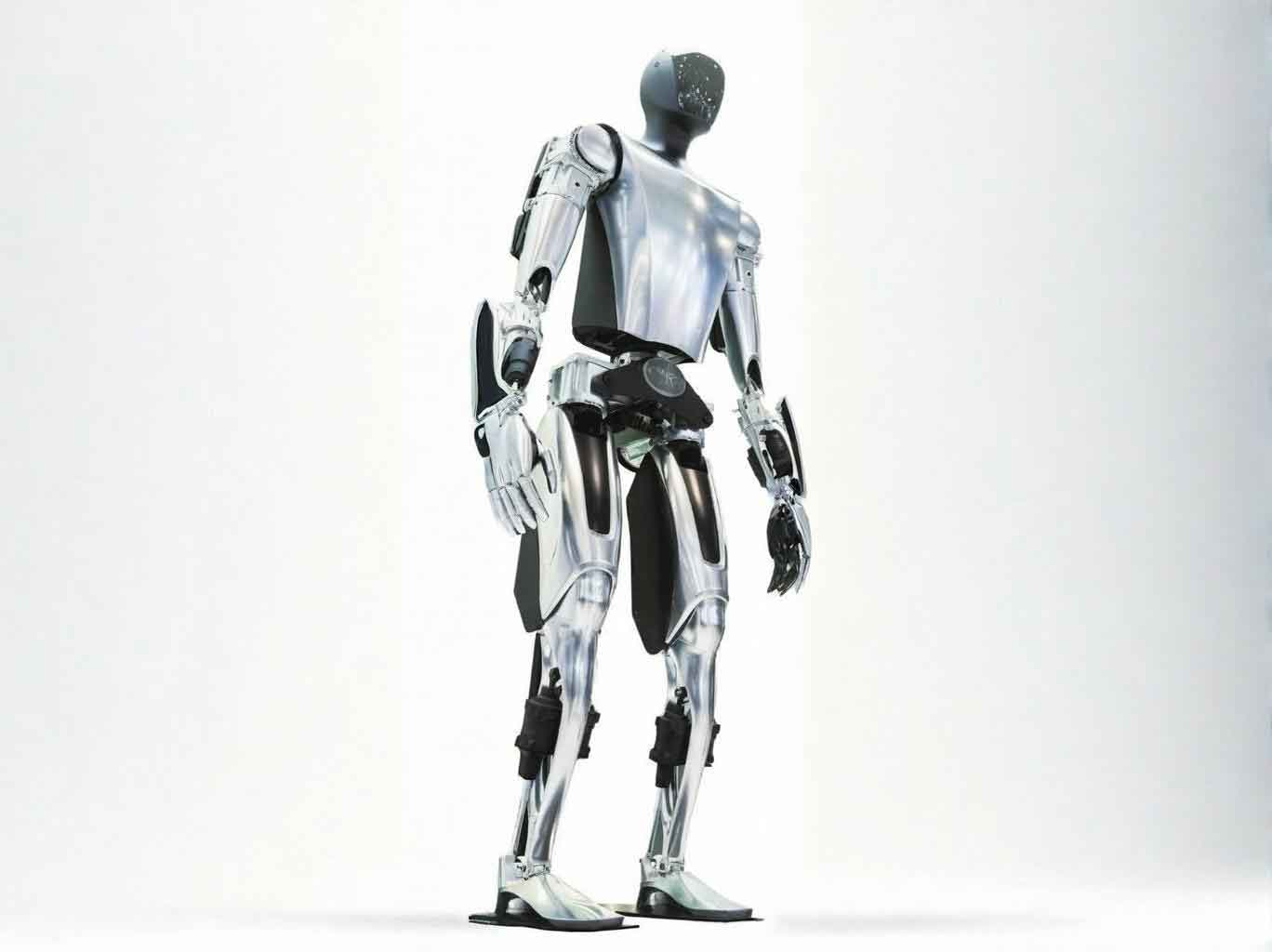
At its core, an embodied AI robot is a synergistic integration of a physical body and an intelligent “brain.” Unlike traditional pre-programmed industrial arms, its intelligence is fundamentally shaped by and enacted through interactions with the physical world. This embodied AI paradigm posits that cognition arises from the dynamic sensorimotor coupling between an agent and its environment. The core technological stack of an advanced embodied AI robot can be conceptualized as a hierarchical architecture:
$$ \text{Embodied Intelligence} = f(\text{Brain (AI)}, \text{ Cerebellum (Control)}, \text{ Body (Hardware)}) $$
Where the “Brain” involves multimodal perception, large language/action models, and task planning; the “Cerebellum” encompasses real-time motion control and dynamic balancing; and the “Body” includes actuators, sensors, and mechanical structures.
The industry surrounding these advanced machines is structured across three interconnected layers, as summarized below:
| Industry Layer | Key Components & Focus | Innovation Direction |
|---|---|---|
| Upstream (Core Components & Foundational Tech) | High-precision reducers, servo systems, force/tactile sensors, AI chips, embodied AI algorithms, operating systems, simulation platforms. | Developing proprietary “neuromorphic” chips, large-scale embodied foundation models, and high-fidelity physical simulation environments. |
| Midstream (Robot Ontology Manufacturing) | Industrial manipulators, humanoid robots, mobile platforms, specialized robotic forms. Integration of hardware with driving software. | Evolution toward generalized humanoid platforms with improved power density, dexterity, and cost-effectiveness. |
| Downstream (System Integration & Application Services) | Customized solution design, deployment, operation, and maintenance across diverse scenarios. | Creating scalable, reusable solution modules for rapid deployment in complex, unstructured environments. |
The application spectrum for embodied AI robots is vast and expanding. Their value proposition lies in tackling tasks that are dull, dirty, dangerous, or require delicate adaptability.
| Application Domain | Primary Tasks | Value of Embodied AI |
|---|---|---|
| Advanced Manufacturing | Flexible assembly, adaptive welding, intricate parts handling, collaborative quality inspection. | Enables small-batch, high-mix production and reduces reconfiguration downtime for production lines. |
| Commercial & Logistics Services | Goods-to-person picking, last-meter delivery in complex spaces, retail inventory management, customer guidance. | Navigates dynamic human environments safely and efficiently, understanding ambiguous verbal commands. |
| Healthcare & Social Care | Surgical assistance, patient rehabilitation, elderly mobility support, social companionship. | Provides physical interaction with empathy and adapts to individual patient needs and responses. |
| Emergency & Extreme Environments | Disaster site search and rescue, hazardous material handling, deep-sea or space exploration. | Operates where humans cannot, making autonomous decisions based on limited, noisy sensor data. |
Suzhou’s Industrial Foundation and Current Landscape
Suzhou’s ambition in embodied AI robotics is built upon a formidable industrial base. Ranked consistently among China’s top three cities for robotics comprehensive strength, the city hosts a robust cluster of over 800 enterprises spanning the entire value chain, generating an aggregate scale exceeding 139 billion RMB. This ecosystem includes numerous National-Level “Little Giant” enterprises and listed companies specializing in core components like precision reducers and servo systems.
Our innovation infrastructure is rapidly maturing. High-caliber platforms such as the Suzhou Embodied AI Robotics Comprehensive Innovation Center have attracted leading domestic and international R&D institutions. These platforms are instrumental in bridging the gap between foundational research and industrial application. Furthermore, our active participation in regional synergies within the Yangtze River Delta—leveraging Shanghai’s strengths in AI algorithms and Hangzhou’s software capabilities—creates a powerful collaborative network for tackling shared technological bottlenecks.
Policymaking has been proactive and structured, following a “national direction, provincial scale, municipal implementation” model. Local action plans and supporting measures provide targeted incentives across the innovation chain:
- For Basic R&D: Substantial funding (up to 200 million RMB) for establishing national and provincial key laboratories focused on embodied AI “brains” and “cerebellums.”
- For Applied Technology: Support for forming innovation consortia to jointly attack bottlenecks in core components like drive-control-integrated joints.
- For Commercialization: “Scenario + Order” procurement models that de-risk market entry for startups and scale-ups by providing guaranteed pilot applications.
A Quantitative Framework for Evaluating High-Quality Development
To steer our industry strategically, we developed a data-driven evaluation system to assess the “high-quality development” level of embodied AI robot enterprises. Through expert surveys and statistical analysis, we identified four critical dimensions and their corresponding key performance indicators (KPIs). The relative importance (weight) of each KPI was calculated using the Entropy Weight Method, where a lower information entropy value $$e_j$$ indicates a higher weight $$w_j$$, signifying greater discriminatory power for evaluation.
The entropy for indicator *j* is calculated as:
$$ e_j = -k \sum_{i=1}^{m} p_{ij} \ln(p_{ij}) $$
where $$k = 1/\ln(m)$$, and $$p_{ij}$$ is the proportion of the standardized value for sample *i* under indicator *j*. The weight is then:
$$ w_j = \frac{1 – e_j}{\sum_{j=1}^{n} (1 – e_j)} $$
The resulting evaluation framework is presented below:
| Core Dimension | Key Performance Indicator (KPI) | Entropy Weight (w_j) | Interpretation & Strategic Focus |
|---|---|---|---|
| 1. Technological R&D Capability | Self-Sufficiency Rate of Key Components | 0.201 | Highest priority. Measures supply chain resilience and control over core hardware like reducers and servos. |
| Originality of Foundational Algorithms | 0.187 | Reflects breakthrough innovation in embodied AI perception, decision-making, and control theories. | |
| Scale of High-Quality Open Datasets | 0.164 | The “fuel” for AI training. Size and quality of real-world robotic interaction data. | |
| 2. Technological Innovation Level | Source Technology Supply Capability | 0.179 | Ability to generate pioneering, patent-defining technologies rather than incremental improvements. |
| Proportion of High-Value Patents | 0.146 | Quality of IP portfolio. Patents with broad claims, high technical barrier, and strong commercial potential. | |
| Success Rate of Venture/Project Incubation | 0.128 | Efficiency in spinning out viable new companies or product lines from internal R&D. | |
| 3. Commercialization Efficiency | Density of Scenario Deployment | 0.136 | Breadth and depth of real-world applications across different industries. |
| Cycle Time for Technology Readiness Level (TRL) Advancement | 0.111 | Speed of moving from lab prototype (TRL 3-4) to pilot-proven product (TRL 7). | |
| Revenue Share from Commercialized Products | 0.095 | Market validation. Percentage of total revenue generated by market-ready embodied AI robot solutions. | |
| 4. International Influence | Contribution to International Standards | 0.081 | Leadership in global rule-setting for safety, interoperability, and performance benchmarks. |
| Number of Overseas Joint Laboratories | 0.069 | Depth of global R&D collaboration and access to international talent pools. | |
| Proportion of PCT Patent Filings | 0.054 | Scale and strategy of global intellectual property protection and layout. |
A composite score S for an enterprise can be derived as a weighted sum:
$$ S = \sum_{j=1}^{12} w_j \cdot I_j $$
where $$I_j$$ is the normalized score (0-1) for the *j*-th KPI. This model allows for benchmarking and identifies specific areas for targeted intervention.
A Four-Pillar Strategic Roadmap for Suzhou
Based on the diagnostic insights from our evaluation framework, we propose an integrated four-pillar strategy to accelerate Suzhou’s ascent as a global leader in embodied AI robotics.
Pillar 1: Foundational Empowerment – Mastering Core Elements and Algorithmic Loops
Addressing the top-weighted KPIs—component self-sufficiency and algorithm originality—requires a concerted, ecosystem-wide effort. We propose establishing a dedicated “Critical Components Localization Fund” that operates on a hybrid grant-and-equity model. It will provide non-dilutive grants for applied research on bottlenecks like high-torque-density actuators and multi-modal tactile sensors, while also taking strategic equity positions in promising deep-tech startups. Concurrently, we will launch a municipal “Embodied AI Data Commons & Supercomputing Platform.” This platform will aggregate anonymized operational data from robots deployed across Suzhou’s factories, hospitals, and logistics centers. Access to curated datasets and subsidized compute power (via “Compute Vouchers”) will be allocated based on a company’s contribution to the data commons, creating a virtuous cycle that fuels proprietary algorithm development. The strategic objective is to close the loop: Data → Algorithm → Hardware → Real-World Performance → More Data.
Pillar 2: Innovation Ignition – Fostering Source Technology via Satellite R&D and IP Cultivation
To strengthen our source technology supply (weight: 0.179), we must tap into upstream innovation beyond our geographic borders. We will establish “Suzhou Embodied AI Satellite R&D Centers” within premier research universities across the Yangtze River Delta and globally. These centers, funded by Suzhou but located in academic hubs, will focus on long-horizon, high-risk basic research, with clear pathways for technology transfer to Suzhou’s industrialization base. To shorten the notorious “Valley of Death” between lab and market, we are scaling up our Advanced Pilot and Validation Bases locally. These facilities offer shared access to world-class testing environments for dynamics, human-robot interaction, and safety certification. Complementing this, a “High-Value Patent Cultivation Program” will provide financial incentives for filing international PCT patents and bonus rewards when patents are widely cited or form essential parts of industry standards. The metric for success here is not just patent quantity, but the creation of formidable, defensible technology moats.
Pillar 3: Commercialization Acceleration – Market Creation through Scenario-Driven Procurement
Our rich manufacturing and urban fabric is our greatest asset for accelerating commercialization. We are institutionalizing a “10,000-Robot Pioneer Program,” which functions as a large-scale, open innovation challenge. Government departments and leading state-owned enterprises will publish annual “Scenario Opportunity Lists,” specifying concrete problems (e.g., “automated polishing of complex alloy castings” or “night-time elderly care facility patrol and fall detection”). Crucially, procurement will be bundled: winning a bid means receiving both a testing scenario *and* an initial purchase order. This “de-risking” mechanism is enhanced by a government-guided fund that co-invests with private VCs into companies that successfully graduate from these pioneer projects. The financial model can be conceptualized as increasing the expected value for innovators:
$$ EV_{Innovator} = (P_{tech} \times V_{market}) – C_{dev} $$
Our policies aim to increase the probability of technical success $$P_{tech}$$ through validation support and amplify the market value $$V_{market}$$ through guaranteed early adoption, thereby incentivizing more investment in development cost $$C_{dev}$$.
Pillar 4: Global Leapfrog – Institutional Openness for International Network Integration
While international influence indicators currently have lower weights, they are lagging indicators that will determine long-term leadership. We will leverage Suzhou’s Free Trade Zone to pilot pioneering policies like “Zero-Tariff, Fast-Track Import for Joint Lab Equipment,” drastically simplifying logistics for global research collaboration. A “Foreign High-End Talent Service Portal” will offer one-stop, expedited processing for work permits, residency, housing, and schooling. To actively shape the global playing field, we are launching an “International Standards Pioneering Grant,” providing substantial awards to enterprises that lead the drafting of ISO or IEC standards for embodied AI robot safety, communication, or performance testing. Furthermore, we will organize collective “Suzhou Pavilion” presences at major international robotics exhibitions, showcasing our ecosystem’s capabilities. The goal is to transition from being a participant in global value chains to becoming a central node in the global innovation network for embodied AI robotics.
In conclusion, the journey for Suzhou to become a national source of innovation, a high-end manufacturing cluster, and a model city for embodied AI robot applications is clearly charted. It requires a synchronized effort across strengthening our technological foundation, igniting cutting-edge research, aggressively creating markets, and integrating into global systems. By executing this four-pillar strategy with focus and adaptability, we are confident that Suzhou will not only capture the immense economic value of this transformative technology but also contribute significantly to solving complex societal challenges through intelligent, embodied machines.