
The atmosphere was electric, charged with a palpable sense of being at the precipice of a new era. As I navigated through the halls of a recent major technology conference in Beijing’s innovation heartland, one theme resonated above all others: embodied AI robot. This is no longer a speculative concept confined to research labs; it is rapidly crystallizing into the defining engine for the next wave of industrial and societal transformation. The convergence of advanced artificial intelligence with sophisticated robotics is not merely creating smarter machines; it is forging a new class of entity—one that perceives, reasons, learns, and acts within our physical world. This shift represents a fundamental leap from intelligence in silico to intelligence in corpore.
The discussions, spanning policy, cutting-edge research, gritty practical applications, and strategic investment, painted a comprehensive picture of a field in vigorous, albeit complex, ascent. The consensus is clear: the age of the embodied AI robot is dawning, and its impact will be profound.
I. The Policy Landscape: Cultivating the Ecosystem
The journey of technological revolution is seldom purely organic; it requires fertile ground. Representatives from municipal and district-level committees overseeing science, technology, and industry emphasized the strategic priority placed on future industries like embodied intelligence. The focus is on building a holistic innovation ecosystem. This involves providing the institutional soil for “change-makers” to thrive, accelerating the transformation of scientific achievements into commercial realities, and fostering deep collaboration between academia and industry. Initiatives such as specialized incubators and forums for young scientists are being launched precisely to bridge the gap between foundational research and market-ready innovation. The goal is systemic: to move from isolated breakthroughs to a self-sustaining cycle of research, development, and deployment for the embodied AI robot sector.
II. Foundational Visions: The Theoretical Bedrock
Beneath the buzz of activity lie deep and sometimes divergent philosophical and technical frameworks guiding the development of embodied AI robot systems. Leading academics and corporate researchers outlined several pivotal trajectories.
One dominant view centers on scaling. Here, large language models (LLMs) are seen as the nascent “brain” for embodiment. The trajectory extends these models from text to multimodal understanding (vision, audio) and ultimately to action planning and control. The formula for intelligence, in this scaling view, is often linked to model size, data, and compute:
$$ \text{Capability}_{\text{AI}} \propto f(N_{\text{parameters}}, D_{\text{data}}, C_{\text{compute}}) $$
However, critics argue that current “static” knowledge fusion in LLMs must evolve into “dynamic” emergence through interaction. The ultimate milestone is Artificial General Intelligence (AGI) achieved through brain-inspired architectures, potentially by mid-century.
A more integrative framework, prominently discussed, moves beyond “brain-in-a-box” approaches. It advocates for a holistic design philosophy for intelligent robots, summarized by the A2G theory:
| Element | Concept | Description for Embodied AI Robot |
|---|---|---|
| A | Artificial Intelligence | The core cognitive layer: perception, reasoning, dialogue, and decision-making. |
| B | Body | Optimal physical form factor, which may not necessarily be humanoid, tailored for specific environmental interaction. |
| C | Control | Precise, robust, and adaptive motion control algorithms. |
| D | Developmental Learning | Lifelong learning through continuous interaction with the environment, enabling skill acquisition and adaptation. |
| E | Emotional Quotient | The capacity for affective understanding and human-robot emotional resonance. |
| F | Flexible Manipulation | Dexterous object handling and tool use, reliant on advanced tactile sensing. |
| G | Guardian Angel | The robot’s role as an integrated, trustworthy entity within smart homes and communities. |
This framework underscores that a true embodied AI robot is more than the sum of a large model and a mechanical chassis; it is an organic synthesis where intelligence and physicality co-evolve.
III. The Engine of Learning: From Simulation to Reality
A critical technical thread is the learning paradigm itself. How does an embodied AI robot acquire complex skills? Reinforcement Learning (RL) and its integration with prior knowledge is a primary pathway. The canonical RL objective is to maximize the expected cumulative reward:
$$ J(\theta) = \mathbb{E}_{\tau \sim \pi_{\theta}} \left[ \sum_{t=0}^{T} \gamma^t r(s_t, a_t) \right] $$
where $\pi_{\theta}$ is the robot’s policy, $\tau$ is a trajectory of states $s_t$ and actions $a_t$, $r$ is the reward, and $\gamma$ is a discount factor.
For embodied AI robot control, this is often combined with imitation learning from human demonstrations. The hybrid objective can be formulated as:
$$ \mathcal{L}_{\text{total}} = \mathcal{L}_{\text{RL}} + \lambda \mathcal{L}_{\text{imitation}} $$
where $\mathcal{L}_{\text{imitation}}$ penalizes deviations from expert demonstrations, providing a crucial prior to accelerate learning in high-dimensional spaces like humanoid movement or dexterous manipulation.
Experts highlighted four near-future frontiers for deep RL in robotics: 1) whole-body motion imitation for dance or complex poses, 2) robust locomotion over extreme, unstructured terrain, 3) dexterous manipulation of complex objects with multi-fingered hands, and 4) perception-based navigation and obstacle avoidance using raw sensor data. The unanimous conclusion was that real-world deployment and physical data collection are indispensable for progress toward AGI; simulation alone is insufficient.
IV. Hardware Imperative: The Quest for Dexterity and Sensing
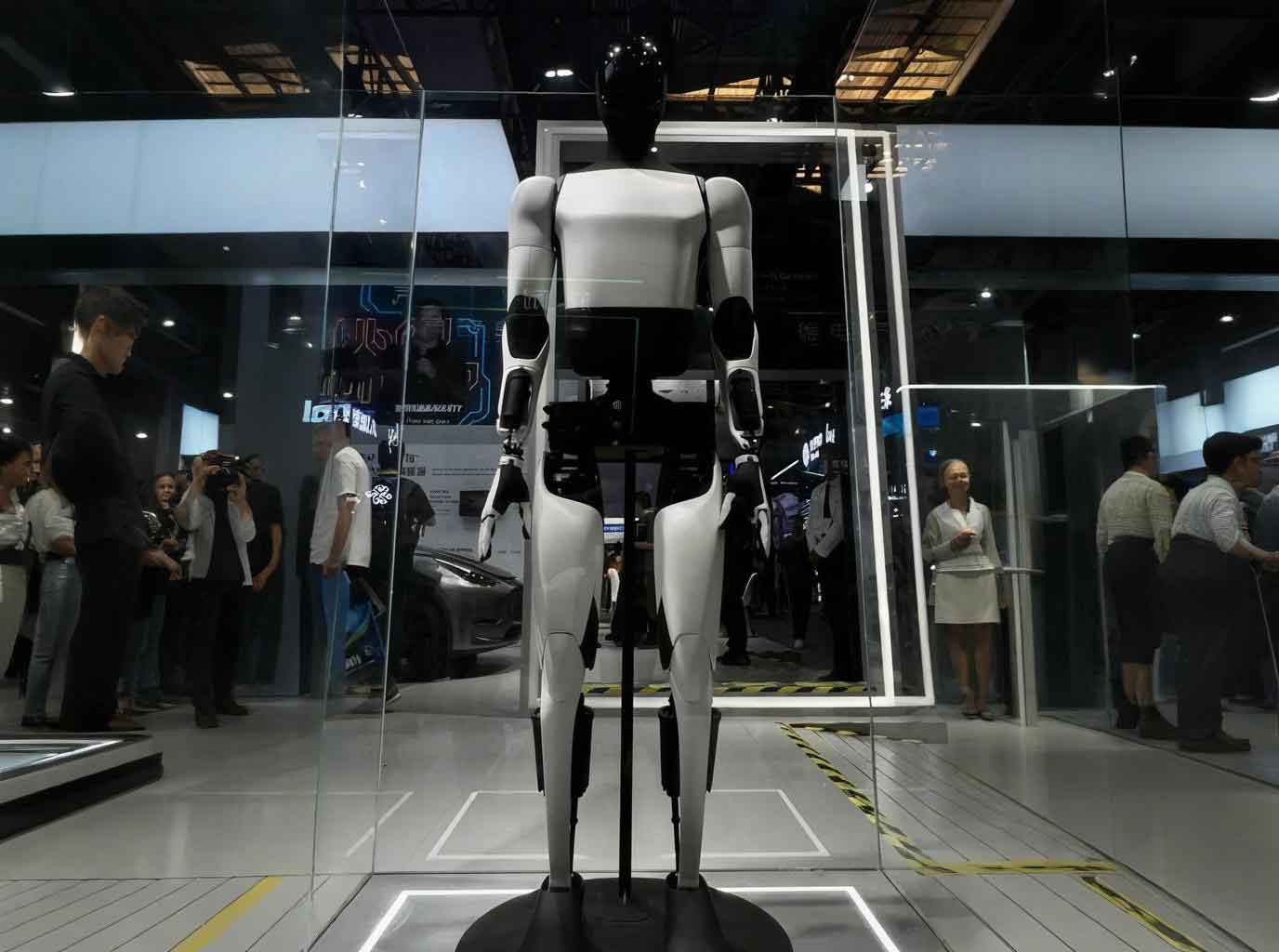
Intelligence requires a capable physical vessel. A significant portion of the discourse focused on the “body” of the embodied AI robot. The debate around humanoid form factors is active. While humanoids offer generalism and intuitive human-environment compatibility, many industrial scenarios may prioritize specialized morphologies. As one expert noted, a worker on an assembly line often requires dexterous arms, hands, and eyes more than bipedal legs.
This brings the focus to core components, especially the end-effector. The灵巧手 (dexterous hand) is universally acknowledged as a critical bottleneck and a key differentiator. Innovations here are multifaceted:
| Component Focus | Technical Evolution | Impact on Embodied AI Robot |
|---|---|---|
| Dexterous Hands | Moving from high-cost, research-grade hands to cost-effective, robust, and high-DoF (e.g., 20+) designs with integrated force/tactile/temperature sensing. | Enables complex, in-hand manipulation and fine tool use, moving beyond simple pick-and-place. |
| Actuation & Drives | Development of compact, high-torque density actuators (e.g., hollow-cup motors, customized gearboxes) and novel materials for lightweight, strong structures. | Directly determines the robot’s strength-to-weight ratio, agility, and energy efficiency. |
| Multimodal Sensing | Fusion of vision (2D/3D), tactile arrays, proprioception, and audio. Advances in flexible, high-density tactile sensors. | Provides the rich, redundant perceptual stream needed for environmental understanding and safe physical interaction. |
| Integrated Control | Unified frameworks for whole-body control (WBC) that seamlessly manage balance, locomotion, and manipulation forces. | Allows for dynamic, coordinated tasks like carrying loads while opening doors or recovering from pushes. |
The hardware trend is clear: miniaturization, integration, standardization, and a relentless drive toward higher performance at lower cost. The equation for a capable robotic hand, for instance, balances Degrees of Freedom (DoF), sensor density, and unit cost:
$$ \text{Capability}_{\text{Hand}} = g(\text{DoF}, \text{Sensor Resolution}, \text{Force Density}) $$
$$ \text{Commercial Viability} \propto \frac{\text{Capability}_{\text{Hand}}}{\text{Cost}} $$
V. The Application Crucible: From Labs to Factories and Beyond
Theory and hardware converge in application. Here, the narrative shifts from “what is possible” to “what is practical.” Industrial settings emerged as the most immediate proving ground for embodied AI robot technology. The key driver is the pressing need for flexible automation.
Traditional industrial robots excel at repetitive tasks in structured environments but falter when product variety is high and changeover is frequent. The new imperative is for systems that can quickly adapt to new tasks—a challenge often termed the “quick changeover” or “high-mix, low-volume” problem. This is posited as a potential killer application for embodied intelligence. An embodied AI robot, equipped with advanced vision and learning algorithms, could be reprogrammed for new assembly or inspection tasks with minimal manual intervention, perhaps just through new demonstrations or natural language instructions.
The challenges for industrial落地 (landing) are significant and were candidly detailed:
| Challenge | Description | Required Solution |
|---|---|---|
| Technological Novelty & Pace | Core technologies (3D vision, AI models, control) are evolving rapidly. | Sustained, high-intensity R&D to maintain product leadership. |
| High Performance Bar | Industrial clients demand near-100% reliability, precision, and robustness. | Meticulous system engineering, extensive testing, and iterative field refinement. |
| Long Integration Chain | Deploying a solution involves hardware, software, tooling, and process integration. | Building strong partnerships and providing comprehensive, easy-to-integrate solutions. |
Beyond manufacturing, other verticals like logistics (depalletizing, singulation), healthcare (physical assistance), and agriculture are in active exploration. The path is one of identifying specific, valuable “embodied skills”—closed-loop competencies like “insert connector A into slot B” or “pick and orient irregular object C”—and perfecting them before scaling to broader generality.
VI. The Investor’s Calculus: Patience in the Face of Complexity
Building the embodied AI robot future requires immense capital. The investment perspective reveals a field assessed with cautious optimism. Investors differentiate between “brain” (AI/software) and “brawn” (hardware/robotics) companies, acknowledging that both are critical and must eventually synergize.
The hardware stack is often seen as more immediately tangible and easier to evaluate—progress in actuator performance or sensor specs is measurable. The software and AI stack, particularly foundational models for embodiment, is harder to value due to faster iteration and less clear moats. The investment thesis revolves around several key questions:
- Market Timing: Will industrial applications generate substantial revenue before the longer-term consumer market matures?
- Strategic Positioning: Can a company become a critical provider of a key component (a “picks and shovels” play) or a vertically integrated solution leader?
- Technical Moat: Does the company possess defensible IP in hard tech—novel mechanisms, proprietary control algorithms, or unique datasets?
- Team: Does the team combine deep technical expertise with commercial execution capability?
The required investor mindset is “patient capital.” The development cycles are long, the technical risks are high, and the path to profitability in nascent markets is uncertain. The investment formula, therefore, incorporates a high discount for risk and time:
$$ V_{\text{Company}} = \sum_{t=1}^{n} \frac{CF_t}{(1 + r_{\text{high-risk}})^t} + \frac{\text{Option Value}_{\text{AGI/Tech Breakthrough}}}{(1 + r)^n} $$
where $r_{\text{high-risk}}$ is a significantly high discount rate reflecting technical and market uncertainty, and the terminal “option value” represents the potentially massive, but highly speculative, upside.
VII. The Quest for the “Super Scene”
The ultimate discussion point was the search for the “super scene”—the application domain that will drive the deployment of hundreds of millions of embodied AI robot units, akin to the smartphone revolution. Experts converged on two necessary conditions for such a scenario to emerge:
1. Consumer-facing (To C) Orientation: The technology must seamlessly integrate into daily human life, solving pervasive problems like household chores, elderly care, or personal companionship. This creates a vast, pull-driven market.
2. Leap in Performance and Affordability: The systems must achieve a dramatic jump in reliability, safety, ease of use, and cost-effectiveness to become a mass-market commodity.
While the industrial “super scene” might involve millions of units in flexible factories, the consumer “super scene” promises orders of magnitude more. Humanoid robots are often spotlighted as the potential vessel for this consumer future due to their inherent compatibility with human environments. However, the consensus is that we are in the early innings. The current focus is rightly on achieving robust, economically viable functionality in constrained domains, accumulating the technological capital required for the eventual leap to generality.
VIII. Synthesis and Forward Look
The journey into the embodied intelligence epoch is a multi-decade expedition. The field is characterized by exhilarating progress punctuated by sobering technical and commercial challenges. The development of a truly capable embodied AI robot is a symphony of advancements across disparate disciplines: materials science, mechanical engineering, chip design, control theory, computer vision, and machine learning.
A holistic measure of progress could be a weighted composite score of key capabilities:
$$ \text{Embodiment Quotient (EQ)} = w_1 \cdot \text{Physical Dexterity} + w_2 \cdot \text{Environmental Understanding} + w_3 \cdot \text{Task Learning Rate} + w_4 \cdot \text{Safety \& Robustness} $$
where each term is a normalized metric from 0 to 1, and the weights $w_i$ may shift based on application.
The coming years will see intensified competition and collaboration. We will witness a Darwinian selection of technical approaches (scaling vs. neuromorphic), business models (component supplier vs. platform owner), and form factors. The narrative will progressively shift from “look what it can do in a demo” to “here is the ROI it delivers in your factory” and eventually to “this is my indispensable companion at home.” The fusion of a perceptive mind with a capable body is underway, promising not just incremental automation, but a fundamental redefinition of our partnership with machines. The era of the embodied AI robot is not on the horizon; it is unfolding in the research institutes, startup garages, and pilot production lines of today.