
As an observer and participant in the field of artificial intelligence, I have witnessed a profound shift from virtual intelligence to physical embodiment. The rise of large language models, such as ChatGPT, demonstrated remarkable capabilities in text analysis and logical reasoning, yet they remained confined to the digital realm, unable to interact with the physical world. This gap between knowing and doing has sparked a transformative journey toward embodied AI, where intelligence is not just computed but enacted through physical entities. Embodied AI, often manifested as embodied AI robots, represents a paradigm where machines possess bodies to perceive, decide, and act in real environments. In this article, I explore the development logic, bottlenecks, and future vision of embodied AI, drawing on technological evolution and industrial trends. The core aim is to understand how embodied AI robots can transition from theoretical constructs to practical partners in human society.
The concept of embodied AI challenges traditional views of intelligence as mere symbol manipulation. Historically, AI focused on disembodied intelligence, excelling in tasks like chess or calculus but struggling with basic sensory-motor skills. This paradox, highlighted by Moravec’s paradox, suggests that human-like perception and movement are computationally harder than abstract reasoning. The theoretical roots of embodied AI trace back to the 1980s, when researchers like Rodney Brooks argued that intelligence emerges from the interaction between body and environment. Brooks’ subsumption architecture, demonstrated in robots like Genghis, showed that complex behaviors could arise from simple sensorimotor loops without centralized control. This marked a departure from symbolic AI, emphasizing that embodied AI robots learn by doing, through continuous feedback from their surroundings. Over decades, advancements in machine learning, sensors, and actuators have paved the way for modern embodied AI, blending cognitive models with physical execution.
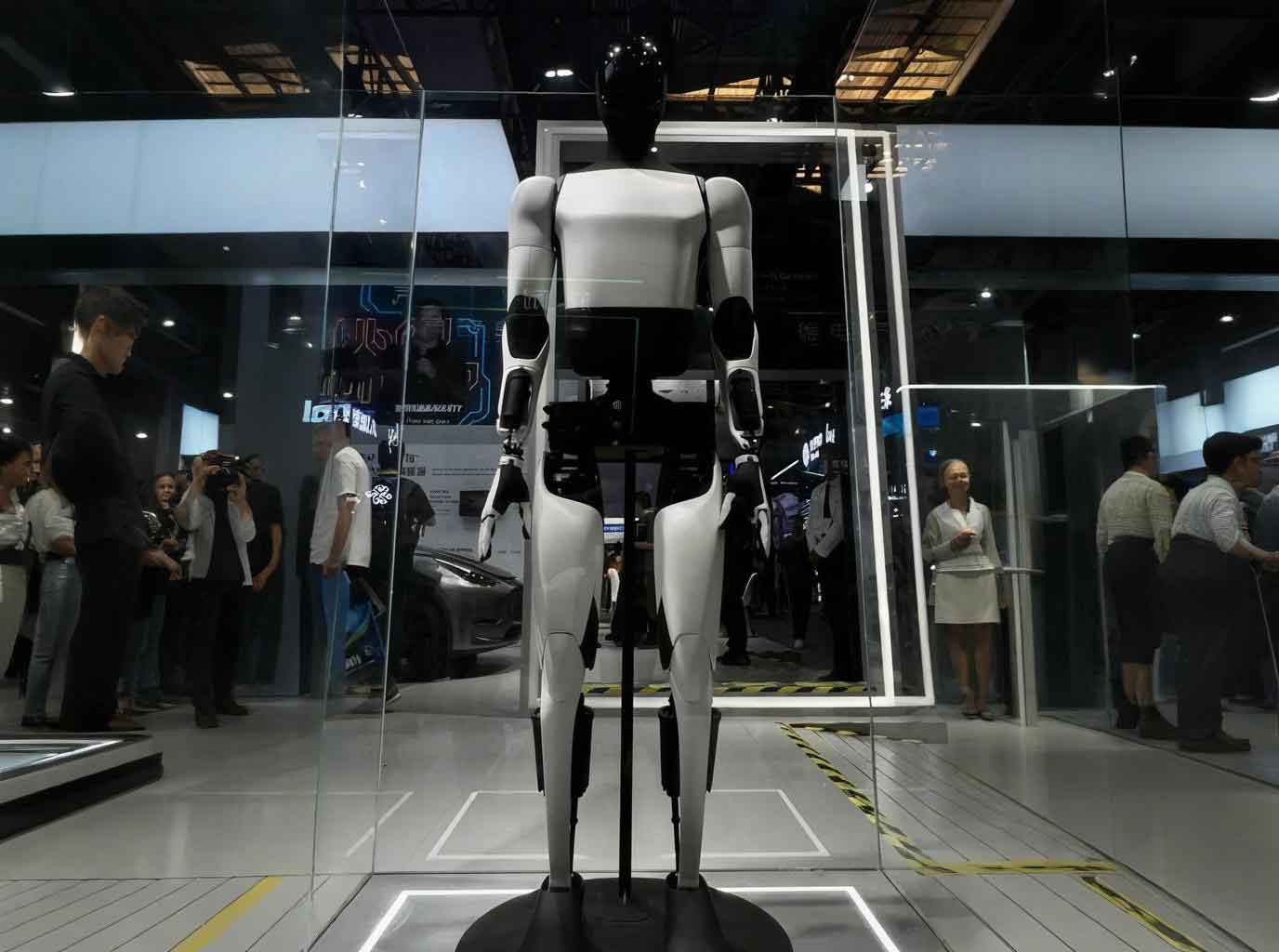
At its heart, embodied AI relies on a closed-loop system of perception, decision-making, and execution. This system integrates multimodal sensors—cameras, microphones, tactile sensors, and inertial measurement units—to capture environmental data, processes this information through cognitive models, and translates decisions into precise physical actions. For an embodied AI robot, this means not only understanding a command like “fetch the medicine bottle” but also locating it in a cluttered space, grasping it without damage, and navigating obstacles to deliver it. The intelligence here is embedded, participatory, and co-evolutionary, generated through active exploration. Key technologies can be summarized into three components: the body, the brain, and the cerebellum, each playing a critical role in enabling embodied AI robots to function autonomously.
| Key Component | Role | Core Functions |
|---|---|---|
| Body | Action载体 | Physical structure, environmental perception, and self-awareness through sensors and actuators. |
| Brain | Decision中枢 | Task understanding, data integration, and planning using large language models and reinforcement learning. |
| Cerebellum | Action执行者 | Motion control, real-time feedback, and precision execution via algorithms like model predictive control. |
The body of an embodied AI robot comprises mechanical structures, sensory systems, and power units. Mechanical joints and end-effectors, such as dexterous hands, determine mobility and manipulation range. Sensors act as perceptual networks: cameras provide vision, microphones capture audio, and force sensors gauge touch sensitivity. These components enable the embodied AI robot to sense both itself and its environment. The brain, often powered by large language models and vision-language-action models, handles multimodal fusion and decision-making. It integrates data streams—for instance, aligning voice commands with visual inputs—and employs algorithms like reinforcement learning for adaptive behavior. The reward function in reinforcement learning can be expressed as: $$R(s,a) = \mathbb{E} \left[ \sum_{t=0}^{\infty} \gamma^t r_t \mid s_0 = s, a_0 = a \right]$$ where \(R\) is the cumulative reward, \(s\) is the state, \(a\) is the action, \(\gamma\) is the discount factor, and \(r_t\) is the immediate reward. This allows the embodied AI robot to optimize actions through trial and error. The cerebellum bridges brain and body, converting abstract decisions into motor commands. Techniques like model predictive control (MPC) optimize actions over a horizon: $$u_t = \arg\min_{u} \sum_{k=0}^{N-1} \left( x_{t+k}^T Q x_{t+k} + u_{t+k}^T R u_{t+k} \right)$$ where \(u_t\) is the control input, \(x\) is the state, and \(Q\) and \(R\) are weighting matrices. Force control ensures gentle handling, such as gripping a glass without shattering it. Together, these technologies empower embodied AI robots to perform complex tasks in dynamic settings.
Despite progress, embodied AI faces significant bottlenecks that hinder widespread adoption. These challenges span data processing, scene adaptation, and hardware limitations, often preventing embodied AI robots from scaling beyond specialized domains. Firstly, multimodal data processing suffers from structural defects. Embodied AI robots must fuse visual, auditory, and tactile data in milliseconds to maintain real-time responsiveness. However, current systems struggle with latency and integration, leading to errors like task conflicts or delayed adjustments. For example, a service robot might misinterpret simultaneous commands, causing operational failures. The issue is not computational power but the lack of seamless fusion algorithms akin to human brain processing.
Secondly, scene adaptation remains immature. Lab-tested embodied AI robots often falter in real-world environments due to unpredictability. Homes have clutter, factories have noise, and outdoor spaces have varying terrains. These factors challenge the robustness of embodied AI robots. Additionally, high costs—exceeding tens of thousands of dollars for hardware and software—limit accessibility for households and small businesses. Moreover, many developments prioritize demonstrative functions over practical needs, such as elderly care or precision logistics, reducing utility. A case in point is扫地 robots, which frequently fail in scenarios like avoiding tangled wires or navigating narrow gaps.
Thirdly, sensors and actuators exhibit performance shortfalls. Sensors in embodied AI robots often have precision errors, such as 1 mm deviations in visual detection, inadequate for high-precision tasks like microchip assembly. Auditory sensors are prone to noise interference, degrading voice recognition. Actuators face issues like low payload capacity (under 10 kg), slow response times, and insufficient accuracy for delicate operations. Energy consumption and bulkiness further restrict application scopes. Beyond technical aspects, embodied AI robots grapple with safety ethics, interdisciplinary collaboration gaps, and a lack of unified evaluation standards. These bottlenecks collectively slow the transition from prototypes to pervasive tools.
| Bottleneck Category | Specific Issues | Impact on Embodied AI Robot |
|---|---|---|
| Data Processing | Multimodal fusion delays, task conflicts | Reduced real-time performance and reliability |
| Scene Adaptation | Environmental unpredictability, high costs | Limited deployment in complex settings |
| Hardware Limits | Sensor inaccuracy, actuator inefficiency | Poor precision and adaptability in tasks |
| Ethical & Safety | Lack of value alignment, safety frameworks | Risks in human-robot interaction |
To overcome these hurdles, embodied AI must advance through synergistic efforts in model optimization, scene adaptation, and hardware innovation. For models, developing multimodal embodied large models is crucial. These models should integrate reinforcement learning for self-improvement, as shown in the policy update rule: $$\pi_{new}(a|s) = \pi_{old}(a|s) + \alpha \nabla J(\pi)$$ where \(\pi\) is the policy, \(\alpha\) is the learning rate, and \(J\) is the objective function. Transfer learning can expedite training by leveraging lab data for real-world applications, reducing redundancy. Cross-domain fusion, combining machine learning with control theory, can shorten the perception-decision-action cycle. High-quality datasets, cleansed and standardized, are essential for training robust embodied AI robots.
In scene adaptation, a phased approach from simple to complex scenarios is advisable. Embodied AI robots should first target low-risk, high-demand areas like hospital drug delivery, where obstacle avoidance and精准投放 are critical. Collaborative R&D involving hardware makers, algorithm firms, and end-users can ensure product relevance. Government incentives, such as subsidies and research funding, can lower adoption barriers. For hardware, upgrades should focus on cost-effective precision. Micro-electromechanical systems (MEMS) sensors offer miniaturization and accuracy, while anti-interference optical sensors enhance reliability in noisy environments. Actuators made from composites like carbon fiber reduce weight, and high-speed servo motors improve responsiveness. Cost reduction through mass production and localization will make embodied AI robots more affordable. Policymakers can support this via core technology funds and industry-academia partnerships.
The industrial ecosystem of embodied AI is structured into upstream, midstream, and downstream segments, forming a comprehensive value chain. Upstream provides core components: AI chips for computation (e.g., from companies like Cambricon), precision motors and reducers for movement, and sensors for perception. These parts constitute the “genes” of embodied AI robots, determining basic capabilities. Midstream focuses on system integration and mass production. This includes整机 design for diverse forms—humanoid, quadruped, or wheeled—control system development, and motion algorithm optimization. Embodied large models enable natural language-to-action translation. Manufacturing giants have established production lines to scale embodied AI robot output, driving cost efficiencies.
| Industry Segment | Key Elements | Role in Embodied AI Robot |
|---|---|---|
| Upstream | AI chips, motors, sensors, algorithms | Supply core hardware and software foundations |
| Midstream | System integration, control, manufacturing | Assemble components into functional robots |
| Downstream | Industrial, logistics, healthcare, home | Deploy robots in practical applications |
Downstream applications drive commercial value, spanning industrial manufacturing, logistics, commercial services, healthcare, and home companionship. In industry, embodied AI robots handle assembly and inspection, boosting efficiency. In logistics, they optimize last-mile delivery. The “Robot-as-a-Service” (RaaS) model lowers entry costs for businesses. Healthcare and elderly care represent growing markets, where embodied AI robots assist with rehabilitation and daily tasks. The market potential is vast, with embodied AI robots poised to become ubiquitous assistants.
Looking ahead, the application前景 of embodied AI robots will evolve from niche to general-purpose roles. Short-term, they will thrive in structured, repetitive tasks like warehouse sorting or lab automation, where ROI is clear. Mid-term, as adaptability improves, embodied AI robots will enter semi-structured environments—hotel services, retail, or medical assistance—offering emotional and functional value. Long-term, the vision is通用 physical intelligence, where embodied AI robots serve as versatile home helpers, capable of learning and adapting to diverse needs. Success hinges on balancing technology with market fit; companies may adopt platform strategies with modular skills for rapid customization. Leasing models will ease access. Within a decade, embodied AI robots could reshape productivity and lifestyle.
In conclusion, embodied AI signifies a historic leap from cognition to action, moving beyond data patterns to physical value creation. The journey of embodied AI robots is marked by converging technologies, capital influx, and场景 validation. Yet, the path to universal physical intelligence is long, requiring holistic integration of perception, reasoning, action, learning, and safety. Future leaders will be those who build virtuous cycles of data-algorithm-hardware-scenario, balancing cost, performance, and trust. The ultimate significance of embodied AI robots extends beyond smarter machines; they redefine human-technology relations—from tools to collaborators to co-evolving intelligent communities. As we develop these embodied AI robots, we are crafting not just robots, but the infrastructure and文明形态 of tomorrow’s society. The evolution of embodied AI will likely trend toward self-evolution, collective协同, and value alignment, demanding coordinated efforts in policy, ethics, and innovation to ensure a stable and beneficial future for all.