
As a researcher in the field of artificial intelligence and healthcare, I have witnessed the rapid evolution of embodied AI robots, which represent a paradigm shift in how machines interact with the physical world. Embodied AI robots, or embodied intelligence systems, are not merely traditional robots but intelligent entities that integrate perception, cognition, and action through physical embodiment. They learn and adapt by interacting with their environment, much like humans do, making them particularly promising for healthcare applications. In this article, I will delve into the characteristics, core elements, current applications, challenges, and future trends of embodied AI robots in healthcare, aiming to provide a detailed overview that underscores their transformative potential. Throughout, I will emphasize the role of embodied AI robots in enhancing medical services, and I will use tables and formulas to summarize key concepts.
The concept of embodied AI robots stems from the idea that intelligence is not just about processing information but about being situated in a body that can sense and act. This embodiment allows for more natural interactions and efficient task execution in complex environments like hospitals, clinics, and homes. In healthcare, embodied AI robots are emerging as tools for rehabilitation, assistance, monitoring, education, and beyond. Their ability to perceive patient states, make autonomous decisions, and perform physical tasks offers unprecedented opportunities to improve outcomes, reduce costs, and enhance patient experiences. However, the integration of such systems also poses significant challenges, which I will explore in depth.
Core Characteristics and Elements of Embodied AI Robots
Embodied AI robots are defined by several key characteristics that distinguish them from conventional AI or robotic systems. These include environmental perception and interaction, autonomous decision-making and action, efficient learning and adaptation, and seamless human-robot collaboration. From my perspective, these traits enable embodied AI robots to operate effectively in dynamic healthcare settings where unpredictability is common. To better understand these systems, I have summarized their core elements in Table 1, which highlights the integration of hardware and software components.
| Element | Description | Example in Healthcare |
|---|---|---|
| Embodiment (Robot Body) | The physical structure that allows interaction with the environment, including sensors and actuators. | Surgical robots with precision arms for minimally invasive procedures. |
| Intelligent Agent | The AI core that processes sensory data, understands context, makes decisions, and controls the body. | Multi-modal models combining vision and language for patient assessment. |
| Data Infrastructure | High-quality, large-scale datasets used for training and optimizing the intelligent agent. | Medical imaging databases for training diagnostic algorithms. |
| Learning and Evolution Architecture | Frameworks that enable continuous learning through interaction, such as reinforcement learning. | Adaptive algorithms for personalizing rehabilitation exercises. |
Mathematically, the behavior of an embodied AI robot can be modeled as a sequential decision-making process. Let $s_t$ represent the state of the environment at time $t$, $a_t$ the action taken by the robot, and $r_t$ the reward received. The goal is to maximize the cumulative reward over time, often expressed through the Bellman equation in reinforcement learning:
$$ V(s) = \max_a \left( R(s, a) + \gamma \sum_{s’} P(s’ | s, a) V(s’) \right) $$
where $V(s)$ is the value function, $R(s, a)$ is the immediate reward, $\gamma$ is the discount factor, and $P(s’ | s, a)$ is the transition probability. This formula underpins how embodied AI robots learn optimal policies for tasks like patient monitoring or surgical assistance. In healthcare, such models must incorporate safety constraints, which I will discuss later.
Research Hotspots and Current Applications of Embodied AI Robots
From my analysis, research on embodied AI robots in healthcare has surged, focusing on vulnerable populations such as children, the elderly, and individuals with disabilities. Key disease areas include stroke, cancer, and autism spectrum disorders. Applications span treatment, rehabilitation, nursing, and social interaction. For instance, a recent study highlighted how autonomous surgical robots could revolutionize operations, with embodied AI robots enabling higher precision and adaptability. I have compiled Table 2 to summarize the primary research hotspots and applications, emphasizing the diverse roles of embodied AI robots.
| Focus Area | Target Population | Application Examples | Role of Embodied AI Robot |
|---|---|---|---|
| Rehabilitation | Stroke patients, elderly | Virtual reality training systems, exoskeletons | Providing interactive, adaptive exercises for motor recovery. |
| Assistive Devices | Individuals with disabilities | Smart wheelchairs, prosthetic limbs | Enhancing mobility and daily living through intuitive control. |
| Health Monitoring | General population, chronic disease patients | Smart home systems, wearable sensors | Continuous monitoring and early warning for health risks. |
| Medical Training | Medical students, professionals | Virtual patient simulators, holographic systems | Offering immersive, hands-on practice for clinical skills. |
| Surgical Assistance | Surgical teams | Robotic surgery systems, AI-guided tools | Improving precision and reducing invasiveness in procedures. |
In practice, embodied AI robots are already being deployed in various settings. For example, in China, hospitals have introduced virtual consultation platforms where embodied AI robots assist patients in pre-diagnosis, reducing wait times. Similarly, game-based digital therapies use embodied AI robots to make rehabilitation engaging for conditions like vision impairment. These examples underscore the versatility of embodied AI robots in addressing healthcare needs.
Detailed Application Scenarios of Embodied AI Robots
To illustrate the impact of embodied AI robots, I will explore specific scenarios in detail. Each scenario demonstrates how the core elements of embodied AI robots—embodiment, intelligence, data, and learning—come together to solve real-world problems.
Intelligent Rehabilitation with Embodied AI Robots
In rehabilitation, embodied AI robots create immersive environments for patients to recover motor functions. Consider a virtual reality system like TAGER, designed for stroke patients. This system uses sensors to capture head and hand movements, providing real-time feedback in a virtual world. The embodied AI robot here is not just a passive tool but an active participant that adapts exercises based on patient progress. The learning process can be formalized as an optimization problem:
$$ \min_{\theta} \sum_{i=1}^N L(y_i, f(x_i; \theta)) + \lambda \Omega(\theta) $$
where $f(x_i; \theta)$ represents the robot’s decision function with parameters $\theta$, $L$ is a loss function measuring rehabilitation performance, and $\Omega(\theta)$ is a regularization term for safety. By minimizing this, the embodied AI robot personalizes training, improving outcomes. Studies show that such systems significantly enhance upper limb function compared to traditional methods, thanks to the embodied interaction that motivates patients.
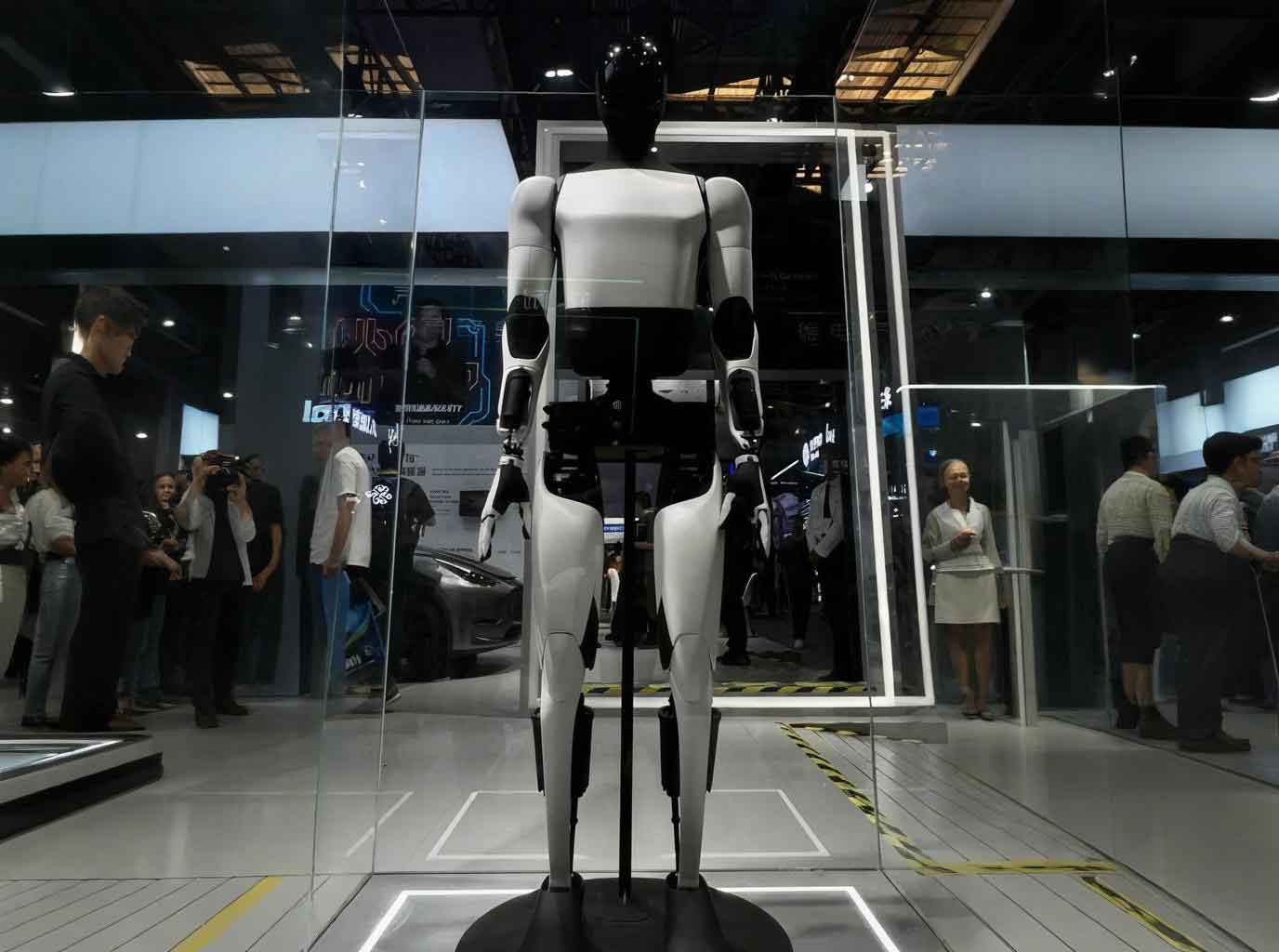
The image above depicts an embodied AI robot in a rehabilitation setting, highlighting its physical presence and interactive capabilities. This visual reinforces how embodiment is crucial for engaging patients in therapeutic activities.
Medical Assistance via Embodied AI Robots
Embodied AI robots also serve as assistive devices, enhancing independence for people with disabilities. A smart wheelchair developed at the University of Michigan uses Kinect cameras to interpret head and hand gestures for control, eliminating the need for joysticks. This embodied AI robot integrates perception (vision sensors), intelligence (gesture recognition algorithms), and action (wheelchair movement) to navigate safely. The decision-making can be modeled using a probabilistic framework:
$$ P(a | o) = \frac{\exp(Q(o, a)/\tau)}{\sum_{a’} \exp(Q(o, a’)/\tau)} $$
where $P(a | o)$ is the probability of taking action $a$ given observation $o$, $Q(o, a)$ is the learned value function, and $\tau$ is a temperature parameter controlling exploration. This allows the embodied AI robot to choose movements that maximize user comfort and safety. Moreover, such robots can include rehabilitation features, like guided exercises, making them multifunctional tools in healthcare.
Smart Home Health Monitoring with Embodied AI Robots
In smart homes, embodied AI robots enable proactive health management. Systems like Activehome deploy sensors to monitor activities and vital signs, using AI to detect anomalies such as falls or irregular heartbeats. The embodied aspect comes from the robot’s ability to interact with the environment—for example, adjusting room temperature based on sleep patterns. Data fusion is key here, and it can be expressed as:
$$ z_t = g(x_t, y_t) + \epsilon_t $$
where $z_t$ is the fused sensor data at time $t$, $g$ is a fusion function combining visual data $x_t$ and physiological data $y_t$, and $\epsilon_t$ is noise. The embodied AI robot uses this to make health recommendations, often connecting to remote doctors for telehealth services. This scenario shows how embodied AI robots extend care beyond clinical settings, offering continuous support.
Medical Education and Training with Embodied AI Robots
For medical education, embodied AI robots power immersive training simulators. HoloPatient, a holographic system, allows students to interact with virtual patients using gestures, providing a hands-on learning experience. The embodied AI robot here acts as a virtual tutor, assessing performance and giving feedback. The learning curve can be modeled with a logistic growth equation:
$$ C(t) = \frac{L}{1 + e^{-k(t – t_0)}} $$
where $C(t)$ is competence over time $t$, $L$ is the maximum skill level, $k$ is the learning rate, and $t_0$ is the midpoint of growth. This reflects how students improve through repeated interactions with the embodied AI robot. Such systems address gaps in traditional education by offering realistic practice, ultimately enhancing clinical readiness.
Challenges and Issues in Deploying Embodied AI Robots
Despite the promise, deploying embodied AI robots in healthcare faces several hurdles. From my perspective, these challenges stem from technical, ethical, and practical considerations. I have summarized them in Table 3, along with potential mitigation strategies, to provide a clear overview.
| Challenge | Description | Mitigation Strategy |
|---|---|---|
| Safety and Reliability | Risks of system failures or errors causing harm in medical settings. | Implement rigorous testing, fault-tolerant designs, and real-time monitoring systems. |
| Privacy and Ethics | Concerns over data security, consent, and ethical use of patient information. | Develop encryption protocols, ethical guidelines, and regulatory frameworks for data governance. |
| Interdisciplinary Integration | Difficulties in combining expertise from robotics, AI, medicine, and psychology. | Foster cross-disciplinary teams, shared training programs, and collaborative platforms. |
| High Development Costs | Expensive R&D and manufacturing limiting accessibility for healthcare institutions. | Promote open-source initiatives, government subsidies, and scalable production methods. |
Mathematically, safety can be addressed by incorporating constraints into the robot’s decision model. For instance, in reinforcement learning, a safe policy $\pi$ can be derived by solving:
$$ \max_\pi \mathbb{E} \left[ \sum_{t=0}^\infty \gamma^t r_t \right] \quad \text{subject to} \quad \mathbb{E} \left[ \sum_{t=0}^\infty \gamma^t c_t \right] \leq C $$
where $c_t$ represents a cost function for unsafe actions, and $C$ is a safety threshold. This ensures that the embodied AI robot prioritizes patient well-being. Similarly, privacy can be protected through differential privacy techniques, where noise is added to data queries:
$$ \mathcal{M}(x) = f(x) + \text{Laplace}(0, \Delta f / \epsilon) $$
where $\mathcal{M}$ is a randomized mechanism, $f$ is a query function, and $\epsilon$ controls privacy loss. These approaches highlight how technical solutions can align with ethical standards for embodied AI robots.
Future Opportunities and Trends for Embodied AI Robots
Looking ahead, I believe embodied AI robots will become integral to healthcare, driven by advancements in AI, robotics, and data science. Key trends include deeper human-robot collaboration, integration with big data and AI diagnostics, and the proliferation of autonomous medical robots. Table 4 outlines these trends and their potential impacts, emphasizing the evolving role of embodied AI robots.
| Trend | Description | Expected Impact |
|---|---|---|
| Enhanced Human-Robot Collaboration | More natural interfaces and shared decision-making between humans and robots. | Improved efficiency in surgeries and patient care, with reduced workload for staff. |
| AI-Driven Diagnostic Systems | Embodied AI robots using large datasets to aid in diagnosis and treatment planning. | More accurate and personalized healthcare, with early detection of diseases. |
| Autonomous Medical Robots | Robots capable of independent operation in complex tasks, like surgery or rehabilitation. | Increased accessibility to high-quality care, especially in remote areas. |
| Scalable and Affordable Solutions | Cost reductions through modular designs and mass production. | Wider adoption in diverse healthcare settings, from hospitals to homes. |
The evolution of embodied AI robots can be modeled as a diffusion process, where adoption rate $A(t)$ follows:
$$ \frac{dA}{dt} = \beta A(t)(1 – A(t)) – \delta A(t) $$
where $\beta$ is the innovation coefficient and $\delta$ is the abandonment rate. This equation suggests that as technology matures and challenges are addressed, embodied AI robots will see exponential growth in healthcare. Furthermore, the convergence of technologies like 5G and IoT will enable real-time data exchange, enhancing the capabilities of embodied AI robots in telemedicine and remote monitoring.
Conclusion
In conclusion, embodied AI robots represent a transformative force in healthcare, offering intelligent, adaptive, and patient-centric solutions. From rehabilitation to surgery, these systems leverage embodiment to interact naturally with patients and environments, improving outcomes and experiences. However, realizing their full potential requires addressing safety, privacy, interdisciplinary, and cost challenges. As a researcher, I am optimistic that with continued innovation and collaboration, embodied AI robots will become commonplace in medical practice, driving a new era of personalized and efficient care. The future will likely see embodied AI robots working alongside humans as trusted partners, ultimately enhancing the well-being of individuals worldwide.