
As a researcher deeply immersed in the field of robotics and artificial intelligence, I observe that we are standing at a pivotal moment. The concept of the embodied AI robot, an intelligent agent that perceives and acts upon the physical world through a physical form, is rapidly transitioning from laboratory prototypes to tangible applications. This year, the explicit inclusion of “embodied intelligence” in my country’s Government Work Report as a key future industry, alongside biomanufacturing and quantum technology, marks its formal elevation to a national strategic priority. This recognition underscores a global race to master this technology, a race characterized by immense potential and significant hurdles.
Global Development Status: Policy and Commercialization
The development of embodied AI robot technology is being propelled by concerted national strategies and vigorous private sector investment worldwide. The strategic frameworks established by major economies highlight the perceived importance of this domain.
| Country/Region | Strategic Initiative | Key Objectives & Investments |
|---|---|---|
| United States | National Robotics Roadmap (2024) | Explicitly promotes a “Robotics+AI” ecosystem, advocating for inter-agency collaboration to accelerate integration. |
| Japan | Society 5.0 Strategy | Aims for a “Super Smart Society,” incorporating embodied AI into the national framework with dedicated budgets for biomimetic robotics R&D. |
| South Korea | 4th Basic Plan for Intelligent Robots | Commits $2.4 billion to cultivate 150 specialized robot companies and deploy over 1 million robots by 2030. |
| China | Government Work Report & “Unveiling the List” Initiative | First inclusion in national agenda. Ministry of Industry and Information Technology launched a “揭榜挂帅” (challenge-led) plan to foster innovation synergy with other frontier fields. Over 20 cities have announced local supportive policies. |
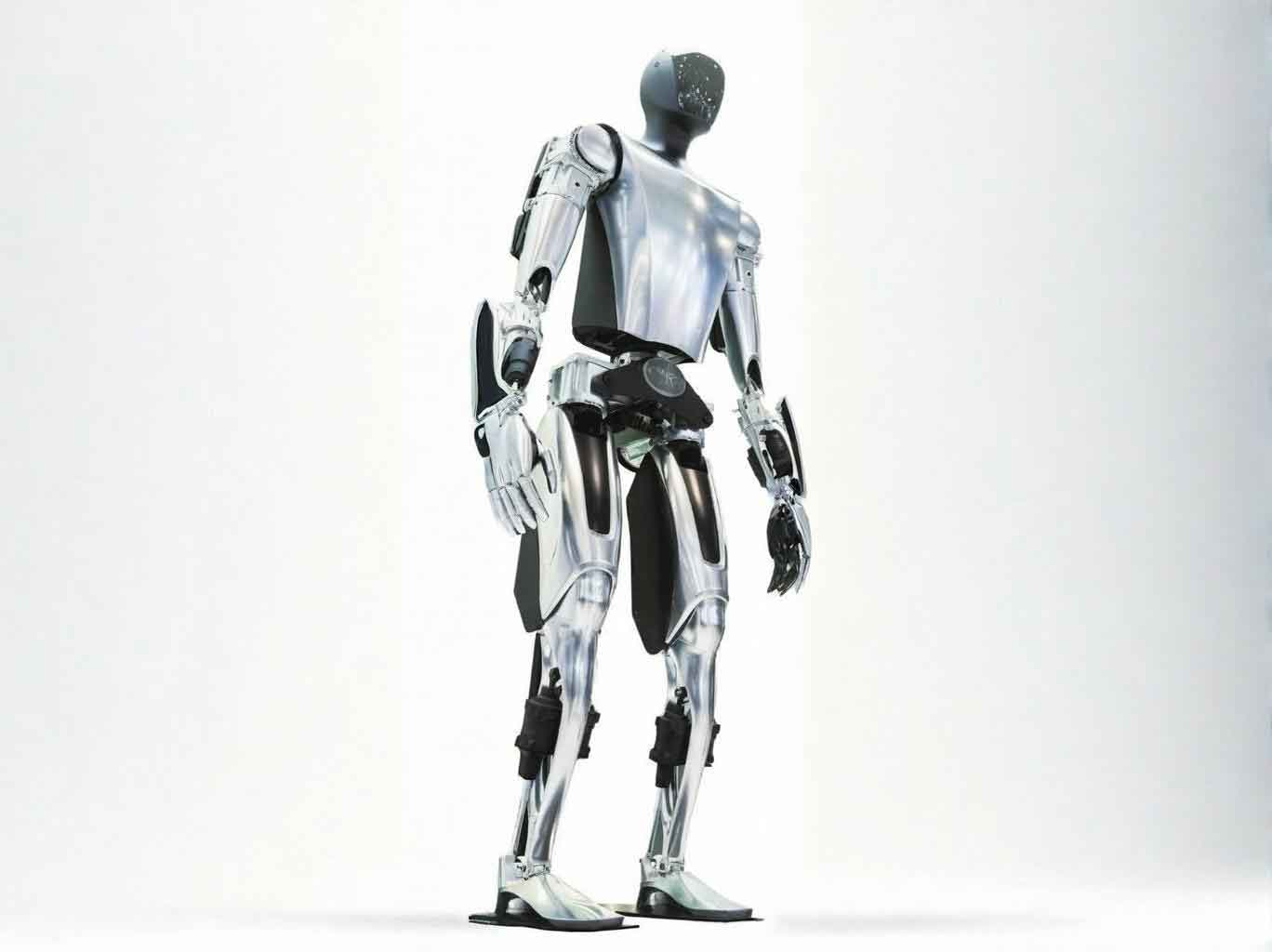
On the commercialization front, technology giants are leading the charge in innovation. Tesla’s Optimus humanoid embodied AI robot aims for trial production of 5,000 units in 2025, scaling to 50,000 by 2026. Companies like Google (with its Robotics Transformer models) and NVIDIA (providing simulation and AI platforms) are creating essential enabling technologies. Startups such as Figure AI and Agility Robotics are making significant strides in dexterous manipulation and legged locomotion. Within my domestic ecosystem, application innovation is vibrant. For instance, Ubtech’s WalkerS humanoid robot, integrated with Baidu’s ERNIE large language model, is finding applications in healthcare and education. Another company, Unitree Robotics, has achieved the global top spot in shipment volume for quadruped and humanoid robots, with its consumer-grade Go1 quadruped embodied AI robot cumulative shipments exceeding 50,000 units, capturing over 60% of the global consumer legged robot market.
Future Trends: Convergence and Expansion
The evolution of the embodied AI robot is not a singular technological advance but a convergent one, leading to profound shifts in research, application, and economic landscape.
Deep Interdisciplinary Fusion: At its core, embodied AI sits at the intersection of artificial intelligence and robotics, demanding synergy from computer science, control theory, cognitive science, and mechanical engineering. This fusion, powered by advances in sensor technology, biomimetic materials, and control engineering, is birthing new hybrid disciplines like cognitive robotics and intelligent bionics. The control paradigm itself is evolving from classical models to those informed by learning. We can represent a simplified high-level decision-making process for an embodied AI robot as a Partially Observable Markov Decision Process (POMDP), defined by the tuple:
$$(S, A, T, R, \Omega, O)$$
where:
- $S$ is the set of states of the world,
- $A$ is the set of actions the robot can take,
- $T: S \times A \rightarrow \Pi(S)$ is the state transition probability function,
- $R: S \times A \rightarrow \mathbb{R}$ is the reward function,
- $\Omega$ is the set of observations the robot receives,
- $O: S \times A \rightarrow \Pi(\Omega)$ is the observation probability function.
The goal is to find a policy $\pi$ that maximizes the expected cumulative reward $\mathbb{E}[\sum_{t=0}^{\infty} \gamma^t R(s_t, a_t)]$, where $\gamma$ is a discount factor. Modern embodied AI robot systems use deep reinforcement learning and large foundation models to approximate solutions to this complex problem.
Sustained Expansion of Application Boundaries: As a new focal point for empowering all industries with AI, the application scenarios for embodied AI robot systems will expand from structured industrial manufacturing into more complex domains like domestic services, deep-sea exploration, and space operations. The trajectory will likely progress from specialized (ToB) applications toward more general-purpose (ToC) systems.
Concentration of Innovation Resources: The field’s growth will attract cross-disciplinary talent, cluster upstream and downstream enterprises, and draw significant capital. A “triple helix” of talent, policy, and capital will form a driving mechanism. Academic institutions will redesign curricula, industrial capital will flow in to accelerate commercialization, and governments will orchestrate the ecosystem to build a closed loop from R&D to pilot production and mass manufacturing.
Vast Market Prospects: The economic potential is significant. According to market research, the global embodied AI market size is estimated at $2.5335 billion in 2024 and is projected to reach $8.7565 billion by 2033, growing at a compound annual growth rate (CAGR) of approximately 15%.
Challenges in Developing Embodied AI: A Multilayered Analysis
Positioned on the Gartner Hype Cycle, embodied AI remains in the “Innovation Trigger” phase. While propelled into the spotlight by advances in large AI models, substantial challenges persist across technical, industrial, and regulatory dimensions.
Technical Layer
| Challenge | Description | Consequence |
|---|---|---|
| Scarcity of High-Quality Data | Training robust models requires massive, diverse, high-fidelity datasets from the physical world. Collection is costly, difficult, and lacks standardization. Simulation data, while scalable, suffers from a reality gap (the “Sim2Real” problem). | Limits model generalization, leading to poor performance and unreliable behavior in unseen real-world environments. |
| Limitations in Model Capabilities | Current multimodal large models are in early stages for true sensor fusion (vision, touch, audio, proprioception). Task planning and generalization for long-horizon, complex tasks remain inadequate. | The embodied AI robot cannot robustly handle dynamic, unstructured environments or learn new tasks efficiently from limited demonstrations. |
| Computational Power Bottleneck | Processing multimodal sensory streams and performing real-time, complex reasoning demands immense parallel computing power, reliant on high-end GPUs and AI accelerators. | Dependence on foreign-supplied advanced chips creates a strategic vulnerability and constrains the computational efficiency of onboard processing for the embodied AI robot. |
Industrial Application Layer
| Challenge | Description | Consequence |
|---|---|---|
| Difficult Scenario Landing & Unclear Commercial Path | Requirements vary drastically across sectors (e.g., precision in manufacturing vs. safety in homes). Customization is expensive. Companies face a strategic dilemma between developing high-cost general-purpose robots versus limited-scope specialized ones. | Slows down widespread adoption, increases development costs, and creates uncertainty for investors, hindering the formation of a clear value proposition for the embodied AI robot. |
| Low Industry Chain Synergy | The hardware-software co-design cycle is inefficient. Hardware component iteration (especially high-performance actuators and sensors) is slower and costlier than software iteration. Deep system integration remains a challenge. | Creates bottlenecks in product development, increases time-to-market, and may result in suboptimal performance where hardware cannot fully leverage software advancements. |
| Low User Acceptance & Trust | Public understanding is limited. Concerns about safety, reliability, and job displacement create social hesitation. In critical fields like robotic surgery, building trust with both practitioners and patients is a gradual process. | Acts as a significant barrier to market penetration and commercialization, even for technically mature embodied AI robot solutions. |
Standards and Compliance Layer
This layer presents some of the most profound and complex challenges for the future of embodied AI robot integration into society.
| Challenge Category | Specific Issues |
|---|---|
| Safety & Ethics |
|
| Missing Standards |
|
| Labor Force Transformation |
|
Strategic Recommendations for Advancing Embodied AI
To navigate these challenges and harness the opportunities, a multi-pronged, coordinated approach is essential.
Accelerating Technological R&D
| Focus Area | Recommended Actions |
|---|---|
| Data Infrastructure | Establish public-private partnerships to build large-scale, open-source, multimodal datasets for embodied AI robot training. Develop and enforce data collection, formatting, and annotation standards to ensure quality and interoperability. |
| Model Innovation | Fund national research centers focused on key bottlenecks: multimodal perception fusion, world model learning, hierarchical task planning, and efficient reinforcement learning for physical control. Foster deep academia-industry collaboration. |
| Computational Foundation | Invest massively in national AI computing infrastructure (“computing power pools”) accessible to researchers and startups. Simultaneously, prioritize and fund the R&D of next-generation, high-performance AI chips (GPUs, NPUs) to achieve strategic autonomy. |
Promoting Commercial Application and Adoption
| Focus Area | Recommended Actions |
|---|---|
| Ecosystem & Platform | Support the development of open, modular platforms and universal development kits (hardware interfaces, simulation environments, software stacks). This reduces redundant low-level work and allows companies to focus on application-specific innovation for the embodied AI robot. |
| Application Pilots | Create regulatory sandboxes and application demonstration zones in selected cities/industrial parks for testing embodied AI robot solutions in real-world settings like logistics, elderly care, and infrastructure inspection. Offer incentives for pioneering business models. |
| Public Engagement | Launch nationwide science communication initiatives to demystify the technology, demonstrate its benefits, and foster a realistic public understanding of the capabilities and limitations of embodied AI robot systems. |
Establishing Governance and Standards
| Focus Area | Recommended Actions |
|---|---|
| Technical & Safety Standards | Proactively convene international and domestic standards bodies involving engineers, ethicists, and policymakers. Priorities include:
|
| Ethics & Social Governance | Establish multi-stakeholder ethics committees to develop guidelines for embodied AI robot design and deployment. Implement mandatory ethical impact assessments for significant projects. Define clear liability frameworks for accidents involving autonomous robots. |
| Workforce Transition | Implement a national skills transformation strategy, including:
|
In conclusion, the journey of the embodied AI robot from a research concept to a societal partner is underway. Its development is a complex tapestry woven from threads of groundbreaking technology, evolving market dynamics, and profound ethical considerations. Success will depend not only on engineering brilliance but also on our collective foresight to build the collaborative frameworks, responsible standards, and adaptive social structures that will allow this powerful technology to flourish for the benefit of humanity. The path is challenging, but the potential to augment human capability and tackle global challenges makes it a defining endeavor of our time.